Journal Category: Study

  • Aichi Triennale 2022: Still Alive — Chapter 1  | Aichi Prefectural Museum of Art

    Aichi Triennale 2022: Still Alive — Chapter 1 | Aichi Prefectural Museum of Art

    08 September 2022


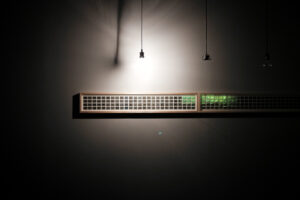
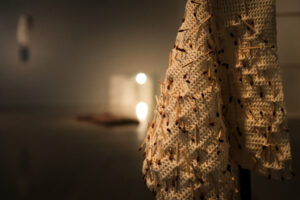
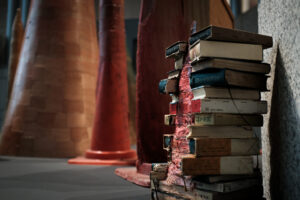
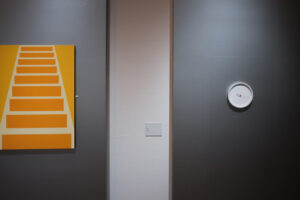
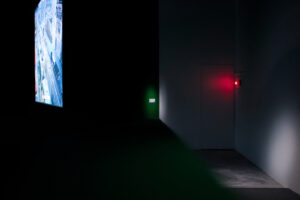
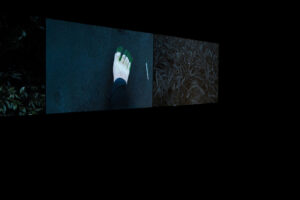
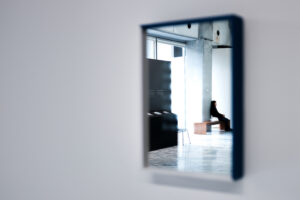
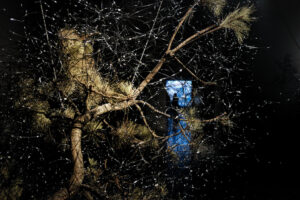
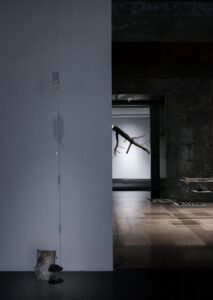
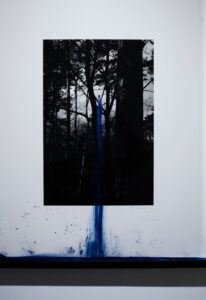
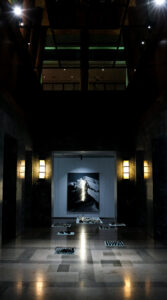
    We would like to present to you a series of photographic essays centred on Aichi Triennale 2022: Still Alive, which took place between August and October 2022 across various venues in different cities and towns in Aichi Prefecture, Japan, namely Arimatsu, Ichinomiya, Nagoya and Tokoname.

    The theme of the Triennale is pretty much self-explanatory. In case you’ve been away from the planet, for the past two years there’s this thing called COVID-19 that has barged into everyone’s lives, crudely stripping mankind of anything fun and pleasurable. Doomsday, it seemed, when it surfaced globally in early 2020, humanity was facing the greatest threat since World War II… Maybe that was a step too far, but at some point, I’m sure many of us felt that way.

    When finally, finally, in the year 2022, the COVID restrictions were lifted — Japanese borders reopened once again, welcoming the return of tourists, combined with all the geopolitical bullshit going down and prices soaring across the world — “Still Alive!”, as mankind shouted.

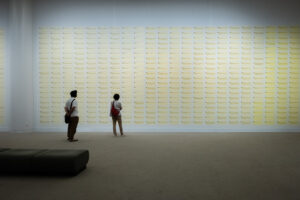
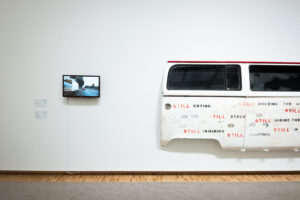
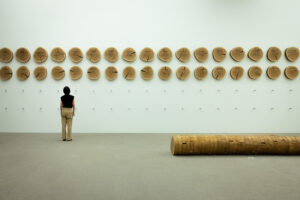
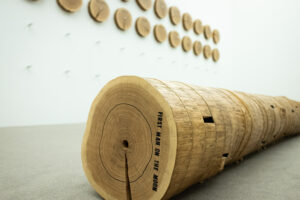
    The title of this Triennale is probably nothing but apt — like, fantastic timing. Still Alive is also a name directly derived from a series of works created by the Aichi-born conceptual artist On Kawara1, started back in the 70s and continuing until the year 2000. The work comprised a collection of over 900 telegrams, under different forms, that the artist sent from New York to his friends and foes, curators and collectors, carrying the plain and direct message declaring his existence, that he had not committed suicide: “I am still alive.” Which is no longer the case today because our man has already passed away.

    The controversy that clouded the previous 2019 edition surrounded the topic of a comfort woman statue installed in one of the main museum venues. “A scandal” — many newspapers in the country headlined at the time. One section of the museum was subsequently closed, with the work removed after being on display for no more than a measly few days, as complaints and even threats poured in. To this day, I personally still see it as somewhat of a shame. If an object of art is not there to provoke critical thinking, nor to evoke emotions, if an art event is set out to serve the purpose of nothing but a theme park attempting to draw a crowd and please everyone within that crowd in the process, or if every art biennale in the country is to meet the requirements of the local government with an underlying message hinting at area revitalisation under the guise of contemporary art — of course, this is not to say that the intention is bad to begin with — surely all the tax money could, or perhaps should, be invested more wisely instead?

    Regardless, what’s done is done, and that “scandal” — only speculating here — was probably one of, if not the dominant factor as to why, this time round, for its latest 2022 edition, the Triennale committee brought in one of the largest cannons working in the industry today, Mami Kataoka2 of Mori Art Museum, Tokyo, to spearhead the direction of this massive game, raising the curatorial question of what it means to stay alive while living in an era of uncertainties and struggles — working collaboratively with over 100 artists from more than 30 countries and different parts of the world, whilst making sure that nothing would go south, I imagine.

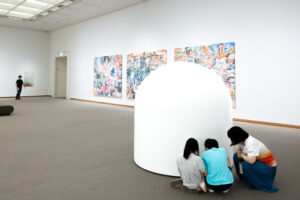
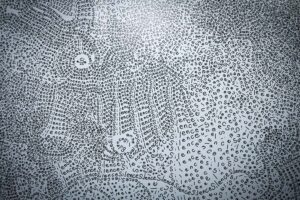
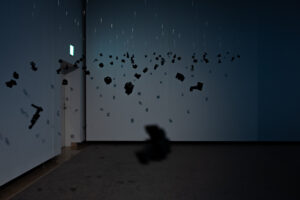
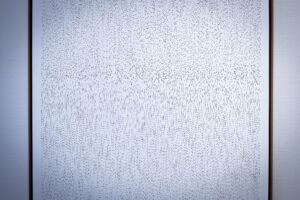
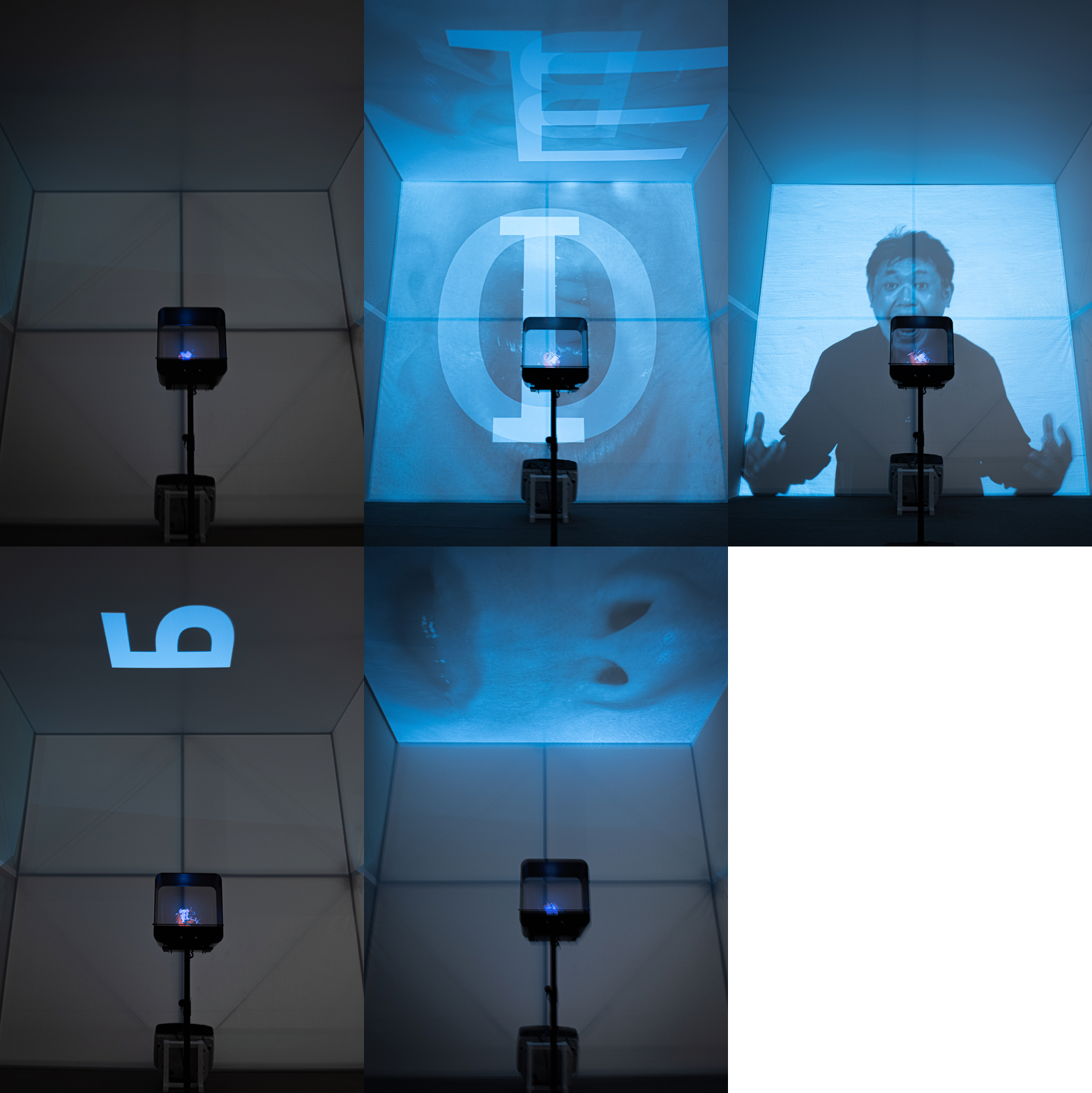
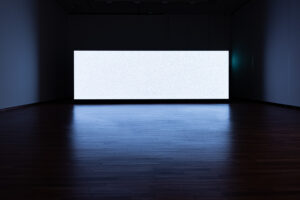
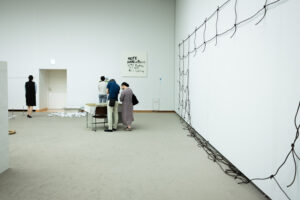
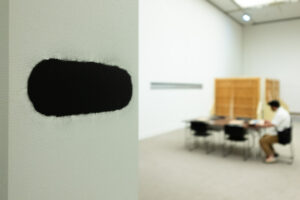
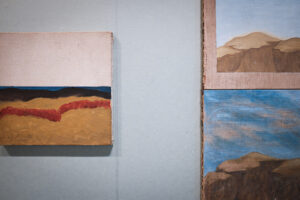
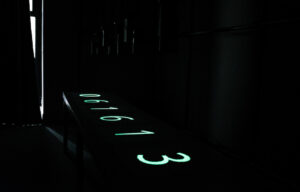
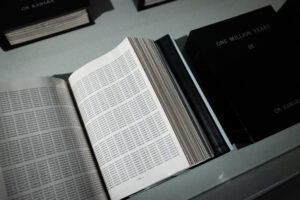
    The first part of the documentation below focuses on the Aichi Prefectural Museum of Art. Kicking off with Marcel Broodthaers’ Map of a Political Utopia and Small Paintings (1973), followed by Kawara’s telegram works, through to Watanabe Atsushi’s I’m Here Project, each projected their own individuality to the world in an attempt to investigate temporalities, historical, political and social emergencies while attesting to the existence of human beings in spite of the turbulent times that we are living in. There was no lack of interactive artworks allowing adult and child visitors to participate and leave their marks, in turn completing the works in question.

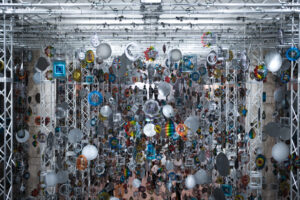
    Meanwhile, the exhibited works in each city aroused a great sense of locality, with many of them being deeply community-oriented, which was clearly another one of the curatorial directions initially set forward, in terms of encouraging the artists to excavate the relationship, as well as trigger a dialogue, between lesser-known regions of Japan and the rest of the world. Take Chiharu Shiota’s exhibition in Ichinomiya, for example, a city with a flourishing textile production industry. Here we saw Shiota’s new installation Following the Line (2022), embodying hundreds, if not thousands, of her signature red yarns, said to have been locally sourced, radiating from textile machinery and weaving a monstrously expansive web of blood vessels resurrecting the memories of the bygone. The red threads traversed the entire space of an abandoned saw-tooth roof factory (Nokogiri / 鋸), now turned gallery studio, overspreading the ceilings and superimposing themselves upon the aged walls. Here you would also find traces of its former life remaining, elucidating the tales of a forgotten past.

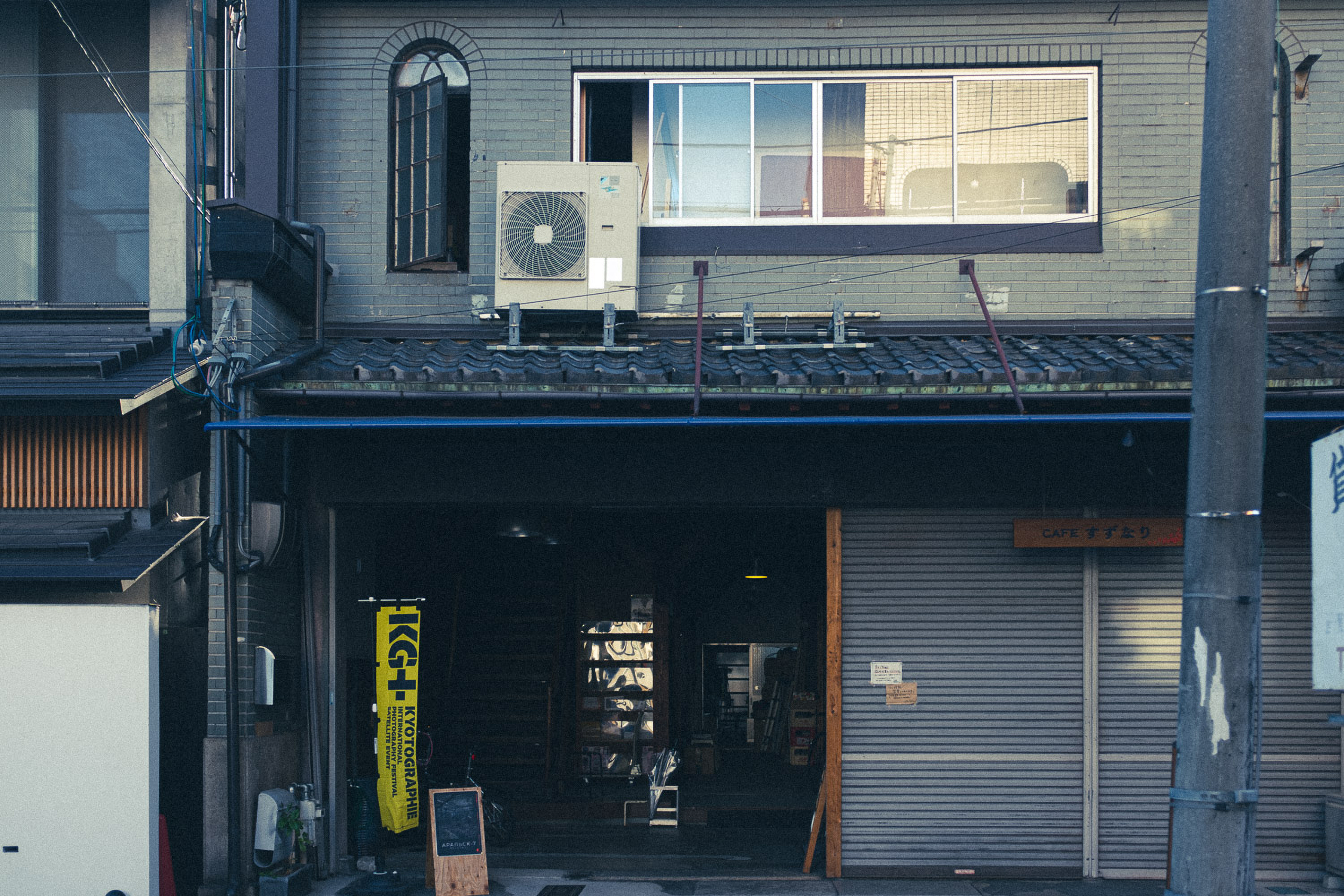
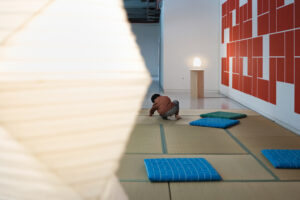
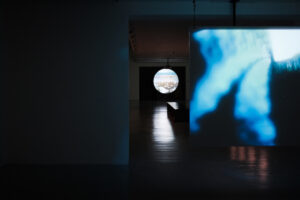
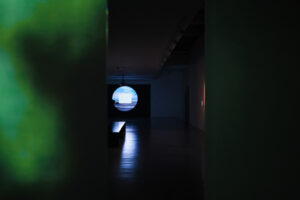
    Many of the partnership programmes this year were noticeably more prominent than ever before, GROWING SPACE (2022) included, I dare say. KONMASA Gallery in Arimatsu probably hosted one of the most mesmerising exhibitions that I have seen in the past year in Japan. With a chic café located on the ground floor, upon entering the gallery space upstairs you would be greeted by a Triennale-related Shibori exhibition, paired with an experimental series of showcases by KONMASA the artist, should you decide to venture further into the darkness. While I was there, it almost felt like the whole scene had transported me back to some underground gallery I used to goof around in East London.

    Nowadays, whenever I get to visit an exhibition or an art event, I begin to see through the process behind each physical manifestation of artistic expression, and the effort and finance necessary for its eventual materialisation, thereupon learning to appreciate more about the production value. Especially with a curatorial direction in place, you don’t simply put an object on top of a plinth or hang a picture on the wall and say, “voilà”. Overall, the Triennale felt intricately designed, with detailed guides and maps available right at your fingertips. Whether the exhibition was situated inside a museum white cube or a kominka3, everything was thoughtfully planned, leaving enough room for visitors to navigate their way through objects, installations and wall text statements. However.

    On a different note, upon visiting nearly all the venues across five areas of the prefecture in a total of six days over the course of seven weeks, regretfully, a feeling of utter incompletion lingered, like somewhere down the bottom of my heart, I was desiring, craving even, more — for more intellectual and physical challenges, something a bit more in-your-face. Granted, most of the works exhibited dabbled around the theme of the Triennale; everything played out peacefully and safely. Living in the city of Nagoya, I for one, understood the imperative political correctness demanded this time round in order to save some face, or rather, the Triennale itself, resulting from all the chaos, conflict and disturbance caused by its predecessor.

    And hey, let’s not forget that the aftermath of the pandemic hadn’t evaporated just yet, some optimism and order can in fact contribute to greater greatness. The flip side of that coin, nevertheless, is that there lay an apparent discrepancy between the showcased exhibitions themselves, with the ones in Ichinomiya probably being the only exception, the fact that the venues there were absolute badass — immense enough for the artworks to breathe, haunting enough to provide a disparate viewing experience — a utopian amalgamation of the old, the modern and the abandoned.

    Many of the other exhibitions, conversely, felt like a mashup of work after work. What’s more, they at large conveyed a feeling of dilution, that the artworks were being excessively diluted by being presented in such a way that, eventually, inevitably and unfortunately, the only things viewers ended up with were conceivably nothing more than mere dozens (or hundreds) of photos on our mobile phones. And that, perhaps, is the ultimate testimony to authenticating our aliveness in the modern era.

    For the rest of the series, zooming in on Arimatsu and Endoji, Ichinomiya (Parts 1 & 2) and Tokoname, as well as the second part on the museum, please follow the respective links.


  • KG+ 2022 | KYOTOGRAPHIE

    KG+ 2022 | KYOTOGRAPHIE

    05 May 2022


    We would like to present a series of photographs documenting this year’s KG+, an annual photography event held in Kyoto, Japan.

    By now, hundreds of Guy Bourdin’s renowned, and the much celebrated photograph of manicured hands with vivid red nails stacked on top of one another, covering the model’s eyes, leaving the red lips visible, would probably have surfaced across your social media feeds. The image was selected as the main visual for this year’s KYOTOGRAPHIE — not to be confused with KG+ — which shapes itself like a baby brother to the former. While KYOTOGRAPHIE brings together internationally established photographers, KG+ welcomes relatively lesser-known names — think emerging, that’s probably the right word.

    It is perhaps best not to dwell on the event’s different categories, which are confusing, to say the least. The distinction between KG+, KG+ Select and KG+ Special is a little like the countless diffusion lines of a fashion label. Unless you’re a diehard fan of the designer, you probably won’t be able to tell exactly what distinguishes Ground Y, Y’s, and Y’s Bang On from Yohji Yamamoto.

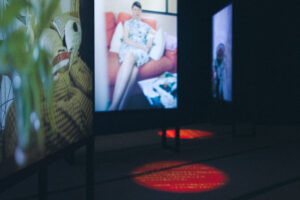
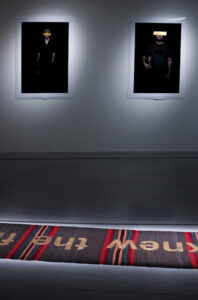
    The exhibited photographic works at this year’s KG+ by and large, consisted of documentation of real-life events. A whole range of diverse subjects was explored, from gender issues and identity, to the aftermath of Fukushima, and so on. During the event, we could see artists and photographers experimenting with various methods to elevate the medium. One project that caught the eye was titled Home, created by Lu Wang (王露, b. 1989), a graduate of the University of the Arts, Tokyo. The project essentially revolves around personal and cultural identities, prompting questions surrounding migration and its by-products. The artist presented her work by incorporating elements of sound, lighting, and stage design, with the stories of her subjects being narrated within a dark, immersive environment. This did indeed somewhat transform the viewing experience, allowing audiences to engage with the subjects of the photographs as actual individuals with their own stories that form part of a broader narrative, rather than merely staring at some random photographs of Asian women dressed in Chinese qipao.

    The word “photography” is composed of the Greek word “phos”, meaning light, and “graphê”, meaning drawing or writing. A literal translation of the word “photography” would therefore be “drawing with light” — anyone who has looked it up on Wikipedia should already be aware of this. What you should also be aware of, however, is that when photography first surfaced, there was an extremely technical side to it. Photography was, in fact, a technological invention that combined the sciences of optics and chemistry. It was regarded not only as a means of artistic expression but also, mainly, as a process of science, involving both chemical and physical experimentation. Printing colour photographs was once considered a massive task, something that has, of course, been all but eradicated by modern technology, for better or worse. The French photographer Nadar captured the first aerial photograph from a hot-air balloon, that was in 1858. Nowadays, even a cheap drone is capable of managing the same task perfectly.

    Peeking once again at the course of photography in relation to art history — Dada, Surrealism, Russian Constructivism — all of these movements relied eminently on the camera for artistic production and visual creation. Photography has operated not only as a cultural medium but also as a social tool, and has always been intertwined with the political landscape and the state of society. Dada was a reaction to the First World War, which in turn gave rise to Surrealism in Europe. California Modernism, meanwhile, diminished quickly because of the Great Depression. Not to mention the fact that many of these movements occurred within relatively local contexts. The internet didn’t exist, people hand-wrote letters, and the docking of a ship carrying news or photographs probably made a lot of people’s day back then. Today, on the other hand, images and information travel at lightning speed, from one end of the world to the other in the blink of an eye. Images turn up callously on your screen regardless of your liking. Things have never been easier — gaining access to imagery, information, and knowledge — to call it effortless, would be an understatement.

    Photography has endured as a vital creative and artistic medium, surviving and thriving for almost two hundred years, adopting countless facades and forms through the tides of history. Nonetheless, it has often been argued that the medium itself has become a little obsolete today due to the advancement of technology. With a single push of a button or a soft touch on the phone screen — there you have it — a photograph. You no longer have to concern yourself with silver nitrate, or even worry about shutter speed or exposure. With the help of a smartphone, everything can be viewed and edited from the palm of your hand.

    More often than not, in the time that we are living in today, every individual is likely to encounter thousands of images or photographs, shared by other individuals on a daily basis, accelerated by nothing more than the simple act of scrolling through social media, with a tiny movement of the thumb. The omnipresence of photography has resulted in a perpetual bombardment of image after image, driving the mind into an oblivious state, filtering out everything in front of our bare eyes and leaving us, remembering, absolutely, nothing.

    As human beings move towards a post-modern world, photography moves with us too. I have zero doubt that the medium itself will remain and continue to pervade, at least for now, photography will simply continue to up the ante and reinvent itself until the next big thing comes along. It remains the quickest, and arguably the easiest way to capture, document, and share stories with the rest of the world, the only variable that has changed is the platform on which the photograph is shared.

    The purpose of a physical exhibition serves to tell a story, also to lift you out of your daily mundanity, providing an alternative experience. Whenever I visit a photography event like KG+, however, I’m often left with a question mark, asking myself: why am I even here? Wouldn’t it be easier if everything were published online? The information or content exhibited in such a manner is, in many ways, no different from an online blog post or a spread in a magazine. Painting is probably a whole different story, but we are kidding ourselves if we truly think that the quality of a printed photograph always outshines that of one we come across online — such an argument, or sentiment, to be precise, feels more like a dying old guard defending its realm, clinging on to the prestige in the face of changing times, than a genuine assessment of the image and the art form itself.

    Photography has evolved, perhaps photographers and photography exhibitions should too?


  • A Poetry of Concrete | Nariwa Museum

    A Poetry of Concrete | Nariwa Museum

    30 May 2020


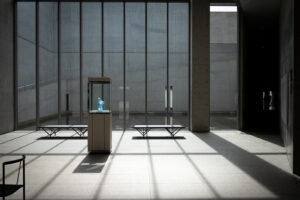
    We would like to present a series of photographs documenting Nariwa Museum (成羽美術館), located in the rural area of Bitchū-Takahashi in Okayama Prefecture, known not only for its vast mountainous landscape and ancient castles, but also for its impressive collection of art museums scattered throughout the prefecture.

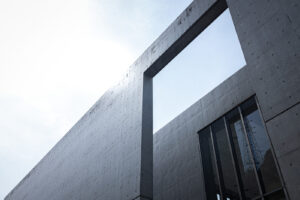
    Completed in 1994, the Nariwa Museum was constructed in honour of the locally born artist Kojima Torajirō1. After a 90-minute journey in the rain departing from Okayama Station, the first thing that struck me upon arriving on site was the peculiarity of its location — I failed to conjure up a better phrase to describe it — literally in the middle of nowhere, there it was. But don’t let the initial cynicism get hold of you so quickly, I thought, and I was right. One may only be able to fathom why once you open up and embrace the museum together with its surroundings.

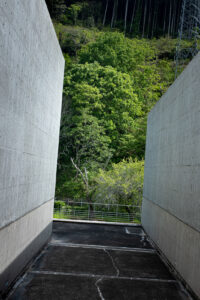
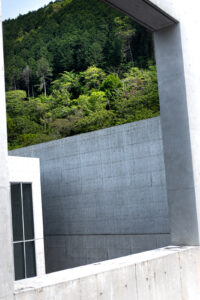
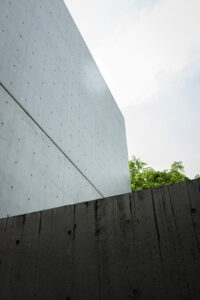
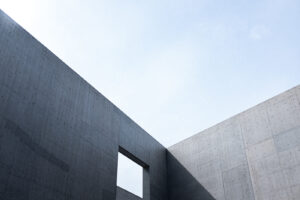
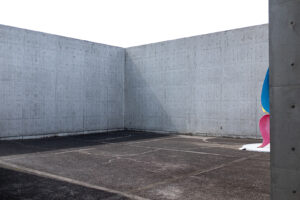
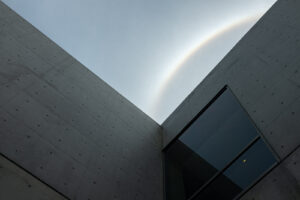
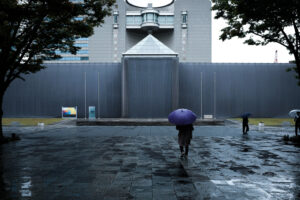
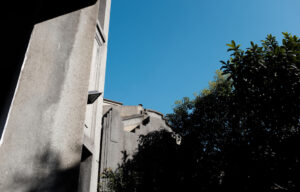
    Walking up a set of stairs upon arrival, the towering unadorned concrete walls of the museum, amplified by the grandiose glass windows, their physical presence would hit you instantly. The sky started to clear up as if the piercing lines of the building’s exterior façade had sliced through the clouds. The architecture is here stating its existence, as though announcing to the visitors who have come a long way that they have come to the right place. It stands tall and firm before everyone, acting as a reminder that this is, in fact, also an area of historical significance and archaeological interest.

    Make no mistake, this is distinctively Tadao Ando2, the industry’s colossal titan, who had probably shaped my earliest impression of modern Japanese architecture — the minimal, the grey, and the sharp edges. However, Ando’s works are never about taking over, on the very contrary, another penetrating theme constantly recurring throughout the master’s works, is the unmasking of the environment enveloping the architecture.

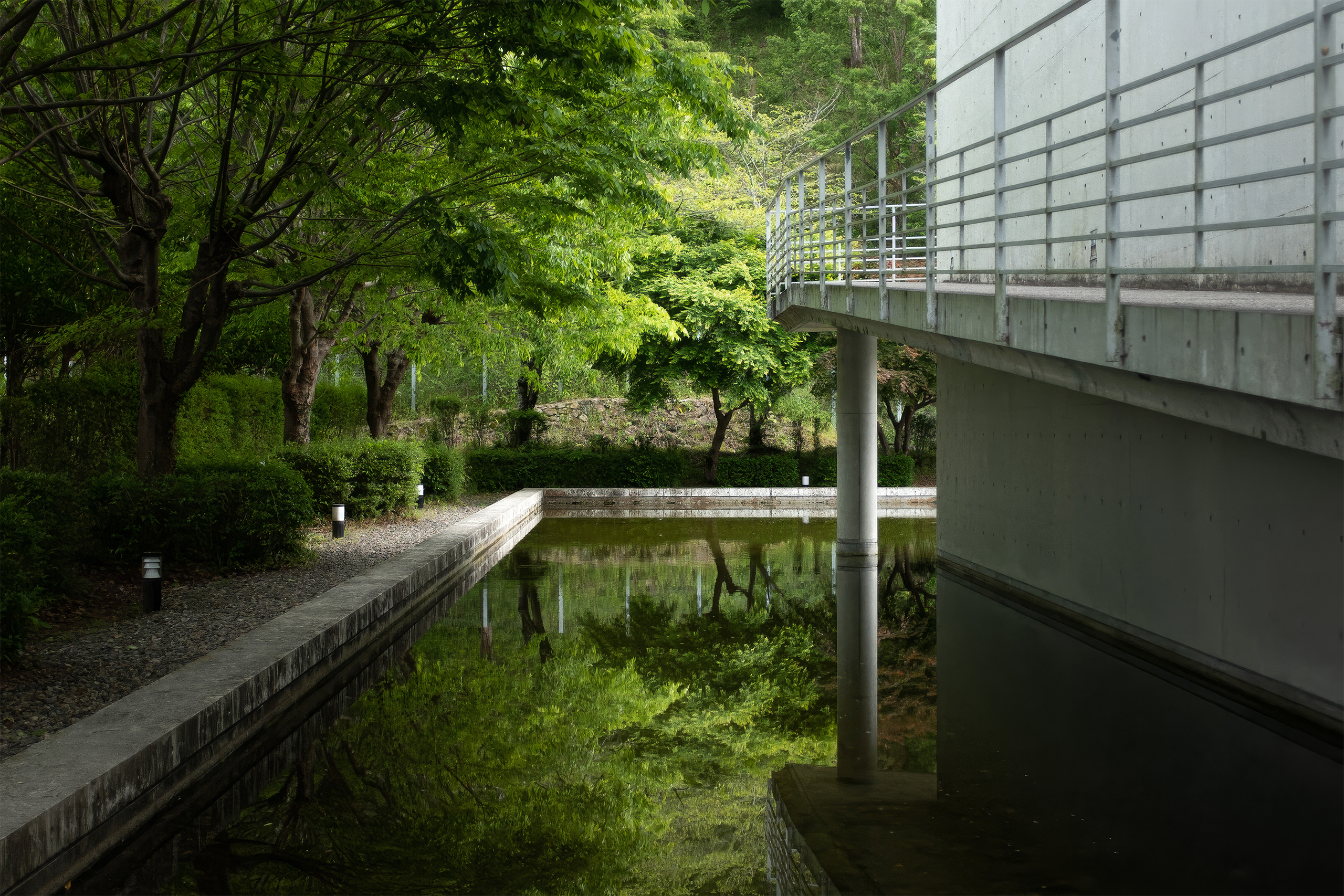
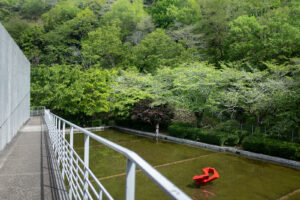
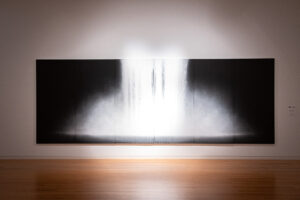
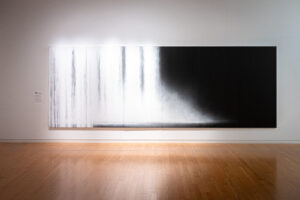
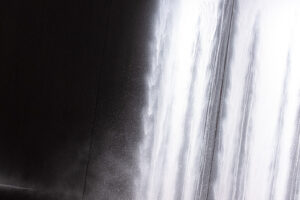
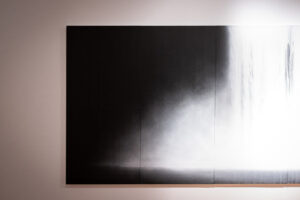
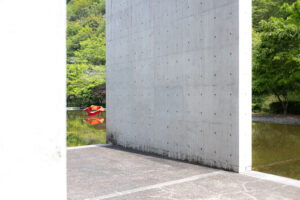
    Whilst at first your gaze would unquestionably gravitate towards the subject in question, as you roam around and listen to this geometric poetry sung by the architecture, shrouded in and elaborated by nature, you begin to see that the building’s hard edges are relieved by the tranquil waters and the verdant, forested mountains. The soft grey of the concrete captures the spring greenery beautifully like a moving painting stirred by the wind. No wonder Hiroshi Senju3, an abstract expressionist and Nihonga (Japanese-style painting) master known for his minimalistic approach and ancient Japanese painting techniques, chose this particular venue to exhibit his works.

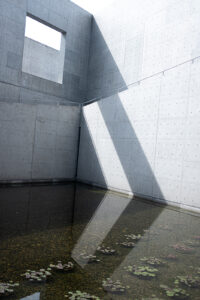
    Once out of the exhibition hall on either floor, you are greeted by an open space encircled by a transitional concrete slope, where the shadows and natural light dance gently upon the still reflection of the water garden — a perfect epitome of the entire museum, I felt.

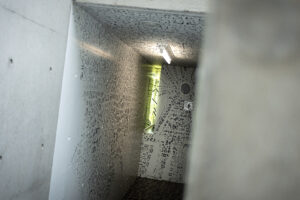
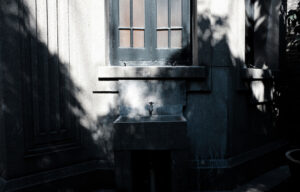
    Situated just a few feet away from the main building, a museum’s public bathroom may, in general, sometimes be neglected by visitors or even the architect, but this was surely not the case at Nariwa. A reprise of the collaboration between Ando and the artist Shuji Mukai (向井修二), in which the latter painted the entire bathroom with his signature “symbols”, reminded me of a book by Jun’ichirō Tanizaki called In Praise of Shadows, which I read during my university years. Not because of the art, but because of its discussion of a traditional Japanese toilet, which Tanizaki described as “a place truly of spiritual repose”.

    The bathroom at Nariwa is most definitely not a traditional one that sits within an impeccable Kyoto temple, but certain parallels can be drawn. It might be strange to call a public toilet “elegant”, but the aesthetic it carries is in perfect harmony with the museum’s architecture. Being partially open, with the rustling leaves and birdsong accompanying you, the experience of going to a public toilet is, apparently, no longer a dreadful one.

    Standing before the running water garden outside, partly enfolding the museum, staring at its crystal-clear reflection, it felt as though mist and fairies would emerge from the rain-soaked soil and the grove of trees. The journey into the middle of nowhere became an escape from the sterility of life during the pandemic and its endless chambers of information, rewarded by the chance to witness this concrete magic.


  • Mind Trail: Day and Dusk — Chapter 1 | Yoshino

    Mind Trail: Day and Dusk — Chapter 1 | Yoshino

    12 December 2020


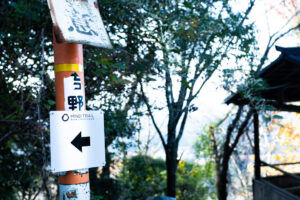
    We would like to present to you a photography essay centring on Mind Trail, divided into three chapters, each focusing on a different location in Nara Prefecture: Yoshino (吉野町), Tenkawa (天川村) and Soni (曽爾村).

    When the world went into lockdown due to COVID-19 back in spring 2020, numerous exhibitions, events and festivals had to be cancelled, the lucky ones were postponed. People were forced to stay home. A lot of things that we used to take for granted in our everyday lives — simple things like eating out, or hopping on a quick flight for a weekend break, the list goes on — and practically everything on that list was gone. What’s worse, this dark cloud hanging above our heads just seemed to refuse to go away.

    It was indeed a particular and yet very strange period, on the other hand, possibly a silver lining amongst it all, it was also a rather enlightening phase for many of us. We’ve seen people take advantage, so to speak, of this opportunity to reflect closely on themselves and sharpen their blades.

    When the first state of emergency in Japan was lifted in May 2020, people were able to go out once again, though still with precautions. Yet just one breath of fresh air felt luxurious and precious enough. Perhaps surprisingly, or perhaps not, people noticeably rediscovered the joy of being out in nature again, be it hiking or camping.

    Taglined “Museum in your mind”, Mind Trail was produced by Seiichi Sato1, the representative of art and design company Rhizomatiks, and curated by Akio Hayashi2 of inVisible. It was an outdoor art festival that took place in the autumn of 2020, utilising the vast, beautiful and brilliant nature of Nara. The intention behind the project, I believe, was extremely simple: if museums are a no-go due to restrictions on mass gatherings and social distancing measures, why not experience art out in the open? It invited people not only to re-examine our relationship with nature itself but also prompted the question of what the definition of art could be.

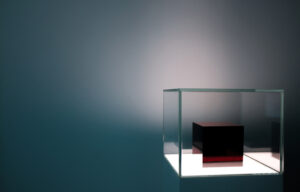
    Is it that oil painting hanging on the wall of the living room? Or is it the intriguing object sitting behind glass on a plinth inside a white-cube space? Or perhaps it’s that curiously looking so-called installation standing in the middle of the common area of an architecture firm’s office?

    In my opinion, although it felt somewhat aligned with Japan’s familiar approach to regional revitalisation through contemporary art, Mind Trail was nonetheless an honest approach and an inspiring project on all grounds, drawing tourists and museum-goers simultaneously, an obvious stimulant to the local economy given the horrible and difficult circumstances everyone was dealing with. Moreover, it offered an alternative to the very established system, that artworks do not necessarily have to be confined to museums or galleries, and that they can be observed and appreciated literally anywhere. It further opened up a dialogue about how the masses could interact with contemporary art and what it can nurture.

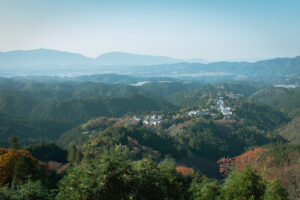
    The first chapter, presented below, focuses on the daytime hike through Mount Yoshino at the peak of autumn, while the second chapter documents the descent from the mountain as dusk gently fell.


  • Yokohama Triennale 2020: Afterglow — Chapter 1 | Yokohama Museum of Art

    Yokohama Triennale 2020: Afterglow — Chapter 1 | Yokohama Museum of Art

    30 October 2020


    We would like to present the first part of a series of photographs documenting the Yokohama Triennale 2020, which concluded not long ago in October. Initially delayed due to the pandemic, the Triennale was an ambitious and challenging undertaking during a particularly difficult period, featuring more than sixty artists, most of whom were not Japanese, posing obstacles not only in communication and logistics, but also in production itself, as one can easily imagine.

    A couple of months before the original opening date, I reached out to the Triennale committee to enquire about the possibility of the fair not happening at all. In return, I received a rather affirmative and reassuring response that nothing would change except for a slight postponement. Much like the Japanese government’s “Go To” campaign, perhaps one of the cleverest or dumbest things a government could come up with, depending on which corner you are in, whether it was wise to encourage domestic travel and stuff hundreds of people into museums amidst a global pandemic, I will not be the judge of that.

    The Triennale, meanwhile, was co-organised by the local government and art foundation alongside The Asahi Shimbun and NHK. Together with the Triennale committee, the sponsor list included banks, real estate corporations, and the usual suspects. Again, whether by and large there was a political motivation behind the whole plot, I will not be the judge of that either. From a creative production perspective, however, it was an incredible feat to pull off under such circumstances. Not to mention that, after being confined to a dreadful period of lockdown, despite being much more relaxing compared with many parts of the world, people simply wanted to go out and experience things again.

    Sentiment noted — here came the Triennale.

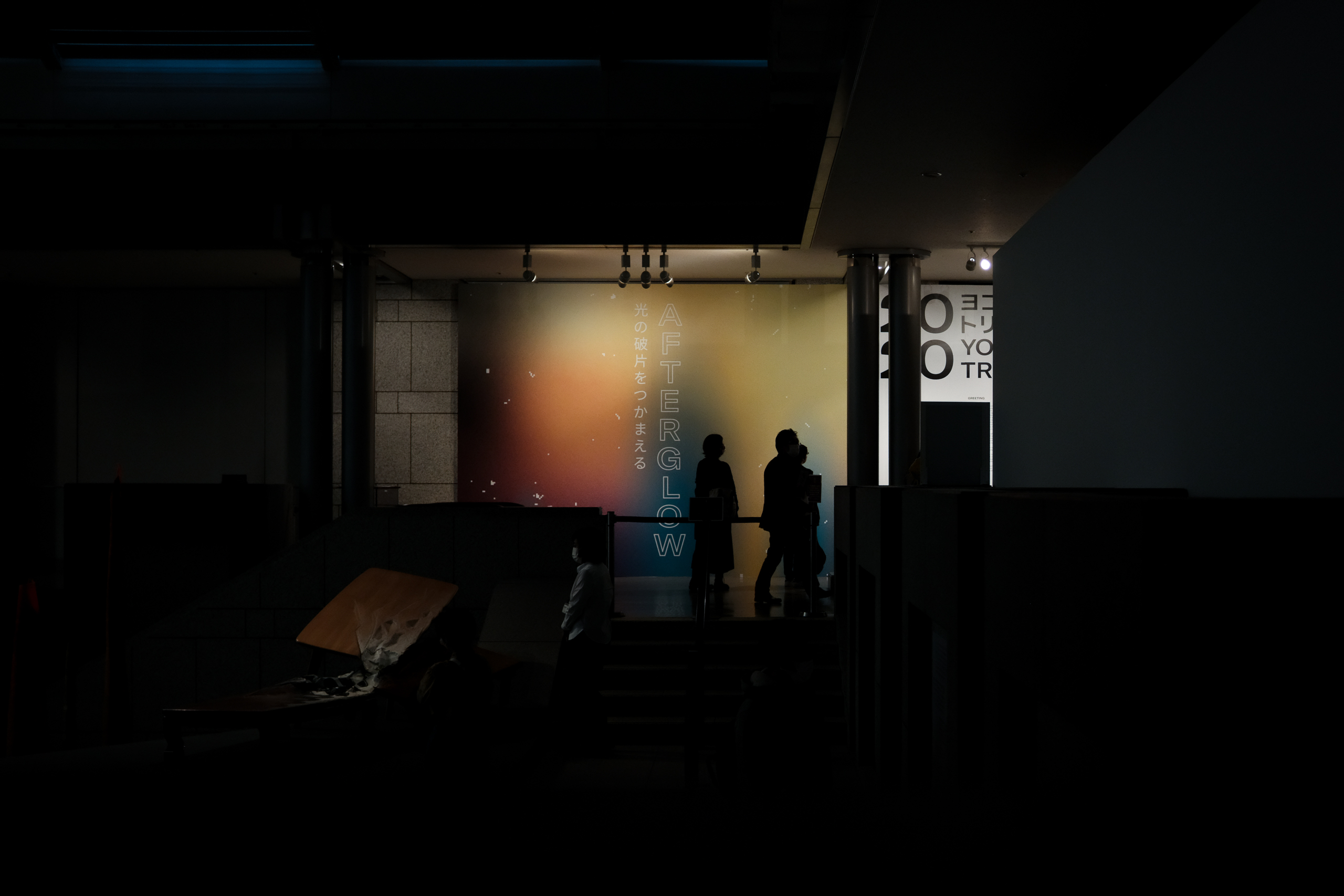
    Setting foot once more in Kanagawa Prefecture, generally considered the second most populated area in Japan, to the south of Tokyo, an industrial port no more, the city of Yokohama has been busy transforming itself into an international and creative hub for the past two decades. Since its initial launch in 2001, the Triennale has unquestionably played a major role in bridging cultures, while redeveloping and reshaping the city’s artistic landscape. This year’s edition was hosted across the Yokohama Museum of Art, PLOT 48 — formerly the Anpanman Children’s Museum & Mall, as well as the NYK Maritime Museum. Artistically directed by Raqs Media Collective, the Triennale was titled Afterglow, a somewhat romantic and poetic name given by the New Delhi–based trio, as if resembling a silver lining among a mass of dark clouds floating overhead.

    But was it really?

    Granted, the Triennale had most definitely been planned long before the pandemic and chaos struck, when things were relatively simpler, when people could roam around freely without the obligation to wear a mask. Whatever the curators were set out to achieve originally, inevitably, it had to be readjusted under the current climate, and whatever justification and reinterpretation the title Afterglow later came to embody, often felt like an exercise in wordplay. Throughout my eight hours of art-viewing across two venues, something did not sit quite right. The feeling lingered like a bad hangover, something felt inherently disconnected, out of context even.

    This is not to say the works presented lacked interest or were not thought-provoking. There was no shortage of head-scratching as well as nodding moments. Numerous works served as reminders that we are, in fact, living in a world of transience now. It touches upon history and lost memory, not shying away from confronting political, social, cultural, and sexual matters, questioning the meaning of objects, while spaces themselves were transformed into something rather spectacular. Even the directors themselves were non-Japanese for the first time in the history of the event, and audiences undoubtedly all got their fair share of Instagrammable installation photographs — it ticked almost every box.

    Yet for some reason, something just didn’t sit right. Perhaps it was due to the fact that I still had to pay every bit of attention to the virtually non-existent social distancing despite the museum’s best efforts. Perhaps it was that the audiences, while being as cautious as they could, still had to cram themselves in front of the artists’ statements, aspiring to understand the works. And perhaps it was the constant sanitising of hands, or simply, the pain of photographing through a viewfinder while wearing a mask.

    That detestable feeling escalated after making my way down to the satellite venue PLOT 48 in the pouring rain. Inside the building, up the stairs, there was an exhibition primarily concerning shrimps, or lobsters and whatnot. On another day, I might have found it amusing, but at that moment one could not help but wonder whether there might have been alternative ways to suffocate ourselves besides moving from one dark room to another, hoping to extract something out of those endless video pieces. Was this really what we needed while half the world has gone to shit, or was this ultimately an innocent escape from the upheaval for us all?

    For the second and third parts of the photography series, please follow the respective links.


  • Juxtaposition — Chapter 1 | Taipei Fine Arts Museum

    Juxtaposition — Chapter 1 | Taipei Fine Arts Museum

    28 February 2020


    We would like to present a series of visual documentation juxtaposing photographs taken from three exhibitions hosted at the Taipei Fine Arts Museum earlier in 2020, namely Moving Ink featuring Tong Yang Tze1, The Serenity of Madness / 狂中之静 featuring Apichatpong Weerasethakul2, curated by Gridthiya Gaweewong and produced by Independent Curators International (ICI); as well as Island Tales: Taiwan and Australia / 小說: 雙城計劃, curated by Chien Cheng-yi3. The visual documentation is divided into two chapters, and the photographs are not presented in any particular order of importance. Other highlighted works in the series include the likes of Disembodied Posture by Yi-Ting Wang. For the second chapter of the series, please follow the link.

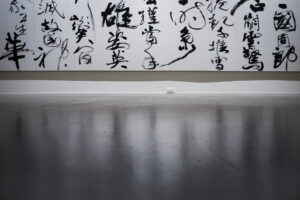
    Tong Yang Tze’s calligraphic works are broadly considered modern. The Shanghai-born Taiwanese calligrapher uses the art form as a medium of creative expression, meaning most of the characters are predominantly unrecognisable despite being written in Chinese characters, or kanji (漢字) in Japanese. Differing from traditional calligraphy, where much of the practice serves a purpose — be it educational or religious — modern calligraphy, on the other hand, rids itself of functionality.

    The foundations of the form, however, such as brushstroke technique, ink application, structure, and composition, remain consistent and are nonetheless heavily emphasised. In a way, the modern method becomes an abstract deconstruction and reconstruction of the traditional form, expanding the horizons of calligraphy while evolving to adapt to contemporary times.
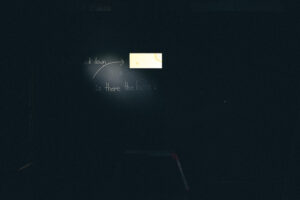
    The video artworks of the internationally acclaimed and award-winning artist and filmmaker Apichatpong Weerasethakul are perhaps more familiar to many of us. Born in Thailand and educated in the US, Weerasethakul’s works resist easy comparisons drawn between the modern and the traditional. They often come across as mythical and quintessentially, experimental. Yes, they can feel highbrow, like much of contemporary art, and yes, at times they can be hypnotising too. My personal advice is to stay focused and stay curious because, in this case, you are about to enter the artist’s subconsciousness, an invitation handed over by the curator.
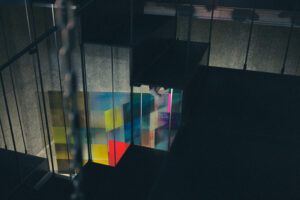
    Take your first step carefully, because the entire exhibition is pitch-black. Once you begin to explore, you encounter surreal visuals accompanied by momentary sound and atmospheric lighting, almost as if they were all escorting you into a dreamlike state. Nearly palpable, you experience a narrative woven by the artist, interlacing fragments of his personal memories with spiritual and religious elements. As you continue to wander, his most intimate world gradually unfolds. You find traces of his American upbringing, and glimpses of his relationships with those closest to him are quietly revealed. Towards the end, more recent works addressing the social issues of his country of birth are also exhibited.
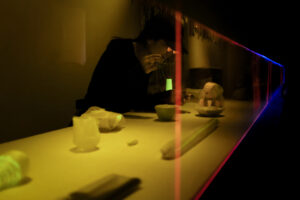
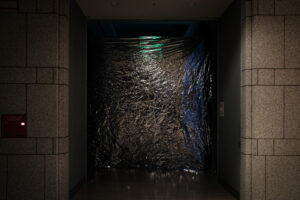
    The final remaining exhibition features tales of Taiwan and Australia. Taipei and Perth are probably not cities you would instinctively pair together under many circumstances, but it turns out that this year marks the 20th anniversary of their city-to-city friendship. I couldn’t tell you exactly what that truly signifies, but hey, 20 years is a long time, and what better way to celebrate than with an art exhibition? Rather than sailing towards the historical truths or geographical magnificence of the two islands, the exhibition tells stories of reimagined fantasies where you embark on this imagined journey set somewhere between Taipei and Perth, past and present, paved by the curator along with 13 artists.

    You hear whispers, learn of fictions and personal memoirs, and find yourself entertained by insignificant trivia and the most private matters. What else do you see? An ingenuous encounter or illusory daydreaming? This journey unequivocally reminds you of your own tales, even for an outsider like myself.


  • Aftermath | Shanghai Gallery of Art

    Aftermath | Shanghai Gallery of Art

    30 January 2020


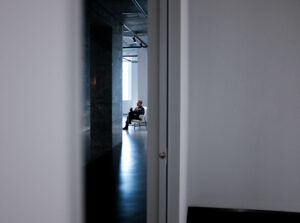
    Hidden away on the third floor of a massively monumental neoclassical building on the Bund1, you are almost guaranteed to miss the Shanghai Gallery of Art the first time around. Upon backtracking your steps and eventually arriving at, presumably, the building’s entrance on a side street, you are met by madams in extravagant dresses and heels, chefs chatting and puffing in white uniforms, tourists and locals dashing in and out. This can’t possibly be an art gallery that means serious business, can it?

    How wrong I was.

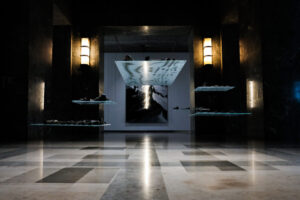
    After a few moments of confusion and frustration, and, of course, a short elevator ride, it felt as though I had landed on another planet. Arriving at the doorway to the space, I was immediately struck by the soaring ceilings. I am almost certain that the human brain is wired to be impressed by such interiors, a sense of history and grandeur never fails. Unexpected, too. It is not the sort of space you could casually chance upon, not even in Europe.

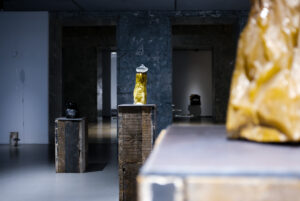
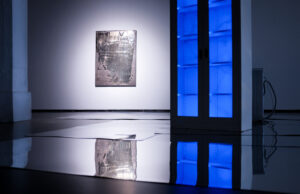
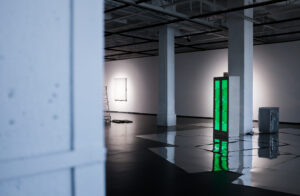
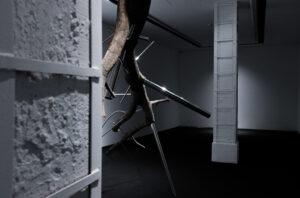
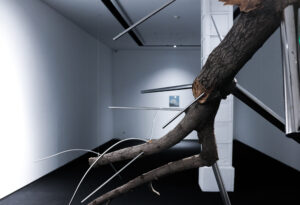
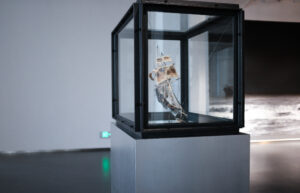
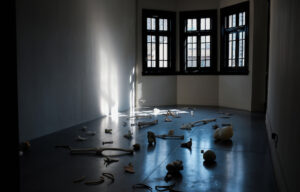
    Wrapped up earlier this January 2020, shortly after the New Year, the exhibition Aftermath / 余波, curated by nrm, brought together works by Gao Weigang2 and Michael Joo3, evoking a daunting yet strangely calm post-apocalyptic ambience. Rather than painting a crumbling dystopian world familiar from science-fiction films or Japanese anime, the exhibition centres on the end of civilisation and consumption: what remains of a society, and what history entails. Fragile objects engraved with forgotten stories assume peculiar new forms and are deliberately scattered throughout the space.

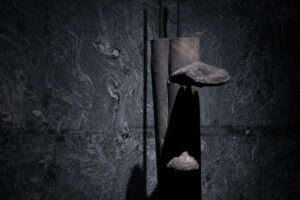
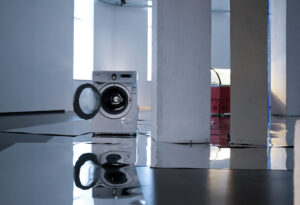
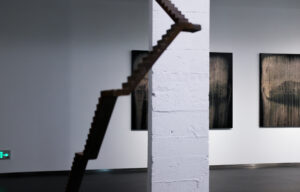
    Perhaps one of the most intriguing aspects of the exhibition was its diverse presentation of materials. Seemingly ancient wooden plinths lean against magnificent marble walls, with silver nitrate paintings and carbonised mushrooms, whatever those are. Everyday household appliances and even plastic shopping bags seem to have undergone strange evolutionary phases, acquiring grotesque features and eccentric behaviours, as though they had become living organisms in their own right.

    The exhibition questions our perception of permanence and resurrection. Where might our contemporary notions of beauty ultimately lead when the world as we know it comes to an end?

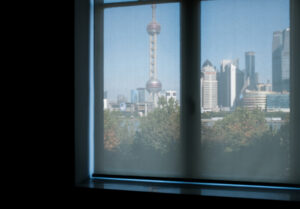
    Looking out from the gallery windows, the iconic Oriental Pearl Tower4 stood tall and assured in Lujiazui5, or Lokatse in the Shanghai dialect — the largest financial district on mainland China, dominating Shanghai’s skyline and presenting a stark contrast to the stranger world imagined by the artists and curators within.

    A curious aftermath indeed.

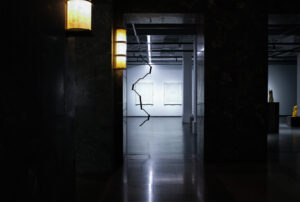
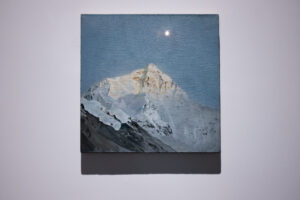
    Make no mistake, though, it was undeniably a dystopia inside, when you see metal pipes sprouting from wooden branches and hanging ominously from above. Yet beyond the distant mountain peak, a glimmering light was beaming with hope, signalling the persistence of humanity and some degree of optimism. Given the world’s current state of chaos and disorder, that is surely something we can all reach for, and perhaps even hold on to.


  • Shanghai: OCD | Rén Space

    Shanghai: OCD | Rén Space

    21 December 2019


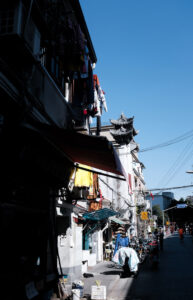
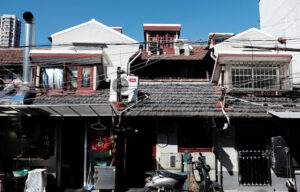
    Shanghai, long dubbed the “Demon City” (魔都) by Chinese netizens, is said to have inherited the name from a 1924 novel by Shōfu Muramatsu1. Right in the heart of this colossal and spellbinding demon sits Huangpu (黄埔), home to the Bund, Nanjing Road, the old concessions, City God Temple, Yu Garden, the Peace Hotel2, and rows upon rows of shikumen3 houses wedged between luxury towers and department stores. Doesn’t matter whether you are a tourist or a local, chances are you will never miss the great Huangpu. It is old and theatrical, extravagant and exhausted — you get the idea. It is a district where Shanghai endlessly performs itself, and one of the most expensive and prestigious places to live anywhere in China.

    And yet, hidden within Huangpu, there is this small pocket of area known as Xiaonanmen (小南门), quite literally “Small South Gate”, which lies just west of the Huangpu River that cuts through the city, like the Hudson along Manhattan.

    Venturing into a mist of the forgotten, the moment you step out of the metro station, as if you have just crossed time, immediately you begin to smell an air so drastically different from the rest of the city. All sights of those insane glassy real-estate developments disappear, along with them trendy influencers and their slinging fanny packs, and all the Chanels, the Louis, and those fine French delicacies are simply no more.

    Here, it’s all about the everyday lives of ordinary people. You are back in the olden days, almost as if the area itself has refused to evolve and would rather cling on to the past, each brick and every road is imprinted with layers and layers of memories and histories. You’ve perhaps already seen it on Instagram: an old geezer sitting on a camp stool by the road beneath a crumbling wall, cigarette in one hand, slowly inhaling and puffing, looking completely stoic, like someone who has already lived through enough shit to know there is no point giving a shit anymore, absolutely unfazed by everything happening around him. Yes, these fellas exist here without performance.

    Located within close proximity to Xiaonanmen’s textile and flea markets, right after gracing upon a cluster of ageing shikumen houses, with laundry flying on wires above your head and motorcycles occasionally roaring past, Rén Space (仁庐) is a contemporary art gallery housed inside a century-old Western-style mansion (洋房). After decades of witnessing the curses and triumphs of civilisation, and surrounded by a city obsessed with demolition and reinvention, the building has somehow managed to survive, still standing tall today against all vicissitudes and calamities.


    An Annual Report of OCD / 关于强迫症的年度报告 is a solo exhibition by Zhang Peili 张培力4, hosted by Rén Space. Despite its title, it is less an attempt to examine a mental or psychological disorder than an endeavour to explore the uneasy human condition and the relationship between oneself, and the self, from the perspective of the self, adopting both digital and physical approaches simultaneously, Zhang transforms himself, into the exhibits.

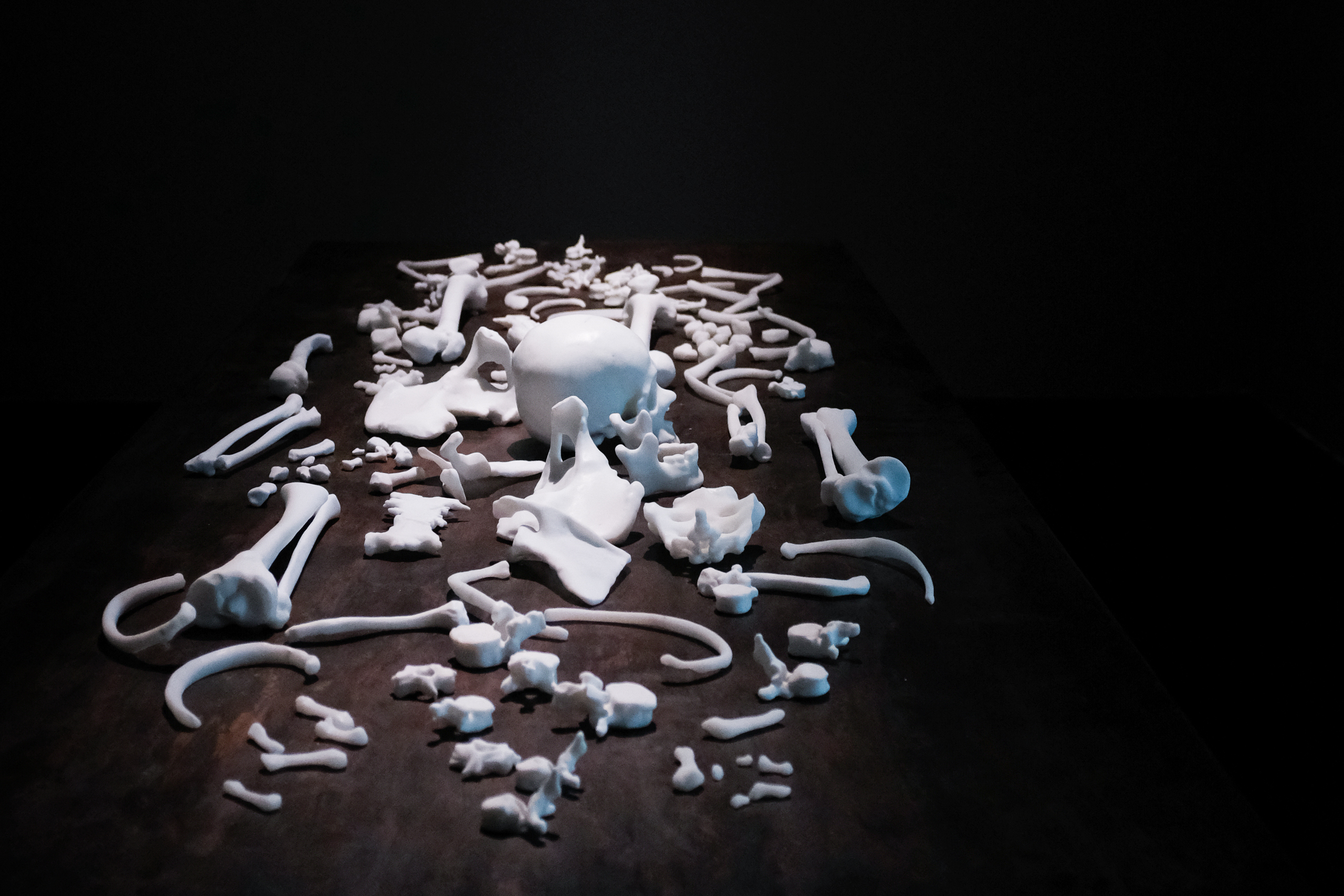
    Call it narcissistic, but aren’t we all guilty? In some bizarre way, the artist exploits himself, extracting and converting elements of the human body — in this case, his own — into sculptural fragments and digital projections accompanied by lighting installations. Presented within a setting where modernity meets tradition, the outcome is quite something else.

    One could not help but be reminded of Ghost in the Shell5 and confront the same questions whilst treading carefully through the exhibition: when every bit of flesh and bone is removed, what remains of the self? As technology advances like never before, blurring the line between reality and simulation, how do we even define “real” anymore? This gruesome torrent marches forward, crushing everything in its path, and where does that leave us? Where do our consciousness, personality, and memory come into play when all our bodily parts cease to exist? And eventually, there is that perennial forever-old question of what makes us human after all.

    While I was at the space, I was glad to stumble upon other exhibition-goers, people who had actually made their way out of the regular art zones during fair season to discover something else the city had to offer. I guess that’s the only reason we were all here, that we were all just tired of the same old shit, of every city slowly becoming homogenised and almost interchangeable.

    According to some locals, demolition plans for this part of Shanghai had been circulating for well over a decade, only now being forced into an accelerated trajectory that seems beyond the point of no return. I’ve heard cute stories from now-grown adults describing how they used to go on dates with their young loves here, queueing up for cheap, humble breakfasts, wandering alleyways late into the evening, growing up alongside streets that now seem destined to be flattened and rebuilt, one day gobbled up by the Mind Flayer. Perhaps, when that happens, when all of that is finally torn down, what remains for them will be nothing more than a vague recollection, dimming a little with each passing year, occasionally brought back to life at the dinner table for a brief few seconds before eventually evaporating with all the roads and houses, like all flesh and bone slowly rotting away into ash.

  • Shanghai: Perpetual Present | HOW Art Museum

    Shanghai: Perpetual Present | HOW Art Museum

    14 December 2019


    When I visited the exhibition in November 2019, I had no idea who Daniel Arsham was. True, that probably only highlighted nothing but my own ignorance, but in my defence, my justification would be that the world is too big and there are too many names, so what can I say.

    But hold on.

    The second I stepped into the exhibition hall, without even flipping open the exhibition leaflet, there was that “ah-ha” moment. Turns out I wasn’t all that ignorant after all. Of course I had seen his works before, it simply never bothered me enough to look up the name, hence no correlation was drawn.

    You know sometimes when you see something every now and then, so often that, you kind of just want it out of your face, Frida Kahlo, or the Kardashians, for instance. But I suppose when the fame of a certain individual reaches somewhere bordering on pandemic level, there is no escape, whether you want it or not.

    So there I was.

    Back in a time when we were still safe and free to hop on any flight without worrying about certificates, documents, health declarations and all, straight after landing in Shanghai from Nagoya (名古屋), I found myself setting foot in HOW Art Museum (昊美术馆) for the very first time.

    Opened in 2017, the museum sits on the outer skirt of the city, east of Pudong1, away from much of the hustle and bustle. The area itself was largely industrial only a decade earlier, but with the backing of a centralised government, paired that up with the arrival of Disneyland, things began to change. “Emerging” would probably be the right word to describe it.

    Emerging it is.

    A word that has been synonymous with both China and Shanghai for quite some time now, although some may consider that the latter has long since “emerged” already. Both have undergone dramatic and drastic transformations, not only in terms of urban development and infrastructure, but more significantly, in the mindset of the people.

    Perhaps driven by wealth, perhaps by social media frenzy, as more and more of them climb up the social ladder entering a newly formed bourgeois state, armed with international outlooks and growing cultural awareness, the art and design sector, has gone only one way. The undisputed bull’s-eye of the country’s art arena, has experienced tremendous growth in both demand and supply, so remarkable that, while comparable developments can be observed elsewhere in the world, few have matched the scale, speed, and intensity.

    Entering HOW.

    What could possibly be better than yet another contemporary art museum stuffed with international huge-name artists and designed to engage a young, selfie-hungry horde? Owned by an art-loving real-estate tycoon, the institution’s vision is, and I quote: “HOW is a place in which art and space interact quite naturally… It’s about developing a lifestyle and hosting exhibitions that connect to young people.”

    Fair enough.

    Sat next to a supposedly luxury hotel, boasting a MoMA2-inspired gift shop selling artists’ merchandise and a never-can-go-wrong trendy café, the whole setup embodies such a particular lifestyle that any young kid could aspire to — it’s not about experiencing art, it’s about the whole package.

    It’s curious, however, when you read a statement like that, it makes you wonder whether those faceless executives or half of the internet in fact, suffer from paedophilia-alike syndrome. I’ve personally never really quite understood the marketers’ forever old obsession with chasing after the “young people” like they are some dragons and phoenixes.

    Why not appeal to your mother or grandfather? What exactly is wrong with someone old-er? They have the time, they have the means, and I’m sure as hell most of them are still eager to learn. Being old is not equivalent to becoming oblivious, or dead, right?

    Is it because most of them are wise enough not to fuck around on social media and therefore no free ads for the brands and whatnot, I can’t tell, but it’s always the young, the millennial, the Gen-Z and the alphas that these people must appeal to, how has this not been killed in the boardroom already.

    Anyway, Perpetual Present, that is the name.

    Whether this is an exhibition title drafted up by the marketing department or the artist’s studio, it is full of ingenuity. It’s so precise, in just two words, it wraps up Arsham’s aesthetic language and conceptual ideal, creating an epitome so alluring and poetic, yet perfectly apt, for the age of social media.

    As for the exhibition itself, you would come across familiar terms and phrases such as, ahem, “ambiguity crystallisation”, “blurring the boundaries between present and future”, “interactive artworks that engage audiences”, and my personal favourite, “disrupting the linearity of time”. Seriously, by now, if you are still scratching your head over these seemingly inscrutable and indecipherable words, usually found on museum and gallery walls, honestly, you are fine, even if you are not some modern-day cultural globetrotting warrior. The problem with this art-speak language, as it appears in artist and exhibition statements over and over again, is not the vocabulary itself. Rather, when writers substitute these words for something precise, the words lose almost all their weight and bearings and become practically meaningless.

    But let’s come back to the exhibition.

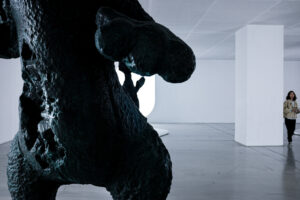
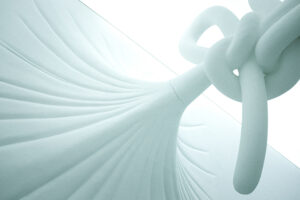
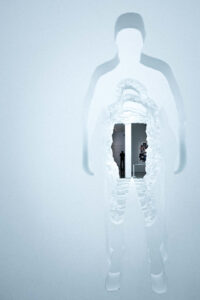
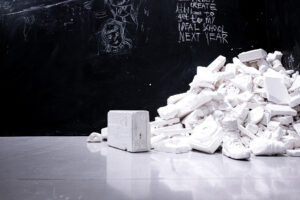
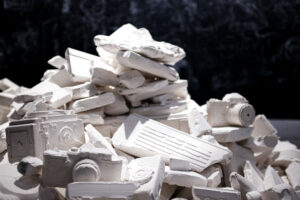
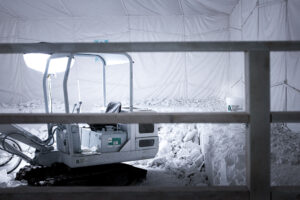
    Meet Arsham’s most iconic works, all stamped with his symbolic, signature language of decay and temporal confusion. You move past gigantic bronze pop-art sculptures one after another, enter a somewhat futuristic excavation site littered with objects unquestionably belonging to the present day, and of course, you would also encounter the large plaster knot bridging two facing walls, which has probably shown up in your Instagram feed a thousand times, so often that seeing it in person might strangely feel like scrolling past it again.

    There goes the whole shebang.

    And what’s more, you could even get a taste of his celebrity status — a quick glance at Arsham’s long list of prominent collaborators, including Pharrell Williams and Dior, and you will sort of think, the guy has pretty much made it.

    Not only has he exhibited similar works all over the world, without having reached the age of 40, if I may also add, but when this solo exhibition greeted the beloved art-loving crowd in Shanghai, at a neatly designed, 3-story contemporary art museum, concurrently, a Joseph Beuys3 exhibition was taking place on the floor above (which I’m sure the Beuys representative okayed it). For me, that carries enormous weight. Being named one of the world’s Top 100 Influencers by Hypebeast4, on the other hand, carries marginally less, it remains a powerful signifier nonetheless.

    This romantic image of the poor and starving artist, surviving on dirt while living in a shithole without a roof, is no more. They are the rock stars of our contemporary culture, selling blockbuster tickets for museums and galleries. They are the KOLs with millions of followers on whatever social media platforms. They are cultural supernovas who transcend the boundaries of the art world.

    Then you have the collaborations.

    When you see Arsham’s cringe-worthy “collab” with Pokémon (apparently IKEA is next), your eyes are probably rolling into the back of your head already, and you don’t even need to be that cynical. Honestly, it is hard not to feel ambivalent, even lethargic, and at times, it feels as if the artist has been whoring out his own name one way or another, regardless of whatever motives may lie behind all these sham marriages. It’s evident that he’s more concerned with cashing in, than selling out, and, to be fair, there’s nothing wrong with that.

    Arsham has deftly constructed a visual identity so strong that this cult-like following surrounding his work almost feels well-earned. As a spectator, this is not to stand on moral high ground preaching that artists should never mingle in the game of money play, that they should always be burdened with social responsibility before quietly dying in a ditch. At a time when every marketer seems desperate to court the young, I simply wish someone like him could stray from the path that lowers himself to becoming another Supreme. In a cultural landscape already so saturated with commercial cacophony, perhaps the guy could challenge himself slightly further and conjure up something a little bit stranger, a little riskier and more magical for the kids.

    As Jian DeLeon5 once said, “We have to feed the kids fruits and vegetables; it’s not hard feeding them junk food.” An eroded Pokémon (or IKEA for that matter)? Surely, we can do better than that.