21 December 2019
Shanghai, long dubbed the “Demon City” (魔都) by Chinese netizens, is said to have inherited the name from a 1924 novel by Shōfu Muramatsu1. Right in the heart of this colossal and spellbinding demon sits Huangpu (黄埔), home to the Bund, Nanjing Road, the old concessions, City God Temple, Yu Garden, the Peace Hotel2, and rows upon rows of shikumen3 houses wedged between luxury towers and department stores. Doesn’t matter whether you are a tourist or a local, chances are you will never miss the great Huangpu. It is old and theatrical, extravagant and exhausted — you get the idea. It is a district where Shanghai endlessly performs itself, and one of the most expensive and prestigious places to live anywhere in China.
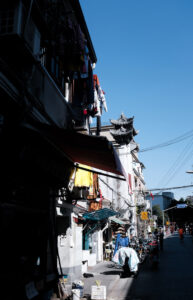
And yet, hidden within Huangpu, there is this small pocket of area known as Xiaonanmen (小南门), quite literally “Small South Gate”, which lies just west of the Huangpu River that cuts through the city, like the Hudson along Manhattan.
Venturing into a mist of the forgotten, the moment you step out of the metro station, as if you have just crossed time, immediately you begin to smell an air so drastically different from the rest of the city. All sights of those insane glassy real-estate developments disappear, along with them trendy influencers and their slinging fanny packs, and all the Chanels, the Louis, and those fine French delicacies are simply no more.
Here, it’s all about the everyday lives of ordinary people. You are back in the olden days, almost as if the area itself has refused to evolve and would rather cling on to the past, each brick and every road is imprinted with layers and layers of memories and histories. You’ve perhaps already seen it on Instagram: an old geezer sitting on a camp stool by the road beneath a crumbling wall, cigarette in one hand, slowly inhaling and puffing, looking completely stoic, like someone who has already lived through enough shit to know there is no point giving a shit anymore, absolutely unfazed by everything happening around him. Yes, these fellas exist here without performance.
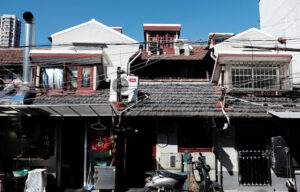
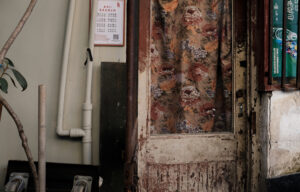
Located within close proximity to Xiaonanmen’s textile and flea markets, right after gracing upon a cluster of ageing shikumen houses, with laundry flying on wires above your head and motorcycles occasionally roaring past, Rén Space (仁庐) is a contemporary art gallery housed inside a century-old Western-style mansion (洋房). After decades of witnessing the curses and triumphs of civilisation, and surrounded by a city obsessed with demolition and reinvention, the building has somehow managed to survive, still standing tall today against all vicissitudes and calamities.
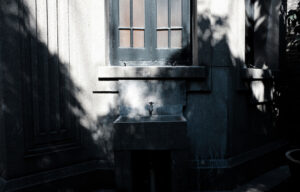
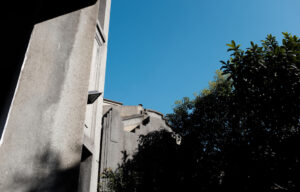
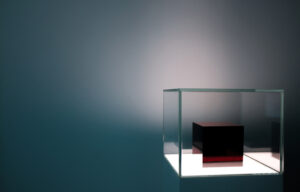
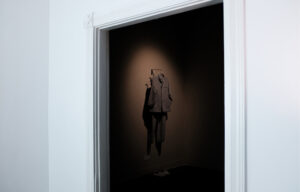
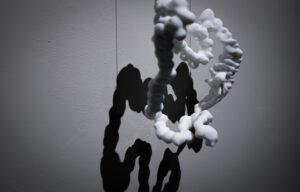
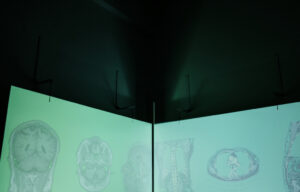
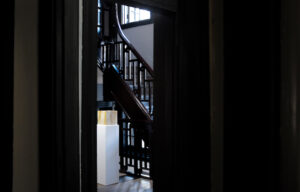
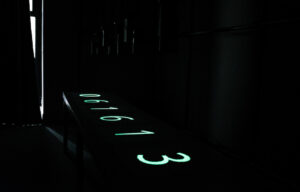
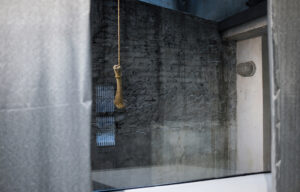
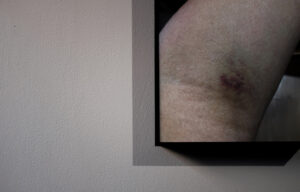
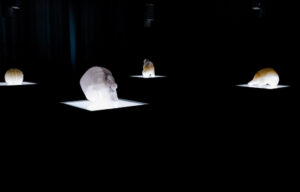
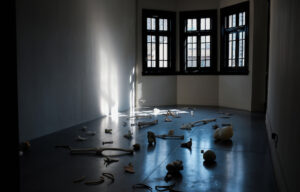
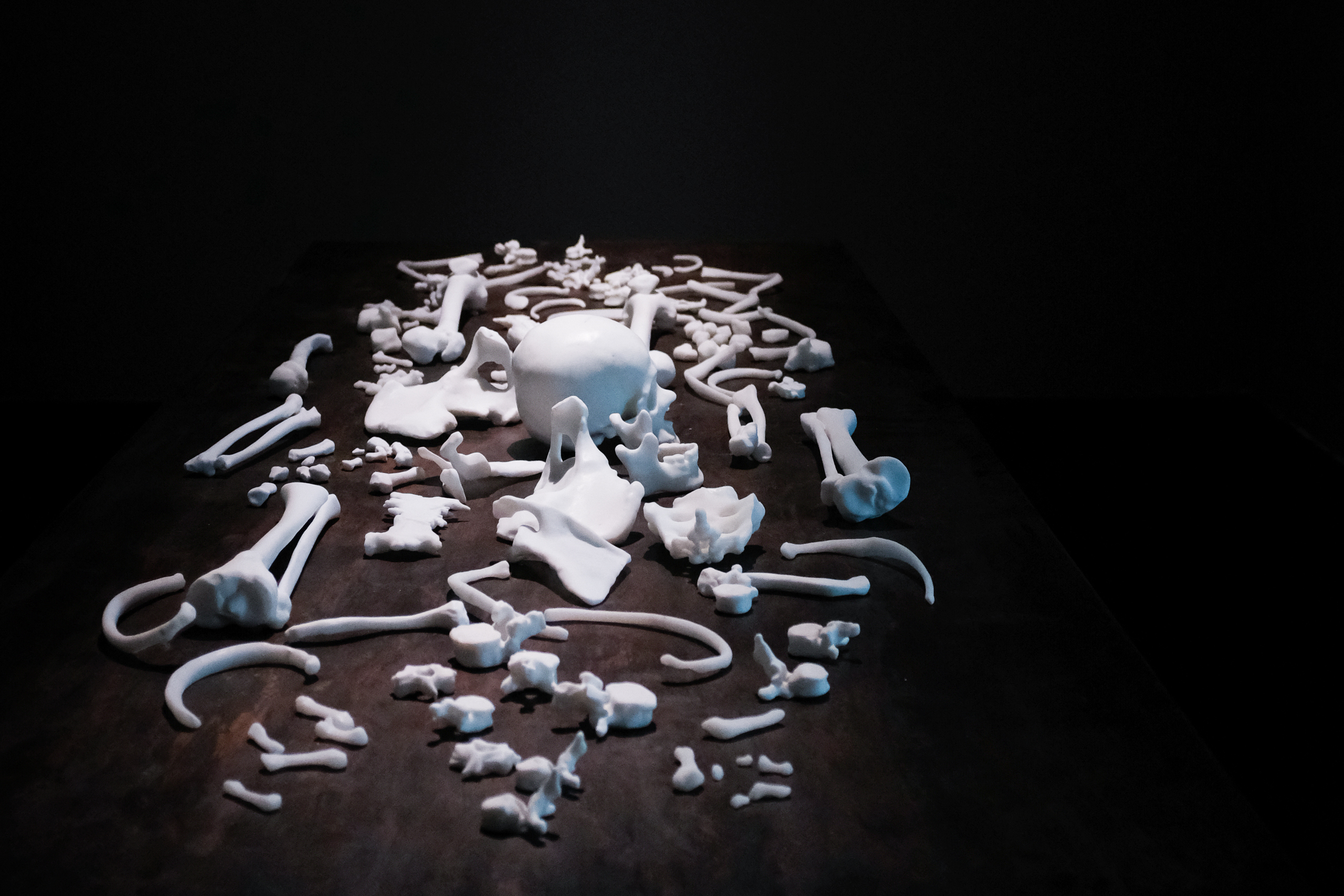
An Annual Report of OCD / 关于强迫症的年度报告 is a solo exhibition by Zhang Peili 张培力4, hosted by Rén Space. Despite its title, it is less an attempt to examine a mental or psychological disorder than an endeavour to explore the uneasy human condition and the relationship between oneself, and the self, from the perspective of the self, adopting both digital and physical approaches simultaneously, Zhang transforms himself, into the exhibits.
Call it narcissistic, but aren’t we all guilty? In some bizarre way, the artist exploits himself, extracting and converting elements of the human body — in this case, his own — into sculptural fragments and digital projections accompanied by lighting installations. Presented within a setting where modernity meets tradition, the outcome is quite something else.
One could not help but be reminded of Ghost in the Shell5 and confront the same questions whilst treading carefully through the exhibition: when every bit of flesh and bone is removed, what remains of the self? As technology advances like never before, blurring the line between reality and simulation, how do we even define “real” anymore? This gruesome torrent marches forward, crushing everything in its path, and where does that leave us? Where do our consciousness, personality, and memory come into play when all our bodily parts cease to exist? And eventually, there is that perennial forever-old question of what makes us human after all.
While I was at the space, I was glad to stumble upon other exhibition-goers, people who had actually made their way out of the regular art zones during fair season to discover something else the city had to offer. I guess that’s the only reason we were all here, that we were all just tired of the same old shit, of every city slowly becoming homogenised and almost interchangeable.
According to some locals, demolition plans for this part of Shanghai had been circulating for well over a decade, only now being forced into an accelerated trajectory that seems beyond the point of no return. I’ve heard cute stories from now-grown adults describing how they used to go on dates with their young loves here, queueing up for cheap, humble breakfasts, wandering alleyways late into the evening, growing up alongside streets that now seem destined to be flattened and rebuilt, one day gobbled up by the Mind Flayer. Perhaps, when that happens, when all of that is finally torn down, what remains for them will be nothing more than a vague recollection, dimming a little with each passing year, occasionally brought back to life at the dinner table for a brief few seconds before eventually evaporating with all the roads and houses, like all flesh and bone slowly rotting away into ash.