12 December 2020
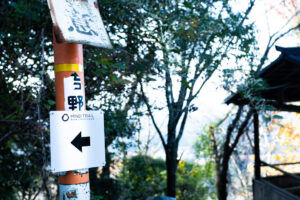
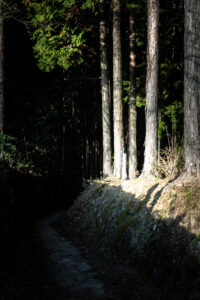
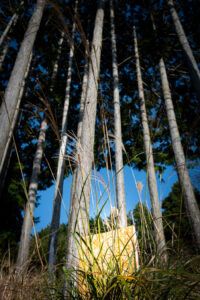
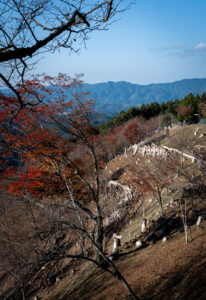
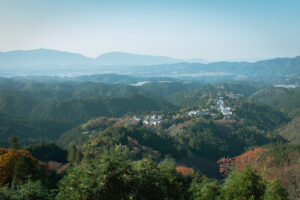
We would like to present to you a photography essay centring on Mind Trail, divided into three chapters, each focusing on a different location in Nara Prefecture: Yoshino (吉野町), Tenkawa (天川村) and Soni (曽爾村).
When the world went into lockdown due to COVID-19 back in spring 2020, numerous exhibitions, events and festivals had to be cancelled, the lucky ones were postponed. People were forced to stay home. A lot of things that we used to take for granted in our everyday lives — simple things like eating out, or hopping on a quick flight for a weekend break, the list goes on — and practically everything on that list was gone. What’s worse, this dark cloud hanging above our heads just seemed to refuse to go away.
It was indeed a particular and yet very strange period, on the other hand, possibly a silver lining amongst it all, it was also a rather enlightening phase for many of us. We’ve seen people take advantage, so to speak, of this opportunity to reflect closely on themselves and sharpen their blades.
When the first state of emergency in Japan was lifted in May 2020, people were able to go out once again, though still with precautions. Yet just one breath of fresh air felt luxurious and precious enough. Perhaps surprisingly, or perhaps not, people noticeably rediscovered the joy of being out in nature again, be it hiking or camping.
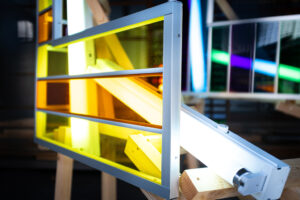
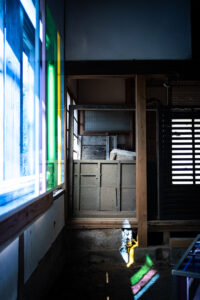
Taglined “Museum in your mind”, Mind Trail was produced by Seiichi Sato1, the representative of art and design company Rhizomatiks, and curated by Akio Hayashi2 of inVisible. It was an outdoor art festival that took place in the autumn of 2020, utilising the vast, beautiful and brilliant nature of Nara. The intention behind the project, I believe, was extremely simple: if museums are a no-go due to restrictions on mass gatherings and social distancing measures, why not experience art out in the open? It invited people not only to re-examine our relationship with nature itself but also prompted the question of what the definition of art could be.
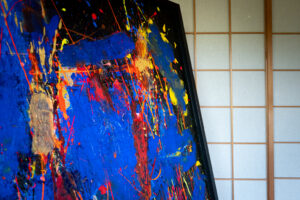
Is it that oil painting hanging on the wall of the living room? Or is it the intriguing object sitting behind glass on a plinth inside a white-cube space? Or perhaps it’s that curiously looking so-called installation standing in the middle of the common area of an architecture firm’s office?
In my opinion, although it felt somewhat aligned with Japan’s familiar approach to regional revitalisation through contemporary art, Mind Trail was nonetheless an honest approach and an inspiring project on all grounds, drawing tourists and museum-goers simultaneously, an obvious stimulant to the local economy given the horrible and difficult circumstances everyone was dealing with. Moreover, it offered an alternative to the very established system, that artworks do not necessarily have to be confined to museums or galleries, and that they can be observed and appreciated literally anywhere. It further opened up a dialogue about how the masses could interact with contemporary art and what it can nurture.
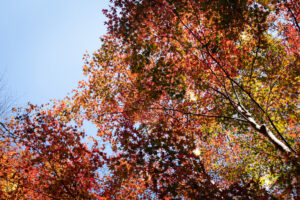
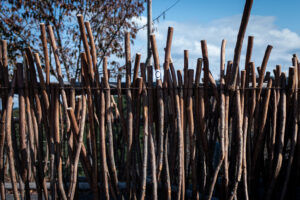
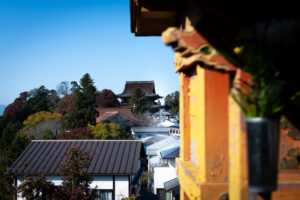
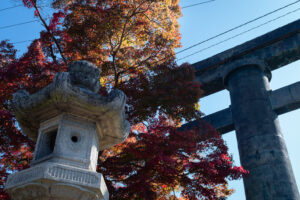
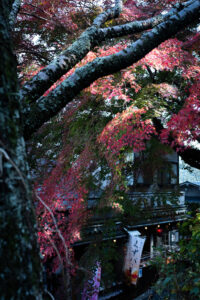
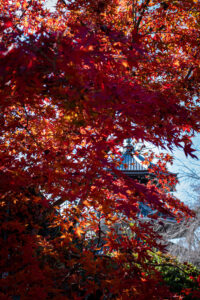
The first chapter, presented below, focuses on the daytime hike through Mount Yoshino at the peak of autumn, while the second chapter documents the descent from the mountain as dusk gently fell.