Journal Category: Story

  • Interview: Koichiro Osaka — Chapter 1 | ASAKUSA

    Interview: Koichiro Osaka — Chapter 1 | ASAKUSA

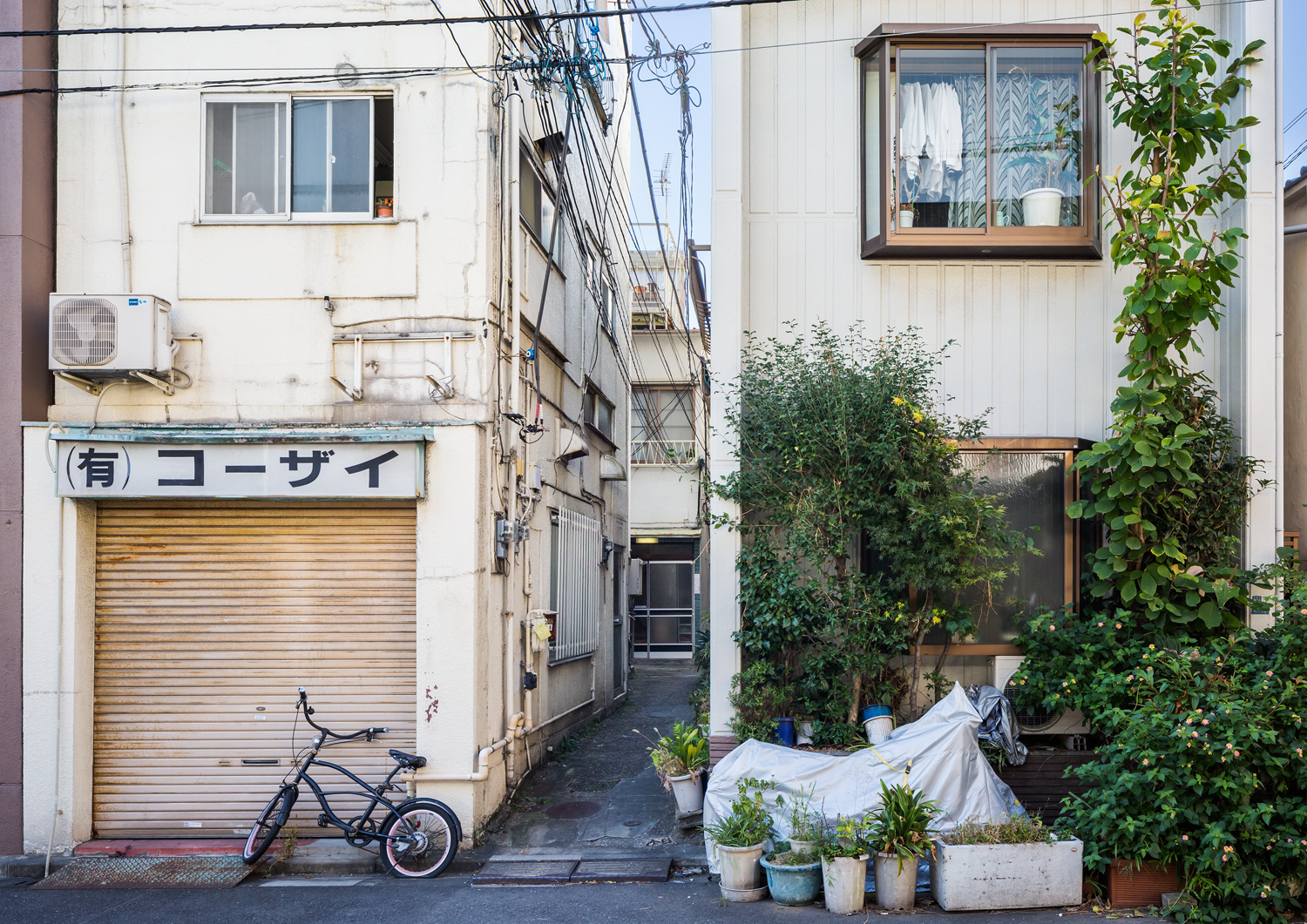
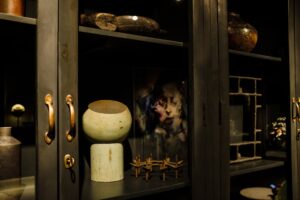
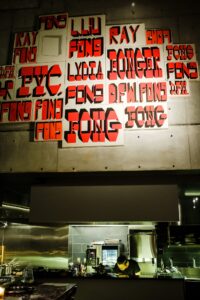
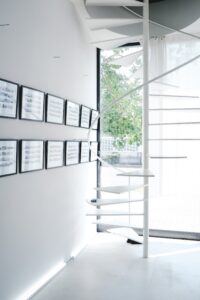
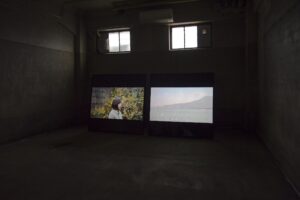
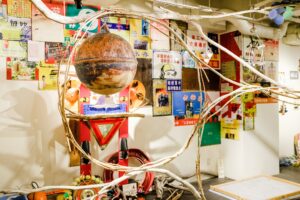
    ©Nobutada Omote, courtesy of ASAKUSA


    Before we go any further, allow me to get a little bit personal.

    Friend, curator, and founding director of ASAKUSA gallery, Koichiro Osaka (大坂紘一郎) and I go way back. In 2004, when I was a fresher at the University of Bath, we used to share the same dormitory kitchen, where we met for the first time. I was chopping and preparing dinner, living right next to the kitchen, which had probably woken Koichiro and alarmed him: it’s time for breakfast. Isn’t that what people always say, “food brings people together”, be it breakfast or dinner.

    We all face multifarious types of issues at different stages in life. During our late teens and early twenties, we were all puzzled by our family, relationships, future uncertainty and of course, grades, and probably some other stupid, trivial stuff if you turn around and look back now. It’s a period of relentless internal negotiation, extremely volatile, sensitive and vulnerable. I recall reading an interview Koichiro did a few years ago in which he said that, as a kid growing up, when you have to be crushed and confined within social norms, when you have to experience judgement and denunciation constantly, this vast chasm between yourself and others never ceases to fade, that you are never taught by schools or parents how to comb through and express your own negative emotions and dissatisfactions, and that not being understood by peers and family is indeed, an unfortunate and saddening thing.

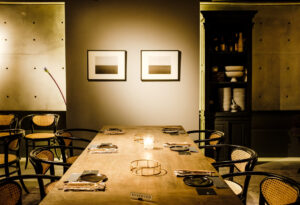
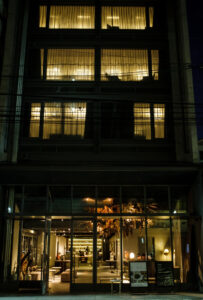
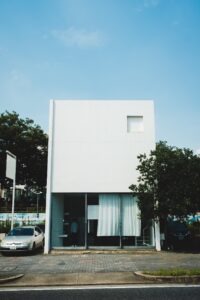
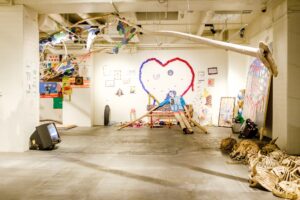
    ©Nobutada Omote, courtesy of ASAKUSA

    I agree.

    We’ve all heard the stories, and most of us are more than likely to share this experience in our university years — getting wasted with your mates in a student hall kitchen, shouting and crying over something, probably stupid and insignificant too. Koichiro and I were slightly different. Yes, we had our fair share of alcohol, but it was mostly conversation in that filthy kitchen, quite meaningful ones, mind you. I’m fairly certain that now he wouldn’t remember and consider it as such, but for someone like me who was far from home and family during a confusing period of time in life, I was glad and also fortunate to have someone like Koichiro there, guiding me in his own way back then. Although I wouldn’t describe him as a flamboyant and particularly cheerful character, this low-key Hokkaidō-born intellect’s ideologies and stellar insights, sometimes wordy but always critical, fascinate me to this very day, and I’m still grateful for the words, compassion, and wisdom offered by someone who was, in all likelihood, struggling probably even more than I was.

    With a captivating and somewhat peculiar CV to boast, Osaka has been driven by a quest for a deeper level of understanding, or even an obsessive yearning to comprehend the multiplicity of himself and this guerrilla-like world around him. His desires and curiosities have led him to reside in some strange corners of the world, while working with renowned cultural institutions across different countries. Following an eight-year adventure in London and Berlin, he initiated ASAKUSA in Tokyo in 2015, a gallery space that centres its attention candidly on academic, social and political agendas — not the most common kind of contemporary art gallery out there.

    Asakusa (浅草) in Tokyo is an area well known for its World Heritage status, along with all the traditional vocabularies attached to it, overrun by domestic and foreign tourists in rental kimonos or yukata, posing for tedious photos. The gallery, on the other hand, is nestled in a secluded and peaceful residential part of town, about ten minutes away from all the hustle and bustle, quietly staging its intervention and demonstration, speaking out against the norms — again, fairly peculiar.

    Rewinding the clock once more back to 2011, when I was working on a magazine project at university, we conducted a brief Q&A session together. Quickly dialling forward to 2020, with the world having gone to shit due to the COVID-19 pandemic, I fired the exact same questions at him once again, 10 years later, curious to observe his responses. We dived deeper into some of the questions during — yes, you guessed it — a Zoom meeting, at a time when the state of emergency had just ended in Japan (May 2020). Some answers may seem irrelevant and tangential, but are somehow oddly connected and all intertwined. You will find the second part of our conversation here.

    Sincerely.


  • Interview: Riko Yasumiya

    Interview: Riko Yasumiya


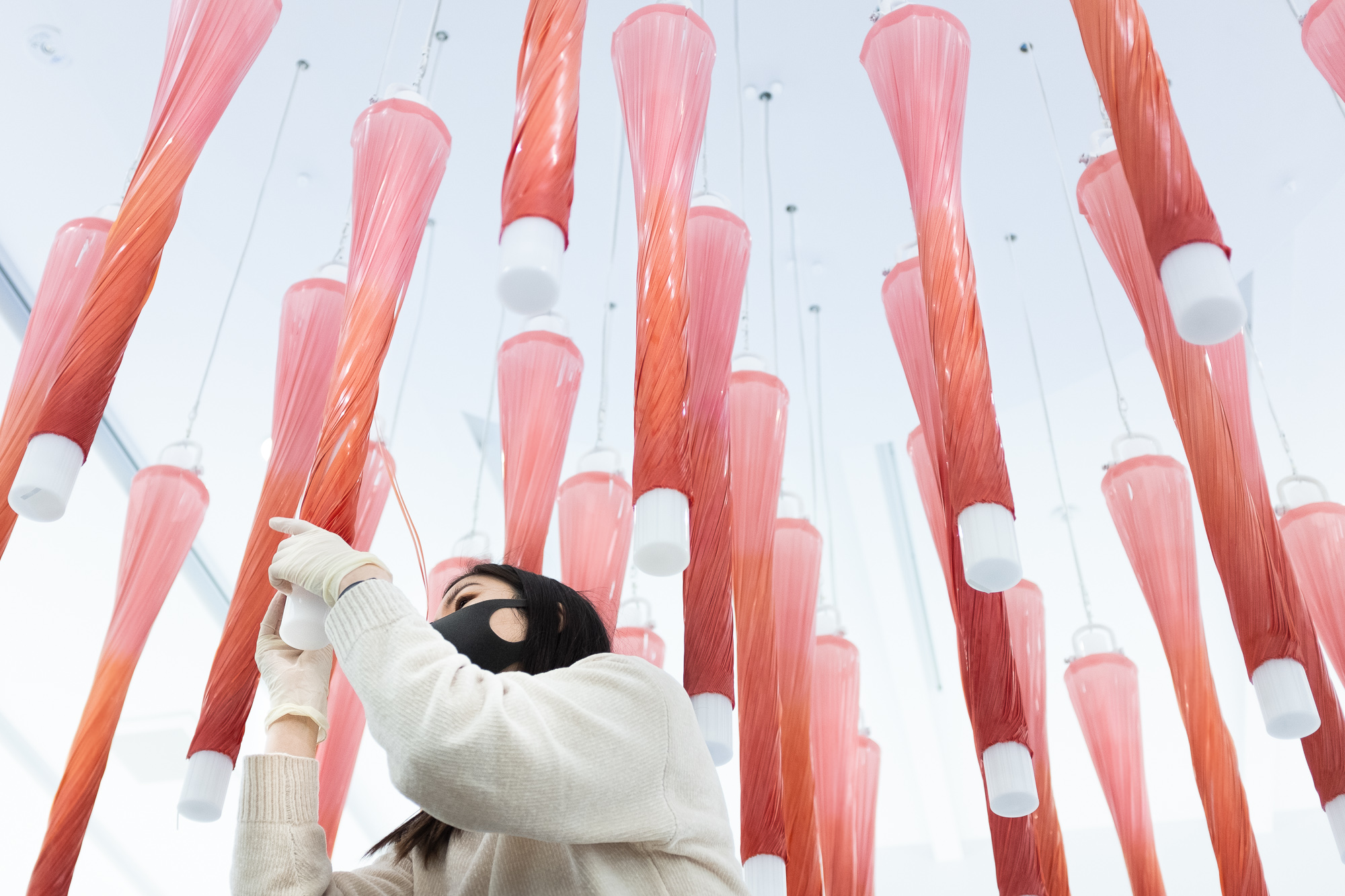
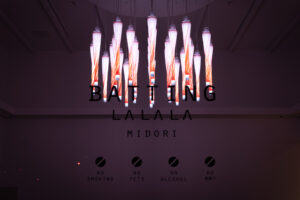
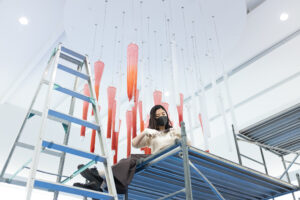
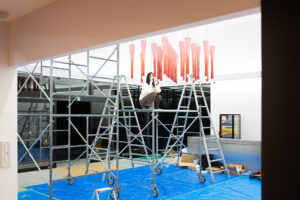
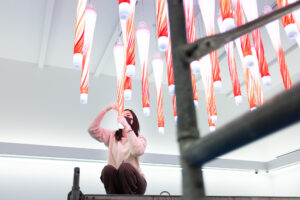
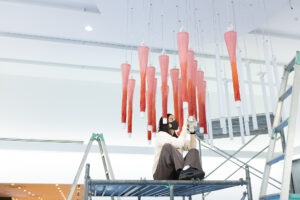
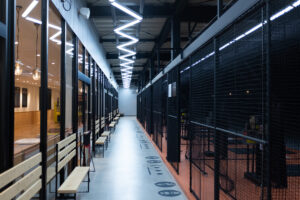
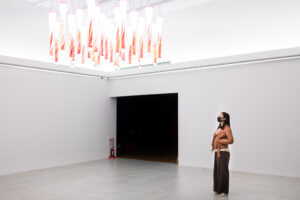
    Upon the completion of her light installation work, neuro-muscular interaction (神経−筋 機能) at Batting LALALA Midori (バッティングららら), as the producer of the project GROWING SPACE, SYNONYM spoke with Riko Yasumiya (安宮理子), the invited artist, about her background and experience, as well as aspects of the project itself.


    AXEL WANG:
    Riko, let’s start with where you are based now. I enjoy Tokyo every time I go, but I suppose living there is a completely different story. The last time we spoke, you expressed some slight distaste for residing in the city. Can you tell us why?

    RIKO YASUMIYA:
    It’s just too complicated. There’s this constant flow of information accelerating the pace of a society that’s already moving too fast. It’s almost become a custom, a norm for many to chase after this constant fluctuation. Some people try really hard to keep up with the trends, and I guess that creates a kind of disconnect between me and the masses. It’s exhausting, really, and I sometimes feel a little bit alienated.

    I’m sure there are others who feel the same way. Society is hugely diverse, and it’s not lacking in great personalities who express themselves, in fashion, for instance. On the other hand, because so much is happening all the time, expectably, there are more opportunities and excitement.


    AW: How would you describe your experience living overseas compared with Japan?

    RY: When I’m in Japan, I’m Japanese, when I moved overseas, I naturally fell into the category of a foreigner. Even within a micro-environment like a school let’s say, I still belonged to that group of foreigners, despite there being many immigrants in London. I remember feeling quite desperate trying to figure out how to be recognised as an artist, and more importantly, as an individual, instead of being seen as just another foreign student who goes overseas and sightsees.

    The schools themselves felt very different too. In Japan, it’s more about the craft, you pay more attention to skills and techniques, whereas in the UK, the work is evaluated more on the basis of concept and presentation. It’s the same art, but from a different perspective, and I think that was extremely valuable for me to learn.
     

    AW: Rewinding the clock a little bit, you moved from studying graphic design in Kyoto, to art and science in London. Was there any trigger behind this switch of field?

    RY: Allow me to clarify, while I was in Kyoto my major was digital design. So, beyond graphics, the course also covered game design, illustration, video animation, and so on, using a variety of digital creation tools. The department emphasised learning different techniques and wasn’t about graphic design alone specifically.

    My interest in creating mixed media works, utilising both digital and analogue methods,  started to develop back then. I used to produce human anatomy-related work quite early in university. At the time, I couldn’t afford a 3D model, and there weren’t really any apps available either. The one thing I could do was flip through anatomy books, gradually building a virtual model in my head and comparing it with the illustrations in the books, in order to understand the human body better. As I progressed, I realised I needed to learn from experts and professionals, which led me to pursue further study in an interdisciplinary course related to art and science.


    AW: Further comparing the differences, how do you think your art is perceived by the public or the professionals in the two places?

    RY: I would like to think my work is perceived positively both in Japan and overseas. I guess if people find it interesting, that’s more than enough for me, who they are isn’t really my concern.

    In London, you tend to encounter artworks or crafts almost everywhere, it’s just part of everyday life. On the other hand, in Japan, these works are predominantly exhibited in art museums or galleries, so people have fewer opportunities to engage with them, to feel, touch, or to experience artwork outside those establishments.

    Also, many people still associate art with traditional fine art, like painting. Since my work is often mixed media, the public may not always recognise it as “art,” or they might mistake it for something else, which can be a bit frustrating.
     

    AW: I think many of us consider art and medicine to be separate. How do you see their relationship?

    RY: Both medicine and art originated from philosophy in ancient times. As time went by, they evolved in their own ways, branching out and eventually acquiring their own identities and names1. I think every field exists because human beings are always driven by curiosity and a desire to discover. Even though medicine and art are largely considered separate today, as you mentioned, the boundary between them was still fairly ambiguous around the 13th century. It wasn’t until the 16th century that the two fields really emerged as independent disciplines. Many significant historical figures, Leonardo da Vinci, for example, were anatomists, engineers, as well as artists.

    With the invention of photography in the 19th century, there was practically no need for realistic illustration in medicine anymore. Instead, medical imaging science began to take over the role that art once played, especially as technology advanced. Historically, I think art and medicine started to diverge because of their different natures: artists tend to seek expression, whereas medicine is grounded in precision and accuracy.

    Nonetheless, in the past, one way or another, they had always collaborated and contributed to each other’s development. Medical research and findings were illustrated by artists, so they could be better understood when published. And as medicine advanced, artistic representations also became more refined and convincing. I find this kind of cross-disciplinary collaboration highly intriguing.

    As an artist, I feel that my role is to help ease communication between doctors and patients through my work. Medicine has become much more transparent today, with fewer mysteries surrounding it. But throughout the course of history, even as we’ve made progress in curing diseases, the communication barrier between medical workers and patients has always existed, and probably always will, because pain and suffering are inherently subjective, so this would probably be an eternal challenge for me.

    On top of it all, in order to convey the symptoms accurately, the right words and knowledge are required from both ends. I don’t think this is simply a matter of formal education; even if it’s taught in school, people tend to overlook it if they’re not interested. I believe curiosity is really the root of our hunger for knowledge. The human body fascinates me, and I want to share that fascination through my work. Maybe, after experiencing it, someone might become just a little more interested in biology or medicine — even in a small way.
     

    AW: Touching on the topic of healthcare, there have been previous cases where art has been prescribed to patients, almost like a form of medication or therapy. Obviously, this is going to be circumstantial, but how do you think art in general can function in that way?

    RY: Jill Sonke presented a talk about why medicine needs art2 back in 2015, where she talked about the relationship between creative expression and healthcare, particularly for patients with mental illness, so it’s definitely something that’s being actively discussed in the field.

    I haven’t really thought much about it, since it’s not the central focus of my work, but art therapy is already an established practice, and I do feel that clinical psychology is gradually moving ever so close to the world of art, in a sense that, I know this may sound a little bit obscure, but I believe our inner body is able to respond to, or pick up, certain wavelengths or signals produced by the visual or auditory elements of an artwork, along with other external factors. Depending on the piece, it can have a calming effect, almost like bringing a sense of peace of mind.
     

    AW: Being born and raised in Japan, how do you think your characters are shaped by Japanese culture? Are there any particular Japanese artists? Or others who have influenced you?

    RY: In terms of how I realise my work, I think I’m definitely influenced by a minimalistic design approach, as well as the Japanese attention to detail and emphasis on craft, and the idea that work has to be meticulous and precise. My family was also a huge influence. Both my aunt and uncle worked in the medical field, I think that’s how my interest in medicine developed in the first place.
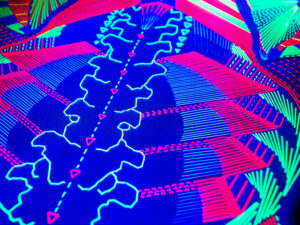
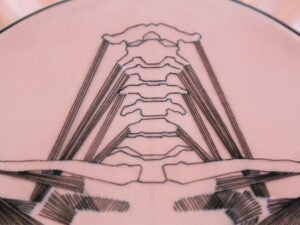
    I honestly don’t think there’s any way to separate myself from Japanese art and culture. The likes of manga, for example, have had a huge impact on me, especially the visual aspects of Evangelion (新世紀エヴァンゲリオン) and Attack on Titan (AOT, 進撃の巨人), in terms of how human anatomy and works of art are brought together. At some point, I was certain that these exceptional manga artists were not only illustrators, but also anatomists, like Da Vinci. Without discovering their works, I probably wouldn’t have acquired this wealth of knowledge and understanding of human anatomy, since illustration alone has its limits when it comes to portrayal and expression.

    Say in Evangelion, muscle fibres are kind of growing out of gigantic industrial, robotic structures, joining together to form a larger system. Whereas in AOT, you see various human tissues like muscle fibres, organs, skin, and all the flesh connecting to bones to construct a redesigned human form. You obviously don’t come across these types of physicality and body movements in the real world, but they sparked me to think how, even though the human body is often seen as a universal and unified theme, there are countless layers and dimensions to how it can be represented.

    Other great artists like Ryoji Ikeda (池田亮司), Bridget Riley, Man Ray, and many profound writers who contributed to the study of anatomy from the 16th to the 19th century, like Andreas Vesalius, who wrote De humani corporis fabrica libri septem and Jean-Baptiste Marc Bourgery, the author of Atlas of Human Anatomy and Surgery, I’ve found all of them deeply inspirational — even Grey’s Anatomy, in its own way.
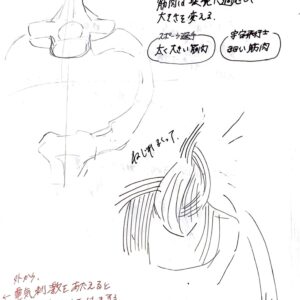
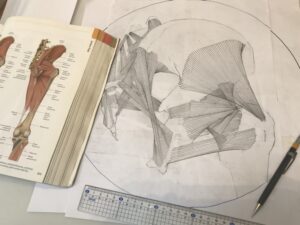
     

    AW: This project at LALALA is your first commissioned project after graduation. I imagine it can be quite overwhelming, especially surrounded by literally all men working on site. How would you describe the overall working experience?

    RY: Speaking from experience, installing artwork often involves a lot of carpentry, machinery, tools, and heavy lifting, so it just happened that only male contractors were on site that day. Everyone involved was a specialist and a professional, so gender wasn’t really an issue for me.

    If I’m honest, yes — it was a lot to take in for my first commissioned project, though I would say it didn’t drift too far off from what I have always been doing, which is thinking about how to realise and present my work.

    There were also many other tasks that I had to worry about, so it wasn’t just about making the artwork, which was, of course, my main responsibility. I genuinely appreciate everyone’s effort in helping bring the project to life.
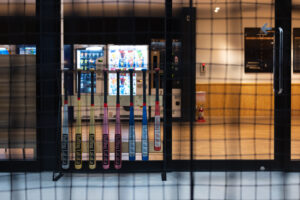
     

    AW: Thank you for your time, Riko. One last thing before we go, how have you been affected by the global pandemic?

    RY: Definitely, all plans had to be adjusted. I’d be lying if I said I didn’t have concerns about the production and presentation of my work. From the beginning, I’ve always wanted to create work with an interactive element, but the pandemic has made that very difficult.

    I talk about this a lot with fellow artists, trying to figure out the best possible ways to present our work. There’s been a lot of back and forth, but I think it’s something we all have to reconsider given the circumstances.

    At the end of the day, however, I do believe that works of art have to be experienced in a space that you don’t normally come across on a daily basis, somewhere real and tangible, where you can relax completely, concentrate and immerse yourself, so to speak. Hopefully, things will return to normal sooner rather than later!
  • Interview: Akinori Kanao | CANVAS

    Interview: Akinori Kanao | CANVAS

    Akinori Kanao (金尾彰典, b. 1981), born in Hyōgo (兵庫) Prefecture, Japan. Majored in design at university, upon graduation, Kanao began his career at a graphic design company, before moving on to a consulting firm specialising in property redevelopment. Equipped with ten years of professional experience, his interest in music and art led him to become an independent project producer. In 2015, he launched CANVAS, founded with the mission of creating and preserving values and cultures, as well as connecting art with modern-day society.

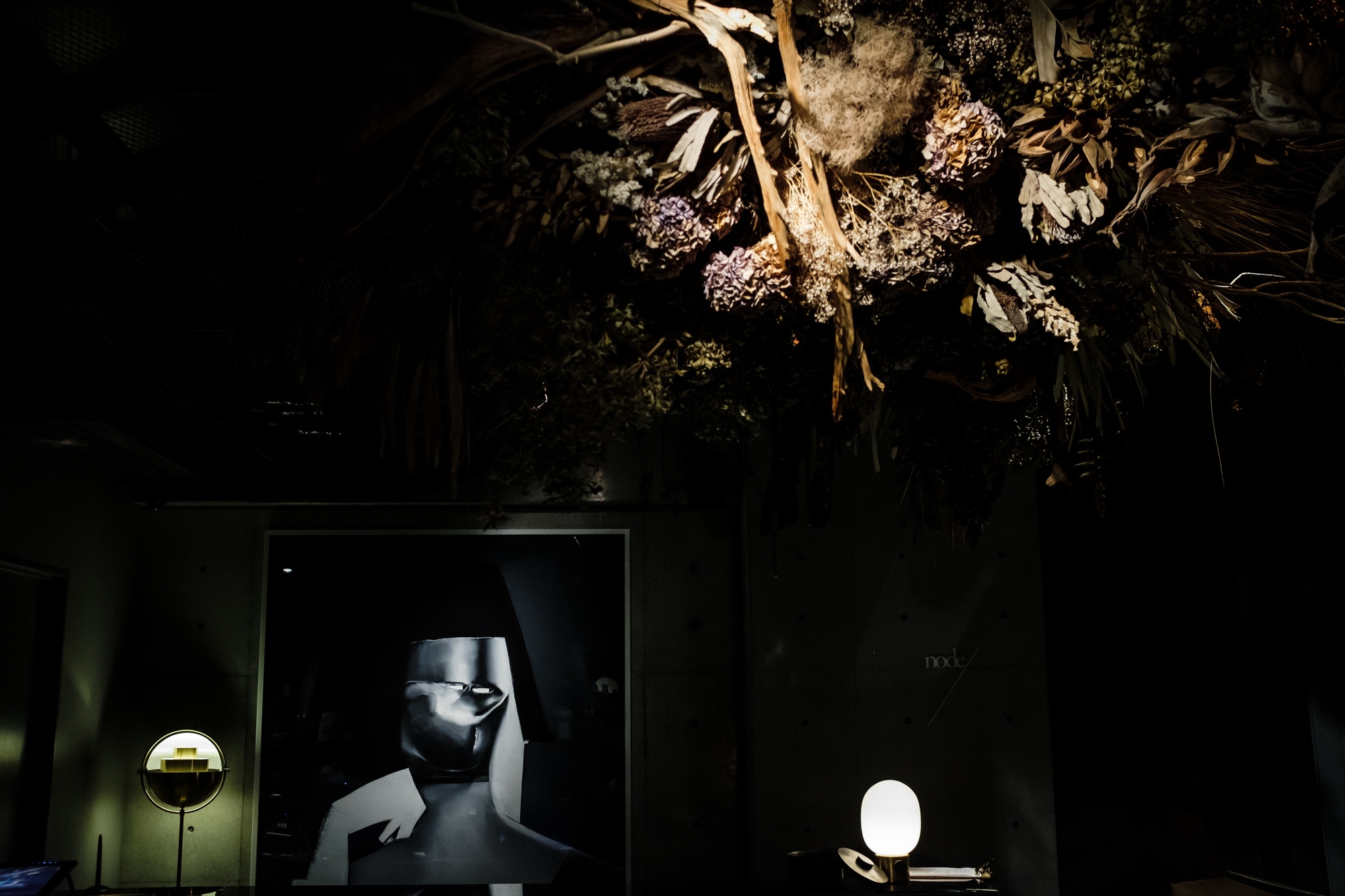
    As one of the key figures behind the realisation of projects such as Node Hotel and FEEL KIYOMIZUDERA, Kanao has even managed to navigate this digital-oriented world without the presence of a website. We spoke with the social media–shy producer about his personal philosophies and his stance on architecture.


    AXEL WANG:
    Kanao-san, can you tell us what you do? Are you more of a creative director or a consultant?

    AKINORI KANAO:
    We are off to a difficult start! I can’t give you a straight answer, honestly. In the case of the Node Hotel project, however, for something of that scale, we had many people involved in the development process, where I was acting as a coordinator, balancing things out, you know, in order to achieve our vision and goal.
     

    AW: Before we go any further, did you always know that you wanted to do something creative?

    AK: I studied design at an art university in Kyoto. I’m a bit sorry to say this, but I mostly just played around outside of school and hardly went to any classes. But I guess one positive thing that came out of it was that I got to meet a lot of great people, and I still work with many of them today. During that period, I didn’t have much schoolwork, so I was free to do things that I actually enjoyed, like organising music events in Tokyo or inviting artists and musicians over for whatever.


    AW: Let’s come back to Node Hotel. We stumbled upon it in Kyoto near the end of 2019, and we were immediately blown away by the interior, which was how we came to discover your involvement. As one of the main players behind the project, can you please tell us something about its development?

    AK: We spoke with the landlord upon hearing that he wanted to build a hotel in the area, so I thought about what kind of dish that I could serve at the table. Kyoto has never been short of demand for hotels, so obviously, we didn’t just want another standard and regular addition to the city. Node started with a clear-cut concept, and I assembled the team. We wanted it to be a hub that connects culture and people, where they can also learn things, experience art and design.


    AW: After working for Nintendo and a consulting firm, what triggered your interest in property redevelopment infused with cultural elements, and eventually starting CANVAS?

    AK: I didn’t work for Nintendo! It was a graphic design company that did hardware and software packaging designs for Nintendo. I think I spent around seven to eight years there, then switched over to a consulting firm where I started to get more hands-on with architectural projects, both of which were in Kyoto. At the start of my professional career, I was committed to spending a maximum of ten years working for somebody else.

    CANVAS wasn’t founded for the purpose of constructing buildings alone, but more for creating and preserving values and cultures, or even assets. We just turned five this year, though sometimes I have to say, it does feel slightly embarrassing to talk about our own company because, honestly, we just do all kinds of things. Mainly, we collaborate with artists, but the projects themselves are not limited to only something like Node, but also branding and event work, FEEL KIYOMIZUDERA, for example.


    AW: That’s a particularly interesting one. Kiyomizu-dera (清水寺, literally “Pure Water Temple”) is perhaps one of the most famous and celebrated temples in Japan. How you married tradition and contemporary culture is phenomenal. Can you tell us more about this experimental project?

    AK: Sometimes, we mistake the existence of a temple as a historical site, where tourists visit. It is in fact, not only a place for religious gatherings when a temple was first erected. Think of it as a museum for education and learning, cultural exchanges and, of course, art as well. I learnt that temples used to be places where contemporary ideas were formed, a representation of avant-garde expressions in the past. For me, religion and art are like friends, they have different characters and personalities, but are somewhat close to each other, that’s how the conception began.


    AW: Can you name your favourite architecture?

    AK: You mean the ones I helped materialise or? Right, just in general.. Hmm.. Actually, my father worked in the architecture industry, whereas my own career kicked off in the field of graphic design. What struck me in the head was that, especially with commercial advertisements, they are very temporary, they are gone after a while — marketing campaigns, poster print-outs and so on. On the other hand, architecture remains. Like the ones my father worked on, they are still here, public buildings like libraries, commercial properties, and hotels, of course, and later even restoration work on a castle. After, I don’t know, almost eight years in graphic design, I just thought, that’s pretty cool, you know, whether it’s a shop or whatnot, they remain. I think that’s how I became serious about architecture, and of course, (because of) my father’s influence too. I remember when I was a child, there were no computers at home, what I saw mostly were blueprints, rulers and all that. I don’t think I’m able to name one particular favourite architecture, there are just too many great works in the world!

    Like in Kyoto, you see these old buildings and temples, a lot of them are from the Meiji (明治) and Taishō (大正) eras. They are like ancient relics of the past planted into the present, sitting neatly alongside all these hugely impressive renovated and contemporary works. I just couldn’t name a “best”, as a lot of them become legacies of the city. Living among them and working in the field, I’ve come to realise this is probably what I value the most: how these buildings stand against the challenge of time, functioning as part of the city. I think history also tells us that culture is often cultivated and born out of architecture.


    AW: Can you share with us your working process when it comes to an architectural project?

    AK: Just for the record, I’m not an architect. I like architecture, which is kind of obvious by now, I guess it does run in the family. Process-wise, I work with an architect who designs the building.

    We envision the form, and we create the space together, the process is like playing catch. The architect looks after the facade from a subjective point of view, whereas I prioritise the content of the building from a relatively objective seat. Take Node Hotel, for instance, I had to figure out the artworks and the furniture — the contents — joining the architecture with the interior space, though both ends require a certain level of respect for society, the surroundings, and the environment, because it will eventually end up as an object in the city. And this object will grow and evolve on its own, that part pretty much falls out of my hands, which, is probably the most interesting part of it all, how it completely grows beyond my imagination.


    AW: Before we spoke, it was brought to our attention that the company doesn’t have a website, let alone any social media account. When it comes to collaborating with artists, how do you normally meet them?

    AK: For work purposes, I do have to visit art fairs around the world. It’s kind of funny because the Japanese tend to gather when they are overseas, so it’s very community-based. There are often parties among ourselves, so I have the opportunity to meet a lot of the artists, and we catch up when we return to Japan. We share drinks and ideas, and conversations about work start very naturally. Essentially, we are all trying to integrate art more into society, forming a deeper connection. I’m too shy for SNS, you know (laughs), so this way of organic networking suits me better, really. It’s also easier when the people you meet share similar values and passions.


    AW: Finally, Kanao-san, what role do you think contemporary art plays in modern-day society?

    AK: Art and culture are, in a sense, products of our societies, you can’t buy them off a shelf, obviously. Nonetheless, they are created by human beings. I think contemporary art does have a greater role to play than we often recognise. It is connected to fashion and design, architecture and furniture, as well as music, and even food. I’ve always believed that the dissemination of Japanese art and cultural expression will have an impact on industries at large. That’s why we are doing what we are doing! (Laughs)

  • Interview: Yurika Ninomiya | gallery N

    Interview: Yurika Ninomiya | gallery N

    Forever fascinated by art and flowers, Yurika Ninomiya (二宮由利香)’s childhood hobbies led her to become a professional florist as well as an avid collector of art. After 13 years, Ninomiya decided to switch professions and became a full-time gallerist. gallery N was founded in 2008, and is based in Motoyama (本山), Nagoya (名古屋).

    Designed as a home-and-gallery space by Suppose Design, the gallery started with the concept of presenting contemporary art in a floral and architectural context, hosting a wide range of exhibitions and talks by artists. The Ninomiya husband-and-wife team together manage the operation of the gallery, and steadily, N has matured into a major player in the Nagoya art scene. Branching out to Tokyo (東京) in 2017, Kanda Shataku (神田社宅) was established as an alternative platform for Aichi (愛知) and Nagoya-based artists. In this interview, we spoke with Ninomiya about the gallery, the pandemic, as well as her passion for flowers.


    AXEL WANG:
    This year marks the 12th anniversary of gallery N. It’s going to be impossible to summarise, but tell us how you feel, Ninomiya-san, is there a specific exhibition or a project that you are the fondest of?

    YURIKA NINOMIYA:
    We’ve been collecting for a long time, piece by piece. We obviously didn’t have the know-how of gallery management in the early days, but thanks to the support from clients and artists, we were able to establish N. To this day, we’ve successfully presented 155 exhibitions since its launch in 2008, it’s difficult to pick a favourite, but project-wise, the most memorable one was titled Shutchō N1. It’s like we brought the gallery along with us and went on different business trips to all these towns that didn’t host contemporary art galleries — twice to the Kagiya Building (カギヤビル) in Hamamatsu (浜松) and twice to the Nagase Shopping Arcade (ながせ商店街) in Tajimi (多治見), where we held special exhibitions in abandoned spaces and transformed a former restaurant into a white cube.

    We were just so pleased to see crowds start gathering in places where no one really frequented before. In a sense, the areas were unexpectedly revitalised, and by the end of the exhibition period, there were even new commercial tenants who took over the spaces, which was something we could never have predicted. I think overall, the project reflects well on who we are and what the gallery stands for.


    AW: We collaborated with a floral designer named Yuka Fukushima (福島由桂) for SYNONYM’s first presentation. We are always hugely inspired by works from floral artists like Daniel Ost and Makoto Azuma (東信). Do you draw any connection between the two occupations, florist and gallerist?

    YN: When we first launched the gallery, the idea was to have an intersection point of art, architecture and flowers. As time went by, we slowly put more emphasis on contemporary art, so yes, our background may be slightly different from that of many galleries.

    My experience as a floral designer does help with communication. Interweaving art with other genres also made it more approachable for a lot of clients and audiences who may not be familiar with the field. I think every individual is more multi-dimensional than he or she often realises, thus for N, I also wanted the gallery to be a place that opens gateways and possibilities for people.


    AW: We love the fact that N sits in such a beautiful and contemporary architecture, combining your own home and gallery space, and creating this drastically different aura from its surroundings. Suppose Design is an incredible architecture firm, how did you come to work with Tanijiri Makoto (谷尻誠)? Was there any reason behind choosing this particular location in Motoyama?

    YN: It was obviously a project that I couldn’t just handle on my own, and I barely knew any architects beforehand. I was at a complete loss, as you can imagine. It wasn’t until I came across Makoto-san’s work in a magazine, and I talked about it with my husband, then we finally decided to reach out to him. Just like any encounter, there were moments of doubt and unrest at first, especially due to the fact that he’s based in Hiroshima (広島). We were over the moon when Makoto-san responded and agreed to create this project, along with Yoshida Ai (吉田愛)-san. After meetings, we shared drinks and chats, it was a smooth sail, and we couldn’t have been happier with the outcome, not only because of the realisation of the project itself, but also the mutual understanding that was established.

    When I was searching for a vacant property back then, I happened to walk past this place, and I noticed an elementary school behind it. It was April, and the cherry blossoms were in full bloom. You could hear children playing and running around, it was like a melody, I fell in love with it at first sight, and knew right away that it was perfect. It’s like a dream come true because ever since I was a child, I had dreamed of having a home in the Motoyama area.


    AW: What about the Tokyo outpost, Kanda Shataku (神田社宅), is there a different artistic direction between the two spaces?

    YN: The Tokyo space was opened in 2017 when my husband relocated to the city for work. Exhibition-wise, I would say it’s half-half between Nagoya and Tokyo, we don’t draw any distinctions between the two spaces. I think sometimes the operational and production side of things can be extremely easy to overlook, as gallerists ourselves, we must prioritise the schedule of the artists.

    For our local artists here in Aichi, it’s a great opportunity for them to gain more exposure by exhibiting in Tokyo, where there’s undoubtedly a larger market. Meanwhile, if artists are not able to visit Nagoya, we will present their works in Tokyo or vice versa. The same goes for clients and audiences, if they are intrigued by our Tokyo exhibitions, sometimes they even stop by our Nagoya space. I think that’s just a simple and convenient solution for everyone involved.


    AW: We are living in strange times right now. It’s also a period of reflection for a lot of creative individuals we have spoken to. How are you coping with the pandemic?

    YN: During the “stay-home” period, I felt that the way we were once so used to interacting with art had disappeared. Some clients told me that it was apparently their first time in decades not being able to visit any museums or galleries in person. I thought about that a lot, can we actually live in a world without experiencing art?

    Right now, as we have seen, the industry is advancing towards the online market, be it museums or galleries, more digital exhibitions are emerging. I think as a result, this will drive more e-commerce sales of artworks than ever before, and that inevitably leads me to re-evaluate our own strategies as a gallery. Lately, I’ve seen drive-through exhibits. Despite the circumstances, interesting things are happening, perhaps an exhibition for home delivery could be fun too. (Laughs)

    In the meantime, we hosted our first artist talk on Zoom, where a total of 8 artists presented their works during the talk. It was well received, as quite a lot of clients participated. For me, it was really exciting and fun, it just provided a new way of interaction that we had never thought of before. I would love to continue doing it, actually.


    AW: The situation is getting better now. Does the gallery have any future plans this year? Any particular artists that you are hoping to work with?

    YN: In October 2019, we held a Butoh2 performance by Konan Amoku (阿目虎南), who has gone solo from Dairakudakan (大駱駝艦). We are planning to do it again sooner or later. As we speak, there’s an ongoing exhibition titled Finding Fireflies featuring Aoi Fujiwara (藤原葵) in our Tokyo space, who took part in last year’s Aichi Triennale 2019, animated explosions are a constantly recurring theme in her paintings.


    AW: Thank you for your time, Ninomiya-san. Before we go, one final question: do you remember the first time art amazed you?

    YN: It was a vase and flower painting by Odilon Redon that I saw when I was in elementary school. At the time, probably my favourite outdoor activity, I used to enjoy picking flowers in the wild and arranging them in my own little vase. I guess ever since then, flowers and ikebana have just become an integral part of me, both in life and work.

  • Interview: Subaru Matsukura — Chapter 2 | Nue inc.

    Interview: Subaru Matsukura — Chapter 2 | Nue inc.

    Brave New World


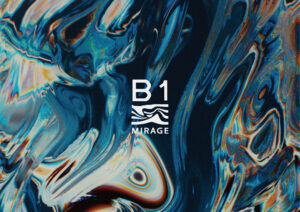
    B1 MIRAGE (2018)


    AXEL WANG:
    Matsukura-san, what led you into this creative career path?

    SUBARU MATSUKURA:
    This is probably what I meant when I mentioned the social responsibility that comes with the job at the very beginning of the conversation. In some ways, society demanded this occupation and I responded. Whenever I think about it, I still find it hard to believe, that someone like me, who didn’t even graduate from an art college, is doing this job for a living. There was always an element of luck too, I was hired by a production company right after graduation and was surrounded by fantastic colleagues and seniors. It was beyond my wildest dreams, I loved what I did back then and I love what I do now. There is still an enormous urge within me to create new things. I believe that’s what has kept me going all these years, and without even realising it, I’m already 37 years old with two kids.


    AW: Are you inspired by a particular few artists, designers, or anyone in the creative field?

    SM: In general, names don’t really bother me, whether it’s a famous artist or an unknown designer, a graffiti artist or just a child who likes to draw, I think anyone who expresses themselves deserves our utmost respect, especially in a society like ours.

    During my university years, I attended lectures by the editor, Shigeo Goto (後藤繁雄), at Kyoto University of Art and Design (京都芸術大学) for about four years, despite not being a registered student there. I just wanted to hear Goto-san’s lectures, I apparently took them a whole lot more seriously than a lot of the attending students. (Laughs) If I have to name one person, Goto-san is without a shadow of a doubt my biggest influence. We stay in touch to this day, and occasionally we share drinks. He’s got this survival attitude, being hungry all the time, undeterred by his age, incredibly valiant, he’s always on the front line leading the charge, and for me, that’s just incredible.


    AW: I would like to congratulate you on being shortlisted for and winning all these awards in the past, both domestically and internationally, New York, London, Japan, especially the Cannes Lions and the Good Design Award. Those are fantastic achievements. Can you tell us about those experiences, and how do you think the working environment in the creative field in Japan differs from the rest of the world?

    SM: I never wanted to participate in any of those awards in the first place. Funny enough, I was somehow pushed by the companies. It’s like Tenkaichi Budokai (天下一武道会), you know, that fighting tournament in Dragon Ball, but for the creatives. I do understand the significance of it, don’t get me wrong, it’s similar to winning a gold medal for athletes. For me, the most fascinating part of the award was being able to experience works from some of the best in the industry and learn from them, like what kind of skills and techniques they possessed. You also got the opportunity to speak with these brilliant minds and hear their stories.

    Although I’m not the best person to comment on the creative industry overseas, I presume that it doesn’t differ much from what we have here. Of course, there are bound to be differences, but at the end of the day, it all boils down to the idea and the final product. I think right now, we have so many runners who are prepared and motivated to amaze the world, it’s a matter of who can come up with the most original, the most interesting, or the coolest idea. The fastest will win, regardless of nationality, on this racing track.

    B1 MIRAGE (2018)


    AW: I arrived in the UK from China at a young age. After spending almost 20 years there, I have now relocated to Nagoya for work. I feel that your immediate surroundings and the environment play a huge part in influencing you and shaping your mindset. Growing up in Japan and spending your entire professional career here, the country is generally regarded as a fairly closed but culturally rich society. To what extent do you think the way of “Wa (和)” has influenced you, or would you say you prefer not to be labelled as “Japanese”?

    SM: I was born in the rural area of Furano (富良野), Hokkaidō (北海道), and raised in Sapporo (札幌). Culture was scarce, and I was desperate for it. I often found myself in the Sapporo Art Park (札幌芸術の森), the whole forest was like a museum, and that’s where I encountered the Butterfly Stool by Sori Yanagi1, during middle school I think. It’s a perfect execution of design and art. After I received my first paycheck years after I started working professionally, I bought the stool in a heartbeat. That encounter back then was what ultimately led me to study in Kyoto (京都). The contrast between Hokkaidō and Kyoto was almost intense, to say that I was overwhelmed when I got there was a total understatement. Coming to think about it, that was presumably the first time I actually experienced the many sides of Japanese culture.

    A lot of companies like Nue exist, and I personally know some of them have advanced outside of Japan. If I’m allowed to be completely honest, that’s not something I’m interested in. I can’t pinpoint a specific reason, I had turned down opportunities to work overseas. I guess I just felt it was troublesome. From time to time, I get to visit various smaller towns across the country because of work. One word I would use to describe Japan is “kimyō (奇妙)” — eccentric, curious and perhaps exquisite too. Even though I grew up in the nature of Hokkaidō, which is unmistakably part of Japan, I have always been struck by the distance between where I was raised and the idea of Japan that everyone is familiar with, almost as if I had always been in a foreign land. It’s kind of fascinating. For me, the country still has so much to unearth and experience, the food culture, the matsuri (祭) in all those different towns and cities remain exciting and inspiring to this day.

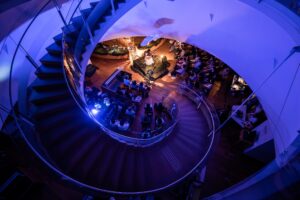
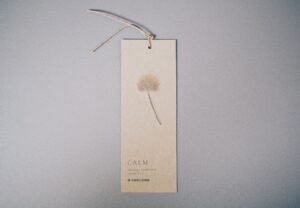
    CALM #02 ~Night Library Live (2018)

    I don’t like to judge people by their nationalities. I bet you hear this a lot, but it’s true. I am Japanese, I know that for a fact, and I’m comfortable with it, it’s not exactly a label that can be peeled off, and yet I just don’t think anyone should be defined by this label of nationality. It’s “you” as a human being that matters to me. Not only where you were born or raised, but also your immediate surroundings, like you said, and further, your life experience, who you have met, the things you have learnt, what you have achieved and even your failures, all contribute to shaping your character. There are more than 7 billion people on the planet, and they all have different stories, imagine that!

    I remember a time during university when I was invited to an art fair in Tokyo, and I ended up spending a month living on the rooftop of some random house in Bakurochō (馬喰町) with several other people, like we were all homeless, which was pretty much the whole point of it: how to live a life when you have absolutely nothing. The greatest joy was when we all gathered and shared our meals. We learnt to make tents and shelters, sat on the rooftop, and watched the birds. I obviously knew this would end and my life would return to normal, but for a moment I was away from everything, my mind was empty. That was an incredible and valuable experience for someone like me from Hokkaidō. It was the time when I realised that, eventually, we are all humans and all created equally, social stigma or the idea of being “Japanese” no longer holds any significance, as it is merely a categorisation, just another label.

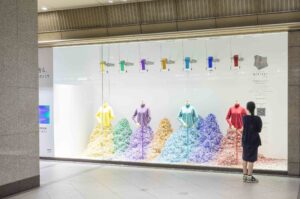
    DEP/ART KYOTO (2017)


    AW: You graduated from Ritsumeikan University (立命館大学) in Kyoto, and are now living and working there in the city. What draws you to Kyoto?

    SM: There are about two million people living here in Kyoto. Given its status, it’s not a massive city, but it is filled with a considerable number of universities, art colleges and long-established traders. Relatively, our community is quite small, you may easily bump into acquaintances on the street, meet an artist in a bar, things happen spontaneously over a drink, and you overhear all kinds of stories.

    I lived in Tokyo for a while and decided to come back here only because it’s a more engaging city for me. I often see remarkable things happening here that are beyond imagination, it’s difficult to come across that in Tokyo, where things are slightly more restrictive. You occasionally hear that Kyoto people are difficult when it comes to mannerisms and so on, but for me, it’s the most embracing and accepting city I’ve ever lived in.


    AW: Now that the state of emergency has been lifted in Japan, were you affected by the lockdown at all?

    SM: We were blessed with more work fortunately. As a company, we specialise in dealing with complicated challenges. When society or people lose their way, they tend to value us more. Things are changing now, especially in the art field. Despite the circumstances, I still sense a burst of energy from the industry. I don’t think anyone has the right answer now because the future is not predictable at all, no right strategy exists because none of us has ever experienced this either, so it’s all down to us.


    AW: Do you think our lives will be different after this?

    SM: It’s devastating, that people are dying because of this. At the same time, I’m thankful to the people who are working and risking their own lives every day so that the rest of us can continue living a normal life. Our society is like a collective body of lives, society grows when each one of us grows. Like after 3.112, that was the time when I felt that we all matured as a group overnight, we all had to. I guess it’s human nature, we grow and learn to respect by experiencing tragedy and sadness. And yes, I think our way of life has already changed. Given that I’m fascinated by human beings, I’m indeed optimistic about humanity, and I’m certain it will change for the better.

    B1 MIRAGE (2018)


    AW: A change of topic, if Subaru Matsukura were not the Subaru Matsukura today, who would he be?

    SM: An e-sports player, definitely. I’ve been playing games forever, even PlatinumGames3 is one of our clients, one day, I rang their bell, proposed a collaboration, and we started working together. They were one of the developers of games like Bio Hazard (Resident Evil) back then, which was massive when I was a kid, and it was a huge influence.


    AW: To the kid dreaming about a future career in the creative industry, what’s your message?

    SM: Deep down, I think we are all children, so are you, and so is this 37-year-old middle-aged man. Our existence is the best creative work of mankind. We grow up, we have more rules, we learn to abide by them, and we become adults. “Please eat your meals today without using chopsticks or a fork.” What’s your reaction when you hear that? Sounds weird, right? “Take an alternative route on your way home today, and you will see something different” — These misdirections are all error codes. Because we are all coded to live with the least expense and risk, to behave and to eat properly so that you are not frowned upon, to take the usual way home so you won’t get lost. But who came up with all these codes? Is it society, or maybe your parents? We need to think, about who’s the director of our lives. Children make such a mess when they eat, somehow they always get lost at that age. It’s only when we grow old that we begin to fall into boxes and boxes of rules drawn by we-don’t-even-know-who, and eventually we all turn into replaceable people. My best advice, to any child, as cheesy as this may sound, is to live your own life and build your own world, always question what you see and think again about all the codes that are already written.


    AW: Thank you for your time, Matsukura-san. It’s been a real pleasure. Before we wrap up, could you let us know some of your future plans?

    SM: I would like to make some games, or anything related to gaming. I’ve been playing Tetris since primary school, and I’m really good at it! Jokes aside, I remember back in the days at ovaqe inc., it generally took about 3 months to complete an advertisement project. Nowadays, it’s mostly hotels, streets and public projects, with bigger enterprises involved. The duration of each project has increased, so it’s harder to predict. Right now, I’m in charge of a community redevelopment project for a fishing village in Fukui (福井) Prefecture. It’s not about having another building or an extra tunnel, but more about human resource development. I can’t go in depth about the strategies, but it’s probably one of the most exciting projects that I’ve worked on.

    Meanwhile, we launched a creative studio district last year here in Kyoto called CONCON. It remains under development, consisting of 3 terrace houses and 16 containers, mainly hosting creative and architecture teams like ourselves — offices, a wine bar, an apparel label and even a few monks. You guys should definitely visit!

  • Interview: Subaru Matsukura — Chapter 1 | Nue inc.

    Interview: Subaru Matsukura — Chapter 1 | Nue inc.

    Homo Ludens 遊ぶ人


    AXEL WANG:
    Matsukura-san, how would you describe yourself and your line of work, given our “slash culture” today? Are you a consultant, curator, designer or more of an advertising guru?

    SUBARU MATSUKURA:
    I feel that once you attach labels, you kill possibilities. The work that I’ve been doing in the past few years comes with a certain level of social responsibility, so for now, let’s just say that I’m the representative director of Nue inc.


    AW: “Nue”, what is it?

    SM: Our logo is a pixelated mosaic of a Japanese yōkai1 called nue. This creature is like a chimera, a combination of various animals, with the face of a monkey, the legs of tigers and the tail of a snake, and so on, rather ambiguous and vague to say the least, even by folklore standards. A bit like our work, people don’t normally understand what we are doing.


    AW: You seem to dwell in the field of visual communication in both the art world and the creative industry.

    SM: Speaking from my own experience, the two industries are quite different. I have worked on a new annual fair called ARTISTS’ FAIR KYOTO since it launched in 2018. It was cancelled this year due to the pandemic, unfortunately. I get to experience and discover new insights every year from more than 300 pieces of artwork submitted to the fair. For me, ease of communication reduces the value of art, because we can’t expect to all “get” it in the same manner. Artists are geniuses, they are able to communicate either verbally or visually in a way that no one else can. Each artwork created is like a mirror, where we project our own values, and a thousand of us will perceive it in a thousand different ways, standing in front of this mirror.

    On the contrary, creatives carry this responsibility on their shoulders, where they must convey, as the compendium of expectations grows exponentially by the day. Any attempted communication directed at the target audience has to be delivered, otherwise it will just be too much lyricism, and such expression not only needs to be articulated and accurate but also, in Japanese, the word is “senren2“. I’m not an artist, but my perspective comes from someone working in the creative field that’s close enough to the realm of art. From where I stand, I look after the infrastructure and control the resolution of the output. I don’t know if that makes sense.


    AW: It’s a surprise to hear that you were in charge of a creative role for ARTISTS’ FAIR KYOTO. How did you become involved?

    SM: Let’s see, please forgive me, it’s been a while! (Laughs) The earliest contact took place after Nue inc. was incorporated. It was during the Setouchi Triennale (瀬戸内国際芸術祭) and I was invited as a guest producer by a contemporary artist and producer named Noboru Tsubaki3. We got along pretty well, and then Tsubaki-san had an art project commissioned by the Kyoto Prefecture government, where he nominated me to be the creative director. The concept of the project was that the artists become the salesmen and were responsible for selling their own works on the spot without any galleries in between. That was how the collaboration started, and I imagine the rustic nature of the project was also the trigger for ARTISTS’ FAIR KYOTO.

    Overseas art fairs, in general, tend to be more beautiful and neat, more structured, whereas for this Kyoto fair, the idea was to create an intimate environment for both artists and audiences, where they can all immerse themselves in such an atmosphere, and conversations could flow more naturally. Tsubaki-san has this anarchist mindset that’s not often seen, and we all love him for being such a rebel.


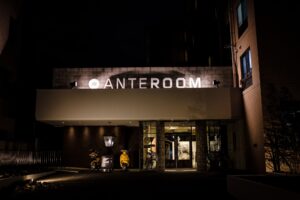
    AW: Can you walk us through the concept and execution of Homo Ludens 〜遊ぶ人〜, the exhibition held last autumn at Anteroom (AR)?

    SM: I was managing a few things during the development of AR, from its conception to assembling the team and so on. It was like being in a love relationship, where there were lots of aspects that needed to be taken care of. During the first two years after its launch, it was our secret hideout, where I curated shows and organised events. After I left the project, it was like the relationship ended, but I was so glad to see her mature and be able to walk on her own.

    “When we were born, we were all free and wild, you age, and then you learn and adapt.” That was the idea AR proposed, and we started talking. They wanted to venture out of the conventional exhibition routine, so I suggested an alternative recipe — an open and free space. Homo Ludens was then set up as the theme, the name of the exhibition was inspired by a book of the same title written by Johan Huizinga.

    During the opening phase of the project, the team broadly discussed “culture” and how the exhibition should engage with it. But what is culture? You can’t merely fabricate something and just make culture. If you think about it, it’s there before you even notice it. I thought about how we should approach this and decided we could return to the fundamental roots based on our initial idea. What did we do as children? Well, we simply “play”, right? It was a simple enough concept, and basically, we wanted the exhibition to be somewhat like a kindergarten playground, and the exhibitors were like my friends. As you become an adult, you don’t have the opportunity to spend time with friends as often, AR became this promised land where we could do whatever we wanted, as freely as we wanted — we could read, play tag together, roll around in a sandpit, and build something silly out of it. There were zero constraints for both the curator and the exhibitors.

    When you think of planning for an exhibition, the structure and organisation are clear, and the expectation and goal are, more often than not, quite clear as well. But this time, I wanted to go the other way. During the exhibition period, you saw artworks appearing on different days, and they were all over this playground. Some were never completed, and I guess visitors were confused. Obviously, it wasn’t familiar to most, we always got questions like, “Is the installation still ongoing?” or “Is this the final form of the exhibition?” My response was, if you recall hanging out with your friends in the park when you were a kid, it never really seemed to end. Whether you played again tomorrow or the day after, the time and place might change, and the friends you played with might also change, but the “play” itself always seemed to last.

    Reaching the end of the exhibition period when we had to dismantle, everyone just said, “Let’s play some time again”, and waved goodbye. For me, that was the most satisfying moment of the entire project. So we thought, why not dive deeper and recreate the exhibition in an actual public space in the future? That would be fun.


    AW: We are witnessing more integrations of artworks and exhibitions in hotels these days. I suppose it’s not only a great marketing strategy but also grants opportunities for creatives working in the industry. How did the exhibition at AR come to fruition? Was it challenging to achieve a balance of your own vision in a conventionally less creative context?

    SM: Our benchmark was Ace Hotel, definitely, though its characters seemed to have transcended over time, and so has the role it plays in a city. The bar was set high, but we were determined to match that. I tried not to touch the curation of artworks or the interior design in the Concept Rooms4, as we had some truly talented artists and individuals working on those. It was a situation that I had never experienced before, the unexpected was what made the whole thing come alive.

    My part was to coordinate and envision something outside the box. It’s like a gradual expansion process of a universe, you just didn’t know what to expect next. You saw a gallery space pop out in the lobby here, a wall taken down over there; the artworks were like different life forms. As their number multiplied, it was almost as if a kind of symbiosis arose, some of them evolved, and some vanished as this universe kept growing. True that every project requires balance, but when you are creating something completely new, you wouldn’t even know what the right balance is. For me, it was all about making the most exciting choices, and the end result would speak for itself. How to deconstruct and break down any existing balance was possibly the most fun part of any creative process.


    AW: Prior to AR and Nue, there’s ovaqe inc., was that the first company you incorporated?

    SM: The company was only meant to last for 5 years, that was the plan. After I left 1-10 Design, a few members from the company followed, and that was exactly what I told them: they needed to look for their own clients and gain independence after 5 years. The entire team consisted mainly of creative directors, planners, and producers, without any engineers or designers. Our work ranged from digital commercials to shopping malls and hotel projects, and so on. Whenever a project came along, we assembled a team. Nue operates similarly, the only difference is that the projects we are tackling now are more complicated, with substantially more complex layers.


    TO BE CONTINUED…

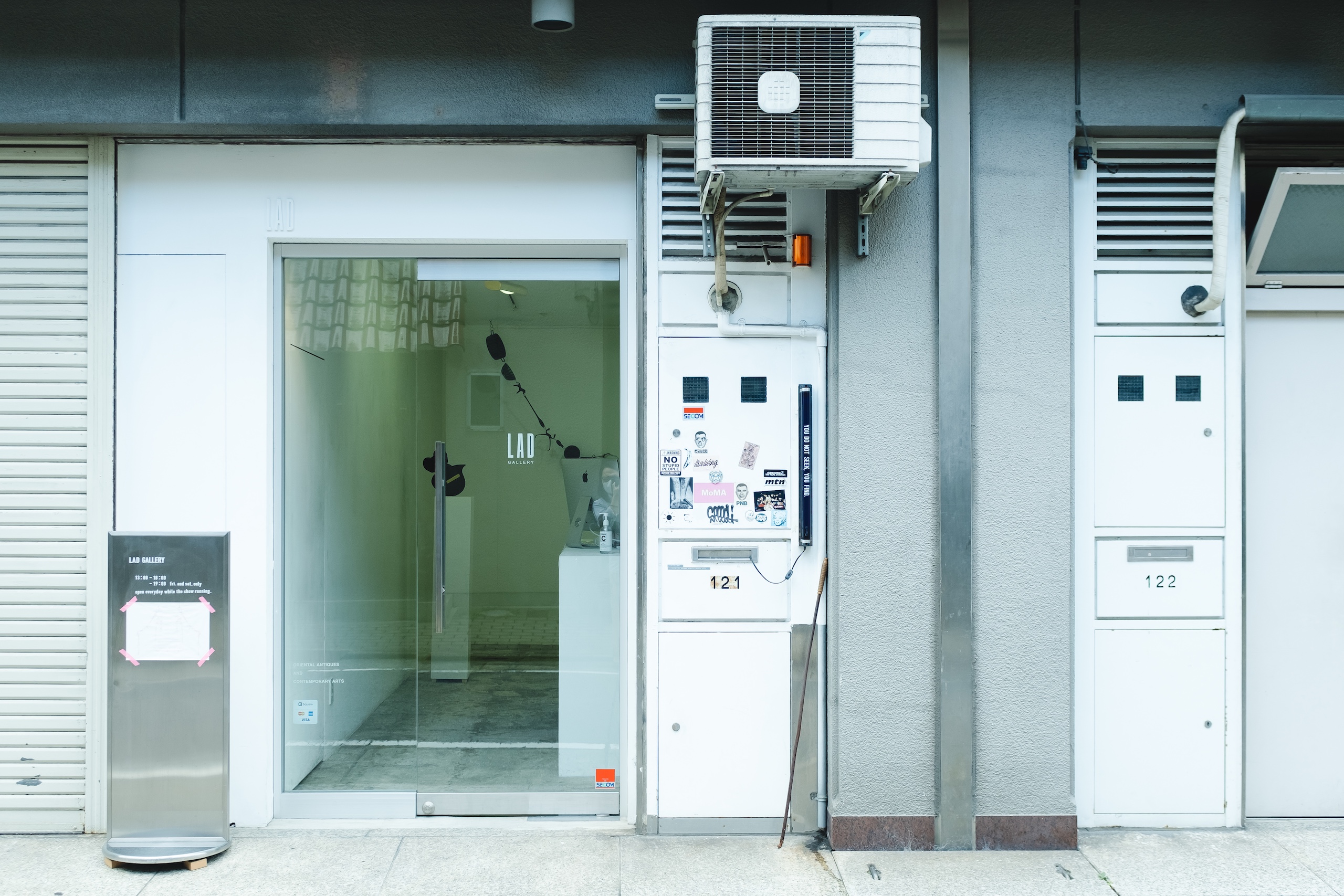
  • Interview: Ryohei Iwata | LAD Gallery

    Interview: Ryohei Iwata | LAD Gallery

    Ryohei Iwata (岩田量平) is a gallery director born and raised in Nagoya (名古屋), Japan. Under the influence of his family and growing up among objects of antiques, Iwata eventually set his sights on the realm of the art world after learning his trade in a gallery that handles mainly classics. LAD Gallery was initiated in 2013, and is located in Nagono (那古野), Nagoya.

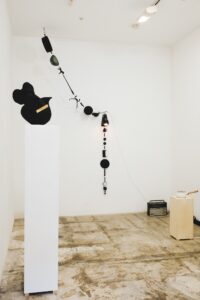
    Focusing on emerging artists with a youthful spirit, LAD has exhibited works from the likes of Ei Kaneko (金子英), Genta Kosumi (小澄源太), and more. The gallery is also a regular attendee of various art fairs in Japan, such as ART OSAKA, ART FAIR ASIA FUKUOKA, and artTNZ. We visited Kiyomi+Tetsuhiro Uozumi (魚住紀代美+哲宏)’s exhibition hosted in LAD in July 2020, when the lockdown was lifted in Japan, and spoke with the director about the gallery, his background, and philosophy.


    AXEL WANG:
    Iwata-san, first of all, what does LAD stand for? In British English, we usually use this word to casually address a boy or a young man, “He’s a nice lad”, “That lad is cool”.

    RYOHEI IWATA:
    People asked this a lot, and actually, you are not too far off! The “male” aspect was not what we had in mind, however. When we named the gallery, we thought a lot about “youth”, because being young is not always equivalent to the idea of “youth”. It’s more about sensitivity and perception, and that’s how we envisioned the gallery, where our audiences can come and discover works and artists that are full of youthfulness, where boundaries are broken down.


    AW: Can you tell us a little bit about yourself? Are you Nagoya-born, and have you always worked in the city?

    RI: Yes, I was born and raised in Nagoya. Ever since I was young, I had no problem with being a salaryman (サラリーマン). Immediately after graduation, I got an offer from a bank, and then I was hopping between jobs, a law firm, a university and all, though none of them could be described as my true calling. Both my parents had their own businesses going on, and in order to help in the future, I came to think that I needed to work in a somewhat related environment, and eventually, I landed a job at an actual gallery. It dealt mainly with masterpieces, like Picasso, Chagall, Seison Maeda (前田青邨), and Tatsuo Takayama (高山辰雄). It’s like training and practices, I think it was essential to familiarise myself with the daily operations of a gallery before the big game, learning how to handle clients and sales. After all those years of experience, I realised it’s the expressions of modern-day human beings that interested me the most, so I guess it was natural for me to then step into the world of contemporary art.


    AW: You told us the other day when we first met, that your father runs an antique business. Was that the trigger for your interest in contemporary art, and your decision to start an art gallery?

    RI: I remember when I was little, we went to Kyoto a lot, because of my father’s work. I used to see a lot of these cool antiques sitting in such modern spaces, and quite a few of them exhibited a curated mixture of contemporary and antique artworks. “Contemporary” is obviously a term that we have in recent decades, all the antiques that we see today, are pretty much contemporary once, and crafted with the latest technology at the time. It’s a bit difficult for me to separate contemporary and antique artworks into different genres, given my own experience, especially growing up with antiques all around me. It’s almost like an affinity that I developed and grew attached to.


    AW: For a foreigner living in Nagoya, Nagono is probably one of my favourite spots. I’ve heard from colleagues that this part of town used to be completely run-down back in the day. It’s incredible to see so many vibrant restaurants, shops, and galleries like yours thriving in the area now, not to mention those historical sights too. Why did you choose to open the gallery here?

    RI: I wasn’t quite aware of the area in fact, it was only a few years ago that my family happened to move into an old house in Nagono, and I saw this abandoned warehouse, then decided to rent it and start LAD. And yes, I think you are quite right, the area has so much potential, it’s close to Nagoya station, which is the heart of the city, and yet you are still able to experience a rather typical and local Japanese atmosphere here. Not only restaurants but also independent theatres are opening up, and lately we’ve even had a bouldering gym!


    AW: Locating the right artists to work with is not always easy. Can you walk us through your process? How do you normally unearth talented artists? Do you have to attend art fairs or biennales on a regular basis?

    RI: I used to go to graduation shows a lot, recently it’s all social networking. Not only because of the pandemic, but SNS has become an inseparable part of everyday life for many youngsters. We are living in an era where almost everyone has their own homepage or social network account. Especially during graduation seasons, we come across all sorts of interesting works posted on SNS from students.

    I used to jump around and judge the artworks I saw with my bare eyes, these days I’d like to get to know the artist as a person. As layers of barriers are removed, you get to speak with individual artists directly, not only experiencing their works, but also hearing what they have to say is crucial for me. It’s never really about the artists’ manners or whether they bow, but their urge and desire. You sense their passion to create, what they would like to express and tell the world, that’s something I value as a gallery director. Where you graduate from, what your major is, those are never really my concerns either. You don’t have to graduate from art schools to be an artist, probably half the artists that we have presented are not formally trained art students.


    AW: COVID-19 has been on everyone’s lips for the past 6 months. Has it affected your work at all?

    RI: We had to close the gallery due to the lockdown, right after the ART NAGOYA fair that was held at Hotel Nagoya, which we participated in back in February. We weren’t able to see as many works as we did before, but at the same time, I felt that there were new angles and possibilities. Right now, we are in talks with a company that handles online sales of artworks.


    AW: Please forgive us for prying into your Instagram, we found that you are also quite the musician. If not a gallery director, would Iwata-san have taken a different career path, perhaps as a music performer?

    RI: I’ve always been passionate about music. I wouldn’t say I’m particularly good at any instruments, I just enjoy playing! If I were born again, yes, maybe I would like to become a musician, though, weirdly enough, I prefer to keep my feet on the ground, even when I was a child, I was quite realistic. I guess that was probably the reason why I thought it wasn’t so bad being a salaryman! (Laughs)

  • A Letter from Yoichi

    A Letter from Yoichi

    Dear Soichiro:

    Thanks for having me in the office the other day. I understand that you wanted to do an interview with me, I think it will be easier for me to just write everything down and hopefully that’s okay.

    I’m not from a family of artisans. The only thing that came close to the world of art and craft for my family and me, was probably that my older sister used to be a talented painter, and she had every intention of attending the Tokyo University of the Arts, but my parents were rather up against it, so she abandoned the thought. She’s married now.

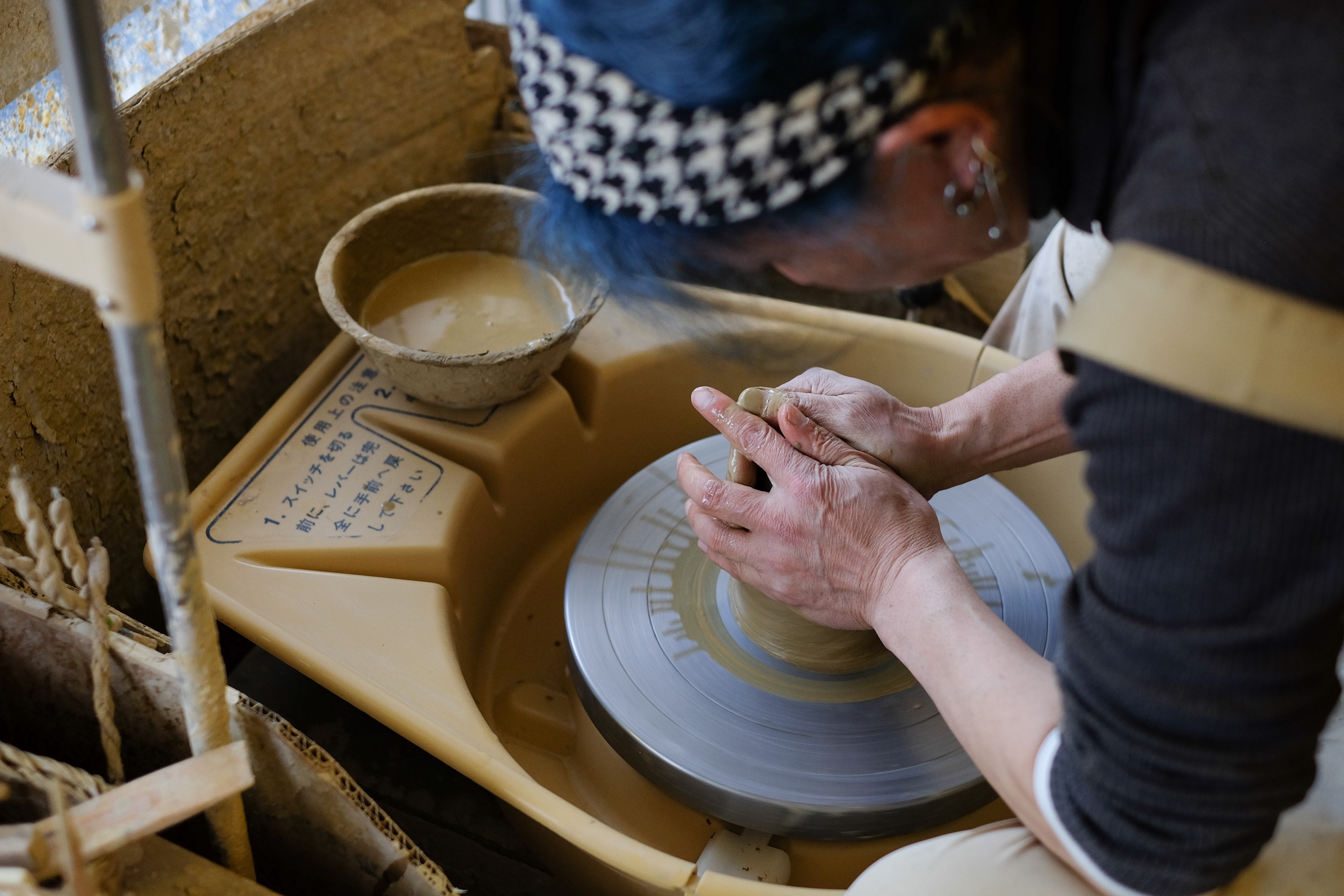
    I have never considered myself an “artist” even to this very day. For instance, whenever I was introduced to the likes of galleries and so on, I never liked being called an “artist”. I enjoyed playing with soil and clay from a young age, and if anything, I express myself using soil and ceramics, that’s all.

    This stance remained unchanged even after turning 45 — the day I quit my job. I wanted to create things with my own hands, I wanted to get out of the suits I wore every day. I wasn’t able to do that back when I was a salaryman, being a tiny cog within a massive machine. I would like to pursue what I love within my limited lifetime. At the end of the day, it’s not hugely important what I am referred to as, a name is only a name, I guess.

    At first, the idea was to go back to Yamanashi (山梨), where I was born, after graduating from the ceramic school, but then I wanted to start my career as a potter somewhere no one knew me, and I ended up staying in this studio in Toki (土岐). It used to be a store that sold ceramics.

    That was an extremely hard period. Life took its toll, I went through a divorce, and my life was turned upside down with not much money left. I didn’t know if I could afford food for the next day, and I even had to produce my own food because there weren’t any other options. What I ate, what I used, and frankly, it has stayed that way ever since. Looking back, it wasn’t easy, I felt like something had been accumulating up to the point when I started pottery. When I was creating, it was almost as if the clay was confronting me, and I had to respond with everything I had left at that time. Pottery is very different from graphics in the sense that it’s almost impossible to produce the precise colours or shapes that you envisioned. The unexpected hue and texture of the final outcome intrigue me a lot, that’s probably why soil and clay are still my best inspirations.

    I didn’t take on the alter ego “Yoko” until I divorced my first wife. I made the decision because I hated my masculine side, it was when I realised the identity of “Yoko” that I grew more aware and learnt to appreciate the presence of my original self, “Yoichi”. I think we all have two (genders) sitting within us. I was confused and worried at the beginning when I decided to step out as “Yoko”, about how everyone else was going to react and what their opinions would be. I think I have been blessed that the people around me, and even the audiences of my work, are more understanding than I had ever hoped.

    I would love to go to England one day. Since I was small, I have always admired the country. Back in the 70s and 80s, the culture and the fetish scene there were fascinating. It would be my dream to experience it, though it must be quite different now. Other than that, I do not have any large-scale life plans. Running a small gallery café with my partner, who is a pâtissier, producing everything from scratch on our own, that would be quite content for us.

    I think I should stop now. Thank you once again, it was great working with you this time. All the best with your work in the future too.


    Kindest regards

    Yoichi Yoko Yajima
    29 August 2019

  • Interview: Yuka Fukushima | Petrichor

    Interview: Yuka Fukushima | Petrichor

    Smell


    SOICHIRO KIMURA:
    Let’s start with smell.

    YUKA FUKUSHIMA:
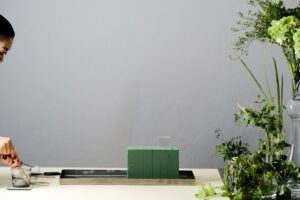
    You might have noticed that the smell of plants changes according to the temperature and the environment. When it cools down, the plants toughen, and you can just about witness a rise in the blueness and depth of their colour — like crystal; conversely, as it turns warmer, they become softer and smell incredibly gorgeous. Imagine floating a piece of dry plant on any watery surface, shaking it, and taking a sniff — a stronger aroma from the plants will be released due to their cell destruction. I wanted the audience to feel these changes and possibilities, as well as create a new scent by mixing up a variety of distinctive smells, which was also the idea for the installation this time at SYNONYM. What I was also hoping to experiment with was how to preserve the original olfactory characters of the plants through distillation. The purifying process would remove any contamination and foreign elements. If successful, we would potentially be able to experience that organic, fresh smell from the plants at any time of the year.

    Do you remember that time when you walked into the forest? When you were out in nature, standing among the woods, when you smelled that fragrance of morning dew and forest air, hearing the sound of flowing rivers, our bodies are able to memorise all these sensations. According to the Proust effect, that smell does trigger memories. The theory always comes to my mind whenever I create, drawing that connection between plants and people. Hopefully, my work can evoke something they have once experienced and allow them to relive those events again. Plants are an integral part of human lives; this piece I created for the exhibition also serves as a reminder that we are indispensable to one another.


    Distillation


    SK: We titled the installation piece Distillation. Have you been experimenting with the actual process for long? I assumed it’s not a required task at work.

    YF: Initially, I was investigating water as a subject without being overly interested in the notion of distillation. Being a floral designer, understanding the quality of it has always been an imperative part of the job; we have to ask what type of water is best for different plants, and where to find it. In reality, plants can survive with the tiniest dose; even in the desert, they manage to absorb it from the air and the underground – that’s where the cycle begins. The quality of water will affect the well-being of plants, which would then alter the quality of air.

    In some ways, I suppose this also applies to humans, since around 60% of our bodies are made up of water, and its properties vary across regions of the world; ultimately, this would affect the air we breathe. Being born in Nagoya (名古屋) means I was nurtured by the Kiso River (木曽川). When I go on trips, I always pay close attention to what the locals have to offer. I’ve had this wild thought since I started working with my family that one day, somewhere, eventually, I would be able to locate the water that is just right for my own body. I wonder if that would change me in any way.

    My initial trigger for diving further into “distillation” occurred when I went on a research trip to one of the distilleries specialising in crafting gin in Gujo (郡上), to the north of Nagoya, in order to test out the possibility of retaining the aroma of plants through distillation. The impression was that such a process is primarily used for brewing liquor and sake. To my very surprise, the gin I tasted at the distillery wasn’t how I had pictured it, even though it was neat and extremely popular on the market, I thought it wasn’t really my personal favourite at that moment.

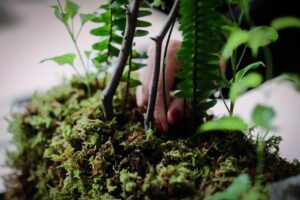
    I soon departed for the mountains at Gujo after hearing advice from the craftsman before jumping to any conclusion. Needless to say, the air up there was on another spectrum; the altitude was high, and it was extremely slippery and dangerous due to the growing moss. Once I smelled the air, I wasn’t going to miss the opportunity to try the river water despite everything. It turned out to be an incredible experience. The river looked beautiful and radiant, almost as if it were a living creature. It would be an understatement to say that I was shocked by its taste. In contrast to the water from most parts of Japan, which is soft and lacks minerals, there it was hard and flavoursome. It was even glowing with a bluish tone under the sun. I then mixed the river water with the gin that was brought along, and voilà — the gin seemed to have evolved and metamorphosed due to the added river water. It became so delicious, and my initial suspicion about the gin was completely eradicated. The impact of the water was phenomenal.

    By the end of the trip, I just thought, I wish I could preserve all of this — all the emotions, even the commotions. If I could distil that crisp taste of the river and the gin, the sense of having that graceful breeze passing through my hair and the warming sunshine glancing on my face, the feeling of reaching out for the rocks on the mountain and treading cautiously among the forests, the rise in my body temperature and heartbeat — if I could preserve all the feelings and all the elements of delicate nature in one transparent glass bottle, wouldn’t that be something else? Once again, I asked the question of what the perfect water is, and how we extract the best out of it. This intended separation and preservation process was what led to my spark for Distillation.


    Independence


    SK: I understood that you decided to move away from the family-owned business Marimo-en (マリモ苑) sometime earlier this year, but I’ve never really asked you why. Gaining independence professionally, I think that takes a lot of courage.

    YF: It has always been on my mind. I was looking for the right timing, that was all. I envisioned Tokyo, like many others, where things are obviously more accepted, and I went through phases looking for vacant properties for my business in the city. After a while, however, the idea just didn’t sit right anymore. I needed to be able to work with the right people, and again, probably like many, I didn’t feel that Tokyo was the place for me. Hence why I thought it made more sense to stay in Nagoya, where I was born and bred, a city I also knew where to find the best nursery growers.

    My older sister, who also manages the business, prefers things the way they are. On top of that, it has been continuously running for 51 years — more than half a century — which is amazing and terrifying at the same time, so fundamentally it’s not easy to change things. Clients are ever more demanding, a significant amount of time and effort is needed to keep the business afloat, and it’s achingly draining for my own creativity. Working at Marimo-en for 20 years and now approaching 40, I think it’s about time that I figure out what it is that I genuinely want as a person and a floral designer.


    Japan


    SK: You mentioned staying in Nagoya for the new solo adventure, do you think the city, or Japan overall, has influenced you?

    YF: Being Japanese, I think we are typically concerned with small details and mundanity, and frankly, we are very good at it. For instance, I like pochi bag1, washi paper and Sanada braid2 myself — trivial matters for a lot of people who aren’t Japanese, or unfamiliar with our culture. Matsuri (祭) and uchimizu3 are great examples too — the reflection of seasonality and seasonal presentation can oftentimes be so mundane that most would simply take it with a pinch of salt.

    I remember getting a weird déjà vu while I was looking at part of the painting Rakuchu Rakugai Zu4 housed at the Kyoto National Museum. It depicts the detailed lives of common people in Kyoto during the Edo period so vividly, almost as if I were there. I guess we all fantasise about travelling back to the past to some degree, for me, the Edo period was perhaps the most captivating and inspiring, notably its culture. It’s also the time when the concept of Iki5 was formed, the aesthetic ideal moves me deeply, and it’s what I aim to embody personally and professionally too.


    Art


    SK: Personally and professionally, do you seek inspiration from contemporary art, though the term is rather vague?

    YF: Lately, I particularly admire the photograph Kamiokande taken by Andreas Gursky; the abstract yet minimal expressionistic jet-black paintings executed by Tomoharu Murakami — underneath all the layers and textures of black ink on dark canvases, the use of materials like charcoal powder, oil and acrylic paints, you see discipline and vision. His techniques of wielding knives and brushes to create are also astonishing. I also remembered seeing an installation work orchestrated by Shuzo Takiguchi (瀧口修造), summing up essentially, it was his study. For most, it was perhaps merely a room filled with irrelevant objects, again, everyday slices of life intrigue me. I discovered eggshells pinned with a memo stating “I would like to eat what’s inside one day6” — absurd but fascinating.

    The list goes on: Ryan Gander, Yoshihiko Ueda (上田義彦), Lee Ufan, these are all very inspiring figures. I’ve never studied art, but it pains me to see how the contemporary art world is dominated by scholars or academics and marketing-driven conglomerates. It’s never about the name or reputation of the artist for me, but the vision and emotion that the artist is able to convey through his or her creations. You can almost immediately detect whether the intention of the work is to cater to market demand; there shouldn’t be any hierarchy in art either. Take the Edo period as an example once more, there was none of that. Shunga7 for instance, the culture and art were more to do with commoners than with royalty or governments.


    Future


    SK: Becoming an independent designer, what plans do you have for the future?

    YF: I would probably not start any ikebana8 lessons or workshops because I feel that it’s already a very saturated market. In my head, there are things that I would like to create, perhaps, for lack of a better phrase, a new style that differs from the majority of the industry, or somewhat of another aspect of what we as florists or floral designers can offer. It may not be the most interesting idea in the world, but speaking for myself, the crucial thing, once again, is to open up possibilities and ask the right questions. My mission is to connect people through plants, creating a pure and exclusive connection between both ends, without the necessity of attaching any words or explanations.