Akinori Kanao (金尾彰典, b. 1981), born in Hyōgo (兵庫) Prefecture, Japan. Majored in design at university, upon graduation, Kanao began his career at a graphic design company, before moving on to a consulting firm specialising in property redevelopment. Equipped with ten years of professional experience, his interest in music and art led him to become an independent project producer. In 2015, he launched CANVAS, founded with the mission of creating and preserving values and cultures, as well as connecting art with modern-day society.
As one of the key figures behind the realisation of projects such as Node Hotel and FEEL KIYOMIZUDERA, Kanao has even managed to navigate this digital-oriented world without the presence of a website. We spoke with the social media–shy producer about his personal philosophies and his stance on architecture.
AXEL WANG:
Kanao-san, can you tell us what you do? Are you more of a creative director or a consultant?
AKINORI KANAO:
We are off to a difficult start! I can’t give you a straight answer, honestly. In the case of the Node Hotel project, however, for something of that scale, we had many people involved in the development process, where I was acting as a coordinator, balancing things out, you know, in order to achieve our vision and goal.
AW: Before we go any further, did you always know that you wanted to do something creative?
AK: I studied design at an art university in Kyoto. I’m a bit sorry to say this, but I mostly just played around outside of school and hardly went to any classes. But I guess one positive thing that came out of it was that I got to meet a lot of great people, and I still work with many of them today. During that period, I didn’t have much schoolwork, so I was free to do things that I actually enjoyed, like organising music events in Tokyo or inviting artists and musicians over for whatever.
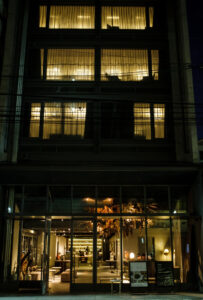
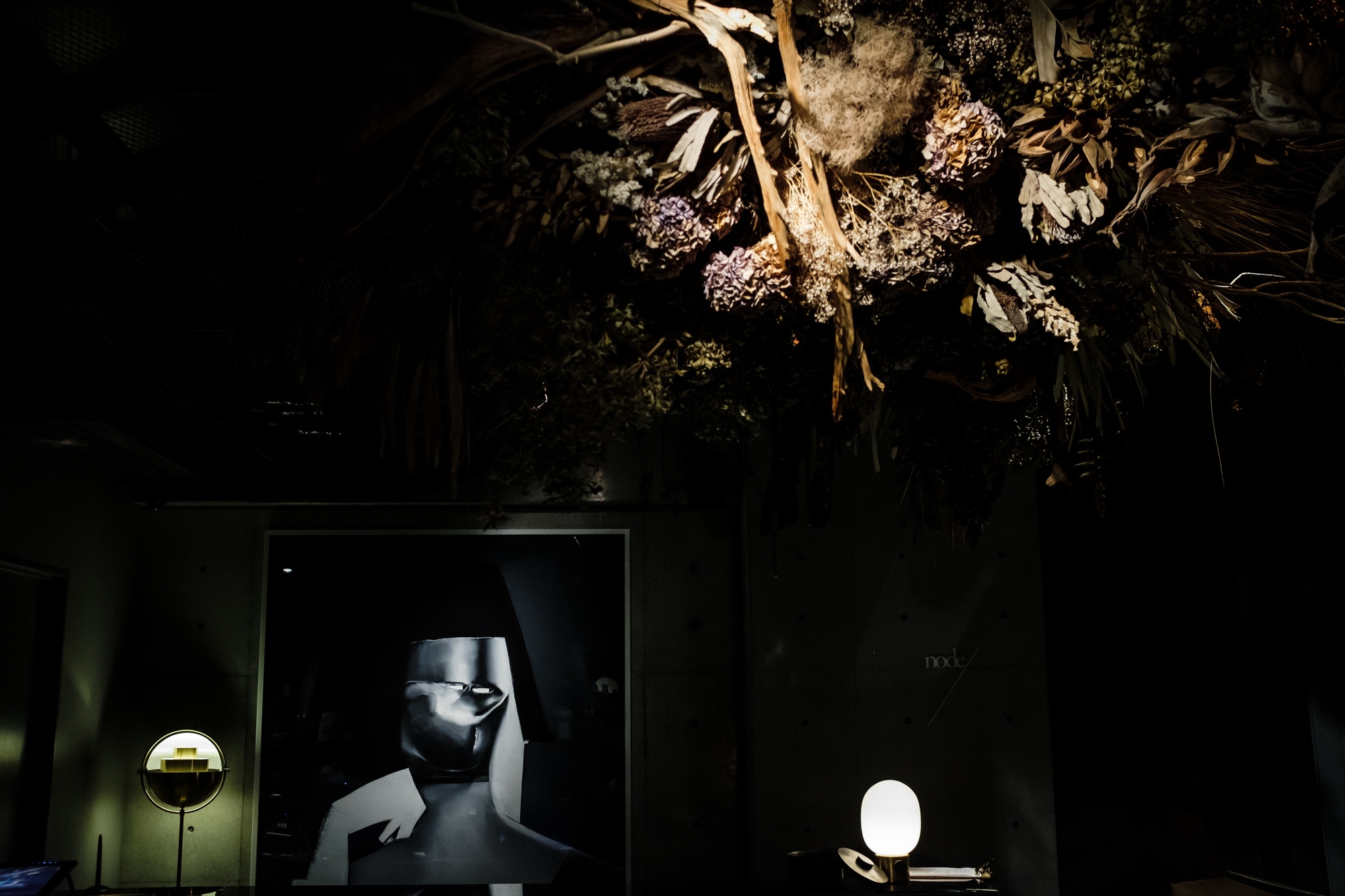
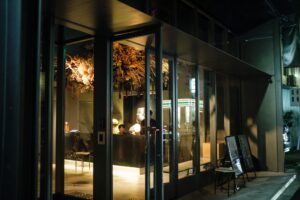
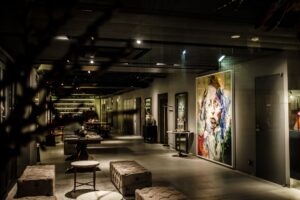
AW: Let’s come back to Node Hotel. We stumbled upon it in Kyoto near the end of 2019, and we were immediately blown away by the interior, which was how we came to discover your involvement. As one of the main players behind the project, can you please tell us something about its development?
AK: We spoke with the landlord upon hearing that he wanted to build a hotel in the area, so I thought about what kind of dish that I could serve at the table. Kyoto has never been short of demand for hotels, so obviously, we didn’t just want another standard and regular addition to the city. Node started with a clear-cut concept, and I assembled the team. We wanted it to be a hub that connects culture and people, where they can also learn things, experience art and design.
AW: After working for Nintendo and a consulting firm, what triggered your interest in property redevelopment infused with cultural elements, and eventually starting CANVAS?
AK: I didn’t work for Nintendo! It was a graphic design company that did hardware and software packaging designs for Nintendo. I think I spent around seven to eight years there, then switched over to a consulting firm where I started to get more hands-on with architectural projects, both of which were in Kyoto. At the start of my professional career, I was committed to spending a maximum of ten years working for somebody else.
CANVAS wasn’t founded for the purpose of constructing buildings alone, but more for creating and preserving values and cultures, or even assets. We just turned five this year, though sometimes I have to say, it does feel slightly embarrassing to talk about our own company because, honestly, we just do all kinds of things. Mainly, we collaborate with artists, but the projects themselves are not limited to only something like Node, but also branding and event work, FEEL KIYOMIZUDERA, for example.
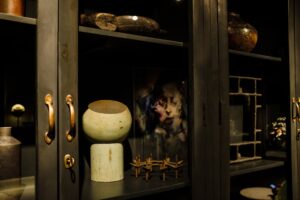
AW: That’s a particularly interesting one. Kiyomizu-dera (清水寺, literally “Pure Water Temple”) is perhaps one of the most famous and celebrated temples in Japan. How you married tradition and contemporary culture is phenomenal. Can you tell us more about this experimental project?
AK: Sometimes, we mistake the existence of a temple as a historical site, where tourists visit. It is in fact, not only a place for religious gatherings when a temple was first erected. Think of it as a museum for education and learning, cultural exchanges and, of course, art as well. I learnt that temples used to be places where contemporary ideas were formed, a representation of avant-garde expressions in the past. For me, religion and art are like friends, they have different characters and personalities, but are somewhat close to each other, that’s how the conception began.
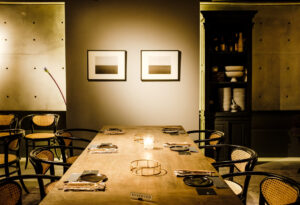
AW: Can you name your favourite architecture?
AK: You mean the ones I helped materialise or? Right, just in general.. Hmm.. Actually, my father worked in the architecture industry, whereas my own career kicked off in the field of graphic design. What struck me in the head was that, especially with commercial advertisements, they are very temporary, they are gone after a while — marketing campaigns, poster print-outs and so on. On the other hand, architecture remains. Like the ones my father worked on, they are still here, public buildings like libraries, commercial properties, and hotels, of course, and later even restoration work on a castle. After, I don’t know, almost eight years in graphic design, I just thought, that’s pretty cool, you know, whether it’s a shop or whatnot, they remain. I think that’s how I became serious about architecture, and of course, (because of) my father’s influence too. I remember when I was a child, there were no computers at home, what I saw mostly were blueprints, rulers and all that. I don’t think I’m able to name one particular favourite architecture, there are just too many great works in the world!
Like in Kyoto, you see these old buildings and temples, a lot of them are from the Meiji (明治) and Taishō (大正) eras. They are like ancient relics of the past planted into the present, sitting neatly alongside all these hugely impressive renovated and contemporary works. I just couldn’t name a “best”, as a lot of them become legacies of the city. Living among them and working in the field, I’ve come to realise this is probably what I value the most: how these buildings stand against the challenge of time, functioning as part of the city. I think history also tells us that culture is often cultivated and born out of architecture.
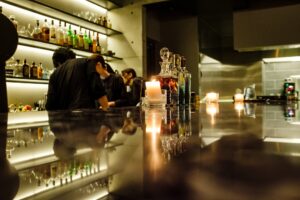
AW: Can you share with us your working process when it comes to an architectural project?
AK: Just for the record, I’m not an architect. I like architecture, which is kind of obvious by now, I guess it does run in the family. Process-wise, I work with an architect who designs the building.
We envision the form, and we create the space together, the process is like playing catch. The architect looks after the facade from a subjective point of view, whereas I prioritise the content of the building from a relatively objective seat. Take Node Hotel, for instance, I had to figure out the artworks and the furniture — the contents — joining the architecture with the interior space, though both ends require a certain level of respect for society, the surroundings, and the environment, because it will eventually end up as an object in the city. And this object will grow and evolve on its own, that part pretty much falls out of my hands, which, is probably the most interesting part of it all, how it completely grows beyond my imagination.
AW: Before we spoke, it was brought to our attention that the company doesn’t have a website, let alone any social media account. When it comes to collaborating with artists, how do you normally meet them?
AK: For work purposes, I do have to visit art fairs around the world. It’s kind of funny because the Japanese tend to gather when they are overseas, so it’s very community-based. There are often parties among ourselves, so I have the opportunity to meet a lot of the artists, and we catch up when we return to Japan. We share drinks and ideas, and conversations about work start very naturally. Essentially, we are all trying to integrate art more into society, forming a deeper connection. I’m too shy for SNS, you know (laughs), so this way of organic networking suits me better, really. It’s also easier when the people you meet share similar values and passions.
AW: Finally, Kanao-san, what role do you think contemporary art plays in modern-day society?
AK: Art and culture are, in a sense, products of our societies, you can’t buy them off a shelf, obviously. Nonetheless, they are created by human beings. I think contemporary art does have a greater role to play than we often recognise. It is connected to fashion and design, architecture and furniture, as well as music, and even food. I’ve always believed that the dissemination of Japanese art and cultural expression will have an impact on industries at large. That’s why we are doing what we are doing! (Laughs)