Journal Category: Story

  • Interview: Mitsunori Kimura

    Interview: Mitsunori Kimura


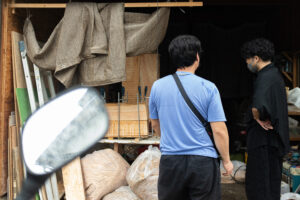
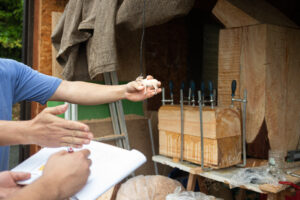
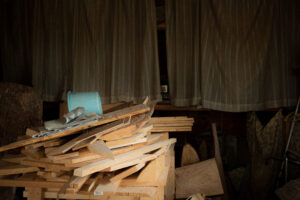
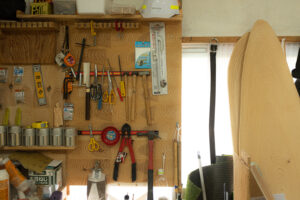
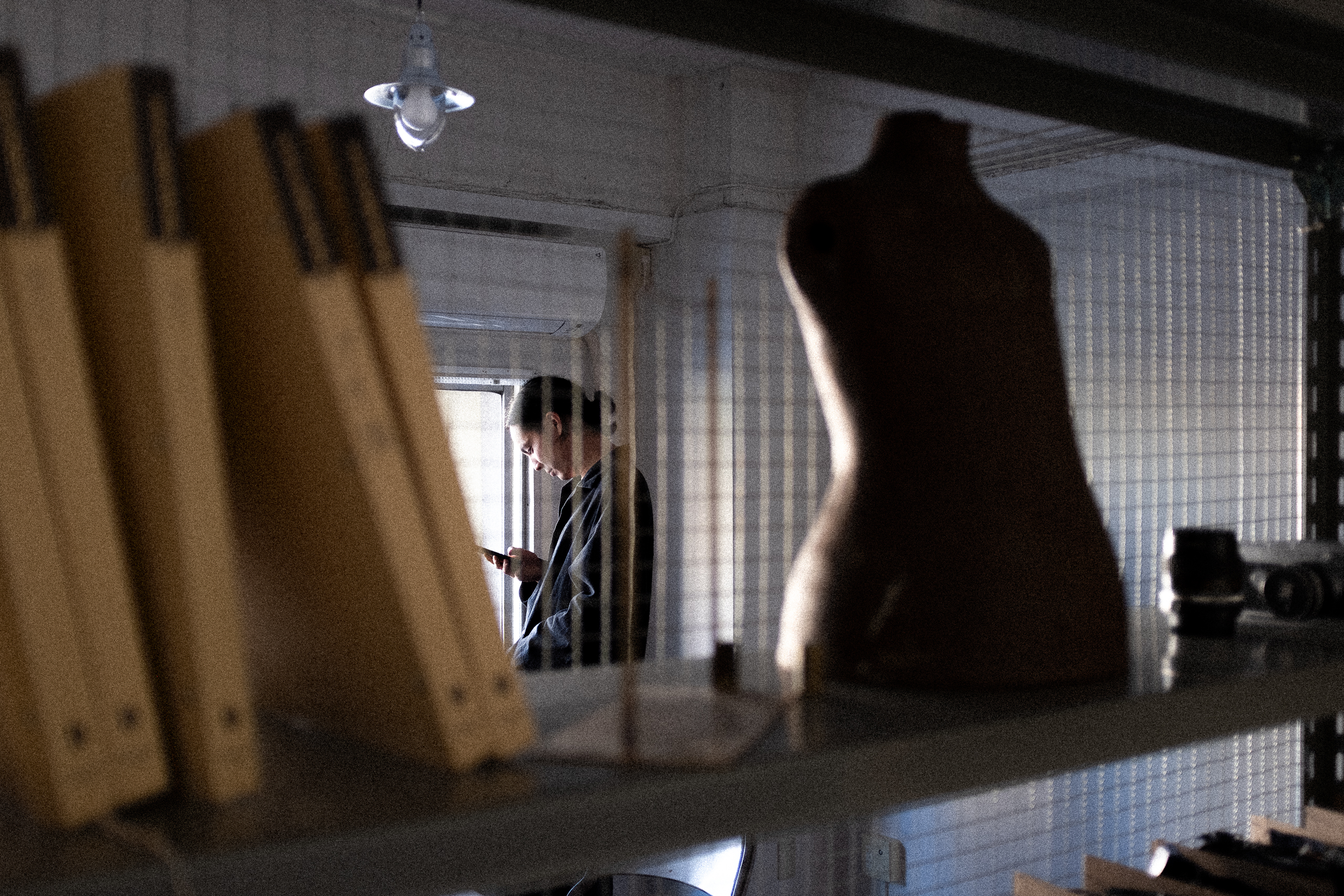
    Before the launch of GROWING SPACE (2022), we visited Mitsunori Kimura (木村充伯) at his studio towards the end of July.

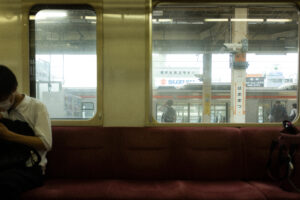
    A train ride of less than two hours took us from Nagoya (名古屋) to Fukuroi (袋井), Shizuoka (静岡), where the artist lives and works. We also had the opportunity to speak with Kimura-san about his life before becoming an artist and what it’s like to be a sculptor. Of course, it was a pleasure meeting his lovely family. Please find our interview and photographic documentation of the visit below.


    AXEL WANG:
    Kimura-san, first of all, why did you decide to pursue sculpture?

    MITSUNORI KIMURA:
    People sometimes consider sculptures as artworks, and sometimes they don’t. I’m interested in the boundary between artwork and the real world, and I believe sculpture can act as a bridge between the two.


    AW: Was there a point when you decided to become a full-time artist?

    MK: Not exactly, it was more of a natural progression of events really. Before, I never thought about selling my works, so even when there were enquiries, I always just refused. When I first started working as an artist, I also had a job at a university, so I wasn’t particularly troubled by money, and I didn’t have that many works either. At the time, I used to think that if I had to sell my work to someone, I would rather just buy it myself, if that makes sense.

    However, as my career progressed, the number of works increased, and it became impossible to store all of them. There were financial constraints too. So, after a few exhibitions at commercial galleries, I gradually began to find joy in selling my work.


    AW: I can imagine it’s not easy in the beginning.

    MK: Back in the day, every morning when I woke up, I would ask myself whether I wanted to continue working as an artist. But whenever I thought about the compliments from Pier Luigi Tazzi, he was an art critic and curator who sadly passed away last year, I felt encouraged. We met when he was the curator of Aichi Triennale 2010. I used to show him my work, and I still remember his very positive reaction to Oh There Is a Dog! (2010), and afterwards he exhibited my works in Italy. Moments like that kept me going

    After I quit my university job, I had opportunities to present my work at commercial galleries, so income wasn’t a massive issue, though I had to admit that there were times when my account balance was approaching zero. Even then, I never seriously considered quitting. I just kept going, hoping the works would eventually sell.


    AW: Let’s talk about your inspirations, Kimura-san.

    MK: When I was a junior high student, I used to love reading about the wooden cat sculptures in art textbooks. In high school, I found the works by Katsura Funakoshi1 enormously intriguing. Later at university, I was taught by Eiji Watanabe2 to create a sculptural interpretation of the Red Man, painted by Georg Baselitz3. Through the motif, I gradually began making my own animal sculptures using wood and oil paint.

    I guess I’ve never really had a strong sense of reliance, or maybe trust even, in too many people since elementary school, so I think Watanabe-san is definitely my strongest influence. About 10 years ago, I also noticed that my work shares certain similarities with that of Takesada Matsutani4.

    I create three-dimensional objects using oil paints, and I use a chainsaw to create hair-like texture on the surface. These methods avoid direct contact with the material. Matsutani-san, on the other hand, uses a lot of vinyl adhesive in his work, allowing it to be shaped by elements like gravity, heat, or even wind. In a way, it creates a sense of distance between the object and the viewer.

    During my student years, I encountered Mono-ha5 quite often, so instinctively I thought the movement influenced me. But perhaps without realising it, I was also influenced by the Gutai6 group. Later, as I did more research on Matsutani, I learnt that he was indeed, a member of the Gutai group led by Jiro Yoshihara — I came across his motto: “Don’t imitate others”7, which I found quite compelling.


    AW: When did animals become such a dominant presence in your work?

    MK: I remember since around 2004, I’ve consistently made animal-related works — if you could even call them “works”, like we used to make cats and dogs posed like humans, or sort of turned humans into animals. When the COVID-19 outbreak began, animals became a focal point because they were seen as potential carriers of the virus.

    During the pandemic, I was trying to focus on the act of breathing by the lungs, for obvious reasons. At that time, I had the ambition to create works representing all the mammals that existed on Earth. In the end, I managed to create the faces of 958 of them. After that, I compiled them into a pictorial catalogue, and it reminded me of a simple fact I had almost forgotten: humans are mammals too. It made me realise how strong the connection is between animals and us — I find that endlessly fascinating.


    AW: You mentioned creating hair on sculptures using a chainsaw, can you tell us more?

    MK: It’s a technique that I have been experimenting with in recent years — creating hair on the surface of human and animal sculptures — imagining hair growing out of the wood itself. It’s a process which involves the operation of a chainsaw, fluffing repeatedly on the surface, basically. So it depends on the characteristics of the material, it’s only possible with a certain type of wood.


    AW: Is there a message that you are trying to convey through your animal sculptures?

    MK: Not consciously, I don’t bear any messages in mind when I make work. But depending on the context, it can take on meaning. Obviously, the interpretation is left open to the viewer. In general, what I would like to create are animals that breathe and tread this land.

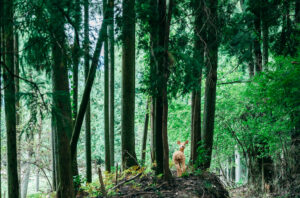
    For instance, in The Deer is Gazing (2020), when viewers make eye contact with the deer sculptures, the spectacle reminds them of death in the natural world, because in real life, making eye contact with wild animals can put you in danger. On the spot, you feel some sort of tension, and of course, some would find that the deer is cute and so on.

    In Into the Forest (2020), I depict deer eating trees. As you may or may not know, deer have four stomachs, and they will eat just about anything, like tree bark. And this is said to have contributed to deforestation to some extent. In this work, you see that the deer’s heads are buried deep inside the trees, as if they are so absorbed in munching up that they fail to notice anyone approaching — ends up becoming part of the forest.

    The Deer is Gazing (2020) @Yuta Togo


    AW: I remember standing in front of a massive painting by Anselm Kiefer, there was this feeling of awe — it was a mixture of respect and wonder, and even fear. I personally think that the human brain is wired to be impressed by large-scale objects because, when you think about it, we are tiny creatures compared to nature! Anish Kapoor on the other hand, once said that, being big can be meaningless when it comes to art, the point of the scale has to relate to what it’s about, the content and the context. Has the thought of creating giant-sized sculptures ever crossed your mind?

    MK: You are definitely right there, large-scale works do have a strong presence and charm. I have thought about making it, but to be honest, the size of the work has never been my concern. And I guess whether the object feels large or small depends entirely on the space. So for me, the more important question is what to create, not how big it should be. The works I make are always life-sized, they are not necessarily a realistic depiction of actual animals, but they do carry a certain sense of realism.


    AW: Kimura-san, do you find time for any hobbies outside of making art?

    MK: I enjoy filming and watching videos of my singing (laughs), especially when I try to imitate a female singer’s voice!

  • Interview: Jinhui Wang — Chapter 2

    Interview: Jinhui Wang — Chapter 2

    What’s Real


    AXEL WANG:
    What would you call yourself on a business card?

    JINHUI WANG:
    If I had a business card? I guess the point of having a business card is so that people can easily understand what you do.


    AW: Exactly.

    JW: I would just say artist. Definitely not a photographer — that would be very misleading. If the person wants to know more, I’m always here.


    “This has always been my interest, exploring what is real, or what we believe is real,
    versus what is not real. Like, how do we define this boundary?”


    AW: Here comes a very stupid question: What are your artistic inspirations? I somewhat sensed a bit of Kubrick in your work.

    JW: 2001: A Space Odyssey (1968) is one of my all-time favourites. I like the fact that, there’re so many different layers to it, and the fact that nothing is explained overtly. It’s a timeless masterpiece that tells a story about cycles, about us, human beings. It reflects on our very existence — we exist, we rise, we fall, and then we start all over again — a cycle we can never break out of, from the micro to the macro. To me, that’s also what’s amazing about us as human beings. This cycle is beyond time and space, it’s the cause and the result of everything, and we never give up.

    I’m inspired by different aspects of different people really. I love the works of Nam June Paik, for the playfulness and for how he used so-called technology as an element in his sculptures. Jean Baudrillard probably speaks to me the most, the author of Simulacra & Simulation (1981), which in turn inspired the Matrix movie series.

    What Baudrillard talked about in the book was basically — OK, I’m going to try to summarise it — to conceal is to pretend not to have what we have, and to simulate is to pretend to have what we do not have. Baudrillard believed that simulation questions the difference between the real and the unreal, whereas a simulacrum is something, that doesn’t need to be justified by anything other than itself, like God. There is always a manipulator in a simulation, but what if the manipulator itself is a simulacrum? We then enter a loop of questioning what is real and what is not, and it might just be easier to stop this binary logic and accept the fact that we actually live in a hybrid state. The Matrix references a lot of Baudrillard, from what I understand.


    AW: Are you excited about the 4th Matrix film?

    JW: I don’t know, I didn’t like the last one. The first one (The Matrix, 1999) is the best for me personally, because it corresponded with Baudrillard’s theories, the second (The Matrix Reloaded, 2003) and the third (The Matrix Revolutions, 2003) felt more like continuations without introducing anything new, it turned into a warfare of who wins and who loses.


    AW: Human vs. machine.

    JW: Yes, then it became binary. Anyway, coming back to artists! There’s a piece created by Claes Oldenburg, the sculptor, in 1963 called Bedroom Ensemble. It’s shown at the National Gallery of Canada in Ottawa. It’s essentially a set of beds, as the name suggests. The whole piece looks like a motel or hotel room, with a variety of objects physically sitting here and there.

    I remember when I saw it for the first time, I had absolutely zero clue what was special about this bedroom-lookalike setup. But if you open your eyes wide and look closely, you notice that the corners of the bed frame are not 90 degrees, everything else is constructed in a geometrically and optically false way on purpose. Without going into too much detail, for me, the piece created this illusion as if you were looking through the lens of a camera, it felt real due to the presence of the objects, but weirdly unreal at the same time because everything is distorted and warped. This has always been my interest, exploring what is real, or what we believe is real, versus what is not real. Like, how do we define this boundary?


    AW: You started experimenting with digital media during the pandemic. When I spoke with you for the first time, I was telling you that I felt this medium still feels very much beyond me. How would you explain what digital art is to me, and why I should care about it?

    JW: Maybe I could ask you the same question: What is art? It really is a question that would spark different responses from different people, I guess. In fact, I really enjoy the work of Arthur Danto’s recently, he was a philosopher and a professor at Columbia University, and he published a book called What Art Is (2013), where he wrote about this whole debate, especially following the modern art movement, people arguing whether art was dead, or art had become something else, what’s art and what’s not, there are simply different points of view.

    The same goes for digital art. It’s like old-fashioned journalism versus digital journalism, old-school accounting versus digital accounting, the whole technology/digital revolution has affected pretty much every field.

    My generation, we practically grew up holding a mouse in our hand, obviously pens too, we still write, but when you start using computers from a young age, it becomes second nature. Learning to use a mouse for us is somewhat like learning to write with a pen in the past. Sure, the computer language is a whole different system, a binary one with a different logic behind it, and it took a while for humans to adapt. We’ve now reached a phase where, all these movements, this (gesturing taking photos with a phone), and this (gesturing taking a selfie holding a phone in one hand), all these hand movements — they are so widely adopted, so common, ingrained even, they have already become second nature for us, just like people with pens in the past.

    The digital medium has become part of our lives and part of our reality. Digital art for me is merely another medium that emerges with the progression of technology. Every medium has its limitations, of course, just like painting using brushes on a certain-sized canvas, digital art, for me right now, is extremely confined to displays or screens, high resolution is often a must, so they are more likely to be on the pricey side.


    AW: What do you make of the digital frenzy these days?

    JW: I’d refer back to Baudrillard once more. He’s not a man of our time, but he talked about consumerism, pop culture, television and proposed that, in a way, it’s all simulations — and I agree, it’s a loop! Like, we believe we buy avocados because we actually want to eat them, not because of a healthy-food commercial we once saw. Likewise, with selfies, we subconsciously pose instead of genuinely documenting life; this manipulates our everyday actions and changes how we behave in real life.

    If we can even call that “real life,” because if everyone starts doing things and living online, that itself becomes real life, right —a simulation of another reality. I suppose most of us live in contradictions because we are influenced all the time. Humans are such fascinating animals, like we are so contradictory, so cynical, yet we are kind, all at once.

    Jean-Paul Sartre once said that to prove we exist, we make decisions and take full responsibility for them — becoming our own “gods.” That feels a little contradictory to me, because the way we dress, how we talk, the things we eat, even the smallest details in intimate relationships, we often mimic one another or imitate characters from films. So much of it happens subconsciously. It’s neither good nor bad, I think — it’s just there.

    The digital medium is not necessarily evil either, it’s not that binary at all. I honestly feel that it’s overly simplistic to just label something as entirely bad, and we should never have it in our lives. Like, The Matrix is paradigmatic, eventually it became this big battle between the good guys, who are trying to save the real world, versus the bad ones, the agents, the big manipulator behind, which is one of the main reasons why I didn’t enjoy it because it’s just all too binary.

    According to Jean Baudrillard, we may already be living in a kind of Matrix-like simulation, yet people still fantasise about someone manipulating us from above. In reality, we are probably our own manipulators — we create our own simulations and then live within them. Once again, it becomes an endless loop, a circle that never quite closes.

    This is what inspired me to create Space Travel (2021). I’m still learning this digital language and trying to make sense of it myself. My work is digital because it felt like the most suitable medium for the questions I wanted to raise and what I wanted to express. At the same time, it also seemed like an area that hasn’t been discussed enough, for many people, it’s still relatively new and even a bit bizarre. But it is our new reality. I personally don’t think technology or the digital is as evil as some make it out to be, it’s just another canvas.


    AW: And NFTs, do you reckon it’s turning digital art into something else?

    JW: NFTs are valuable in that they bring a more diverse audience to art, and in that sense, they’ve given rise to a different form of artistic practice. This isn’t strictly about NFTs, but it’s probably relevant in this context: a creator’s work reflects who they are, and there is usually a clear sense of purpose or meaning behind it. However, when that intention becomes primarily driven by money, and creators begin attaching price tags to their work — not that I’m against artists living off their art — things start to shift.

    In the NFTs space, prices can go insanely high, often not because of the intrinsic value of the work, but due to opportunistic financial motivations. Investors rush into this quick money grab — and I’d rather not get into the debate over what defines the value of art — but this phenomenon creates a problem. Because when I said NFTs bring in a wider audience, many of these new audiences — speaking from my own experience — don’t really give a shit about the art itself.

    Everything moves so quickly that no one has the time, or perhaps the inclination, to sit down with the work and think. Alongside the whole crypto hype, many are only in it for fast money and nothing else. When prices become absurdly high, people go high! That’s likely why NFTs are discussed so much now — because of the scale of money involved, which ostensibly makes them seem relevant and important. But at that point, it’s not really about the art anymore.


    AW: Like a stock.

    JW: Finance in the form of art.


    “…I’m used to people seeing me differently and asking questions.”


    AW: It’s hard not to bring up the pandemic, especially since you are from Wuhan (武汉), China. For the past couple of years, the city has faced a lot of stigmas. How have you been handling everything?

    JW: I was already in London when the whole thing went down. There were some racially related incidents, only some, like, they were saying things about Chinese eating pangolins or whatnot. It’s not really the first time that I have been asked these sorts of stereotypical questions, bordering on offensive. The few times that it did happen, I guess people were not actually intending to be offensive, they probably asked because they’d never really stepped outside their comfort zones. Most of the time, they’re not really expecting any answers since they already have one in mind. I tend to just completely ignore this group, because there’s no real point in continuing the conversation.

    I guess I’m not that sensitive to it anymore. I’ve been to a lot of places, and I’m used to people seeing me differently and asking questions. I’d say I usually deal with it pretty well. Over the past year, “Wuhan” has been getting a lot of attention, just like you said, eyebrows would raise whenever I mentioned where I’m from: “Have you ever been to the lab?” “Is the lab real?” “Do you really eat bats?” — There are all sorts really. Maybe people think they are being interesting and funny, but I usually throw in a bit of repartee and turn the joke back on them. Sometimes it’s better not to take it too seriously.


    AW: Let’s explore some alternatives here. In a way, the pandemic has pushed people out of cities and back to nature, though for someone like you who has just started piecing together a life in London, you can’t simply abandon everything and move up to some mountains in Scotland, but is that something you might consider one day? Practise your art somewhere else outside of a city?

    JW: Oh, definitely. Probably nothing long-term, though. I wouldn’t be able to just completely give up city life yet. I love people, and frankly, I’m concerned about issues, which is a big part of what keeps me going every day. And a lot of these issues, they only become visible through interaction with other people.

    For thousands of years, humans have built cities and invented tools — almost everything we do today comes down to them, which is quite amazing. So I definitely don’t see myself going primitive, living in a cave without any of these tools, that just feels backwards, really. At the same time, the pandemic made me realise how much we’ve all missed nature, especially after I moved away from Canada.

    In cities like New York, London, or Shanghai, things are moving so fast, too fast. And with the pandemic, it’s been one thing right after another. There’s barely any room to slow down and reflect,  people rush into decisions, and we all end up in these conundrums. When things grow into something that overwhelming, like a monster, it becomes hard to tame. But nature always has its way of calming things down, and in turn, it pushes you to actually start using your brain a little, and think, instead of just reacting or becoming a kind of slave to the pace of things. At the very least, it makes you pause and ask yourself why you are being a slave.

    But yes, to answer your question, I’d love to step away one day — just for a few years, perhaps — have my own studio, and just take it easy.

  • Interview: Jinhui Wang — Chapter 1

    Interview: Jinhui Wang — Chapter 1

    There it was, London Design Biennale (LDB) 2021.

    Since spring 2020, the pandemic has forced the art world to shut its doors to everyone, a large part of that world anyway, if you look away from all the mediocre online exhibitions and the chaotic sphere of NFTs. But then there it was, LDB at Somerset House in the summer of 2021. It was probably one of the first major art events to welcome back visitors amidst everything that was going on.

    It must be something worth documenting, I thought. Not to mention the fact that it’s taking place in the city of London, the city that practically raised me and opened my eyes to the art and creative world. Given the fact it was still an uncertain and volatile period for travelling, I needed to find myself a London-based photographer who could also write to document the whole event, where else to look than the famous Royal College of Art (RCA)? And it was just in time for graduation too, there should be a couple of them who had their sleeves rolled up, geared up and ready to venture out to the real world, I imagined.

    As I browsed through the list of works from the year’s MA Photography graduates, to say that I was blown away would be an understatement. They were miles better than many of the works I had seen at some of the Japanese art fairs. I was excited, a bit like when you play Football Manager and witness a pool of promising teenage talents with all the right attributes rising through the academy, doing magical things on the pitch and performing way above their ages — it was a bit like that when I saw these works created by the RCA graduates, I didn’t realise students were capable of so much these days.

    One of them that grabbed me in particular, was a series of Kubrick-esque images created by someone named Jinhui Wang (汪锦卉), comprises outer space elements in vivid colours, as well as mundane settings and objects from our daily lives, digitally infused to create this whole vibe of a 70s science fiction film, even though the crisp and contrasty images are undeniably modern, almost like something you would see on Netflix — an imaginary universe, an alternative timeline — you get the drill.

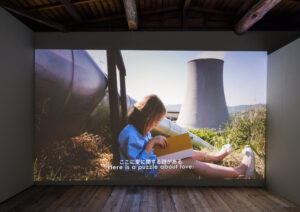
    The work in question here, is a CGI film created by Jin, curiously titled Not Dreaming (2021), as if the artist is deliberately sending out a message with the intention of convincing viewers that, the work is about reality in actual terms. It’s not a visualisation of her dream, but instead, a depiction of her very own reality, which begs the question of what the reality is, or what, ultimately, is real?

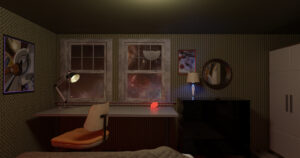
    Following the movements of a weird object of mass that appears to have a life of its own, the film takes you on a trippy journey through the artist’s house. Make no mistake, it is a house indeed — there’s a bedroom, a living room, and a kitchen. Only this house doesn’t remotely resemble one that would exist on our planet earth, evoking a sense of dépaysement. Everything you see in the film feels distant, like falling into a dreamlike state, out of reach and yet simultaneously within grasp, whereas everything looks incredibly ordinary and familiar — the suitcases, the anglepoise, all the essence that constitute the fabrics of a commonly perceived reality sit there in silent playing its tricks, mischievously manipulating you into believing that what you see is in fact, nothing but the truth.

    “It’s all a loop” — a sentence that kept resurfacing during my conversations with Jin afterwards. And I suppose it’s not too far from it after all. As we see towards the end of the film, the journey kicks start once more, and we relive everything once more, as if it’s a signifier of life itself, nothing but a loop. How the artist traverses through the real and the unreal while blurring the line between, is beyond fascinating.

    The artist’s technical ability demonstrated in executing the concept and idea is also impressive to say the very least. Above all, Jin even composed the entire soundtrack for the film. When we spoke for the first time, she surprised me by telling me that, she had only begun learning to create digital artwork since the lockdown was implemented in London back in April 2020, like, you couldn’t go out, so might as well make good use of our time at home. I guess the lockdown did do some of us good eventually.

    The artist also told me that, she experienced some sort of derealisation of her reality during that period, which ultimately found its way into the work. Beneath the layers, such secluded experience, all the emotions, thoughts and ideas started to boil, subsequently formed and seethed, bursting from isolation, Not Dreaming was born in April 2021.

    I recall during our initial meeting that, from this young person who had just finished school, I sensed a remarkable bunch of confidence and maturity. She sounded like she knew where she wanted to go and what she wanted to explore. For someone her age, I thought that’s incredibly hard to come by because, when I was at the age of 24, I didn’t know jack, let alone knowing what I wanted to do for the rest of my life.

    After a few rounds of emailing, I found myself in a happy seat when I heard that she would like to be part of our project. I knew that, one way or another, whatever she decided to produce in the end, it would turn out to be more than a mere photography documentation of the event, and it would be nothing like what I had expected. Guess what, I wasn’t wrong.

    When the project was about to conclude and wrap up, I conducted a 150-minute interview with Jin via Zoom. You can find the edited transcript of our conversation below. The first chapter of the interview centres on the artist’s past and her experience living in all those places around the world — Bordeaux, Ottawa, London, just to name a few. In the second chapter, we focus more on what Jin does, her artistic inspirations, and yes, the pandemic too. I had a wonderful time talking with Jin, and I certainly hope there’s one thing or two for everyone to take away from this young and brilliant artist’s words too.


    Here, There and Everywhere
    Axel Wang
    We can’t really start a conversation without talking about the weather, can we?

    Jinhui Wang
    You can never.

    AW: How’s London right now?

    JW: It’s beautiful, blue skies, soft white clouds, reasonably dry and chilled. Not cold, but chilled, a whole lot better than winter and rain.
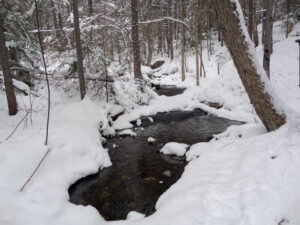

    AW: English weather gets a bad rap. I remember one time in Montreal, it was snowing in May, you lived in Ottawa, so you must know, I just thought, this is even worse.

    JW: I guess it’s not necessarily because it’s cold out here, it just tends to get cloudy and dark. The winter here is much darker and gloomier than in Canada — there’s less Vitamin D, and you feel tired all day. In Canada it does snow often, but when it doesn’t, the sky clears up completely with no clouds, lots of UV, though ultra cold.

    AW: Now that you’ve graduated from the Royal College of Art, how does it feel?

    JW: It’s weird. It’s the first time that I’ve ever been out of school, without the prospect of returning again any time soon, not for at least another two years. For now, I probably need to get a proper job, I need to keep making art and staying in touch with friends, it’s going to be challenging, in terms of blaancing finances and creative works, but it’s somewhat exciting. I’m glad to find myself here in London though, this big crossroad, melting pot, where you’d find all kinds of people from all around the world. It’s not typically English, and it gives you just that little bit of extra freedom to express yourself.
    AW: I’ve never interviewed a fresh grad, from what I’ve seen, you seem to know where you would like to go. Did you always want to make art?

    JW: I would say yes, but also no. I didn’t even know what art was back in the day. When I was young, I loved making things with my hands, a small sculpture here, a painting there. I obviously didn’t consider it “art-making”, especially since teachers and parents pretty much disapproved and regarded them as a complete waste of time, something that wouldn’t get me better grades.

    I was born and raised in Wuhan (武汉), China, where for the most part, cultural education was missing from the school curriculum. But ever since I was a child, I had always enjoyed those “useless” things, and I was constantly just, ruminating over things. I loved to read Plato when I was in junior high, albeit a translated version. I enjoyed the way he asked questions, and I liked how he articulated things in a language simple enough for a twelve-year-old to grasp, yet often deep enough to stay with you and for you to chew on. I loved all of that, though I still wasn’t aware what art actually was.

    I only started to join the dots after I attended university in Canada. I started studying art history and modern art, and I took philosophy courses too, in which metaphysics was something that I was already familiar with, and suddenly it all began to make sense. Without actually speaking any words, I was able to express and convey my thoughts and ideas through making artwork. That was the time when I realised I had to do art, there was this tremendous desire and urge pouring out inside me, wanting to do this and become an artist.

    So to answer your question, yes, I always wanted to make art, but I wasn’t always conscious of it.

    AW: School can be daunting for many kids growing up. We all share similar experiences, I guess we just weren’t brought up having that mindset that, art or design were in fact an option available. I remembered hearing about a classmate who went to Emily Carr and enrolled in a graphic design course, I didn’t even know that was a thing.

    JW: You can do that?! (laughs)

    AW: We were brought up being told to go to school, get good grades, graduate, and then get a job in a bank or whatever, weren’t we?

    JW: I imagined it had to do with the only-child policy. Since all the attention is centred on you and you alone, whatever you do, it has to be something considered “useful” by the parents. But then, in all honesty, I don’t think mine were the worst, despite the disapproval they supported and encouraged me to pursue what I truly wanted to do.

    AW: You’ve lived in so many countries, why did you move around so much? Was it by choice?

    JW: I’m just crazy curious. I’ve always wanted to do things I’ve never done before and go to places I’ve never visited. It all started when I did an exchange program and spent a year in Bordeaux, France, during my second year of high school in Wuhan. Because the two cities are sister cities, and I had been able to speak French since I was twelve.

    Originally, I was going to study at Sorbonne University in Paris after high school. I was accepted by the university however, in order to proceed, I had to do another interview with Alliance Francaise. At first, it was going all so smoothly, but towards the end, out of nowhere, they asked if I could speak English. I completely blanked because I practically ditched English for French as my second language, it was really embarrassing.
    AW: Who would have thought, but your English is not so bad now.

    JW: Thankfully, along the way came this scholarship offered by the University of Ottawa — I loved travelling, it’s a bilingual city, I could always go back to France afterwards I thought, so I packed my bags, and off I went to Canada, to study English! That would be 2015, when I started University.

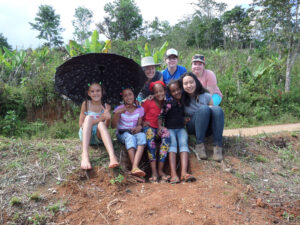
    The first summer during my time there, I opted for a voluntary humanitarian project in the Dominican Republic that lasted five weeks. The preparation for the project itself went on for almost a year — fundraising, language learning and all that. It was an incredible experience, we were building houses, and I got to teach in local schools and so on. After I returned to Ottawa, I just thought, since I had already started learning Spanish, I might as well push further. I took on more Spanish lessons and headed to Salamanca in northwestern Spain for another school project soon afterwards.
    AW: Looks like you’ve finally decided to stop sailing and settle in the city of London.

    JW: You never know.
    AW: If you must name one favourite city, what would it be?

    JW: That’s really hard. I am very emotionally attached to Bordeaux, as you can imagine. Since I was there when I turned 16, I had a fantastic bond with the host family, and we’re still in touch. They are incredibly interesting and cultured people. I was taught a lot of things, even table manners for instance, which I didn’t get to learn back in China. I didn’t really have a social life outside of school back then either, so I do consider myself as having partly grown up in France for that reason.

    But then I also love London, for all the different reasons. I wouldn’t go as far as claiming I’ve finally found myself after I came here, but I guess my personality and character just started to gel when I arrived. I got to make my own decisions as an adult, and it’s exciting to meet different people from all backgrounds every day. I just love people, man, because of all the travelling I tend to get on pretty well with almost everyone. Also, the jazz scene here is amazing. I enjoy going to galleries and museums too, of course, the diversity and cultural atmosphere are something that I haven’t really experienced before, and it’s incredible.
    AW: How do you think all these experiences, living in different cities around the world, have influenced you as a person?

    JW: Each one of them gifted me different things, which I genuinely appreciate. I was just talking about Bordeaux, which was my first cultural exchange and overseas experience — you always remember your first, right? (laughs) It was the first time that I learnt to stand on my own feet, how to act in society, how to behave among people and interact with strangers, learning all those soft skills that I didn’t have a chance to learn before.

    Although not the biggest city in France, many Parisians move to Bordeaux, and generally, I would say the French were curious to know more about China. To a certain extent, some of the things they asked made me realise how little I knew about my own culture, which really put me to shame and, in turn, drove me to learn more about not only culture but history too. It was also about learning different perspectives.

    It was a lot of fun, getting to understand French culture, especially through the language of French, like you know, sometimes if you are an adult travelling abroad, it’s hard not to compare, especially when everything has to be translated. While I was there, I was completely immersed. I was building everything up from zero, like a five-year-old basically, absorbing everything like a sponge. So now, when it comes to the French way of life, or even philosophical concepts or ideals, I’m able to grasp them quite well, more so because I can see things from an “insider’s” perspective.
    AW: Cultural awareness.

    JW: I guess not everyone likes to blend in culturally. For me, I enjoy being part of the crowd. I like feeling the connection between people, and I believe people should be connected. There are so many talks about globalism, but for me, the truth is, we still need more connections. A huge part of the crowd cares only about the differences, but as humans, we have so much more in common than we realise, and I would like to discover and build on those connections.

    I sometimes wander around the street and speak to random people. The funny thing is, when you do that, people open up and allow you into their lives too. And I love it. You’re like a little spy, stepping into different people’s lives. Sometimes it could be a homeless person, or it could just be an older guy who’s bored, someone who cares deeply about what’s going on but doesn’t have anyone by their side to share their thoughts with. They’re happy when someone is willing to listen. And occasionally, I even get invited to secret parties as a result, which is fun too. It just makes you feel like you’re connecting — with people, and with the world.


    TO BE CONTINUED…
  • Interview: Yi-Ting Wang — Chapter 2

    Interview: Yi-Ting Wang — Chapter 2

    The Garden of Forking Paths


    AXEL WANG:
    當⼀名新⼿家長已經是⾜夠繁忙的⼀件事了,更不要提同時您的⼯作還是藝術創作。您覺得孕育新生命有給您帶來什麼不一樣的視角嗎?

    It’s hectic enough being a new parent, let alone working as an artist at the same time. Do you feel that bringing a new life into the world has given you a different perspective?


    YI-TING WANG:
    這個問題對於現在的我來說似乎還是有點早,因為我仍然身處於當下的階段之中。生活作息以及工作節奏勢必都因為新生兒的關係而有所調整,我也還在學習如何在創作和照顧小孩之間取得平衡。

    生為一位女性,或許是天性使然,或是生理影響心理,我常常放心不下小孩,很難全心全意投入在工作狀態裡,必需不時地在創作者與照顧者之間切換,這大概是影響我最多的部分。但同時,觀察一個新生命,從認識自己的手開始,到一點一滴認知這個世界的過程,我彷彿也跟著他重新認識這個世界。

    我很開心自己做了這個決定,孕育一個新生命的經驗對我來說彌足珍貴,也如同創作一件獨一無二的作品一般,唯獨這件作品需要更多的耐心與愛。我期望我的小孩未來能和我一起創作作品,希望他能始終保有對世界的好奇心,與我一同探索這個世界。

    I’m guessing that perhaps in a few years, I’ll be able to answer this question properly. My daily routine and working hours have inevitably changed since the baby was born, and I’m still learning how to strike a balance between making art and caring for my child.

    As a woman, I wonder if it’s natural, to worry about the child so often that it’s sometimes difficult to fully concentrate on work, as I have to switch constantly between the roles of creator and caregiver. But then, watching him grow day by day and slowly make sense of everything around him, I often feel as though I’m being brought back to a childlike state, seeing things through his eyes and rediscovering the world alongside him.

    I’m very glad I made the decision to give birth to a child. For me, as an individual, the experience of bringing a new life into the world is incredibly precious. It’s almost like creating a one-of-a-kind work of art, except that the child demands far more attention, patience and love. I hope that one day we will be able to explore the world together, and perhaps even make art together. More than anything, I hope he will always be curious about the world.


    “我著迷於自然媒材當下的狀態,
    它並非永遠不變…”

    “I’m fascinated by the state of natural materials.
    They never remain the same…
    ”


    AW: 提到新生,我們很難不提及死亡。縱觀您作為藝術家至今的職業生涯,很大一部分作品都與植物有關聯,創作概念也多圍繞著生與死,尤其體現在《不存在的姿態》(2017-2018),是什麼啟發了您開始探討死亡相關的議題,並進行創作呢?

    Speaking of new life, I think it’s inevitable that we bring up death. Throughout your career as an artist, much of your practice seems to be entangled with plants. The concepts behind your work often revolve around the essence of life and death, which is particularly well reflected in Disembodied Posture (2017-2018). What inspired you to dwell on the subject and create the piece?


    YW: 在創作《不存在的姿態》時,我正經歷回台灣後再一次的文化衝擊,以及面對親人的離世。在一次偶然造訪松園時,我了解到,原本在東方文化中象徵長壽且地位崇高的盆栽,一旦出現些微枯黃,便可能被視為失去價值。在這樣巨大的價值觀差異下,我開始思考生命是否也是如此。透過將松樹擬人化的方式,我試圖提問,我們應該如何界定「死亡」的狀態。同時進一步思考,我們做為仍活著的人,應當如何尊重並面對一個已經或即將逝去的生命。在亞洲文化中,談論死亡似乎仍是一個很忌諱的議題,但透過大家都熟悉的松樹及其象徵意涵,我希望更能廣泛觸及觀者的感受。

    When I started working on Disembodied Posture, I had just returned home to Taiwan, trying to overcome another wave of cultural shock, while also dealing with the loss of a family member. I was visiting a pine garden when, by chance, I learnt that bonsai, traditionally a symbol of longevity, and something so culturally significant, can completely lose its value at even the slightest sign of withering. That made me question whether life is perceived in the same way. How do we define death? How do we define the state of being dead? And as those who are still living, what are the appropriate ways to respect both the dying and the deceased? In many Asian societies, talking about death is still somewhat taboo. But through the medium of the pine tree and its symbolic meaning, I hope to open up this conversation and, perhaps, shift conventional perceptions to some extent and engage more people with the subject.


    AW: 我想稍稍聊聊您作品中偏技術層面的部分。不難看出您的作品與自然媒材有很強的聯繫,您通常是如何選擇特定材料開始創作的呢?

    I would like to touch on the more technical side of your work. It’s clear that your practice has a strong bond with natural materials. What do you take into consideration when choosing a particular material to work with?


    YW: 回想起來,我幾乎所有的創作都與「時間」有關。我一向將自然媒材視為時間的載體,用以呈現當下的狀態,並連結過去和未來。我著迷於自然媒材當下的狀態,它並非永遠不變,相反的是,它會一直持續變化。我依據它當下的狀態,去適應它的改變,進而展開創作。有時我覺得,我在創作時是與這些自然媒材進行一種溝通甚至協商,我不會大幅破壞它們原本的樣貌,而是透過研究觀察它們的特質,從中找出我也感興趣的地方,並將這樣的協商過程呈現給觀者。

    Now that I think about it, most of my work is inherently connected to the idea of time. I work with, and express through, natural materials as carriers of time, they reflect the present while connecting the past and the future.

    I’m fascinated by the state of natural materials. They never remain the same. On the contrary, they are constantly transforming. I adapt to them, I adapt to the transformations, in order to create. I observe and study their characteristics, learning about their individual qualities. Sometimes it feels like a form of communication, or even negotiation, with the materials. The emerged work is, in a way, a visual investigation and presentation of this process of negotiation.


    AW: 談談這次疫情的影響吧。

    Has the pandemic affected you in any way?


    YW: 這次的疫情讓我有機會嘗試遠端製作裝置。原本以為辦不到的事情,透過不斷的視訊溝通以及大量的紙上作業,最終完成了一件我無法親自製作的裝置。不過在心情上其實很很矛盾,一方面是透過這次機會完成了在法國的展覽,但另一方面可惜的是我從頭到尾都無法親自看見自己完成的裝置,以及感受現場空間,甚至也缺少了與當地機構和藝術家交流的機會。

    疫情不僅讓人與人之間的關係產生了疏離,也減少了觀者與作品之間的直接接觸。當實體空間的展示減少,對空間的感知也隨之削弱。平面作品或許可以透過線上藝廊的方式呈現,但藝術裝置卻很難被數位技術取代,至少以目前的科技發展而言仍是如此。

    尤其對於我這種常以現地製作完成作品的創作者來說,即使是當下流行的VR技術,我仍持保留態度,因為作品本身的材質質感以及現地製作的場域獨特性都是很難被替代的。但我的確也會思考,如何能夠讓作品在這樣的情況下更貼近觀者,或反其道而行,讓作品成為疫情後的一種期待和希望。

    Because of the pandemic, I had the opportunity to experiment with remotely producing an installation for an exhibition in France. At first, I just thought it wasn’t possible in any way. But through a series of constant video calls and extensive written planning, the project was eventually, and successfully completed. Still, I can’t help but feel a bit conflicted about the whole experience, despite the completion, I never got to see the actual finished work with my own eyes, nor experience the space in person, let alone communicate directly with the institutions and artists involved. That part feels like a real loss.

    The pandemic has not only created this sense of alienation between people, but also reduced opportunities for direct encounters between viewers and artworks. While 2D works may be relatively easier to translate into an online presentation, the experience evoked by installation work simply cannot be replicated by digital media, at least not for now with current technology.

    This is especially true for artists like me, whose work leans toward the site-specific. I still remain rather sceptical of technologies like VR because, the physical presence or qualities, the texture of materials interacting with space, and the sensory experience, cannot truly be replaced. That said, this is the reality we are in, and it’s something I need to consider, about how to bring my work closer to viewers under these circumstances, or perhaps, conversely, how to allow it to become a form of anticipation, something to look forward to after the pandemic.


    AW: 在最近的一份關於全球暖化的IPCC(2021)報告中有提到,人類面臨的環境威脅正以前所未有的速度加劇。鑑於您很大一部分的作品都與植物相關,作為一名藝術家,您覺得您有責任讓大眾更加關注到這個議題嗎?

    A recent IPCC (2021) report on climate change, notes that the environmental threats facing humanity are intensifying at an unprecedented rate. Given that much of your work is related to plants, do you feel a responsibility as an artist to raise public awareness of these issues?


    YW: 對於我們人類在當下所面臨的環境危機,我無庸置疑是抱持高度警覺的。不過,我的作品大部分都在描述探討一些較為抽象的概念,例如時間、生命、節奏、能量等。很老實地說,我並不會特別強調生態或是環保議題,也不會刻意創作過於直白指涉相關議題的作品。

    一大原因是因為這是一個顯而易見的事實,如果把顯而易見的事實放在作品內,就如同報紙的標題一樣,一旦被閱讀,很容易讓觀者產生既定立場。當觀者意識到這是一件「環保議題」的作品時,往往不會繼續探究或進一步思考擺放在其眼前的作品是否還具有更深刻的涵意。其他議題也同樣是如此,所以我比較不會針對當下所發生的事件進行創作,也不傾向去重述一個肉眼可見的事實。我相信在2021年的現在,每個人都應該有責任為所處的環境多盡一份心力。

    When it comes to the environmental crisis we are facing, I am undoubtedly highly aware of its seriousness. However, most of my work centres on abstract conceptual ideas like time, life, rhythm, energy and so on. Frankly, I don’t tend to specifically emphasise ecological or environmental issues, nor do I deliberately create works that refer to these issues too explicitly.

    One of the main reasons is merely that these issues are facts, apparent to everyone. Including an obvious fact in an artwork is like putting it in a newspaper headline: once viewers read it, they can easily develop preconceived ideas. When viewers recognise a work as environment-related, or any issue for that matter, they would step away from engaging more deeply with the work, or think about the underlying meanings, or any implications of this work placed right in front of them.

    For that reason, I would prefer not to create any bodies of work as a direct response to current affairs, nor do I seek to restate facts that are already blatantly visible. I believe that, as of 2021, this is a responsibility that no one should shy away from anymore, and that everyone must do whatever they can to contribute toward the cause.


    AW: 藝術以外,您還有時間探索一下別的興趣愛好嗎?

    Outside of your artistic practice, do you find time for other interests?


    YW: 我常常將興趣和工作融為一起,像是過去有一段時間特別喜歡植物,因此以自然媒材為主創作的作品居多。也有段時間喜愛拍照,便常常將影像融入繪畫之中。天生愛實驗的個性讓我熱衷於嘗試新的技法和研究新的材料,這些大概都很像我的興趣,但同時也是我的工作。

    創作之外,我也很愛下廚。我認為烹飪是一種可以快速獲得短暫成就感的方法。有時我如果創作陷入膠著,我會為自己精心準備一道料理,從思索食材開始,細細備料,或是研究比較同道料理不同的烹飪方式等,讓自己暫時從創作的焦慮中抽離,並在料理中獲得片刻的滿足。

    除此之外,我也很愛閱讀與觀看科幻題材的作品,尤其是反烏托邦的主題,George Orwell 的《1984》與《動物農莊》,Italo Calvino 的《看不見的城市》,Margaret Atwood 的《The Handmaid’s Tale》,電影《Arrival》、《Blade Runner》等作品都會讓我反思當下所處的環境,同時帶我進入一個充滿想像的世界。

    More often than not, my interests tend to overlap with my work. There was a period of time when I was particularly drawn to plants, which led me to work extensively with natural materials. At another point, I remember getting into photography and beginning to incorporate images into my drawings. I love to experiment, trying out new techniques and materials, trial and error is a huge part of my creative process.

    I’m awfully passionate about cooking. For me, it’s a rather quick way to gain a sense of accomplishment. Whenever I feel stuck, I tend to step away and prepare myself a meal, from picking up the right ingredients, to studying different ways of cooking the same dish. It’s just my way of temporarily shaking off that bottleneck anxiety — hugely satisfying too!

    Other than that, I’m a massive sci-fi fan, especially dystopian works. Literature such as George Orwell’s 1984 (1949) and Animal Farm (1945), Invisible Cities (1972) by Italo Calvino, The Handmaid’s Tale (1985) by Margaret Atwood, just to name a few, as well as movies like Arrival (2016), Blade Runner (1982) and so on, have all inspired me to reflect on the world we live in while immersing me in imaginative worlds.


    AW: 未來有什麼項目計劃可以與我們分享嗎?這麼多年的藝術創作經驗累積下來,有想做什麼新的嘗試嗎?

    Are there any upcoming projects you can share with us? After years of developing your artistic practice, are there any new directions you’d like to explore?


    YW: 近期我正在發展一項長期的跟海岸線有關的創作計劃。以界線模糊不明的海岸線為主要敘事結構,線性時間軸為輔,探索台灣不同區段的海岸線影像,進一步探討地理、自然環境與人類行爲之間那些曖昧不明的界線關係。我試圖將可見與不可見的海岸線面貌,重新透過想像縫合,形構出一座想像中的島嶼,創造一種介於現實與想像之間、有限與無限之間、自然與人工之間的新風景。

    這次的計畫會是一個跨領域的創作計劃,結合錄像、繪畫、影像以及物件,並以裝置的方式呈現,對我而言,這也是一次在媒材整合與空間處理上的重大挑戰。

    I’m currently developing a long-term project related to the coastline of Taiwan. By employing the Taiwanese coastline as the main narrative — different regions under different time periods — I wanted to explore this obscure boundary, this ambiguous relationship between human conduct or intervention and a list of subjects like geography and nature’s commands, realised through a series of visible and invisible coastline imageries, in turn creating a new landscape of an imaginary utopia that exists somewhere between reality and fantasy, the finite and the infinite, the natural and the artificial.

    This will be a cross-disciplinary project, combining video, drawing, photography, and objects, presented in the form of an installation. It’s going to be an enormous personal challenge, especially in terms of integrating different media and bringing them together coherently within a single space.


  • Interview: Yi-Ting Wang — Chapter 1

    Interview: Yi-Ting Wang — Chapter 1

    Let’s pause for a moment and recall what life was like before the pandemic. Does feel like a lifetime ago, does it not? Thinking about it, the life we had before was somewhat like an alternative timeline, like one of those Marvel multiverses. You could draw correlations, but they were never quite the same. It was a time when every beautiful face of human beings was not hidden behind a tedious mask when, you didn’t have to constantly remind yourself about alcohol wipes and hand soap, and when you could just sit down in any restaurant or bar without the slightest worry that you might possibly be exposed.

    Some life we had back then, eh?

    As I write this, it has been two years since my last trip to Taiwan, which was the last time I boarded an aeroplane, and also the last time I ventured beyond the borders of the Japanese islands. I looked at the photos I took in Taipei, I read the notes I jotted down in museums, trying to recollect and piece together the fragments of memories that sprang from the trip. I remember the food I ate, the streets I strolled, the miles that I walked — it was a devastatingly tiring trip.

    I landed in Taipei after spending a week in Tokyo during the New Year break, and straight off to the Asian Biennale in Taichung I went, followed by several blockbuster exhibitions back at the Taipei Fine Arts Museum. It’s always exhilarating to see and experience new works of art in foreign cities, though it can most certainly be exhausting at the same time, dealing with different cultures, customs, and of course, people. I remember being at a museum, when a staff member warned me against photographing a light installation projected onto a screen in a darkened room, on the grounds that “it’s going to damage your camera!” I was flabbergasted less by the absurdity of such a warning, than by the confidence with which ignorance had appointed itself, emboldened by the mere possession of authority — just to name but one of the many trivial shits I’ve had to deal with.

    I also remember approaching the end of my journey, I was so physically worn out and mentally drained, reaching a point where I just felt, that really was enough, and I simply couldn’t take it anymore. “Let’s get this over with.” I was so ready to just pack the camera away, and forget about all this artsy stuff, head out of the museum, and just, feast.

    Then something shifted.

    It wasn’t until the minute I arrived on the ground floor of the museum, in front of an installation work of pine trees titled Disembodied Posture (不存在的姿態), situated inside a 20m² box, that I remember it was close to a feeling of revelation.

    It was like a reboot. A moment of invigoration struck the second I entered the space and laid eyes on the work, as if it were demanding every bit of attention from the viewers. All my random and scattered thoughts were seemingly extracted by it, and I was able to focus once again as I stood there, immersed, gazing, trying to take it all in. The room felt serene and virtually reclusive like it was cut off and detached from everything else happening inside the museum. I took a breather and started to wander, from one element to another, studying all the details. It was as if I were overhearing a quiet conversation between the lights and the shadows, the objects and the reflections, almost like my presence had been detected, slowly, all the pine trees responded, appearing to have come alive once more and beginning to thrive. The lives of these objects started to unravel right in front of my bare eyes within the confines of the walls.

    Of course, occasionally, someone would step in for a selfie, but that didn’t take anything away from the whole experience. Before leaving the exhibition space, I took a quick glance at the caption: “Yi-Ting Wang”, a collaboration was already brewing in my head, and I knew that one day I would have to work with this artist.

    The past imperfect is a grammatical tense that exists in French but has no exact equivalent in English, describing an ongoing or unresolved state or action in the past. Perhaps as a culmination of her years spent in France, Yi-Ting’s work evokes a powerful sense of, not nostalgia, nor a reminder of any history, but rather an unfinished process from the past that continues to unfold, stretching into an unforeseeable future. Her work speaks not only of natural objects, but also of time and life itself.

    There’s a line in Forest Gump: “Death is just a part of life. It’s something we’re all destined to do.” Haruki Murakami also wrote in Norwegian Wood: “Death is not the opposite of life but an innate part of it. By living our lives, we nurture death.” Death, alongside love and war, probably plays one of the most significant roles in the history of literature. Yi-Ting’s work sculpts a narrative around the notion of death and encapsulates the very essence of existence, her attempt to extend life beyond death, further opens up a broader dialogue on how death is perceived and valued differently in the East and the West. Does death mean the end, or is every ending another new beginning?

    Now, 2022 has already arrived, yet the pandemic shows no sign of fading away any time soon. In fact, the situation is looking bleaker than ever, and perhaps one should not take it for granted that tomorrow will always be a brighter day. Whether it’s a turn of natural selection, or purely the impotence of governments, we do not know, all we know is that it’s still hitting everyone hard, ourselves included.

    In October last year, amid this uncertainty, we were fortunate enough to participate in Unknown Asia, collaborating with Yi-Ting at the art fair in Osaka. Together, we had to develop a new system of pandemic-era curation, for an intensive and challenging couple of months building up to the day of the exhibition, we navigated our way through,  working collaboratively from a distance, conversing via computers and phone screens. On top of all that, with the help of a few other individuals, we managed to pull through, and we couldn’t be more thankful to Yi-Ting, who decided to join us on board despite the short notice and crazy schedule.

    Upon the conclusion of the project, our conversations with Yi-Ting continued. In the first part of this interview, I asked the artist about her past, the time she spent in France, and her influences. In the second part, we turned to life and death, which have been at the core of Yi-Ting’s ethos and artistic practice. She also shared some of her interests in science fiction, as well as her plans for the future. With the arrival of 2022, notwithstanding the pessimism expressed in writing, let’s keep our fingers crossed and hope for a better year to come.


    Past Imperfect


    AXEL WANG:
    讓我們把時間往回撥一下。您小時候是個怎樣的小孩呢?有什麼家庭方面的影響,或者是因為看到了某件藝術作品讓您有立志當一名藝術家的想法嗎?

    Let’s go back to the very beginning, Yi-Ting. What were you like as a child? Did you always want to become an artist? Was there any particular influence from your family or elsewhere, or a specific piece of artwork that inspired you to pursue this path?


    YI-TING WANG:
    我出自一個普通的家庭,家人沒有特別培育我在藝術方面的發展。小時候接觸藝術的機會較少,大部分讓我感到震撼的藝術作品,都是在去歐洲留學之後才接觸到的。藝術的啟蒙回想起應該是在中學時,偶然有機會參加了紙雕的競賽,並且得獎,從此便對創造立體物件產生了興趣。在競賽準備期間,老師鼓勵我自主研究紙張的色彩和結構關係,我常常在美術社流連忘返地挑選紙張,研究材料與工具的使用,逐漸發覺了材料實驗的趣味,以及各種天馬行空的創作方式。

    I come from an ordinary family, and my upbringing did not involve anything specifically related to art. I had few opportunities to encounter art when I was young, and most of the artworks that truly moved me were ones I encountered only after I went to Europe to study. Looking back, my interest in creating 3-dimensional objects was initially triggered back in junior high school, when I happened to enter a paper craft competition and won a prize. During the preparation process, the tutor encouraged me to explore the relationships between colour and structure in paper independently. I often lost track of time in the art room, selecting paper, experimenting with different materials and trying out different tools, and gradually discovering the joy of material exploration and the many imaginative ways of creating.


    “…只想對自己提出的問題尋找一個答案…”

    “…I wanted answers for myself…”


    AW: 東海大學(台灣)畢業後,您在將近5年後的時間內去往了法國⾺賽繼續學業。有什麼契機或者原因,讓您決定在那個時間點做出這樣的決定呢?

    You went to Marseille to study art nearly 5 years after graduating in 2008 from Tunghai University in Taiwan. It almost feels like hitting a reset button in life. What led you to make that decision at that particular point in time?


    YW: 我其實在大學畢業後不久就先到上海工作了一段時間,主要從事商品企劃以及管理。當時的公司是做琉璃藝術的,領域介於藝術與設計之間,因此免不了需要研究東方藝術文化,對於東方美學以及哲學思考有一定程度的理解,才能企劃出相應的琉璃作品。在製作上,也必須了解材料的特性以及工法技術,更要在傳統的雕塑美學中尋求創新。因此,那段時間對我來說是非常寶貴的經驗,得以磨練自己駕馭商品的能力,從企劃到成品的一切細節。

    久而久之,我開始對藝術有了一番不一樣的想法,試著向自己提問,藝術是否只是眼前所見的這般光景?或是藝術還能有其他的可能性?儘管我在大學時主修的是工業設計,但回頭看,其實對藝術仍然一無所知。當時的我真的很年輕,萌生了要學習藝術的念頭便不再回頭,立即開始準備出國的計畫。回想起,當時的決定非常蒼促,我對法國一無所知,也沒有考慮到法語以及申請美術學院的難度,只想對自己提出的問題尋找一個答案。當下的我並沒有覺得那是很困難的抉擇,除了經濟問題需要解決外,其餘的事情,我都覺得可以先到了那邊再慢慢解決。我當時想的是,如果我現在不做這個決定,未來可能再也不會有同樣的機會,所以無論如何都想試試看,哪怕只是去一下下也好。

    I actually spent some time working in Shanghai after graduation. The job had something to do with product development and management, and the company mainly focused on Liuli (Chinese coloured glass) products, which sit somewhere between art and design. The work inevitably involved researching Eastern art and culture, and developing an understanding of Eastern aesthetics and philosophical thought in order to produce appropriate glass artworks. From a production perspective, I also had to understand the properties of the materials and the techniques involved, while finding ways to innovate within the aesthetics of traditional craft. It was an extremely valuable experience, as it allowed me to hone my ability to manage the entire process of product development, from initial planning to the finished piece, and to pay attention to every detail along the way.

    Over time, after working there for a while, I began to have my own ideas about art and started asking myself: is this all there is to art, just what lies before our eyes? Or could it be something more, something else entirely? Although I had majored in industrial design at university, I realised that I knew very little about art.

    At that point, I was simply dying to learn more. I suppose that was me being young, and I was so determined. Once I made my mind up, that was it, I never looked back, even though it was a rather hasty decision in hindsight. I immediately started planning to go to France, a new country with a new language, which I also knew absolutely nothing about, without even considering whether it would actually be possible for someone like me to study at an art college there.

    Aside from financial concerns, it didn’t feel like a particularly difficult decision. I wanted answers for myself, the rest, I believed I could just figure out once I got there. I also felt that if I didn’t take the plunge then, I might never have the same opportunity again, so I had to try, even if only briefly.


    AW: 在台灣與在法國⽣活與⼯作,從各個層⾯上來看,相⽐之下有什麼不同呢?

    How different is it, when you compare living and working in Taiwan to France?


    YW: 這個問題牽涉很廣,我很難很詳細地回答。對我來說,法國和台灣文化之間存在著非常大的差異,以至於我剛到的時候經歷了很強烈的文化衝擊,花了很長的時間去適應。我感覺學習了一年半的法語後才開始了解語言,進而慢慢了解文化,情況才逐漸好轉。自從我學會法語後,彷彿開啟了另一扇知識和文化的大門,我常常在法語模稜兩可的語境内百般揣測,也經常在腦袋中切換法語、英語與中文的不同語境。語境不同,思考的方式也隨之改變,之後我也慢慢嘗試學著用法語思考,甚至自言自語。

    剛到法國的時候,可能還能清楚分辨哪些是不同,哪些一樣,但住了五、六年後回到台灣,自己的言行舉止卻似乎成了外國人。也很難分辨究竟是原本的習慣使然,還是因為在法國生活所帶來的改變。

    It’s quite a big question, so I can’t really give a detailed answer. For me, there are profound cultural differences between France and Taiwan. I remember experiencing a tremendous cultural shock at first, and it took me a long time to adapt. The situation improved after I began learning the French language, it felt as though another door had opened. I think every language has its own nuances. In the beginning, I had to constantly switch between French, English and Chinese in my head in order to understand and navigate the context, but gradually I became more comfortable with French and was able to think in French, sometimes even talking to myself in it.

    At first, it was all about the differences between the two cultures, but after spending five or six years in France and then returning to Taiwan afterwards, there were moments when I felt somewhat out of place, like it was so strange. I couldn’t quite tell whether it was due to French influence or simply a result of my existing habits, I felt very much like a foreigner in my own homeland, and the way I spoke and behaved just seemed so out of sync with those around me.


    AW: 在台灣出⽣長⼤, 加上在上海及法國⼯作學習,各種經歷有給您的藝術創作帶來怎樣的影響嗎?

    Having been born and raised in Taiwan, and having worked in Shanghai and studied in France, how have these experiences influenced your artistic practice?


    YW: 法國可以說為我提供了對藝術一切認知的養分。在求學期間,我得以利用地利之便,前往歐洲各個地方參觀展覽,增廣見聞,也在巴黎看過幾場印象深刻的藝術家個展,例如2014年在巴黎大皇宮展出的Bill Viola、2015年龐畢度的Mona Hatoum、以及Pierre Huyghe、Edward Hopper、草間彌生等。而每兩年一度的威尼斯雙年展更像是一場場身心的洗禮,從中總能感受到藝術家們對創作的熱情與思考。

    求學期間我曾在藝術家Michel Gouery的巴黎工作室實習。相較於陶藝技巧的學習,真正影響我的是他持之以恆的創作動力,創作如日常,成為一種習慣,至今這樣的創作精神仍然持續影響著並提醒著我。我个人創作的影響多半來自於生活。尤其當長期身處於文化差異下,對於周遭的環境會多一份警覺性,即使作品不會特別說明,但這種感知會自然地滲透其中,成為一種潛在的脈絡。

    Artistically, I think France provided much of the nourishment for my understanding of art in every possible way. Geographically, it was convenient for me to travel and explore exhibitions in the surrounding countries. I saw Bill Viola at the Grand Palais in 2014 and Mona Hatoum at the Pompidou in 2015, as well as works by Pierre Huyghe, Edward Hopper, and Yayoi Kusama, and visited the Venice Biennale, which felt more like a series of physical and emotional rites of passage. I was able to engage with artists’ ideas and feel the passion for their practices, all these great names and art festivals inspired me profoundly.

    During my studies, I interned at Michel Gouery’s studio in Paris, and for me, the experience was less about learning the techniques of ceramics than about observing Michel’s sustained drive to create. For him, creation is part of everyday life. That spirit of artistic commitment continues to influence and remind me to this day.

    My work is largely inspired by life itself and my immediate surroundings. Especially when immersed in a different cultural environment for an extended period, you become constantly alert and attentive to everything around you. Although cultural differences and contrasts are not explicitly the subject of my work per se, this awareness naturally seeps into it, becoming an underlying thread.


    TO BE CONTINUED…
  • Interview: Hiroki Osuka — Chapter 2 | Salou Inc.

    Interview: Hiroki Osuka — Chapter 2 | Salou Inc.

    Return to Japan


    AXEL WANG:
    After almost a decade in China, you had your career and your whole life there. Why did you decide to return to Japan?

    HIROKI OSUKA:
    Like I said, I’ve always been a curious guy. I don’t like being in an environment that’s so comfortable, I wanted a new challenge. After so many years in China, Japan became so foreign to me. Even though I speak the language and know the culture inside out, after spending so much time overseas, I just realised that so many things we have here in Japan are almost like luxuries — the safety, the food, whatever, but I was so used to them, and I took them for granted.

    I came to appreciate Japanese culture and the work ethic more. It’s something that I wanted to learn from my own people now, after so many years abroad. Also, as you know, I got married, and I had to plan for my family’s future, while the political climate in China was sort of taking a different turn. It didn’t feel as open anymore, and that sense of freedom was slowly diminishing. It was becoming somewhat tighter, more and more tense. And so I thought, okay, this is probably the right time to return to Japan.


    “…Japanese textile factories are like very, very isolated here,
    most of them working there are like 80 years old.
    People are literally disappearing, and it’s really, really dying,
    and I just thought this is crazy urgent.”


    AW: Are you finding it difficult, adapting to the Japanese way of doing things again, after moving back here 4 years ago?

    HO: At first, yes. It’s taking me some time, and I’m still getting used to it, especially now that I’ve started working with many locals here. Before coming back, the Japanese people I used to work with were more like, I don’t know, let’s just say they were more internationally minded, either creative people or buyers who visited Paris Fashion Week and stuff.

    Right now, there are many things that I find rather counterproductive, frankly. I’m sure you can relate too. Being in a traditional Japanese working environment, there are numerous back-and-forths, double- and triple-checking, it’s good and bad, I suppose. There are times when you must make a quick decision, but over here, it’s just not possible. There are rules and procedures to follow.


    AW: That’s when Dissonant Practice1 came into play, after you returned.

    HO: With the work that I was doing with Ziggy (Chen), I used to visit a lot of these textile manufacturers in Japan, Italy, and so on. The ones in Japan, to be precise, many of them are located very close to my hometown, either in Ichinomiya¹ or Shizuoka (静岡). As a Japanese person working internationally, I guess I always wanted to represent my country, in a way that I wanted to present something amazing from Japan to an international audience.

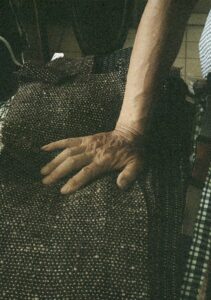
    Among all these textile craftsmen I visited, I noticed how isolated they were from everyone else in the world. I mean, they make amazing stuff, they have amazing know-how, but they’re only working within their comfort zones, within very small boundaries, and with a very select group of people. If you are a new designer and you go there, they might just turn you away because they don’t want to take risks. Whenever I am in Europe, that was probably one of the first things people from the industry would ask me about, like where to source good Japanese fabrics. But on the other hand, Japanese textile factories are, like, very, very secluded here. Most of the people working there are, like, 80 years old. People are literally disappearing, and it’s really, really dying. And I just thought, this was crazy urgent.

    All these beautiful things happening around my hometown, they will be gone in no time. Nobody is taking over because nobody knows about this, and nobody thinks it’s cool because they’re just, like, a bunch of old fellas working with their friends, among themselves. At that point, I just thought I must do this right now, otherwise all these beautiful crafts would be dead without a successor.

    I got along fairly quickly with the factory people. They are all like my grandpas. I’m very familiar with the way they speak, and I respect them massively. And I’m so glad that they trust me in return for what I want to do. I then started taking photos, sharing stories, and writing about the situation on Instagram every now and then. Fortunately, some people reacted, Jan Jan (Van Essche)3 being one of the earliest supporters. Without taking, like, a sales approach to any of the labels, I’ve been exceptionally lucky to have these incredible designers showing appreciation for what I do.


    AW: Does the name Dissonant Practice carry any particular significance? It certainly has a nice ring to it.

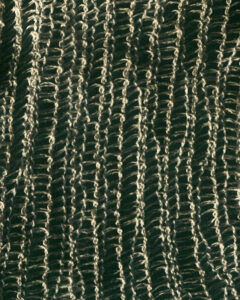
    HO: All the knowledge and handicrafts that come with them are dying purely due to inefficiency — in order to industrialise, you must up your efficiency to produce more, right? All the inefficient and unnecessary stuff is just left behind, forgotten. They are like noises, you blank them out, and you ignore them. Same with the textiles that I work with, there are a lot of mistakes and errors or irregularities in them. They are kind of like noise too, you know. Some sort of dissonance is created by the man-made process in the final product.

    I think it was Miles Davis who said, “There’s no such thing as a wrong note in music”, I listen to a lot of free jazz and noise music, and what he said resonates with me a lot. All these things that are considered mistakes, all have their roles in a piece of music. It’s the note that you play afterwards that determines whether they are right or wrong. Only by pursuing efficiency and getting rid of the unnecessary, eventually everything would just lose its charm, I felt. So I wanted to create the opposite, I wanted to focus on the dissonance, I wanted to focus on the noise. That’s the idea behind the project.

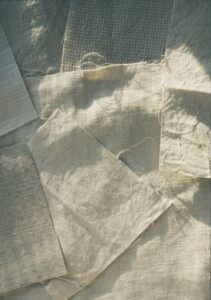
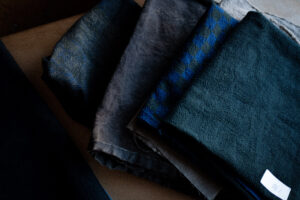
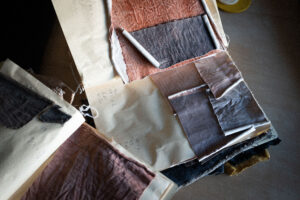
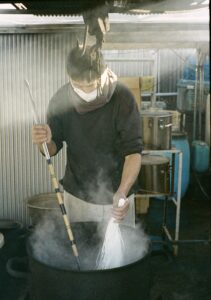
    When I got into natural dyeing, I wasn’t doing it because it’s more environmentally friendly per se. Essentially, for me, the process creates a lot of noise, it creates dissonance in colours and textures. Take synthetic indigo as an example, if you place it side by side with natural indigo, you can see so much depth in the natural one because there is “noise” in the colour — it’s not just blue. There are hints of red, yellow, and green, which make the colour so rich. And without all these elements, it just becomes so plain and flat.

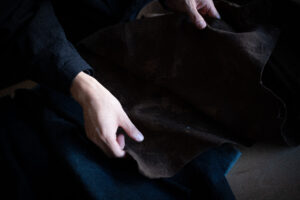
    The spectrum of colours created through the process of natural dyeing changes over time depending on the conditions of light, temperature, humidity — everything. Hence, they become even more unique as time goes by, and that, I think, is the key to cherishing a garment for years to come. And it goes without saying really, this tactile experience is second to none. I personally find these things extremely fascinating, the name Dissonant Practice just represents a large part of this aesthetic.

    ©SYNONYM
    ©SYNONYM
    ©SYNONYM
    ©SYNONYM


    AW: You mentioned social media briefly just now. Both your website and feeds, they all seem to have a mysterious air around them. Was that a calculated marketing choice?

    HO: I don’t really do it consciously, but I find this umm, ambiguity, way more beautiful, and I like that the imagery can be interpreted in various ways by different people, depending on your state of mind or the time of day. The imagery creates a kind of illusion for the viewer, you know, I mean, with a white background and proper lighting, it is what it is.

    ©SYNONYM


    AW: There’s nothing else.

    HO: There’s nothing else, and I didn’t want that. I wasn’t trying to put up a mysterious front and all that, I just find it more subtle and more beautiful that way. Especially with these kinds of natural fabrics, under different lighting, they become completely different — they can’t be captured 100% accurately anyway. That’s why, it doesn’t make sense for me to present images that are, like, crispy clear.

    I was showing you some new developments I’ve been making earlier, right? So I took the samples from home, and as I was driving, I looked at the fabric in different environments under different lights. Every time I looked at it, it was never the same. All the hues and shades, even if we see it with our own eyes in person at, like, 2 a.m. or 5 a.m., they turn into something else. Like some of the fabrics that you saw, you may recognise them as black at first glance, but if you sit here (and look), and it becomes brown. There’s so much randomness, so much oomph to it.

    I guess it’s also the idea of noise and dissonance that I wanted to convey through the images too. Maybe you cannot see it well, but when something is not so clear and precise, when it is abstract enough, you begin to see what you want to see.


    AW: Your fascination with textiles, did it come from family?

    HO: Not really. My grandparents used to run a kimono shop, but by the time I was born, it was already gone. It was never part of my upbringing. I suppose it’s just my own, umm, fetish. (laughs) I just find it so fascinating, and that’s all. My father is an office worker at Toyota (豊田), so this was never a family affair. I’m the second son, so my parents probably wanted to experiment a little with me and see what might happen. I was encouraged to just follow what I was passionate about and do what I wanted to do.


    AW: I guess we can’t avoid bringing up COVID. What do you make of this whole bizarre situation?

    HO: I won’t talk about all the negative stuff because we all know it. I think there are a lot of common emotions shared among many people, that before COVID, everything was moving too fast. When COVID struck, it offered an opportunity to really slow down, and it was exactly the same for me. Over the past two to three years, I was really granted the chance to be still, to settle down, and to focus on my own research. So in that sense it’s been pretty amazing and rather positive.

    The last time I was on a plane, was right at the brink of the COVID outbreak, coming back to Japan from Paris. I remembered people were talking about this new virus in Wuhan (武汉), and the whole lockdown and stuff. And since then, I haven’t really been travelling too much. It’s the first time in, like, 15 years, and that helped me deepen my connection with the local artisans here in Japan. For this textile project, it was essential really. It has probably been the most productive two years of my career.


    AW: The world is picking up its pace once again, and Japan has finally reopened its borders. Are you ready for it?

    HO: Honestly, I don’t know, only because I’m so accustomed to this lifestyle right now. For the past two or three years, my mental health has also been very healthy and stable, because living in a city like Tokyo, Paris or Shanghai, a megacity with the amount of people in it, you are bound to live in constant commotion and comparisons. Because of the pandemic, I experienced none of that and was able to focus on what I wanted to do and study.


    AW: It is what it is now, I guess, and there will be no more surprises. Whenever I think about it, it brings somewhat of a bad taste in my mouth frankly, that we have to deal with all the tourists again. (laughs) I’m not going to say that I enjoyed the pandemic because that would be very disrespectful and selfish, but I remember being in Kyoto around July 2020, I had never experienced the city like that, it was surreal, to have Kyoto almost entirely all to yourself.

    HO: That’s probably why I’d like one more year of it. (laughs)


    AW: Final question, if you were not doing what you’re doing now, what do you think you would be doing?

    HO: I think I’d be a musician, playing a soundtrack of dissonance and noise. (laughs)

    ©SYNONYM
  • Interview: Hiroki Osuka — Chapter 1 | Salou Inc.

    Interview: Hiroki Osuka — Chapter 1 | Salou Inc.

    I remember coming across the name Hiroki Osuka for the first time. It was an odd moment when I received an email response from Ziggy Chen¹, the Shanghai-based fashion label, regarding some trivial matters. It was hard to miss the sign-off, because it wasn’t exactly common to find a Japanese individual working for a relatively niche Chinese fashion designer. That was in 2018.

    Ever since, I have kept an eye on Osuka’s work, especially after relocating to Japan myself. At some point, I discovered that he was now based in Nagoya. Without thinking twice, I reached out to the man, hoping for a chance to speak. Looking back through my inbox, the invitation email I initially sent out was in May 2022. I’m sure this is relatable to many — it’s like writing a fan letter. After pressing the “send” button, you are left in limbo, experiencing silent moments of uncertainty and agitation. Those moments may well stretch into days or even weeks, even though by now you have learnt to cope with expectation management and are equipped with an armour so thick that no rejection can penetrate. But still, those awkward seconds, or perhaps minutes, that one has to endure upon being turned down — I mean, no one genuinely enjoys a bitter disappointment, right? Besides, Osuka’s personal website is nothing short of spectral. “Is there even a person behind this enigmatic façade?” I found myself wondering.

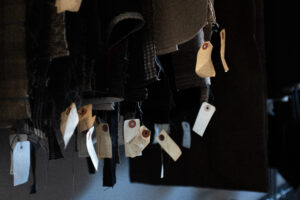
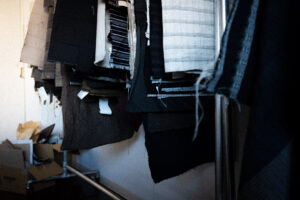
    Fortunately for me, none of the above was the case here. Osuka responded swiftly and sincerely to my invitation and agreed to an interview, very much to my delight. Albeit seemingly inscrutable when we first met, over the course of the following seven months, Osuka welcomed me to his studio with open arms, offering a glimpse into some of his very own recent textile developments. We shared coffees and meals together afterwards, and I listened to his stories and about the days he spent in Shanghai. Savvy as he was, Osuka’s eyes would light up at the slightest mention of textiles, if uninterrupted, he could probably speak on the subject for quite some time.

    Even though Osuka and I have only met a handful of times, I felt as though I had known the man forever. This is not something one can say often, especially as one gets older. Perhaps it’s because we share a similar background in textiles and a mild interest in fashion, or perhaps simply because we speak the same languages. And isn’t that just one of the most beautiful things — human connection? In the post-COVID days, I don’t know about anyone else, but I personally longed for human connection once more. Without even realising it, I had missed those days when you could just speak to a real human being without wearing an ugly mask, when you no longer had to sit in front of a bloody screen conducting endless Zoom calls, watching all your energy drain into a bloody black hole, let alone dealing with all the inevitable technical issues. It’s good to have some humans back, I guess.

    Please find the first chapter of our conversation below. In this chapter, we spoke about the things that Osuka actually does — textiles, while he also shed light on his motivation for moving from Toyohashi (豊橋) to Shanghai, China, nearly 20 years ago.


    A Stranger in Shanghai


    ©SYNONYM


    AXEL WANG:
    How would you describe the job that you’re doing now Osuka-san? Because you don’t just produce textiles.

    HIROKI OSUKA:
    That’s a tough question… Everything that I do is connected — I source textiles, I develop and produce textiles, I work with textile manufacturers to create new fabrics, and I work with labels to help with their collection development, also in terms of the commercial and marketing side, since I have a background in wholesale. Therefore, it’s not only about consulting on the fabrics, but more about the whole brand — how to differentiate, what the right price point is, who the right audience is, and so on. When I talk with the buyers, that provides me with ideas for fabric, and when I work with a textile manufacturer, I have to take the market into consideration. So, it’s quite hard for me to narrow it down to just one word to describe my occupation.


    “…textiles are so fundamentally connected with people’s way of life and their beliefs,
    and that’s what fascinates me.”


    ©SYNONYM
    ©SYNONYM


    AW: In Japan, where the culture of business cards remains so relevant, what does it say on yours?

    HO: It doesn’t say anything. (laughs) Just a name and an address.


    AW: Same here, I can imagine it being a little bit confusing for people.

    HO: Yes, very much so. Usually, I then explain to people what I do, most of the time, they want a straight answer: “Oh, so you are like a textile producer.” Technically, it’s not wrong, textiles have really been my biggest passion, and over the years it has grown to become a core part of who I am, even outside of work, I’m always thinking about textile — researching traditional techniques, hunting for vintage fabric, or visiting craftsmen. My lifestyle, my work, and everything else that I do are kind of all intertwined.

    After engaging with this subject for so long, like, I see the world differently, I’m able to understand different cultures through textiles. When I was showing you those old vintage fabrics from Miao (苗族)2, for example, I came to understand their lifestyle after visiting them in Guizhou (贵州), why they make fabric, why it’s dyed a certain way, and why the patterns — the geometrical patterns that you saw — exist. There are always meanings underneath.

    Whether it’s from Peru, Mexico, India, or Japan, textiles are so fundamentally connected with people’s way of life and their beliefs, and that’s what fascinates me. I mean, nowadays, textiles probably have a different meaning, it’s much more diluted and tapered, it becomes more about the clothes that you are wearing. But as you dive deeper, zooming in closer, especially with the vintage or historical fabrics, you start to gain an incredibly profound understanding of the actual people and their cultures. For me, the word “textile” already has like multiple dimensions. It’s not just a job or a piece of cloth, it’s culture.


    AW: Let’s travel back in time for a bit before we go further. For those who don’t know you personally, you went off to Shanghai at the age of 16. Why Shanghai?

    HO: Back then, the idea of going to Shanghai came to me like, it really was a mere coincidence. Growing up in a small city in Aichi Prefecture in Japan, I always wanted to see what’s out there. You watched television and movies and stuff, so you knew, like, there’s something going on in the world, outside of this little place where I lived.

    I think I told my parents that I, umm, wanted to go somewhere, you know? Obviously, I knew of America, the likes of the UK or Canada. Those were the names that would pop into anyone’s mind first, right, if you were to study abroad. Then somehow, I saw this ad when I was 14 or 15, in a shitty magazine, and it said, “Study Abroad in Shanghai.” That was shocking, if I’m honest, almost eye-opening. I mean, I had never thought about the prospect of studying abroad in China. The idea just hit me, and I thought, that’s like the most interesting thing to do.


    AW: But you didn’t speak any Chinese?

    HO: Nothing. I studied English in elementary school and junior high, but Chinese, no. I mean, China was such a mysterious, unknown country at the time, except for all the Kung-fu movies, but that’s about it. I knew nothing about Shanghai either. I didn’t know the language, but that was really, really enthralling for me, like going somewhere that I didn’t know anything about. I think I’ve always been a curious person, and I always wanted to do something different, so that’s that.


    AW: You saw an ad and then you were off. That’s incredible. We’re talking almost 20 years ago, back then, China was not what it is today. You didn’t speak the language and it’s a completely different culture, how did you feel? A young boy at that age, it must have been fucking terrifying!

    HO: Exactly! (laughs) No, I loved it. Everything in Shanghai stood in stark contrast to Japan. Japan is just so organised, set in stone even. Things in my hometown haven’t changed one bit since I left. It’s probably been like that for the past 30 or 40 years. I’m not saying it’s dead, but it’s not very much alive either. China, on the other hand, especially Shanghai, was changing by the minute.

    Of course, it wasn’t easy. It took me a couple of years to adjust physically, adapting to the food, the climate, everything. And you were right, many things were absolutely appalling to me in the beginning, but I genuinely loved the whole vibe, being in a different environment and having to learn something new every day. It was joyous, really. There was this sense of freedom back then in Shanghai, solely because it was still under construction. I’m not referring to the buildings alone, it’s the whole culture, the whole society. There was this feeling that anyone could be who they wanted to be. If you had an idea and had the guts, you could do it. You don’t really get that in Japan — where you must stay grounded and work your way up, step by step. I guess it really was this kind of sense of freedom that kept me there for the next ten years.


    AW: When did you start working with Ziggy Chen?

    HO: It was before university graduation actually, while I was taking a fashion marketing course.


    AW: So you went from English literature to fashion marketing?

    HO: Yes, I only did that for about half a year. Funny enough, it was mostly Shakespeare, and the whole thing just drifted away from reality and became so unreal to me. It wasn’t that I didn’t appreciate literature, but it wasn’t like I was heading for the theatre, you know? So I soon switched courses. After a few years of studying, obviously, at that stage you start wondering about your future, like which brand you wanted to work for, whether you should stay or go back to Japan, and so on. I think it was around 2010, right when I saw this capsule collection presented by Ziggy in Xintiandi, Shanghai. It was called Decoster Concept then, and it just blew my mind because it was completely different from everything I knew about Chinese fashion, or fashion in general, even. It was probably on that very same day that I sent them an email asking for a job. (laughs)


    AW: What were your roles at Ziggy’s?

    HO: I started as an intern doing visual merchandising. Sooner or later, I was kind of promoted to become, like, a brand manager. I don’t know, Ziggy probably saw something in me, I guess. (laughs) And that’s when I started to manage the sales and wholesale side of the business. After a while, we just naturally began working together on collection development. We travelled around Europe sourcing and developing fabrics, going to places like Italy or India for inspiration, and that’s practically how I got into fabric development in the first place. At the time, I wholeheartedly believed in what we were doing, and I saw it as some kind of mission. I was very devoted to this cause, you know, like, I felt like this was something that I must do! I remember thinking, I found this amazing designer in China, and I wanted to tell everybody about it!


    AW: From where I stand, I sometimes feel that there’s this almost polarised view of China as a nation, that the West and some others are, in one way or another, offended perhaps by how the country is rising up, it’s often being portrayed as this devilish opponent in the media. As a Japanese national who speaks Chinese fluently, lived and worked in China, and is very much immersed in the society, how do you see this country yourself?

    HO: I guess it’s understandable that in the West or in Japan, like people sometimes have this antagonistic view of China, seeing all the negative stuff from the mainstream media. But I do think it’s vitally important that we don’t mix up the government and the people. If you go to China and actually meet the people and spend time with them, in no time you would see that many of them are extremely intelligent, very polite. This is something that Ziggy taught me too. Well, he didn’t actually lecture me or anything, it was only by spending time with him, seeing the kind of person he is. Ziggy is poised, polite, has a very open mind, and it’s incredible to see how much faith and trust he places in the younger generation. Over the years, we formed a very special bond of friendship and a professional working relationship. I don’t mean to draw comparisons with Japan again, but it’s not something that I come across very often here, if I’m honest. I guess it’s thanks to knowing people like Ziggy that I slowly, gradually, began to realise that, maybe what I saw in the media, or what I used to think, or what people said, wasn’t entirely true. It wasn’t the whole picture, at least.


    TO BE CONTINUED…
  • Interview: Gracia Ventus — Chapter 2 | ROSEN

    Interview: Gracia Ventus — Chapter 2 | ROSEN

    Now and Then


    AXEL WANG:
    Out of all places, why Shanghai?

    GRACIA VENTUS:
    It was probably a natural turn of events for me. When I was a teenager, my father would often talk to me for two hours after lunch about business and economics. I think he could sense the entrepreneurial spirit in me, as I had been hustling for extra pocket money by painting people’s shoes. I look up to him as a role model. He came from a poverty-stricken family, won a prestigious university scholarship, worked his way up to be a banker, then a businessman. He used the capital he had saved to set up a modest company to provide jobs for all ten of his siblings as his way of repaying them for their sacrifices in sending him to school. And from those talks — bear in mind this was in the early 2000s — he was always telling me to look to China if I wanted to start a business, that one day the country would rise to prominence, especially with a rising middle class.

    I was not really taking him seriously then. As a teenager growing up in a Westernised country like Singapore, speaking the English language and struggling with her Mandarin classes, I felt a stronger pull towards the Anglo-Saxon culture and way of life. I had visited China before the turn of the millennium, and I hated my trip there because the places we visited were run-down and did not have proper sanitation. It left a bad taste in my mouth. And as a child, I was unable to fully appreciate the natural wonders of the world that we visited in the country. I was more absorbed in my personal discomfort.

    More than a decade later, I was presented with the opportunity to see the new China. Having never forgotten what my father told me, I made my move. That took place over five years ago, and I’m glad I made that decision.


    AW: You once compared Singapore to marrying a boring dentist. How would you describe your experiences living in all those cities? Do you think all the different surroundings have helped shape your character?

    GV: Being a global nomad certainly has played an enormous role in shaping my character. I was uprooted at a young age, and forced to adapt to completely new ways of life, speak new languages and live with strangers. I can switch my languages and accents as quickly as I switch my mode of thinking to empathise with people from different cultures. That helped me a lot in navigating my way in new environments, as well as figuring out how administrative systems are run in the respective countries I’ve stayed in. This is the first thing one should do when working for oneself. The last thing I’d want as a guest in someone else’s land is to be kicked out due to my own ignorance of rules and regulations. I have not lived in my home country for two decades now, so I feel that I have to always be on my toes. And like ballerinas’ toenails, I think my tenacity and will to survive are acutely hardened as I have nothing to fall back on.

    Having been educated and worked in both the East and the West, I gained an understanding of the kind of life I wanted — dynamic, independent, globalised and fast-paced. Australia is a great place for slow living and retirement, but not for nimble entrepreneurship that relies on just-in-time manufacturing and efficient logistics. England is a playground for the rich. You either have to depend on the system and wealthy patrons if you have no capital, or be wealthy enough to dictate your own rules. China is a land where ideas come to life. As long as you can think of it, there will be someone who can do it.

    Growing up in different cultures also exposed me to different ways of thinking, as well as the histories of civilisations in different parts of the world, which I believe is important in forming a more holistic view of the world and humanity. I understand how and why different countries are run, and why no single system of governance can be applied to all countries, contrary to what school textbooks would have you believe. Conflicts between cultures and societies become easier to comprehend when one understands the values that underpin individual behaviour and groups of people.


    “I have always felt like someone who doesn’t have a place to call home.”


    AW: What does travelling mean to you? Where would you like to go first when the travel ban is eased?

    GV: Travelling is a way for me to see more of human endeavours and achievements, and also appreciate the natural wonders of the Earth, while simultaneously helping to reset my mental state that would otherwise be stuck in work mode constantly. Emptying my mind and seeing the world outside my direct environment also helps to generate new ideas that would propel my design work forward.

    My first destination would be my favourite onsen village in Kyushu (九州), Japan. I miss the combination of ryokan (旅館), kaiseki (懐石) and secluded hot springs in winter that only Japan can offer. Next would be Uzbekistan for its architecture and handicrafts, and Bhutan for its culture and landscapes. Other than that, I’m still keen to see more of China, especially Xinjiang (新疆), Inner Mongolia and various Tibetan communities in Gansu (甘肃) and Qinghai (青海). The country is simply too vast to be covered adequately in a lifetime.


    AW: How was it like growing up in Indonesia and Singapore, then moving to Australia? Do you consider yourself a misfit back then?

    GV: I have always felt like someone who doesn’t have a place to call home.

    When I was growing up in Indonesia, I had a comfortable childhood, but I realised that my parents had sheltered me from the realities outside home and school. As I gained an understanding of basic politics, it became evident that the Chinese communities in Indonesia were never fully accepted as locals — a mistrust that was fostered by the Dutch colonialists that was passed on to the local government after gaining independence, despite centuries of migration. We were made to be the scapegoats for social and economic problems that occurred. I never felt quite at home anymore after the racial riots that broke out in the late 90s. One incident after that traumatic riot that I can recall well was getting into a taxi with my family. The driver took one look at us and asked, “So when are you going back to China?”

    Things are better now because Chinese Indonesians are allowed to finally have their Chinese names, speak their languages, and celebrate their holidays within the last decade. However, when one is uprooted at a young age, there is simply not enough time to form a lasting bond with the place one should consider the Motherland.

    In multicultural Singapore, I felt more accepted as a local, especially after picking up the Singlish accent. With that said, I still felt that there was a sense of alienation. As an Indonesian, I was exposed to abject poverty from a very young age; children who couldn’t afford to go to school, beggars at the side of the road, rickety shantytowns built along polluted canals. The civil unrest added another mental scar to my psyche. Being in Singapore felt like living in a curated world where hardships had shifted from the need to survive to the need to become wealthy — hence the boring dentist comment. Most of my schoolmates could not see beyond their local perspective because they generally grew up in a comfortable environment. It was difficult to relate to them what I had seen. Regardless, I appreciate the close friendships that have been forged during my time there.

    I think I fit in Australia the least. I don’t drive, I don’t like forms of socialising that involve heavy drinking, which was prevalent in universities, and I don’t feel at ease in their insular, but undoubtedly comfortable way of life. I’m the sort of person who wants things done yesterday. I’m used to businesses opening until 10 pm and not waiting for more than 10 minutes for public transport, which means that I would only be mentally comfortable living in large urban sprawls.


    AW: Rick Owens recently said: “There are certain things in place when you come into creative bloom, when you’re at the age where you start recognising what it is you’re attracted to, creatively, that sticks with you for your entire life.” He also said that, anything a creator does, is a composition of what you have seen before, it’s all about making that composition your own. Do you agree with what he said? If so, what elements of the past, have you taken, in order to construct your present and future?

    GV: Yes, I certainly agree. I’ve always said that there’s no such thing as originality, it is simply a new way of looking at existing ideas or revisiting forgotten ones. The only true source of originality is probably Mother Nature. Ask any designer and they will either tell you that they look at old photographs or work from vintage samples to create new work.

    I only work from what I know and love. The past consists of my upbringing and my inspirations — all the designer clothes I have seen and felt in my hands, and have developed an affinity towards. My personality in having to protect myself from outside forces, probably shaped preferences for aggressive designs and cocoon-like silhouettes. The future is hard to predict, so I don’t know how it will be shaped.


    AW: What is the biggest lesson you have learnt so far? Any regrets whatsoever?

    GV: The biggest lesson I have learnt from running a business is how difficult it is to find people you can rely on. It is very tiring to give people a chance, train them and trust them, only to realise further down the road that things are not working out and you have to let them go.

    Fortunately, I have not made any regrettable decisions.


    AW: The last time we spoke, you said that, you saw yourself in Shanghai for at least another 10 years to come. How do you envision the future of the label and yourself there?

    GV: I hope to have our own workshop in a couple of years where we make our clothes in-house.


    AW: It’s hard not to talk about COVID these days. We have already seen a lot of societal changes and adaptations. Is there anything that worries you about the future of a post-pandemic society?

    GV: I worry about the geopolitical divide that the US government is hedging on. From money printing accelerating wealth inequality worldwide to the military-industrial complex beating the drums of war through its gunboat diplomacy harking back to the Opium War, and disinformation warfare against a nation rising economically to challenge global hegemony, there are always many things to worry about.

    The pandemic has accelerated emotional manipulation across all mass media, from news to pop culture. We are constantly reminded to be angry about other people’s values, identities, political and belief systems, so that our attention is diverted from decades of neoliberal policies that brought about depletion of natural resources, widening wealth inequality, and the fracturing of societies. Twenty years ago, we were told to fear Iraq and Afghanistan, now we are told to fear Russia and China, all for the benefit of no one but the neocons and weapon-makers who stand to profit from wars. We, the common folks all over the world, struggle to stay united in the face of conflicting information, and unfortunately, we are too run down to cross-check news sources. The elite class sowing confusion and discord understands very well that it takes less energy to hate than to question and empathise. My only suggestion is to always follow the money.

    Fashion is addicted to large-scale mass manufacturing and will most likely not overhaul its production process. The industry will continue to overuse natural resources and manufacture by-products in overwhelming quantities that pollute our air and water. Industry players like me who push for small-scale production are a tiny minority, embarking on a Sisyphean task that may touch a considerable number of souls but ultimately not be able to affect how the industry — be it luxury or fast fashion — prioritises profits over the planet.

    “We must cultivate our garden.”

    In times like these, Voltaire’s message will always resonate with me. Look back far enough, and we can see that the world has always been absurd and filled with suffering. Yet there is also plenty of beauty to appreciate, be it natural or man-made. We must not grow apathetic and ignorant, but at the same time we should understand where our sphere of influence lies, so that we can continue to touch as many lives as possible, even if it starts — and ends — at one.


    AW: Let’s explore some alternatives here. Many years ago, in an interview, you said London was your dream place to live. Has it changed?

    GV: Yes, it has certainly changed. I made that statement as someone who was hoping to work for European fashion brands, before I saw the possibilities Asia has to offer for entrepreneurs. If I were not doing fashion, I would probably pursue a business management role in a big city. I enjoyed combining international studies in economics and politics with numbers and logic.


    AW: If you were to go back to a specific time in the past, when would it be?

    GV: As a woman, there has never been a better time than now. We have never been freer to make our own decisions — and be responsible for them — than we are today. I also love seeing all the technologies that we as humanity are pushing for today, from space exploration to harnessing the energy of the sun in orbit, to making spider silk and synthetic furs that feel like the real thing without harming animals. The past also did not have modern conveniences like air conditioning, fridges and tampons.

    If we could go back as anyone, however, I’d have to echo what my partner told me: a young man getting into the workforce in early 80s Japan, riding the wave of the economic boom while enjoying the technological hardware advancements never seen before that period and enjoying the post-war revitalisation of their culture and traditions.

    ©XEONIQ
    ©XEONIQ


    AW: One final thing before we go, you mentioned cultural shocks when you first arrived in China. Purely for entertainment purposes, I would love to hear one of your most embarrassing stories in the country!

    GV: The most embarrassing thing I could recall took place during my first month there. I had brought an item during my move that I was going to ship domestically to a local customer. I asked her which postal service option she would like, to which she replied, “We don’t use the postal service anymore, please use a courier.”

  • Interview: Gracia Ventus — Chapter 1 | ROSEN

    Interview: Gracia Ventus — Chapter 1 | ROSEN

    Gracia Ventus is an entrepreneur, self-taught fashion designer, writer, and global nomad, if anything else, she’s also a survivor, a food lover, and the list could go on.

    I remember looking at Gracia’s “fit pics” in one of those “what-are-you-wearing-today” threads during the heyday of online forums, and thinking, that these were some of the best outfits I had seen online. Yet another part of me thought, perhaps with a tad of jealousy too, how could one wear all these layers of black in the Asian heat — must be another one of those flashy fashion blogger wannabes with no substance, dressing up to pose for the camera, who’s dying to be a part of the industry.

    How wrong I was, how completely and blissfully wrong I was.

    Before long I started to notice Gracia’s writings on her blog The Rosenrot. Gradually, I came to realise that behind all the extravagant, voluminous facets of Issey Miyake and the brutalist, monotonous layers of Rick Owens — plus the ferocious red lipstick too — there was certainly more than met the eye. I began to find myself eagerly devouring those witty and informative texts on the blog like a starving and ignorant child in search of food and wisdom, which I still do to this very day. On top of everything, outside of my self-absorbed bubble, and frankly at a time of life desperate to grapple onto something, to be able to stumble across someone on the web whose aesthetic ideals and values I could connect with, and who genuinely inspired, felt almost like a blessing.

    The Rosenrot, literally translated as “the red rose”, also presents itself as a homage to Rammstein, the band. Clearly someone influenced by music, like many other great designers of our time, without splashing massive band logos across the back of every jacket, all the cultural influences and literary references are boiled down, distilled and transpired through Gracia’s collections, resulting in a series of subtle, aesthetically pleasing and meticulously constructed garments.

    After perhaps more than half a decade since my initial encounter with this image of Gracia — a facade, more or less — I decided to reach out and write the designer a letter inviting her to an interview, hoping to hear her stories and discover the person behind this facade. During our first Zoom call back in July this year, it was as if an onion had begun to peel itself apart, revealing its core. Beneath that facade was a friendly and eloquent woman — smart and valiant, extremely driven, and someone who knows exactly what she wants — another list of qualities that I could go on and on about. This very first image I had of Gracia then completely evaporated.

    I would like to thank Gracia for her time and contribution to the interview. It was pure joy, and my utmost pleasure, working with her on this, not only because she made everything so simple and effortless, but in ruminating on her words I was able to actually pause and think, and to reflect on my own self, something I have found increasingly difficult to do these days as COVID eases and society rapidly picks up its pace once again. So once more, my gratitude to Gracia, and hopefully you will enjoy reading her words as much as I did.


    Clothes and Words


    AXEL WANG:
    Gracia, you once wrote: “I am merely a curator of ideas, putting together elements of garments into pieces that adhere to my vision.” Are you more comfortable calling yourself a fashion designer now?

    GRACIA VENTUS:
    These days I’m not as reluctant to call myself a fashion designer, but I remain ambivalent. The design part of my job takes up a small percentage of running a fashion company. So perhaps the title “fashion entrepreneur” would still be more appropriate to describe my day-to-day job.


    “I have a strong dislike towards the fashion system as a whole.”


    AW: You seem to operate away from the mainstream fashion system, how do you think being outside of this ring has helped your business?

    GV: The good thing about not following the usual fashion timeline is that I can remove the external pressure of deadlines to a certain degree, but I still have to follow the typical retail seasons otherwise, we might end up releasing collections when customers are done with the shopping season. My direct-to-consumer business model also removes the stresses that come with the wholesale model.

    Regardless of whether one plays within the system or outside of it, the creative, mental and physical toll still exists. I think the fashion ecosystem is generally unhealthy unless one has plenty of financial resources to fall back on and can hire all the help needed to ease one’s responsibilities. Things need to be finished yesterday. The drive to be creative is often a source of anxiety because, as a critical person, I constantly push myself to improve my designs and come up with new ideas. I’m sure many designers are as critical of themselves as I am.

    ©Mathieu Rabary
    ©Mathieu Rabary


    AW: Do you see yourself becoming a part of that system, be it theatrical runways or doing seasonal showrooms biannually that comply with the calendar?

    GV: I cannot say that I will, but I have often surprised myself with the turns of events in my life. The future is unpredictable but one has to be flexible to survive.

    I have a strong dislike towards the fashion system as a whole. Most of the money that customers spend on clothing does not go towards research and product development, or the people who make the clothes, but rather press, advertising and marketing in order to build up their brand image and convince customers why they should pay the premium prices, or dream about being a part of that brand and resort to buying handbags and cosmetics if they cannot afford the high prices.

    Today, we are witnessing the peak of that fashion dysfunction where the old-school fashion subcultures are almost non-existent. What used to be cultural signifiers based on one’s interests and personalities have been replaced by brand tribes, i.e. using branding as a shortcut for validation, affirmation and search for belonging. It’s not a recent phenomenon, but social media has exacerbated it. I do not wish to encourage my customers to see my clothes that way.

    It does not make financial sense for me to put on runway shows; these days it costs at least half a million dollars for a major show, and one can never be too sure what the return on investment will be, whether we take into account the increase in brand awareness or improvement of brand positioning. Seasonal showrooms might be a better way to reach out to retailers, but only if I feel that we are ready to branch out from our made-to-order business model.


    AW: Speaking of theatrical runway, it’s about building a narrative and creating some context, also to establish a vision that helps your audience to understand and to differentiate. In terms of communicating your thoughts to a wider audience, has this ever crossed your mind, how you could possibly expand the vocabulary of ROSEN?

    GV: I would like to collaborate with musicians and artists more often, especially those whose works I admire. Just like how Issey Miyake used to collaborate with dance troupes. Another idea I’d like to do one day is to publish coffee table books with images I’ve taken and essays I’ve written. I have a soft spot for beautiful hardcovers. I’m also rather old-school in the sense that I like print media tremendously, even in this digital age. Books feel so much more intimate than media that is consumed on screens.


    AW: Despite all the hardships, any perks that come with doing what you do in the city of Shanghai?

    GV: There are certainly plenty that keep me rooted to the city. Out of all the countries I’ve travelled to and lived in, China is certainly the fastest and most efficient in terms of logistics and supply chain management. I can purchase anything online and have it delivered to me within a day or two from most parts of the country, which cuts down the time needed for material procurement from our suppliers, as well as transit times when dispatching orders to our manufacturing partners in different regions of the country. Taking advantage of the domestic logistics network adds a flexible component to the business, hence why I can offer a vast range of materials to customers who wish to make custom requests.

    And then there’s the high-speed rail. Not only is it incredibly affordable, but it is also more comfortable than flying and much less time-consuming. With the recent implementation of electronic tickets, I just have to turn up fifteen minutes before the train’s departure time. It has allowed me to visit different parts of the country whenever I feel the urge to. The ride through the countryside lets me observe different aspects of urban and rural developments the country is undertaking.

    I love Taobao too. It’s a window to what the factory of the world has to offer. While there may be plenty of disposable homogeneity to sift through, I have discovered countless small brands who are making beautiful clothes and homewares, amidst the amazing array of delicious food that other regions have to offer — It was only after coming to China that I realised I had only been eating variations of Cantonese food. There were so many other regional cuisines that I was not aware of until I moved here.

    ©Vince Wang
    ©XEONIQ


    AW: Gracia, you are certainly an avid reader. Have you always been one, even as a kid, or was it something that you learnt to appreciate more as you grew older?

    GV: I remember vividly the year I started becoming a voracious reader. When my parents sent me to study in Singapore at the age of ten, I lived with a few older teenage boarders under the same roof. I was often alone and bored, so I started reading the collection of Enid Blyton’s – Secret Seven, Fantastic Five – the whole lot, which had been left behind by previous boarders.

    For those who grew up in English-speaking countries, it is perhaps not unusual for reading to begin at a young age. But growing up in Indonesia, I spoke Indonesian in school and Hakka at home. English was taught as a second language, and it was extremely basic. As English is the lingua franca of Singapore, the standard of English required in education was much higher than what I was accustomed to. I was encouraged to read as much as I could.

    It was then that I realised I had an affinity for the English language, which spurred my reading hobby even more, together with essay writing and public speaking. Soon I started devouring all the other books that were left in the house, from Stephen King to JRR Tolkien and even adult writers such as Danielle Steel, never mind that I had no notion of what sex was at that age.

    Tangentially, I also tried to read Mandarin outside the school curriculum, but for some odd reason I struggled tremendously with the language. I can read Chinese characters, understand them, or at least guess their meanings, but they don’t flow smoothly in my mind the way the English alphabet does.

    ©Robert Nilsson
    ©Robert Nilsson


    AW: You have written continuously throughout the years, initially the fashion blog and now essays while contributing to magazines too. Writing is almost like another profession of yours. What are you hoping to convey through your words, that clothing alone may not do?

    GV: Writing is so literal that you can convey your message a lot more clearly and directly, whereas making clothes is a roundabout way of showing your perspective to the world. The breadth and depth of content that you can deliver with writing surpass any attempts to do so through clothing.

    However, I would argue that both require rigorous editing and making yourself vulnerable to the world, and in some ways, also showing the world that you are narcissistic enough to tell the world your thoughts, which in itself is also a form of vulnerability as you admit to the world that you possess that not-so-positive trait within you.

    I think a tinge of narcissism — enough to have the urge to share your point of view, but not so much that you become an insufferable self-absorbed person — is healthy, otherwise we would not hear the wonderful thoughts of David Foster Wallace and Haruki Murakami, or see the interpretations of beauty through the eyes of Rei Kawakubo and Issey Miyake.

    Personally I don’t find writing to be harder than making clothes, they are both equally difficult, and equally easy. It is easy to write 1000-word essays because as I’ve mentioned earlier, I have an affinity for the English language*, but it is tremendously difficult to write well. Just like how it’s easy to design 100 dresses, but it’s tremendously difficult to ensure they are beautiful and cohesive enough to tell a story.

    *Conversely, don’t ask me to write more than a paragraph in Chinese. The days of writing Chinese essays died upon graduating from secondary school. Towards the end, I made a bargain with a classmate from Hong Kong that I would write English essays for her while she translated mine from English into Chinese.

    ©Dylan Knight


    AW: Going back to expanding the universe of a creator, your writings are mostly critiques and observations. Do you think you would dabble in the world of fiction one day? I certainly enjoyed the Madame B piece.

    GV: The short answer: perhaps one day, when I have spare time in my sixties.

    The long answer: Writing a good fiction requires a different mentality from non-fiction. The world of fiction requires strong world-building skills that can convince the reader that they are in a different environment. It’s a full-time job that requires 3-4 hours of solid research and writing for at least a year or two, which is not something I can afford to do at the moment.


    TO BE CONTINUED…
  • Interview: Koichiro Osaka — Chapter 2 | ASAKUSA

    Interview: Koichiro Osaka — Chapter 2 | ASAKUSA

    We caught up with Koichiro Osaka (大坂紘一郎) in May 2020 — the curator and founder of ASAKUSA gallery, as well as a longtime personal friend of ours. When Japan’s first state of emergency was lifted, to say that we were unsure or confused would be an understatement. It was a period in which the entire world found itself in a state of bewilderment and turbulence, accompanied by all sorts of stupidity, hatred and hostility.

    We are publishing this conversation amidst what appears to be a fourth wave of COVID-19 in Japan. In our conversation, we covered aspects of the pandemic and contemporary art with Osaka. He also spoke candidly about parts of his past experiences and reflections, alongside his role as a curator. Osaka has long been a figure of inspiration to us. Over the 20-odd years that we’ve known each other, he’s always stood his ground firmly in the face of difficulties and obstacles, quietly doing his own thing, steadfastly advancing unassumingly without wavering, never drifting away. To any young person finding their way in the world, we truly hope that Osaka’s story may serve as a source of inspiration.

    For the first part of this feature, which consists of two Q&As I did with Osaka in 2011 and 2020, respectively, together with a personal letter addressed to the Hokkaidō-born curator, please follow the link.


    ©Nobutada Omote, courtesy of ASAKUSA


    AXEL WANG:
    Now that the state of emergency is lifted in Tokyo, are you going out to celebrate?

    KOICHIRO OSAKA:
    I don’t mind staying at home. A part of me is liberated, a part that is not compatible with social life, it’s like being a student again. From a larger dimension of things, the political landscape of the world, the economy, and the environment are all changing, at such an accelerated speed, it’s a shift that I have never experienced in my life, and yet here we are, living this lukewarm and peaceful everyday life, with a certain hypothetical threat of being infected by the virus. Life here just seems to go on without much disturbance, despite that we can’t really travel.


    AW: Suddenly, everything comes to a halt.

    KO: I don’t mind if the economic cycle stops either, because I’m not a pro-capitalist to start with, but this shift, we are not exactly a part of it. Indirectly, yes, everybody is embroiled in the process, but we don’t get to peek behind the curtains. We are only, in a subtle way, being informed, of what is and might take place next month. The media doesn’t paint the whole picture, and there’s only this much information being revealed. It’s sad, I think, at the same time.


    AW: A few weeks ago, while we were on the phone, you said you had been travelling a lot, prior to the pandemic, obviously.

    KO: When did you move to Nagoya?


    AW: April, May last year. Prior to the move, I went around quite a bit too, outside of London. Why I brought that up was because personally, there’s a distinction between being a tourist and a traveller. If I travel with somebody else, I feel more like a tourist, but when I’m on my own, I tend to see more and experience more, more like a traveller in that sense, you know. But given that you were working in all those cities, New York, Hong Kong and so on, you were more of a resident and weren’t even particularly travelling?

    KO: “Travelling” is not the right word, and I don’t prefer using it. I don’t typically travel — going from one destination to another — I only do that as a daily routine of work. I intentionally wanted to take a year off, from what I was doing in Tokyo.

    ©Nobutada Omote, courtesy of ASAKUSA


    AW: ASAKUSA Gallery.

    KO: Yes. It’s been 5 years since I came back from London and Berlin, it seemed like the right time to go out again. Once you settle in one place, you start to familiarise yourself with the local context and establish your practice, which is a great thing, whether as an interpreter, a curator or a writer. You need to understand the people around you, what they are thinking, and the way they practise, regardless of whether you want to change the local context or assert your own position, you do need to have an idea of what’s going on. I think 5 years were certainly necessary for me to achieve that, but once you stay longer, you are out of the bigger context in one way or another. That’s why I wanted to travel, for lack of a better word, and spend some time away from Tokyo. New York came first as a residency program, followed by a two-to three-month stint in Hong Kong, then I was in Southeast Asia. The pandemic happened, now here I am.


    AW: You wanted to get out of your comfort zone.

    KO: I don’t find myself so comfortable here in Tokyo, so I’m not sure.


    AW: Why?

    KO: I’m never happy with my surroundings, though I don’t blame others for it. There are many aspects I like about London, and it’s the same here in Tokyo. Parts of the job are easier solely because I’m a local and I speak the language however, I lose this advantage of being a foreigner or an outsider. It depends on how you position yourself, in order to be in that position, there’s a certain set of knowledge and experience required, creating your own field of expertise, it’s part of a learning process as well as a giving process — you take something, and you give, right?

    At a certain point, if you stay still for too long and become persistent in holding onto that position, you exhaust yourself and have no more to give so to speak. You become sort of “expired”, and people would know that. You can only pretend to an extent, like you know what’s going on in your own crashing world, that you’ve just come back from New York and all that. I think it’s important that we don’t play a game like that. To conclude, yes, we should all go out and learn new things, and be happy!


    AW: “Happiness”, I’m glad to hear that you are now more appreciative of your life.

    KO: Because I spent a long time having difficulties coming to terms with myself — late teens, early twenties, going through my twenties, I didn’t like a lot of things, I was hugely unsatisfied.


    AW: Is it more to do with work? The gallery has been going on for a few years, I would consider that an achievement.

    KO: Not so much, though not entirely unrelated. When we had that Q&A almost ten years ago, I was working at a restaurant, or maybe I had just graduated, so I hadn’t particularly achieved anything. Now I think about work differently, well, I still think that everyone should probably stop working altogether, but first, the definition of “work” must change. By working, at least one’s inner desires have to be fulfilled instead of enslaving oneself to “work”. Sure, we all have to start somewhere, unless you already have a certain amount of assets to begin with. Either way, this change is something I deem necessary. I often think about how far I can push this reality through what I do in my life. I think eventually people could do what they enjoy, and it won’t be called “work” anymore.

    Oliver Beer: Deconstructing Sound (2015) ©Nobutada Omote, courtesy of ASAKUSA
    Oliver Beer: Deconstructing Sound (2015) ©Nobutada Omote, courtesy of ASAKUSA
    ©Ippei Shinzawa, courtesy of ASAKUSA
    Oliver Beer: Deconstructing Sound (2015) ©Nobutada Omote, courtesy of ASAKUSA


    AW: Let’s get down to politics. Your work, including the curation of exhibitions, largely engages with politics in different aspects. What triggered this interest? You didn’t seem to care much before.

    KO: Doing what I have done in the last few years has helped me acquire another set of language to describe the concept of politics. I’m more comfortable talking about it now than before. I don’t think much has changed however, when it comes to my own viewpoint, as I don’t usually reflect on global politics.

    I had a lot of question marks about myself in my early twenties when I was living in Thailand, how the scope of an individual’s life can alter depending on your family of origin and where you were born. Education and opportunities come into the equation too, obviously. I wanted to make sense of all this. It’s like when you asked me about my nationality, I always struggle with this type of question because I didn’t get to decide my nationality or sex.

    Thinking politically, provides more than one way of answering it. It’s not denial in any sense, like I’m unhappy calling myself Japanese, but I know about my family, being born to parents of schoolteachers, definitely not lucrative jobs in most countries, but if I had been born elsewhere, I wouldn’t have been able to afford London, for example. It had to do with the Japanese economy at the time and the exchange rate, which had nothing to do with me as a person.

    Yet I got to arrive in London as a student because of all these external factors combined, and taking them all, including my own background and experiences, into consideration, I felt responsible to respond to such circumstance, what someone from an industrial city in Hokkaidō, where there’s not much going on culturally, should say or could do in the world of contemporary art.

    ©Nobutada Omote, courtesy of ASAKUSA
    ©Ippei Shinzawa, courtesy of ASAKUSA

    When I was choosing the location for the gallery, I didn’t go for the white cube, sure, because I couldn’t afford it, but that choice also revolved around this thought — myself, what’s around me, how I was raised, and so on — you can hardly bring all those variables down to a flat and plain surface in defining one’s, say, aesthetics and taste. Contemporary art taught me that, how we can possibly analyse this from both social and political perspectives, as well as visually, what’s beauty when it’s framed within and polished by a luxurious canvas or shell, if something is created using the cheapest materials available, what does it mean, my brain wasn’t wired that way until I began to study art and culture.

    Oliver Beer: Deconstructing Sound (2015) ©Nobutada Omote, courtesy of ASAKUSA


    AW: We are experiencing a comprehensive shift in the art industry lately, be it auctions or art fairs, you can even stream and buy digital artworks by paying a subscription fee. As a gallery director and curator focusing on multimedia art and installation, do you see that as positive, since the art world has always been slow in adopting digital approaches?

    KO: You know, I was in Berlin hoping to translate some English literature. I probably never told you that I wanted to be a writer or a novelist when I was young. The reason I mention this is that, during my time in London, especially, I viewed artworks through text, instead of any sensory experience of being in an actual exhibition, and I learnt to understand artworks through the filters of what had been written about them.

    The contemporary art education in London gets far, in a way, I feel, to verbalise everything. When you see a piece of artwork, you are taught to read signs, it’s kind of a postmodern game of interpretation — visual elements are broken down into segments, what does this or that signify, and I was right in the middle of it all. I had a few questions about this analytical approach back then, though I’m more careful with texts now and certainly their limitation too.

    After I came back to Tokyo and started working for SCAI The Bathhouse1 and also running ASAKUSA, being more involved in the installation process and execution, I had to be more aware of the artworks’ relationship with all other coordinations within a specific time and tangible space, so in this regard, online viewing for me is almost as if I’m stepping back to school, studying artworks through texts again and constructing exhibitions virtually in my head… But honestly, I don’t have a straight answer for now, I haven’t thought enough about it yet, we should come back to this later on.
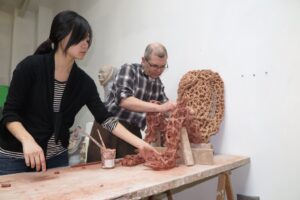
    ©Nobutada Omote, courtesy of ASAKU