Journal Category: Story

  • Interview: Tomoko Hojo — Chapter 1

    Interview: Tomoko Hojo — Chapter 1

    Subtle, often minimal, Tomoko Hojo’s (北條知子) work evokes a delicate sense of tranquillity, and it quietly draws you in. At the age of 35, the artist has already completed numerous residencies, be it in Japan, the US or Europe. She has won awards, held solo exhibitions, and participated in various group exhibitions, as well as biennales. With a particular interest in women’s voices and influenced by the likes of Fluxus, Hojo’s sound work is poetic, intimate and deeply communal-oriented in nature — something rarely encountered in conventional exhibitions.

    I was fortunate enough to catch up with the artist in Nagoya (名古屋) back in April this year, before her trip to London for another exhibition. In the first chapter of the interview below, Tomoko opens up about her journey from studying music to questioning her true calling, and ultimately landed at the crossroads where music and society meet. She discusses her time studying in Tokyo and London, as well as how the collaboration with her long-term working partner Rahel Kraft was conjured.


    I’m Listening to You


    AXEL WANG:
    Before we start, Tomoko, there is something that I must confess: I hardly listen to music.

    TOMOKO HOJO:
    That’s quite a statement.


    AW: I used to, at my age now, however, I just feel like there’s too much sound going around. Silence has become the best music really, like Ai Weiwei once said.

    TH: It’s impossible to have a complete absence of sound, as John Cage1 said.


    AW: Through this conversation with you, I’m sure there are things about sound and music that I can learn for myself as well.

    TH: Sure!
     

    AW: Let’s begin! Before coming back to Japan around a week ago, you said you were in Belgium, Switzerland, Berlin and so on. What were you doing in all those places if you don’t mind sharing?

    TH: One of the main reasons for me to go to Belgium, was the grant awarded to me by the Yoshino Gypsum Art Foundation (吉野石膏美術振興財団), which is known for supporting young artists studying abroad. Originally granted to me in 2021, the opportunity was unfortunately postponed due to the COVID-19 pandemic. However, I was finally able to go on this journey earlier this year.

    Right now, I am collaborating with a sound artist from Belgium named Myriam Van Imschoot2. I invited her to be my supervisor, and we are creating a piece together that will premiere around the end of May in Belgium, as part of a festival.


    AW: Sound work?

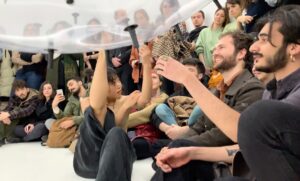
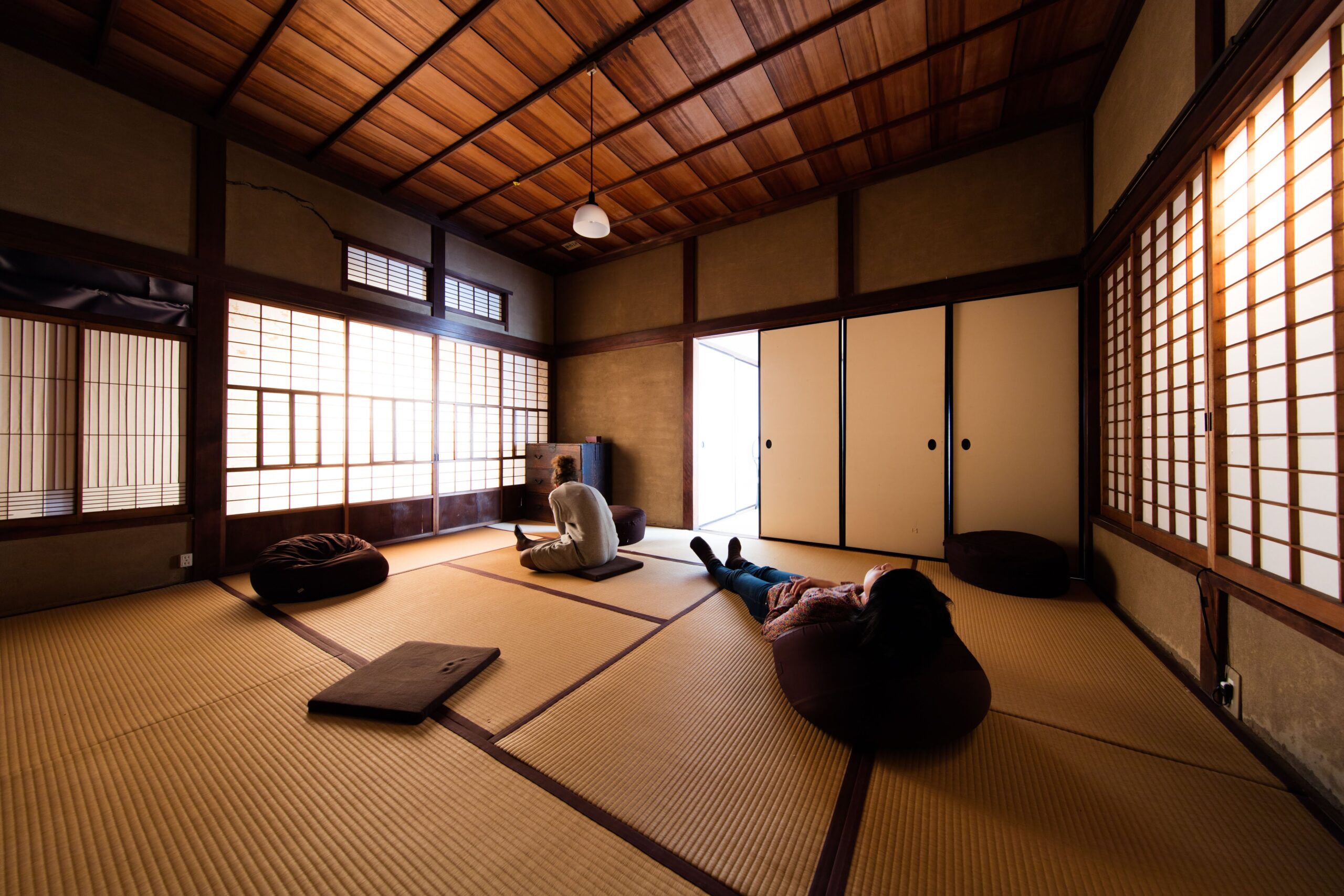
    TH: It’s a performance that incorporates sound elements, yes, with audience participation too. The performance lasts about 12 hours, with around 70 people participating. First, we all come together and do some group performances based on the scores we create. Then, we make music together that’s specifically designed for sleeping. And here’s the interesting part: at the end of the session, we all enjoy a bowl of soup and then snooze together in the same space.
     

    AW: You travel around a lot, obviously, this time you’ve only been away for a couple of months, but every time you come back to Japan after a trip, do you recall the feeling, of landing at the airport and seeing all the Japanese characters again?

    TH: That’s a good question, because it’s something that’s been on my mind as well. It’s funny how every time I return to Japan, it feels as if nothing had happened. It’s like my experiences overseas just vanish. I can’t quite put my finger on it, you know? Logically, in reality, I know things did happen, but emotionally, it’s like a whirlwind of overwhelming mixed feelings. When I arrive at the airport, everything just seems to go so smoothly, and I find myself thinking, “Wait, what’s going on? What am I doing here?” It’s all a bit confusing.


    AW: Like you never left.

    TH: Exactly. It’s funny how certain moments can strike you that way. Just the other day, I had a conversation with a guy who had lived somewhere for over 20 years and then returned to his hometown. Surprisingly, he expressed a similar sentiment — when he went back, it was as if he had never left in the first place, like the bond of attachment was that strong. It got me thinking that perhaps I also have a deep-rooted attachment to Japan, to my hometown as well, even though I may not be consciously aware of it.


    AW: Your hometown being Kitanagoya (北名古屋市)?

    TH: Yes. Not necessarily like a personal attachment, but I think somehow my brain is wired to recognise that this (Japan) is my home.
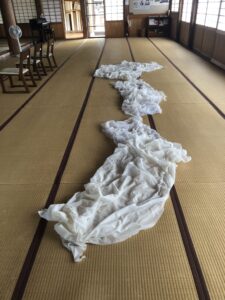
     

    AW: That’s fascinating to hear. But before we proceed, let’s take a trip down memory lane. I presume you pursued a major in music during your university years, right?

    TH: The department I entered was the music department, but what I did was not musical training. The title of my course was Musical Creativity and the Environment at Tokyo University of the Arts, which was a relatively new department, established only in 2001, I think. When we think of music majors, we often associate them with classical instruments like piano or violin, which have been around for a much longer time compared to my newer department.
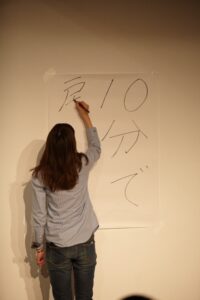
     

    AW: Have you always been interested in music since you were young? Any family influence?

    TH: It was actually my mother who had this strong, almost intense desire for me to become a musician. It wasn’t necessarily my own personal wish at the time. My mother, having graduated from a musical university herself, just told me how wonderful it was and wanted me to follow her path.


    AW: And you were okay with that?

    TH: Well, it’s hard because I was just a kid, and you know how it goes with parents. I couldn’t really defy what my mother wanted for me. I basically went along with her wishes without thinking much about my own future. I just thought, well, if it’s what she wanted, I’d just play along. But when the time came to choose my path, I just became aware that this wasn’t what I truly wanted to do for the rest of my life.

    I kind of just mustered up some courage to express my feelings to my mother, and she went a bit crazy (laughs), because she was so invested in the idea of me becoming a musician. But as I went through my teenage years receiving music education, I discovered that classical music just wasn’t my thing. Performing in front of people made me so darn nervous. I was a very shy girl and always scared of messing up. So, yeah, it became clear to me that music wasn’t my true calling. But at the same time, it’s really tough for me to say goodbye to music because it meant everything to me.


    AW: That’s who you were.

    TH: Yeah, exactly. I didn’t want to disappoint my mother by saying, “Hey Mum, I don’t want to do music,” without a proper justification. So I kept on pondering, okay, I won’t make music my profession, but what are the layers, the background, and the stories behind music?

    During my musical education, I struggled with this severe hierarchy that existed in classical music training. The teachers always held this aura of greatness, and we were expected to follow their every word. And let’s not forget the value they placed on who was creating good music and who wasn’t. It was all about technique, you know? It’s kind of like looking at realistic paintings, you can easily tell which one is “good” because the closer it is to reality, the better it is, right? Well, I soon realised that this structure just wasn’t really for me either. If I couldn’t match up to the level required technically for certain performances, what was the point of pursuing it at all?

    On top of that, I didn’t find much joy in playing music, like I just told you. I just couldn’t see the point. Why should I keep on training and dedicating myself to a career in music? That’s when it hit me. I wanted to explore the connection between music and society. I wanted to figure out how to transform the struggles I faced into something meaningful for other people out there.

    You see, the music world can be quite insular, with its rigid triangles and hierarchies. But once you step out of that little bubble, it loses its influence. I wanted to observe it from a different perspective, to see how it all takes shape from the outside. That’s where my motivation came from, why I wanted to join this department — to dig deeper into the relationship between music and the world beyond.
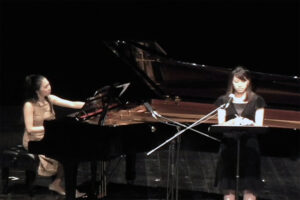
     

    AW: After Tokyo, what made you decide to go to London?

    TH: When I first entered university, I had this idea of studying art management in order to excavate this connection between art and society. But I quickly noticed that simply thinking about it wasn’t enough — I had to create something of my own. I wanted to approach art as a form of critical thinking rather than just making physical objects. My first piece, was a lip-sync performance that I did at the Aichi Arts Center.

    The performance was part of an open call. I just had this idea of challenging the structured nature of a concert hall, where the line between musical sound and noise is clearly defined, and where the idealisation is obviously based on Western classical music. Audiences experience performances in this concert hall space, it’s all live on stage, and they are inclined to be wowed or moved by it, but they don’t see what goes on behind the scenes, so to speak. I questioned whether the experience would be the same for the audience if the performance was pre-recorded and played through speakers. Would the audience still feel the same way?

    I won the competition, luckily in the end, and one of the judges, Tomomi Adachi3 — a renowned performer and musician, recommended that I attend his private school in Tokyo. There, I encountered and started delving into historical avant-garde music, like the works from Fluxus4 and John Cage developed around the 20th century, performing and reinterpreting them, which was not quite the same as what I had in mind initially of what I wanted to do, which was art management. I guess life always pans out differently from how you picture it.

    I continued down this path until the end of my bachelor’s degree. Even though I felt that while it was enjoyable and I certainly learnt a lot, on the other hand, pursuing this kind of work in Japan is challenging from a market perspective, it’s very difficult to sustain a living solely from it. That’s when I decided to expand my focus beyond experimental music and explore sound art during my master’s in Tokyo.

    Later on, my professor advised me to go to London because the Japanese market for my work was incredibly and fundamentally tiny — almost non-existent. If I wanted to continue this direction of my artistic research, I had to go abroad.
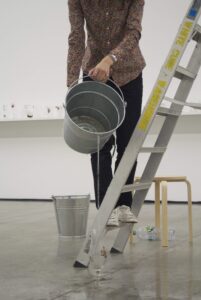
     

    AW: How did you feel before you took off and when you first arrived in London? Was that the first time you went abroad?

    TH: No, the first time I went abroad was 2010, to New York for like three days, and I remember feeling so scared! Everyone looked so busy, and I felt very much isolated and overwhelmed. Afterwards, I visited and stayed with my friend in London, the whole thing just turned out to be very different from New York — it was quieter, calmer. Then I thought, London was probably the right call.


    AW: Any cultural shock you experienced in London?

    TH: The food! It’s crazy expensive and doesn’t taste very good, I’m sorry to say. (laughs)


    AW: I mean, there must be something that you enjoyed while you were living in London right?

    TH: Absolutely! One aspect I truly appreciated during my MA was the wonderful conversations I had with my classmates. While I was in Tokyo, I didn’t have like friends who I could share ideas and conversations about sound and music with, but London was different. Obviously being on the same course, we all had the same interest, and a certain level of knowledge too, and communication was just so smooth, even though my English wasn’t so fluent back then, it was just so easy and enjoyable, to have those conversations with my course mates.


    AW: Is that how you met your working partner, Rahel Kraft?

    TH: Yes.


    AW: You guys have been working together for quite a long time, and I imagine you still are?

    TH: Yes.
     

    AW: That’s quite hard to come by, it’s like a marriage even, don’t you think? With completely different backgrounds, especially for artists coming together to form a duo. Can you tell us about this working relationship?

    TH: Funny enough, one of the reasons behind it was the small size of our course, with only six of us. The limited number of students actually intensified our communication because it became essential, like there’s no escape, you know, and I think we all embraced it well!

    Around the time we completed our MA, Rahel and I both knew that we shared similar interests, storytelling through the realms of voice and memory and so on. So, we kind of just looked at each other and said, okay, let’s actually do something together.


    AW: So all very natural.

    TH: Yes, very natural indeed. We didn’t really set out any specific goals like we-must-achieve-this or we-have-to-be-like-that, it unfolded organically, you know? It’s more like let’s give it a try because we’re not entirely sure how it would work either. We sent out many applications applying for projects, and while some didn’t pan out as expected, one fortunate opportunity came our way, and it happened to be from Japan.

    So, Rahel came to Japan for this project, and I think the bond grew stronger as a result. She’s incredibly diligent and a bit of a perfectionist, and I think I share that nature as well. Working together feels extremely comfortable, it’s amazing how she can handle almost everything — I’m genuinely surprised because I know I couldn’t do it all. But she never feels overwhelmed by it. She’s great at energetic things like climbing and hiking, and she’s unbelievably supportive. For the most part, she ends up taking on more tasks than I do, but I think she genuinely enjoys it.

    I tend to gravitate more towards conceptual aspects rather than practical matters, so we have this vague division of roles. But overall, we work together from start to finish, we don’t strictly divide tasks like one person handling visuals and the other in charge of sound or whatever. We exchange ideas, opinions, and take step-by-step actions.
     

    AW: And very collaborative too.

    TH: Exactly. It’s all very intertwined. Another aspect of it is that we also produce our own works individually, we don’t remain a duo all day long. We work together for one project, then for the rest of the year, we march on our own separate ways, and we meet again somewhere for something new. That’s pretty much the dynamic. And not to mention the fact that we are located in different parts of the world, most of the time anyway.

    Rahel is a remarkably open-minded person. I think this is crucial, for us both to be able to listen to each other’s opinions and maintain the flexibility. We always want to try something new, we always want to share ideas and execute the ideas, and it doesn’t really matter whose idea it was to begin with.
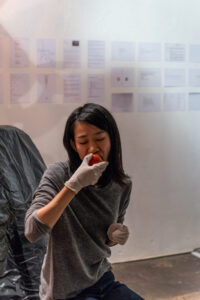
    ©Raquel Diniz


    AW: You mentioned Fluxus earlier. After reading some of your previous interviews as well as learning about some of your works, it’s not hard to tell that you are influenced by Yoko Ono too. Feminism is a constant and recurring topic that appeared in the works of Fluxus and Yoko Ono. In an earlier interview, you said, “I wanted to do some forms of expression that only I could do as a Japanese woman working in sound.” Do you think you could elaborate a little bit further on this statement? What exactly is it that you think only you could do?

    TH: The umm, catalyst for my exploration of feminism, sound, and identity, actually stemmed from another period I spent in London, around 2017, 18 for roughly a year, when I received an artist’s grant from the POLA Art Foundation (ポーラ美術振興財団) then. Towards the end of this residency, as part of a presentation, I wanted to plunge into the depths of sound and identity with my supervisor.

    Up until then, I hadn’t given much thought to the topic of identity or its significance, but after spending so much time overseas, it prompted me to contemplate my strengths as an individual and as an artist.

    I saw the fact that if I were to replicate the exact same ventures as native British artists, I would inherently be at a disadvantage. Plus, I didn’t have a compelling reason to centre my work around, say British historical elements for instance. In light of this, I sought in my heart, something original that would resonate with people and make them grasp the reasons behind my artistic choices or approaches. And eventually it all just led to Yoko Ono, considering her Japanese background. Although she spent a significant portion of her life outside of Japan, working in London as well, she still maintained a connection to her home country.

    So yeah, that’s the whole rationale. Moreover, her being married to John Lennon adds an extra layer of significance, I guess. I think British people somewhat have this special feeling towards Yoko Ono because of John Lennon and The Beatles. It’s not solely confined to the British alone obviously, but as a nation that takes pride in The Beatles originating from their homeland, the perspective may differ somewhat substantially from other Beatles fans around the world.

     

    AW: Maybe we could have a few words on feminism. The topic is probably a bit sensitive here in Japan. With the work that you do, are you looking to challenge these societal norms or expectations in Japan?

    TH: I don’t know if challenge is the right word, but these days I feel that I have to state my position.


    AW: Like you must say something you mean?

    TH: Yes, but my approach isn’t as direct or activist-oriented. I engage with feminist ideas through research and my artworks, like the piece you saw in Ichinomiya (一宮) last summer (Aichi, 2022). That particular work is based on research conducted on women working in textile factories. Back then, men relied heavily on these women, many of whom were young girls from rural areas across Japan. They were essentially forced into these factories, lacking any freedom to speak of. It’s almost a form of modern-day slavery, where young girls were treated almost as disposable labour.

    While I may not have explicitly stated it in that particular piece, the underlying intention was to question and criticise this oppressive system that once surely existed.


    AW: Given how sensitive the subject might be in Japan, have you experienced any pushback for your projects or works, from individuals or organisations at all?

    TH: Not really. Another reason why I felt motivated to undertake this line of work is that there is a growing trend in Japan, and of course globally, when it comes to feminism. Not in a way of feminism being trendy per se, but more like there’s a growing awareness for people working in particularly museums and galleries. While I can’t speak for their exact intentions, I’ve noticed a heightened consciousness when it comes to curating, both in terms of artists’ gender representation and the thematic content being explored.


    AW: It’s got to do with society’s expectations, I guess, like in Japan, society still expects a woman to say, get married at 25 and have kids, and then not work for the rest of their lives and just become a housewife, right?

    TH: I think the situation is changing, I hope so at least.


    AW: Well, it has to.

    TH: Definitely, but obviously, things are a little bit different when you compare Tokyo with maybe some rural parts of the country, where people may still tend to be quite conservative when it comes to things like this. It takes time.
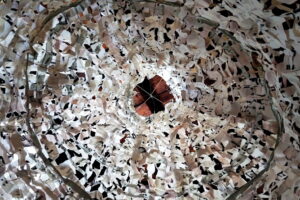
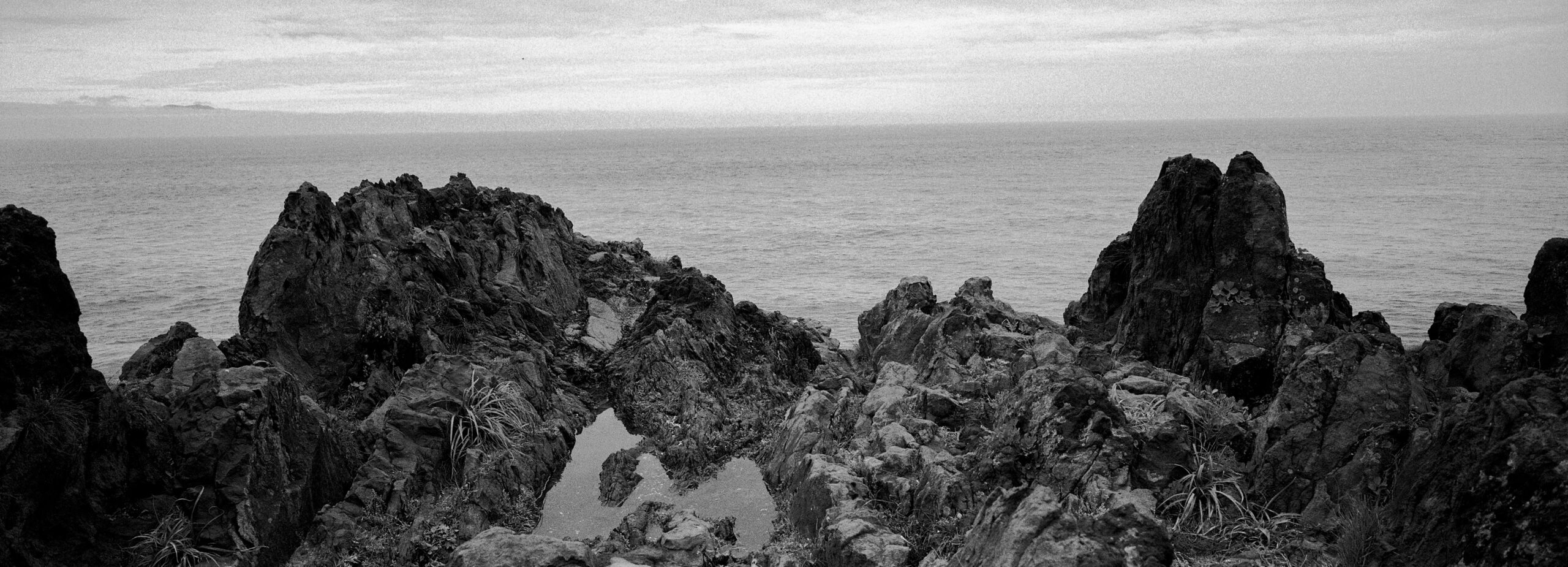
     

    TO BE CONTINUED…

  • Interview: Chaofan Wan — Chapter 2 | STAIRS PRESS

    Interview: Chaofan Wan — Chapter 2 | STAIRS PRESS

    Through the Lens of Life


    AXEL WANG:
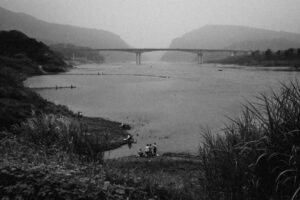
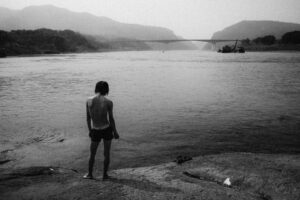
    拍完嘉陵江(《在水边》)之后你还有再回去过,重新看看,再拍点什么?

    Have you ever returned to the Jialing River for another shoot after finishing the By the Water series?


    CHAOFAN WAN:
    没有了,毕业之后就直接来日本留学了。重庆离我家也比较远,也没必要再回去拍,我对过去的东西不留恋,对新的也不期待。

    Nope, after I graduated from Southwest University, I came straight to Japan and haven’t been back to Chongqing since. It’s pretty far from my hometown, and there’s no real reason for me to go back really. I don’t like living in the past, nor do I anticipate the future.


    AW:摄影师马丁·帕尔(Martin Parr)说,所有的摄影师都很怀旧。我自己的看法是当你按下快门的那一刻,你眼前的这个东西就变成了过去。

    Martin Parr once said that all photographers carry a sense of nostalgia. The way I understand it, the moment you release the camera shutter, the subject before your eyes instantly becomes part of the past, forever frozen in time.
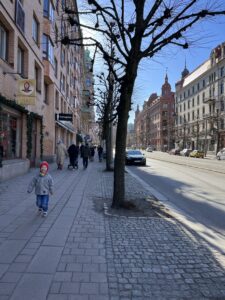
     

    CW:你看到的永远都过去了。

    Everything you see will eventually become part of the past


    AW:从某种程度上说,摄影师永远都是在跟过去打交道。

    To a degree, photographers are always dealing with the past.


    CW:当然你要冷静的分析确实是这么一回事,但你拍的时候没人会想着拍的是过去。只能说你后来拍照片累了,然后在床上躺着,想想哲学性的问题“啊,原来我拍的是过去”。谁当时拍的时候会想这些,绝对不可能,根本没有时间和精力去深究这些问题。

    Well, if you must analyse it, that’s not too far off the mark, but these kinds of thoughts would rarely cross your mind when you are actually photographing, don’t you think? I mean, yes, when you are lying in bed after a day’s work, and you might start pondering these types of philosophical questions, but not when you’re in the middle of shooting. There’s never enough time, energy, or mental space for that.


    AW:你自己也并不是一个很怀旧的人。

    It sounds like you’re not a particularly nostalgic person either.


    CW:对,我无所谓,能回嘉陵江,回重庆当然也好。不过相比于回去拍照,我肯定会先去吃一轮,去念大学时很喜欢去的几家餐馆什么的,之后如果有时间的话再说。我当时拍嘉陵江拍了整整一年,因为学校就在附近,每天我都去拍。现在我要能再回去顶多呆一两天,能拍出什么作品么?拍一些散片也没有什么意义,仅仅是过了一下怀旧的瘾,这种自我陶醉的事儿我基本不干。

    Honestly, I don’t really mind. It would be nice to return to Jialing or Chongqing, but not necessarily for anything photography-related. I’d probably prefer to go for a round of feasting first, revisit the restaurants I used to love back in university, and if there’s still time, then let’s see.

    The project of Jialing lasted for an entire year, I used to go there every single day because my university was extremely close by. If I were to go back now, there’s simply no way I could create any serious work out of a 2-day trip. Taking some random snaps would just feel so banal wouldn’t it, it’s merely an act of self-indulgence in a moment of nostalgia. Not really for me.


    “…in my opinion, this is now the best era for photography.”

    “…在我看来,现在应该就是摄影最好的时代了。”


    AW:另外一位摄影大师史蒂夫·麦凯瑞(Steve McCurry),他说很多时候他的作品会有一定程度的歧义,然后有的时候,他的作品是没有任何意思,他倾向于把这个解读的空间留给观者。你的摄影背后有没有一定的信息或者含义,是你希望传达给观看的人?

    Steve McCurry used to say that his work carries a certain ambiguity, and that sometimes there’s utterly no meaning at all, he prefers to leave the interpretations to the audience. Is there a message that you are trying to convey to the audience through your work?


    CW:肯定是有的,就像刚才说的,作品内包含了我的三观,能够跟观者产生多大共鸣,那我就无法预测了。你刚才提到的三位摄影师,跟我们这代摄影师最大的一个不同是,他们活在大众传媒比较兴盛的年代,他们拍的都是有目的性,都是要卖给报社的。既然是要卖给报章杂志的话,一定是有故事性,有历史性的衡量。所以首先当他们靠这个谋生的时候,是一定会影响到他们自己的价值判断和快门选择。现在我们的时代不一样,我们拍出来的东西,没有报社会花大价钱买,往日的杂志发布之类的传统渠道现在都不大走的通了,所以现在真正迎来了一个摄影解放的时代,是一个最自由的时代,你拍自己想拍的就好了。

    现在对摄影来说,没有了传统的价值观和金钱的绑架,也没必要为了温饱去拍摄。并不完全钟情于摄影,或者靠摄影记录生活的都去拍短视频了。反而现在还在做,或者开始做摄影,才是纯纯粹粹,真真正正喜欢摄影的人。他们拍的东西是为了自己而拍的。当然我讨论的只是像我这样的业余摄影师,像职业的时尚摄影师,以及还是为杂志,为拍商单的摄影师不一样,业余的摄影师完全没有这类限制,特别自由,在我看来,现在应该就是摄影最好的时代了。

    Intrinsically yes, as I mentioned earlier — my work essentially embodies my values. However, to what extent viewers can resonate with them, I can’t really tell. Comparing the three photographers you mentioned with our generation of photographers, the biggest difference perhaps lies in the fact that they lived in an era when mass media was flourishing. They photographed with the objective of selling their photos to newspapers or magazines, for instance. Since their works were meant to be sold, significant narratives were essential — stories, historical value and so on. Therefore, when they were making a living from photography, without a shadow of a doubt, this would influence their value judgments and their choice of subjects to capture.

    I think the time we are living in is somewhat disparate. In a nutshell, no newspapers are going to pay staggering sums for our photographs anymore, and the old-school typical channels like magazine publications don’t exactly work these days either. Hence, in many ways, this is a truly liberating era for photography, one that offers a tremendous amount of freedom. Whatever you want to shoot, it’s entirely up to the individual.

    Photography to me right now, is completely free from any conventional norms and financial constraints. There’s no longer a need to photograph purely just to make a living. Those who lack passion for photography, or merely use it to document their everyday lives, have all moved on to short videos. On the contrary, those who carry on to pursue photography as an art form, or are only now beginning to explore it, are the ones who wholeheartedly love the medium. Everything they capture through photography is exclusively for their own satisfaction and self-expression.

    I’m referring to non-professionals like myself obviously. Professional fashion photographers, on the other hand, for example, or those who work for magazines or undertake commercial projects, are a different case. Amateur photographers have virtually zero limitations and complete freedom. In my opinion, this is now the best era for photography.


    AW:现在想要用摄影来谋生的话,相对来说会不会比较困难?

    Nowadays, if someone wishes to make a living from photography, it’s apparently quite difficult to sustain, is it not?


    CW:我也没想过用摄影谋生。业余也挺好的,干别的工作来养摄影,一旦用摄影谋生的话… 也不是不行,有人找我,我就拍,没人找也不能强求对吧。

    I have not once thought about making a living out of photography though, I’m perfectly fine being a non-professional, funding photography through other jobs and whatnot. But then again, I guess it’s not totally impossible, if someone reaches out to me for a commercial project, I won’t just say no straight up, it’s not completely up to me obviously.


    AW:你刚说“现在可能是摄影最好的时代”,我的看法可能跟你有点出入。我总感觉现在这个时代,摄影这个媒介是被稀释得很严重的一个时代,因为社交媒体,手机,互联网的关系,我们每天都会看到太多太多的照片,照片被产生的速率是前所未有的。

    When you said this is probably the best era for photography, I may have a slightly different opinion. I’ve always felt that in the times we are living in right now, photography as a creative medium has been severely diluted by social media, smartphones, the Internet and so on. The rate at which photographs are being produced is unprecedented, we encounter way too many photographs than we probably should these days.


    CW:大家现在都去看短视频了啊,其实一天即使看到再多的照片,能有几张好的呢?

    Many people have moved on to short videos now, no? Although we see countless photographs and images every day, how many of them are actually good?


    AW:正因为数量太庞大了,比如说像我这种站在一个观者的角度,每天都看到太多照片,会不会因此观者们反而丢失了一种,可以用更严肃的态度去批判,去分辨,这张照片到底是好还是不好的能力呢?

    I guess it’s because of the sheer quantity. As a viewer, being exposed to so many photographs on a daily basis, I sometimes feel that in many ways we may have lost the ability to critically engage with an image — to truly differentiate, and to tell whether a work is actually good or not.


    CW:我一直都不太喜欢以理性看待艺术,艺术去感受就好了。你看它又不图个啥,它没法给你带来什么经济上的收益,甚至任何实际的回报。艺术这个东西本来就对社会没有实际的用处,它的用途就在于满足了温饱之后,能够给你提供另外一个空间,让你去逃避当下的现实。所以说我觉得就无所谓啊,并且那么多人画画,那么多人写小说,有几个人的作品能够留下来,或者我们究竟又能看到多少呢?你说照片看的多,我们看文字也看很多,但到底有多少文字是好文字,那么多好的小说究竟有几个人去读过呢?那么多好的摄影作品,一般对摄影不感兴趣的普通人,他们究竟能看到多少好照片,这个比例我感觉差不多吧。

    I’m not really inclined to approach art from such a rational perspective, I prefer to experience art on an emotional level. I mean, art serves no purpose at all, doesn’t it, and simply viewing it can’t bring you any economic benefit or return. Art itself doesn’t really accomplish anything practical in society either. For me, the primary essence of art resides in its ability to paint an alternate realm for you to escape into once your basic needs are fulfilled. So, I just think it doesn’t really matter, you know, and besides, there are tons of paintings or novels out there too right, but how many of them can actually stand the test of time?

    True, we see a lot of photographs every day, but we also read a lot of texts every day, no? It’s not like most of those are fantastic pieces of writing either. And the masterpieces, I doubt that many people have actually read them. Despite the abundance of great photographic work out there, for the average person who isn’t especially interested in photography, chances are they still haven’t come across that many truly great works.


    AW:包括刚刚提到的几位摄影师,有没有哪几位摄影师对你的影响比较大?

    Including the photographers we just mentioned, is there anyone in particular who has inspired you the most?


    CW:森山大道对我的影响很大,还有罗伯特·弗兰克(Robert Frank),约瑟夫·寇德卡(Josef Koudelka),这三位都是在我初学摄影的时候对我影响特别大的。但当我拍照拍久了,把自己列入跟他们是同行的情况下,我看到好的照片,会喜欢,会欣赏,但它对我的影响可能不会像以前那么大了。现在看到的一切都是竞争者,我可能拍的没他们好,但我不能怂(笑)。

    Daido Moriyama influenced me immensely, as well as Robert Frank and Josef Koudelka. These three photographers were especially inspiring during my early days of photography studies. But um, by now I kind of consider myself a peer alongside them, as I’ve been photographing for such a long time. Obviously I still appreciate and admire great photographs when I see them, but they don’t leave that much of a strong impact on me anymore. Everyone else is like a competitor these days. I’m probably not as good as them, but I can’t back down either. (laughs)


    AW:托马斯·约书亚·库珀(Thomas Joshua Cooper)说,他去很遥远的地方拍照,他希望自己也可以学到一些东西,不管是做人,接受还是原谅。这么多年摄影拍照的过程中你有学到一些什么么?

    Thomas Joshua Cooper, the American photographer, once said that by travelling to remote places and taking photographs, he hoped to learn something through the process, whether it was becoming a better human, more understanding or more forgiving. When you photograph, clearly enough, image-making is the top priority, is there anything you feel you’ve learnt through the process?


    CW:我发现很有意思,你选的这四段话,都是稍有点功利性的话,都是为了什么,才去做什么。因为我不是这样的,去远方拍照,我压根没有想过要学什么。比起想学什么,我宁愿吃点好吃的,喝点好喝的酒,对我来说真的是更重要。

    I find it a bit curious that the four quotes you mentioned all carry a somewhat utilitarian, pragmatic tone, like you pursue something, only for the sake of achieving something else. I guess I’m just not really like that as a person. When I travel to distant places to take photos, I don’t usually think about what I want to learn. Honestly, I’d much rather just check out the local food and grab a good drink, you know? Those things are far more appealing to me.


    AW:相反摄影这个媒材它有教会你一些什么东西么?

    On the other hand, has photography as a medium taught you anything?


    CW:错过了就错过了,新的总会再来。刚开始的时候错过了会懊恼很久 — 来不及按下快门,实物没拍好,没带相机,之类的,现在不会了,比较淡然,因为我知道我肯定还能拍到更好的,一定可以拍到令我自己满意的,这就够了。不会再去纠结错失的那一瞬间,永远没有非拍不可的一张照片。

    If I miss it, I miss it. There will always be another. In the beginning, I used to get really frustrated whenever I missed a shot — pressing the shutter a second too late, not capturing the subject the way I wanted, or simply not having my camera with me. But now I’m much more at ease with it, because I know I’ll eventually take even better photos, and that’s enough for me. I don’t dwell on the moments I miss anymore. There’s no such thing as one photo you absolutely can’t miss.


    AW:当你看到大家都举着手机拍照也好,录视频也好,有没有哪一个时刻,你会觉得说,太烦人了,老子不想拍了。

    Don’t you ever find it annoying when you see everyone holding up their smartphones, and be like, “I’m so done with this”?


    CW:没有。我永远都想拍,从来没有不想拍照的时候。很多人在拍也不会影响我,我就觉得别人拍的都是垃圾(笑)。我只能这么想啊,可能我拍的比别人拍的都垃圾,但那一刻你绝对不能这么想。他们拍他们的,我拍我的,最后可以选择不用(作为作品)就好了么。社交平台我也不发布作品,都是手机随手拍的,网站基本一两年更新一次。

    No, never. I’ll always, always want to take photos. Even if everyone around me is doing the same thing, it doesn’t bother me whatsoever. In my head, I’ll just think they all suck (laughs), and maybe that’s just how I process it. Maybe I’m actually the one who sucks, but in that moment you can’t really think like that. They do their thing, I do mine.

    At the end of the day, it’s not like I’m going to publish every single photo I take, or even consider all of them my work, if you know what I mean. My social media feeds are mostly just random, whimsical snapshots. I don’t even update my personal website that often — maybe once every year or two.


    AW:很多拍照的人,可能会很有目的性地利用社交媒体去作为一个自我宣传的手段,但你也从来没有。

    A lot of people who take photos consciously use social media as a form of self-promotion, but it seems like you’re not really part of that gang.


    CW:没有。也不是说真的没有时间,我就不想把时间花在这上,有这时间躺着看看小说我更开心一点。就还是回到刚刚说的,我对摄影没有那么功利性的看法。当然我也会焦躁,哎呀,关注量还这么少,但转念一想,少就少吧,我也没运营。我也不喜欢用小红书,别人在小红书上花那么多心思,就应该这么有名,相反我就理所当然不会有那么多人知道,付出多少回报多少,我在这上就没有付出,得不到回报也是应该的。反而是我在拍照这件事上付出那么多,最后拍不出自己喜欢的作品,我操那才伤心。

    It’s not that I don’t have time for social media, I just don’t really want to spend my time on it, that’s all. I’d rather lie down, read a novel, or do something I actually enjoy. It goes back to what I mentioned earlier — I don’t really have a utilitarian view of photography.

    Of course, sometimes it still gets to me a little. Like, “Damn, my follower count is still so low.” But then I realise that’s completely fair. I barely even use social media, so whatever, you know.

    People who put a huge amount of time and effort into social media end up becoming famous or getting attention, and honestly, they deserve it. It’s only natural that I don’t get much attention if I’m not putting in the same effort.

    What actually hurts is investing a massive amount of time and energy into photography and still not ending up with photos I genuinely like. Fuck, that’s the depressing part.


    AW:有没有花了很多功夫之后,最后出来的一系列照片都没有你预期中好的?

    Has that ever happened? Putting a lot of effort into creating something, only for the end result to not turn out the way you expected?


    CW:没有。只要基本功达标,然后你目的明确,不可能拍不到好照片。直接摄影是最纯粹的,拍不出好照片的原因就是拍的不够多。首先你得去那儿,如实地,把眼前看到的拍下来,不加修饰,不会无中生有,把有的东西弄没,把没有的东西加进来。原来是怎么样,拍下来就是怎么样,只会简单地调整一下曝光,色调。

    观念摄影拍不好就是想的少,再来是读的少,最后才是拍的少。相比起来观念摄影真的比较难,好的观念摄影我也非常喜欢,但是真的太少了。如果一个观念经不起推敲,不够有趣,不能打动人的话,那最终出来的作品肯定不够好。

    As long as you have a solid foundation in photography and a clear goal, I think it’s impossible not to capture good photos. With straight photography, if the photos aren’t good, it’s usually because you just haven’t practised enough. For me, that’s the purest form of photography.

    You have to be there physically, in the actual scene, capturing what’s in front of you truthfully — without embellishment, without fabricating something that doesn’t exist. Whatever is there, you photograph it as it is, maybe with some basic adjustments to exposure and tone, that’s all.

    Conceptual photography, on the other hand, becomes challenging if you don’t have the right ideas, haven’t researched enough, and on top of that, haven’t practised enough either. Compared to straight photography, conceptual photography is definitely more demanding.

    I genuinely appreciate excellent conceptual photography, but honestly, there isn’t that much of it around. If a concept can’t hold up under scrutiny, lacks any real allure, or fails to move people, then the final work is probably going to end up pretty bad.


    AW:自个儿有没有想说尝试一下观念摄影?

    Ever thought of dabbling in conceptual photography yourself?


    CW:观念摄影这个东西吧,我自个儿想的是,我现在还算年轻,走的动,那我就继续用我现在这套工作方式拍摄。等我之后走不动了,我可能再试试观念摄影。并且最开始摄影吸引我的,就是直接摄影,也就是我现在依然在进行着的,拿着相机,走出去拍照。在路上走,不停地走,走多久拍多久,这个工作方法对我影响极大。我喜欢的照片都是这么拍出来的。

    一旦上了岁数之后,如果因为我的体能等各方面原因,这个工作方法行不通了,那我可能会换一套工作方法,再考虑去尝试观念摄影或者别的。都是不太一样的东西,就像传统料理,好吃的就是好吃啊,创意料理,好吃的也很多,所以说没有谁比谁好,就是想做哪个,就做哪个。

    Right now, I still think I’m young, and physically capable, so I’d really like to continue approaching photography the way I do now. Maybe when the day comes that I’m no longer as mobile, I’ll reconsider and start thinking about conceptual photography.

    From the very beginning, straight photography was what fascinated me, and it’s something I’ve never stopped practising — taking the camera out, being on the road, pointing and shooting. Walking the streets, constantly moving, taking photos for as long as I possibly can.

    That way of working has had a profound impact on me, and all of my personal favourite photos were taken like this. Maybe when I get older, if physical limitations or other reasons make this approach no longer possible, then I might potentially consider conceptual photography or something else.

    To me, it’s kind of like traditional cuisine and fusion cuisine. It’s not really about which one is better — it just depends on the person, doesn’t it?


    AW:你来日本这么长一段时间了,尽管之前还是每年都回中国,但有没有认真考虑过回国一段时间,重新认识一下?

    You’ve lived in Japan for a reasonably long time now. Like you mentioned, before the pandemic, you used to go back to China every now and then, but have you ever considered staying there for a longer period and reacquainting yourself with your hometown?


    CW:没有,有时间就回去看看。新闻什么的也一直有关注,没有什么特别需要我重新认识的地方。

    Nope. I mean, I go back whenever I can, and I follow the news every day, so I already know what’s happening. I don’t really think there’s anything for me to reacquaint myself with.


    AW:我不久前刚看到一位在日本的中国摄影师王露,有一部作品集,拍的是她的出生地,跟她爸爸之间的一些故事。她拍这个系列有个很大的契机,因为她出生长大的城市,现在跟以前是完全两个样子。

    Not long ago, I came across a Tokyo-based Chinese photographer named Lu Wang. She has this photography publication centred around her hometown and the relationship between her and her father. The reason she started the series was because the place where she grew up had changed so drastically from what it once was.


    CW:我的家乡也一样,小时候的建筑全都拆了,现在都是高楼,开发区,回去的时候我都迷路。但这对我来说,只是外观上的变化,本质没有变,人没有变,所以对我来说没有什么实质性的变化。

    My hometown is pretty much the same. All the buildings I used to know have been demolished. Now it’s all high-rises, and most of the area is still under development. The last time I went back, I could barely even find my way around anymore.

    But to me, those changes are all superficial. At its core, everything still feels more or less the same. The same goes for the people. So in that sense, I don’t really feel like anything has fundamentally changed.


    AW:从一开始接触摄影到现在,不管是拍摄的场景,自己的心情,甚至是器材,有没有改变呢?

    From the beginning of your photography journey until now, have the things you like to photograph, your emotions, or even the equipment you use changed in any way?


    CW:有啊!最大的改变就是去年买了数码相机。胶卷价钱近几年涨了三四倍,我拍不起了。用了数码相机之后发现真香,太好用了。唯一不好的是,使用胶片的人一定是有恋物癖,通过暗房的操作之后,拿到手的是实物,但是数码照片是数据,会有不安全感,没电了,硬盘坏了,照片就没了。我对胶片倒也没有什么特殊的情怀,现在选择了数码纯粹是经济考量。

    Yeah, of course! The biggest change is probably that I bought a digital camera last year. Film prices have become ridiculously expensive recently, and I just couldn’t afford it anymore.

    And man, digital cameras are freaking incredible. The only downside, maybe, is that people who shoot film probably have some kind of attachment or fetish for the physical process. After going through the darkroom, you end up with an actual tangible object. Digital photos, on the other hand, are just data, right? There’s always this slight sense of insecurity — if the battery dies or the hard drive fails, everything’s gone.

    Personally though, I don’t really have any emotional attachment to film. Right now I’m choosing digital for purely economical reasons.


    AW:摄影对你来说,有什么特殊的意义么?

    Does photography hold any significance for you?


    CW:没有意义,就是能够让我自我满足的一个媒介。能够满足我的同时,也能够给其他人带来一些东西,就可以了。但首先一定得是满足我自己。

    Not really. There’s no grand significance to it. It’s just a medium that allows me to satisfy myself. As long as it fulfils me and maybe brings something to other people as well, that’s already more than enough.

    But first and foremost, it has to satisfy me before anyone else.

  • Interview: Chaofan Wan — Chapter 1 | STAIRS PRESS

    Interview: Chaofan Wan — Chapter 1 | STAIRS PRESS

    Chaofan Wan (宛超凡), originally from Hubei (湖北), China, now based in Tokyo. He earned a doctoral degree from Tokyo University of the Arts, with a diverse academic background that includes a bachelor’s degree from Southwest University in Chongqing (重庆), China, and a master’s degree in Political Economy from Tokyo Meiji University. Beyond his academic achievements, Wan is a co-founder of STAIRS PRESS and closely affiliated with the Totem Pole Photo Gallery in Tokyo.

    Unwaveringly commits to long-term photographic projects, exemplified by Wan’s latest series, Yes, the River Knows – Arakawa River, in which the production time spanned well over five years, observing life and landscape along the Arakawa River and earning him the 44th New Cosmos of Photography Excellence Award in 2021.

    2023 proved to be a prolific year for the photographer, as he clinched both the Miki Jun Award (三木淳賞) and the Photo City Sagamihara Award. Wan’s work gazes upon the nuances and intricacies of everyday life and society, devoid of any forms of symbolism and decorative embellishments. Steadfastly adhering to the practise of straight photography, Wan captures what he sees, free from judgment or preconceived notions.

    I had the wonderful opportunity of meeting the photographer for the first time in December 2022. The rendezvous unfolded at a quaint little café tucked away in the backstreets of Shibuya, Tokyo. The morning was brisk, and I arrived a tad early at the venue, shortly thereafter, Wan joined me, sporting a beanie and a Barbour jacket. Unlike the customary bowing that often accompanies first-time encounters in Japan, Wan was refreshingly no-nonsense and direct. With a simple greeting, we both took our seats. The photographer exuded an air of casual ease, our interaction was unassuming and seamless, where he swiftly agreed to participate in an interview, setting the stage for any potential collaboration.

    Following this initial encounter, we caught up with each other once more for the interview in Wan’s studio, conveniently nestled not too far from the heart of Shinjuku. Our topics of discussion were primarily centred around the world of photography. Please find the opening segment of the transcript of our conversation below, as well as the second instalment here.


    Yes, the River Knows


    AXEL WANG:
    超凡,我读你之前的访谈,关于作品方面已经谈到不少了,如果在我们这个访问过程中问到了一些重复的问题,希望你不要介意。

    Before our chat today Chaofan, I read some of your past interviews where you discussed many aspects of your work. I hope you don’t mind if some repetitive questions come up during our conversation.


    CHAOFAN WAN:
    没有关系,都可以。

    No problem at all, that’s perfectly fine.


    AW:你在河北固安出生,现在对那个地方还有什么印象么?

    So you were born in Gu’an, China, do you still remember much about the place?


    CW:一直很有印象,如果不是疫情的话每年肯定都要回去,毕竟家在那儿啊。也3年多了,今年6月份可能要回去一下。

    Yes, of course, if it weren’t for the pandemic, I would definitely go back every year, after all, my family is there. It’s already been like more than 3 years now, though I may fly back sometime in June this year (2023).


    AW:说一下日本吧。你刚来东京的时候,这座城市有给你带来什么不一样的感受么?

    What about Japan? When you first arrived in Tokyo, was there anything that impressed you?


    CW:也没什么太大的。就是挺好的,挺喜欢的。东京街道比较干净,当然人与人的距离会有点远。到现在来日本已经第10个年头了吧,呆久了就感觉还挺舒服的,老实说我不太在乎环境,在哪都可以。喜欢大城市的原因主要是方便 — 买东西,吃饭,看展各方面。国内的话,人跟人的交流会更多一点,但人际关系可能会稍微复杂一些,东京虽然感觉人跟人的距离比较远,但有时候这样反而能够让我更加集中注意力来做自己的事情。

    Nothing dramatic frankly. Obviously, Tokyo is nice and clean, and I enjoy living here, even though people seem to keep a greater distance away from each other. It’s been like 10 years since my first arrival in Japan, and as time goes by, I have found Tokyo to be rather comfortable. Truth be told, my surroundings do not really impact me much, I can sort of just adapt anywhere. The main reason I like metropolitan cities is mainly due to convenience — shopping, dining, checking out exhibitions and so on. There may be more interactions between individuals back in China in contrast, but interpersonal relationships can sometimes be too intimate and overly complicated for me. Tokyo, on the other hand, has fewer of these complexities. Although people tend to mind their own business, it actually allows me to focus more on my work.


    AW:你在明治大学取得了政治经济学学位后,是什么原因,让你在念博士的时候选择了摄影?

    After obtaining a degree in Political Economics from Meiji University, what led you to pursue photography during your doctoral studies?


    CW:一开始觉得,摄影就是自己拍就好了,不需要学。但是明治大学后,因为自己学的是政治学,想研究摄影与政治的关系,那就不妨读个博士试试。但学的更多是理论方面的,跟拍摄没有太大的关系,拍摄基本都自学的。

    Initially, I imagined I could simply self-study photography, since I did politics for my Master’s at Meiji, and after graduation, I wanted to dig a little deeper into the relationship between politics and photography, so I just thought, why not, you know, studying photography for my PhD? It was mostly theoretical, though, it had little to do with actually taking photographs. I kind of learnt that part by myself.


    AW:《浅田家!》这部电影讲述的是一位日本摄影师的故事,跟你的人生经历,不知道有没有一些相似之处?

    The film, The Asadas1, tells the story of a Japanese photographer. I wonder if there are any similarities between this film and your own life experiences?


    CW:完全没有。

    Absolutely none.


    AW:电影中男主角去大阪念大学的时候不是经历了一段比较沉沦的日子嘛,纹身呀,留长发,染金发什么的,你有没有过这么一段,稍微有点儿离经叛道的日子?

    In the film, the protagonist goes through a period of, indulgence, shall I say, while studying at a university in Osaka — tattoos, dying his hair blonde and etc. Did you ever go through such a rebellious phase in your life?


    CW:没有。我一直处在一个比较平稳的状态,因为我感觉我想要的东西很明确,不太需要什么外界的刺激或者新鲜感。

    Not really, my life and my mental state have always been relatively stable, I guess it’s because I’ve always known what I wanted, and I don’t really need external stimulation or novelty per se.


    “The reason I love photography is precisely because of the fact that
    I would never be able to break into the fabric of the world on my own…”

    “我喜欢摄影的原因就是因为我无法预料这个世界
    究竟是什么样子,会发生什么,会看见什么。”


    AW:聊一下摄影相关的吧。在去到一个场景拍摄之前,你脑海里会有一些既定的,想要拍摄的对象或者画面么?

    Let’s have a few words about photography. Before arriving at the scene for a shoot, do you have any preconceived or specific images in mind, of what you want to capture?


    CW:没有,就是未知的东西它才吸引我。如果我知道了它是什么,我可能就不太想拍了吧。或者除非是我大概了解那有什么,能够拍出特别牛逼的照片,那我肯定会跑一趟。一般来说我不太做任何事前调查,就去拍了。

    No, the unknown is what appeals to me. If I knew what it was in advance, I might lose interest in photographing it. Unless, I have a rough idea of the place and the subject, and I’m totally confident that I can grab an amazing shot, then I would definitely pay a visit. Under general circumstances, I don’t conduct any research beforehand, I just go and shoot.


    AW:打个比方,比如说你现在去京都玩儿,你有没有想说一定要拍到怎样的一个场景或者人?

    Let’s say, you were in Kyoto now, would there be any specific scene or person you’d really want to photograph?


    CW:那肯定也会,但没有到那么具体。比如东京湾的的起点,有两座灯塔,分别在千叶市和三浦市,两个灯塔之间的东京湾,肯定要拍,也包括这两座灯塔的周边环境。具体要去了当地,取决于当时环境,再来决定怎么拍。事前只会有一个比较模糊的印象。

    Well sure, but not in such a specific way. Say, for instance, the entry point to Tokyo Bay2 is marked by two lighthouses, one located in Chiba city and one in Miura city. For the new series that I’m working on currently, the scenery between those two lighthouses is imperative, including the surrounding environment of each lighthouse. But exactly what I end up photographing depends entirely on the conditions of the day — beforehand, I only have a fairly vague outline of the image in my head.


    AW:按快门那一下纯粹是本能。

    Shutter instinct.


    CW:本能,我不太预设什么。考虑太多的话… 人的脑子太小,外面的世界大多了,我喜欢摄影的原因就是因为我无法预料这个世界究竟是什么样子,会发生什么,会看见什么。我看到的一切,我拍到的一切,这些都不是我内心里面,脑海内既有的东西,并不是的。它(摄影)给我的,完全是一种新鲜的东西。画画的话就不一样,你看不到或者想不到的东西,基本画不出来。我喜欢摄影的是相遇的那一刹那所带给我的感觉,更多是传统的直接摄影。观念摄影的话我也会看,但自己不会去做。

    Instinct indeed. I try not to overimpose too many assumptions. I mean.. Our brains are way too small to grasp the entire world. The reason I love photography is precisely because of the fact that I can never fully anticipate what the world is really like — what might happen this second and what I might see the next. Everything that I can see, everything that I capture, they don’t already pre-exist in me. What photography brings me, is something entirely fresh on another spectrum.

    Painting is different. You can’t just fire up your imagination and then draw or depict things out of nothing. Photography is all about that split second of encounter, especially traditional straight photography. I do look at conceptual photography too, but it’s not something I personally do.


    AW:印象中我们第一次见面的时候,你说你并不是一个特别喜欢出游的一个人。

    I remember when we first met, you mentioned that you weren’t particularly fond of travelling.


    CW:喜欢呀,就是去的话更好,但不去也无妨。去的话一定是为了拍摄新的东西,并不纯粹是旅游。比如去京都,奈良什么,就基本是玩儿,不太拍照,因为拍出来的一切都太京都,太奈良了。

    Well, yes, I do like travelling, but it’s not like I’m obsessed with it. When I travel, the destination must be somewhere I can photograph something new, not purely for tourism. If I go to Kyoto or Nara, for example, I pretty much just remain as a tourist because everything I photograph there, ends up looking too Kyoto, too Nara.


    AW:都被拍了千百万遍了。

    Everything has already been photographed millions of times.


    CW:对的,当然你也可以拍一些比较个人的东西,但我感觉成品最后出来还是不太一样。其实你去哪里旅游,去哪里拍照,是你在跟当地在做一个抗争,一个搏斗比赛的过程。京都奈良已经被一代一代的人填充得太满了,我跟他摔跤的话,一次旅游是不可能赢过它的。除非我能在那住上一段时间之后,我才能知道应该怎样把它干倒,但如果就光旅游三四天我干不倒他。

    You are right. I mean, you can still photograph some odd personal things, but I often feel like the end product is hardly up to par or becomes something of your own. Meaning that, if you are taking photos while travelling, it’s as if you are battling that place, almost like a process of wrestling. Kyoto or Nara, these cities are already saturated by generations upon generations, there’s no way that I can defeat them as a tourist. Unless I get to spend a stretch of time there instead of just staying for 3 or 4 days, only then could I figure out how to beat them.


    AW:这个说法挺有意思。

    That’s a fascinating way of putting it.


    CW:你得把它干倒了之后才能把它变成自己的作品啊。当别人看一眼就能说出“哦,这是你的作品”,而不是说“哦,你拍的是京都”,这样等于京都把你干倒了。

    Only after you beat the shit out of them can you turn them into your own work, so that when people look at it, they would go like, “Ah, this is your work,” instead of, “Oh, that’s a beautiful photo of Kyoto,” you know what I mean?


    AW:你之前说拍嘉陵江,是因为它很近。

    You said in an earlier interview that, one of the main reasons for you to photograph Jialing River3, was because it was close.


    CW:我对远方没有什么幻想。

    I have no fantasies about the faraway.


    AW:有很多摄影师,比如说他们为了要拍到一张很好的照片,他们可能要去到一个很远,甚至是很危险的地方,但你好像对日常比较在意。

    I believe there are many photographers who, in order to capture something magnificent, might go to a distant, or even dangerous place, but you don’t seem to be bothered. From what I saw, your eyes are more set on the dull, mundane matters.


    CW:你看我的题材,我对远方确实没有太大的向往,我觉得我把我力所能及的事情做好,就已经足够让我创作出好作品了。如果一直看着远方的话,当然我也会去,但总觉得跑这么远,像《在水边》《河流全都知道》,这类很耗时,感觉很踏实的作品系列我肯定就拍不出来。我有另外一个系列叫《在石头的内部燃烧》,都是去远方旅游时拍下的风景照,当下看着好,看着美,比较合我心意就拍了,跟东京湾系列和荒川系列相比起来,是完全不一样的。

    It’s presumably not hard to tell from my work that I have absolutely no yearning for distant lands. I just think that as long as I could take care of the reality that exists a few inches in front of me, I’d be able to create some fantastic works. I mean, I would still travel, don’t get me wrong, but I’ve always felt like I would never be able to produce work series like By the Water4, or Yes, the River Knows5 when I’m on a trip, these sorts of hugely time-consuming and down-to-earth projects.

    BURNING IN THE STONE (2017 – ongoing) is another work series that I started back in the day. They were photos I took while I was on a trip. For me, they look nice, aesthetically, they are very pleasing, but when you compare them with the Arakawa6 series or the Tokyo Bay series, they are just completely different.


    AW:不一样是指?

    Different in what sense?


    CW:《荒川》系列是有一个明确要表达的东西在嘛,但是去旅游拍下的照片比较没有过多的表达,只是单纯的画面美感就足够了。

    In Arakawa, there’s a clear-cut message and layers of underlying subtexts within, there’s something inherent that I wanted to express in the series. On the other hand, there isn’t that much self-expression in the photos you take while travelling, in my opinion, they were mostly taken for aesthetic reasons.


    AW:美国摄影师史蒂夫·夏皮罗(Steve Schapiro),他说过有一张具有持续影响力的照片是需要有一点历史因素在的。又比如说像森山大道当年也拍了很多东京“里”的题材,比如风俗,或者一些在新宿看着很湿答答的场景,这些都跟时代与政治背景是分不开的。你大学时主修的也是政治,但是反观你现在摄影的主题与内容都跟政治是或历史完全没有关系的,为什么呢?

    According to Steve Schapiro, a photograph requires a definite degree of history to possess long-lasting power. Take Daido Moriyama as another example, many of his themes involved going around the flip side of Tokyo back in the day, whether it’s fūzoku7, or the rainy scenes in Shinjuku, they were all inseparable from the era he was living in and the political background at the time. Although you majored in politics in university, what you photograph these days has no direct connection to the world of politics or history. Why is that?
     

    CW:政治相关的主题方面,我没有那么直接要表达的东西,那么直接的表达,就变成观念摄影了不是吗?你知道任何事情都逃不开政治,这个区域能够干什么,不能够干什么;为什么这儿是工业区而不能造居民区,都有政治的因素在,一切都是政治。比如说荒川,为什么政府要数次疏通河道,那是为了减少洪水对两岸的影响,这就是政治因素,所以没有必要去说它。明白的人自然就明白,不明白这件事情的也不影响他看这张照片,我觉得没必要说得太明显。

    When it comes to politics-related themes, the scope is more limited, there’s nothing I would like to address so conspicuously, otherwise it would shift into conceptual photography wouldn’t it? You know, nothing escapes politics; what can and cannot be done in a designated zone, why one place is an industrial area instead of a residential one, they are all politics.

    Take the Arakawa River, for example, the government’s multiple dredging efforts were aimed at reducing the impact of flooding on both banks, this is by all accounts, politics, hence I just don’t see the point in talking about it explicitly in my work. If you understand where it comes from, great, but even if you don’t, it doesn’t really matter.


    AW:你拍荒川,持续4,5年这么拍,接下来是东京湾,你想说的是什么呢?

    You had been photographing the Arakawa River persistently for 4 to 5 years, and you are moving on to Tokyo Bay next. What is it that you are trying to say?


    CW:比起我想说的,更多是我想看看河两岸,看看东京湾究竟是什么样子,我把我看到的,通过照片告诉大家。我更在乎一张照片是否能打动我自己,能够打动自己的照片多了之后,自然会有一个叙事空间。经过筛选和编辑,大家看了我的照片之后,顺理成章就知道我看到的荒川或东京湾是什么样子。整个叙事也就代表了我的价值观,我为什么拍这个场景而不拍那个,是世界观,价值观,人文观的一个选择和判断,这也可能是为什么我跟其他人稍微有点儿不一样的地方。所以大家看了照片自然就能理解了,不理解其实也无所谓。

    Rather than conveying a very explicit message, I wanted to explore the banks of the river and Tokyo Bay to see what they truly look like. I capture what I see, and through the medium of photography, it is then shared with the audience. What matters most to me is whether a photograph can touch me emotionally, as the number of these photographs accumulates, a narrative naturally emerges. After going through the process of editing and selections, I believe the concentrated narrative of many myriad aspects would provide viewers with an intuitive understanding of what Arakawa or Tokyo Bay looks like from my perspective.

    And the entire narrative just represents who I am as a person and a photographer — the reasons why I choose to photograph certain scenes and not others are reflections of my worldview, values, and human perspective. I guess this is what sets me apart a little. So I think viewers can get it when they look at my work, again, even if they don’t, where’s the harm?


    TO BE CONTINUED…

  • Interview: Lico Kehua Li — Chapter 3

    Interview: Lico Kehua Li — Chapter 3

    Body Consciousness 身体意识


    AXEL WANG:
    作为最后一个章节的开始,想和Lico你聊聊“重复”这件事。作为舞者或者编舞家,表演需要重复,一天好几场,连着好几天,更不要说全国甚至全世界的巡演,对参与者的身体跟心理要求其实都极高。

    无论是碧娜·鲍许 (Pina Bausch),或者是陶身体剧场,他们的表演中都有很多重复。陶身体创始人之一的陶冶,之前在采访中提到说他希望把舞蹈很枯燥的一面呈现在舞台上,他认为“重复”是舞蹈的终极意义。

    不知道“重复”对你个人来说有没有什么特别的意味?

    For the beginning of this final chapter, Lico, I wanted to hear your thoughts on the idea of  “repetition”. For dancers and choreographers, repetition is something you can never get away with. Multiple, consecutive days of performances, rehearsals, let alone national or worldwide tours.

    Whether it’s Pina Bausch or TAO Dance Theater1, their performances involve an intense degree of repetition. Tao Ye, one of the founders of TAO, mentioned in an interview that he wanted to present the dull and boring aspects of dance on stage, the monotony. And he believed that “repetition” is the ultimate essence of dance.

    I’m curious, if repetition holds any particular significance for you personally?


    LICO KEHUA LI:
    对于现阶段的我和我的舞蹈来说,我不认为重复有非常重要的意义。

    比如在练习基本功的时候,你会不停地锻炼和运用身体的某一块肌肉完成一个动作,通过千百遍的重复,可以建立以及达到某种质感。更加有帮助的,是在表面上“重复”的过程中,仍然保留着觉察性。我们并不是机器,机器的重复也意味着停止,单调机械性的重复只会让我们失去生命力。重复,也许是关于信念,关于你对某件事情肯定的程度。就好比小时候学写字,你不停地重复横竖撇捺,慢慢地养成了习惯,而每一个习惯都会在你身上留下痕迹。那么,你在“重复”时坚守着什么样的信念,从这个⻆度来说,重复非常重要。

    但从另外一个角度来看,我们总是需要打破重复和惯性。那么,这样又该如何定义重复呢?就好比建立一堵新墙需要拆除旧墙一样,我认为新观念的建立始终都需要不断批判以及打破旧的观念。对于现在的我而言,我每天不断烧水、喝水、每天纠结吃什么,这也成了一种重复,但是这些重复对我的生命有什么意义吗?我说不上来…… 这是很好玩儿的一个问题,我觉得可以留一留。当我经历更多的事情后,我可能会有这个词有新的认知。

    At the current stage of my life, I have to say no.

    Obviously, when you are practising the basics, your body and mind become familiar with a specific set of movements and techniques through repetition. You develop muscle memory, refine your techniques and ultimately optimise the performance.

    And within the apparent repetitive process, I think it’s equally essential that you remain as an astute observer — you don’t just repeat, because we are not machines at the end of the day. Mechanical repetition eventually leads to stagnation or even death. If human beings function in exactly the same way, then sooner or later, we just lose all forms of vitality.

    I think repetition is also connected to belief, or perhaps to the degree of certainty you place in something. Just like when you first learned to write as a child, you repeated the same strokes over and over, gradually developing a habit, and every habit leaves its mark on you. So the kind of belief you carry within repetition becomes extremely crucial.

    But if I stand on the other side of the argument, we always need to break free from repetition and old habits, then how should repetition really be defined?

    It’s almost like tearing down an old wall in order to build a new one. To foster new ideas and concepts, not only do we have to build on the foundation, but sometimes challenging or even abandoning the past is necessary.

    For my everyday now, I must go through numerous chores, agonising over what to eat and whatever, does this cycle of repetition hold any significance at all, I honestly don’t know…That’s actually quite an intriguing question, I think it deserves much more thought, and perhaps as I continue living and learning, I’ll eventually arrive at a better answer.

    ©付晓
    ©付晓


    AW:在上一章节中,你提到了《意识与身体》。你还很年轻,有没有什么特别的原因促使你去做舞蹈教学这件事情呢?

    In the last chapter of our interview, you briefly mentioned Consciousness and Body. You are still extremely young for an artist. Is there any particular reason why you wanted to start teaching?


    LL:国内有许多从事舞蹈行业的朋友,或是一些小型的独立舞蹈团体,可能也是疫情的关系,近两年他们会在一些小城市举办工作坊,同时会邀请当下活跃的编舞家或舞者来进行授课。

    几次教学邀请下来,我意识到如果只是凭着个人兴趣去教课,许多过程会因为没有及时记录而流失。有时候在教学中讲述的东西非常有趣,很多一时兴起的奇思妙想和各种经验的分享也都十分宝贵,但下一次我可能就总结不出来了。与其说每一次都有一搭没一搭地输出,我想尝试整理教学的内容,认真地思考哪些内容值得分享和研究,我想找到建立起我的舞蹈理念的技术支持以及思维角度。 面对业余的学生或者专业的舞者时授课会有什么区别,他们提出的问题都对我有很好的帮助,我在寻找答案的过程中也在不停地学习,反思和发现短板。在大环境需要我去做这件事情的当下,既然做了,那就应该更好地琢磨一下。

    Quite a number of my colleagues working in the industry, including some independent dance groups, have been hosting dance workshops, and occasionally I was invited to be a guest tutor. After a while, I just realised that if I simply rely on personal experience or improvisation every single time, many of those valuable creative processes may be lost because they were never properly documented.

    Sometimes in class, I would say random and completely spontaneous things, and those impromptu ideas can be extremely valuable, but I might not be able to recall them clearly by the next session. That was when I began reconsidering my entire approach to teaching. I felt the need to become more organised — to establish some kind of structured curriculum, not only for the students, but also for myself.

    Like building a body of thoughts, or a system of dance philosophies, coming from both a technical and an intellectual perspective.

    There are significant differences between teaching amateur dancers and professional ones, and the kinds of questions they raise can often be surprisingly insightful. Through the process of answering them, I’m also constantly learning, reflecting, and discovering my own shortcomings.

    And honestly, since there is a demand for it, I thought to myself: if I’m going to do this, then I might as well give it my very best.


    “Change is constant,
    and dance has taught me to approach life with an open mind…”

    “…任何人事物都是处在一个持续变化的状态。
    舞蹈教会了我如何保持开阔的心态去面对事情…”


    AW:可以谈谈舞者的年龄和身体间的关系么?

    Do you mind sharing a few thoughts on the relationship between age and a dancer’s physicality?


    LL:对一个舞者来说,你的青春或者是身体状态,都因人而异,我认为不该用年龄去衡量任何一位舞者。我知道不少老师跳到五十多岁都还没让他们自己停下来。

    当我在审视我自己的时候,我能看到很多伤痕,跟我长久以来的训练和各种经历都分不开。每一年随着我的成长,我感觉我都是在消耗我的身体,我很肯定地说我无法像三年前一样疯狂地蹦跳。这三年我增长更多的是知识,语言,文字逻辑方面的能力,懂得更加理性全面地去看待舞蹈。

    像刚谈到的,我的舞者身份已经不再单纯。现在的我,仍然会把注意力放在身体上,在学习更加有耐心和爱心地对待自己的身体。也开始更多地去关注别人,帮助别人。我不再是三年前的我,我始终保持着变化和成长。我也不考虑将来,因为未来会远超我现在的想象。当然还是希望在不久后能够出国,接触不一样的文化,认识不同的人。我喜欢变化,留在相同的地方重复经历同样的事情,本能上面我是抗拒的。

    For a dancer, the concept of youth or physical condition is really subjective and varies greatly from person to person. I don’t think age should ever be used as a determining factor when evaluating a dancer. I know numerous older dancers who continue doing what they do beautifully, well into their fifties and beyond.

    When I reflect upon my own body, I can see there are like, scars and stuff, left behind as a result of years of training and experience. I do get the feeling that with each passing year, my body seems to wear down a little, and I can’t solve all the problems through physicality the way I perhaps could three years ago. What I’ve gained these years instead, are more like intellectual and linguistic abilities, along with a more rational and comprehensive perspective toward the art of dance.

    As I mentioned earlier, my role is no longer a dancer. Although I still prioritise my focus on my body, learning to treat it with greater patience and care, I’ve also started to devote more attention to others, offering support, assistance and advice whenever they may need it.

    I am not the same person I once was three years ago, as I’m continuously shifting and constantly growing, yet I try not to fixate too much on the future, as it always holds possibilities way beyond my tiny imagination. For sure, yes, I would love to travel abroad in the foreseeable future, to encounter different cultures and individuals, I relish change, and instinctively I resist lingering in familiar environments and repeating the same things over and over again.

    ©石磊 Shi Lei


    AW:在舞蹈这条职业道路上,你的性别身份有没有给你带来什么困扰或者帮助呢?

    In your journey through the world of dance, has your gender identity ever brought you any challenges or perhaps advantages?


    LL:好像也没有。当你把这个问题看成一个问题时,它可能就真的变成一个问题了。但是如果你不将其视为问题,它也就不会对你产生太大的影响。我并没有觉得哪些事情必须得男性去做或者哪些事情只有女性才能完成。当然,生理结构上男性更强壮,女性更柔美,这可能会给处理某些事情上带来先天的优势,但是也并非所有时刻下都必须表现出力量或者单一展现柔美对吧。我们每个人特点都不一样。

    现在的我可能已经没有处在一个对性别身份没有过多纠结的阶段,取而代之的可能更多是一种脱离感。我对家的归属感并不那么强烈,随遇而安可能是对我现状比较恰当的一个描述。像小鸟短暂停留在树上,或是蒲公英的种子随风飘落在各地。我似乎不再那么迫切地渴望与别人产生连接。跟还在雷动天下那段时间不同,现在也不太在意别人对自己的认可。某种程度上来说很自由 — 我不会因为别人喜欢我而大喜,也不会因为别人不喜欢我而大悲。反面就是随之而来的孤独感。虽然独处的时间增多了,我也享受独处,但自己能给自己带来的变化其实很少,一段时间后必然会觉得无聊,总盼着谁能给我带来一些波澜。说来说去又回到了一开头谈的那个很拧巴的状态。

    Not really, if I’m honest. I guess I’ve never considered it as an issue, so it kind of takes no toll on me. I don’t believe that certain tasks are intrinsically designated for men, or that some can only be fulfilled by women. I mean, there’s no argument that, relatively, men often possess greater physical strength, whereas women are associated with grace and sensitivity. These qualities may provide advantages in some specific situations, but obviously, that’s not always the case. I think it’s crucial that we all respect individuality.
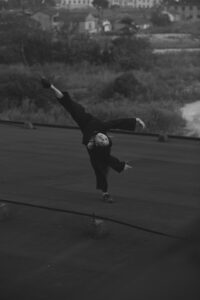
    Right now, I’m in a phase where I’m not too troubled by questions of gender. Instead, I’m experiencing a greater sense of detachment. My sense of belonging to a specific place or home is not particularly strong anymore. You can probably describe it as simply flowing with the current — like a bird briefly resting on a tree branch, or a dandelion seed gently drifting with the wind. The urgency to form connections with others, which characterised an earlier phase of my life at BeijingDance / LDTX2, has diminished, slowly, I am less inclined to actively seek validation or approval from others these days.

    In a way, I feel extremely liberated. I don’t derive excessive joy from being liked, nor do I feel much sadness when I am not. On the flip side, this newfound freedom comes with a certain sense of solitude. Although I enjoy spending time alone, I realise that self-directed changes can eventually become limited, and after a while, I yearn for someone or something to reignite that sense of excitement. It’s just such a complicated state to be in right now, just like we were discussing earlier.

    ©Laurent Hou


    AW:二十多年跟舞蹈相处下来,你觉得她有没有教会你一些什么?

    After 20-odd years, has dance taught you anything?


    LL:一句话太难总结了。如果真要说一件事情,可能是吃苦。如何承受肉体上的苦,如何忍受生活或者是人生给你带来的痛。学习舞蹈本身就已经是一个吃苦的过程,不知不觉中也培养了我对人事物比较坚定的信念,很多事情终归是会过去的,就是要有付出才有收获。

    另外一点我觉得舞蹈带给我的是变化性。跳舞究竟是什么,当你在动的时候,你已经在跳舞了。尽管我不再每天都身处工作室内跳舞,但哪怕只是一个抬手,嘴角的颤抖,所有动态都构成了舞蹈。随着岁月和经验的累积,我越发能感受到所有事情都不是一成不变的,任何人事物都是处在一个持续变化的状态。舞蹈教会了我如何保持开阔的心态去面对事情,不要用一成不变的观念去看待事情。无论是跳舞,做音乐,或者是文字工作,我们始终都处在一个变化内,变化才正正是常态。

    It’s impossible to summarise really… but if I must name one thing though, it’s probably the ability to endure hardships. How to withstand physical challenges, and the pain that life and circumstances can bring. If I’m honest, the process of learning dance itself is incredibly demanding, both physically and mentally. Gradually, I think it has shaped my unwavering belief in perseverance. All things eventually pass, and only through dedication can we truly reap rewards.

    Come to think of it, I think what dance has bestowed upon me is a sense of fluidity, or adaptability. I mean, how do you even define dancing? Even the simplest gestures, the faintest smile, every motion, every subtle movement — all of these things constitute dancing in some form. Although I may no longer dance in the studio every day, the essence of dance permeates all aspects of my life.

    With time and experience, I’ve come to embrace the inherent fluidity of everything. Change is constant, and dance has taught me to approach life with an open mind, whether it’s the art of dance, creating music, or crafting written work, we are always in a state of transformation, like a testament to the ever-changing nature of our very existence.


    Epilogue 终章


    ©Laurent Hou


    作为这次访问的终章,距离我和可华上一次对话,将近三个月的时间后,中国大陆重新开放国门,也变相宣告疫情终于临近尾声。可华在此次的访谈中显得异常的雀跃,与上一次的谈话呈现出鲜明的对比。2023年三月初时,如愿以偿,她终于又一次踏上了欧洲大陆,开始了她的旅途。此时此刻,她正身处巴黎。

    As the epilogue to our interview with Lico unfolds, nearly three months have passed since our last conversation. With the reopening of Mainland China’s borders, it appears as if the pandemic has finally reached its twilight.

    In this part of the conversation, Lico exuded an extraordinary sense of excitement, a vivid contrast to the more introspective vibe of our previous discussions. In early March of 2023, as long desired, she embarked on her journey once again, this time to Europe. At the very moment of our conversation, she found herself in the enchanting City of Light — Paris.


    AXEL WANG:
    Lico,在上一次谈话临近尾声时,我们谈到了关于舞蹈教会你的东西。你提到了一点是“改变”。当时你所说的跟佛教里“无常”的概念是相呼应的。阿喀朗·汗(Akram Khan)在最近的一次访问里也有提到关于“改变”,跟你的看法也很像。他说,改变是生命里唯一的常态,身体,爱,都是维持在一个持续的动态下,甚至包括死亡,我们的身体也在持续腐坏分解的状态。你现在会偶尔回头看一下之前的作品么?经过了年月的变迁,当你完全抽离开再一次重新审视往日作品的时候,你能感受到什么改变么?

    Lico, when we concluded our conversation last time, we spoke about what dance has taught you, and one of the many things that you mentioned was “change”. It corresponds with the Buddhist philosophy of “anitya”, which translates as impermanence in English. Akram Kham spoke about “change” in a recent interview, and it was similar to what you said. He said that change is the only constant in life, our bodies, love, and death, they are all constantly changing.

    Do you have a habit of revisiting your old works? As time passes and one becomes more detached from previous works, do you feel any change when looking back at them?


    LICO KEHUA LI:
    非常偶尔,我不是很常会翻过去的东西。我的变化性非常快,我不喜欢感受到自己停滞的状态。我们上一次谈话时我在北京,现在我来到了巴黎,前一天我还在哥德堡,之后一个星期准备去西班牙,柏林,这个持续变动的状态会给我带来很多思考。在这个过程里,你会遇到自己不熟悉的东西,发现自己的短处,通过跟世界各地的人的相处,和他人的一种良性比较,你才能知道自己的位置在哪。而不是在同一个地方,每天经历着同样的事情,在同一群人的关注之下,看待自己的方式始终都会是一成不变的。就像活在一个泡泡里,这个泡泡就是全世界。跟两个月前相比,我对自己和对这个世界的认知又有了新的变化。

    回到你的问题,其实反倒是很多身边和外界的人,他们会时常来提醒我的过去。但我并没有对过去有很强烈,想要抓住的执念,我更希望人们能看到现在的我,或者探讨当下或是未来的可能性。

    On rare occasions, maybe, I seldom dwell on the past. My nature has always been one of rapid change, because I find discomfort in stagnation. The last time we spoke, I was in Beijing, and now I have arrived in Paris. Just the day before, I was in Gothenburg, and next week I will be preparing to visit Spain and Berlin — this constant, I don’t know, state of flux perhaps, provokes profound contemplation within me.

    Through this process, you encounter unfamiliar territories, discover your own shortcomings, and by engaging with people from around the world, and through a benign comparison with others, you can ascertain your own position. On the other hand, if you are stuck in the same place, experiencing the same events day after day, within the confines of a fixed group of people, your perception of self is likely to remain unchanged. A bit like living in a bubble, you know, where that bubble becomes your entire world.

    Comparing myself now to who I was even two months ago, I can already feel that my understanding of both myself and the world has once again undergone another transformation.

    Coming back to your question, it is actually the people around me who often remind me of the past, but personally, I do not hold a strong obsession or desire to hold onto the past. Instead, I hope that people can see me as I am now, and engage in conversations about the possibilities of the present and the future.

    ©夏沐


    AW:最后,我们来聊聊舞台吧。阿喀朗·汗在同一篇访问里说,经过了疫情,他很想念舞台。他说在舞台上是一种,自由落体的感觉。尽管经过了数不清的的排练,纵使已经在泳池练习了千百遍,一旦踏上舞台,仿如跳入了汪洋,大海比你强壮,你的周围一切都是不受控的。舞台对他来说,是存在和生命。你最近的工作更多转到了台后,你有想念舞台么?

    Finally Lico, let’s talk about the stage.

    Mr. Khan spoke about this in the same interview I just mentioned, saying that he seriously missed the stage during the pandemic. He said that when he’s on stage, it feels like free fall, even though you might have practised thousands of times beforehand, but once you step onto the stage, it’s like jumping into the ocean, the ocean is way stronger than yourself, you possess zero control over your surroundings.

    The stage means everything to him, his existence, his life. What about you, Lico? Do you miss the stage, not only because of the pandemic, but also because much of your work now happens behind the scenes?


    LL:最近在北京刚结束的项目,是沈伟老师的一部舞剧《东坡》,我作为舞者和演员又一次回到了台前。我特别能理解阿喀朗先生的想法,当你在舞台上,作为一个舞者被人关注,欣赏,甚至被评价的时候,你会深切地感受到自己的价值。从始至终,我们的舞蹈生涯都是在这样一个状态下孕育而成的。

    当我这次再次回归到舞者身份时,反而对舞蹈多了一层不同的理解。当你在编舞和当老师的时候,你给予的更多,你需要把自己的判断和价值传递给别人。但作为一名舞者,相反你要扮演的角色是需要倾听,相信和配合,并且无条件地去执行以及完成编舞者的想法,不能有太多自我对于美丑好坏,喜欢与否的判断。对我来说也花了一段时间去调整以及适应这个“新”身份。当回归舞者时我发现,舞者需要更多身体的给予,相反老师和编舞需要更多大脑的给予。在扮演不同的角色时,大脑的能量和身体的能量实际上是有不同的配比。

    过去三年在国内,相比于现代舞幕后的工作,我参与了许多中国传统舞的舞剧,它更倾向于角色人物性、故事性、情感和情绪的叙述和表达,更符合中国传统的主流审美观和价值观吧。很多这些戏剧方面的元素,也从另一个角度训练了我在舞蹈中不单只运用身体表演。

    这又是另外一个变化不是吗?

    因为身份的矛盾性,当我翻过了一座山,再次面临现代舞的时候,我似乎又能看清更多。不同的环境、需求、社会体系下,评判标准也不同,同时也更能了解自己,知道自己身体内的成分是什么。

    I recently participated in a theatre production in Beijing, called Poetic Dance: Dongpo3, directed by Shen Wei4, and once again, I found myself on stage, both as a dancer and an actress. I could truly, truly relate to what Mr. Khan said.

    When you step onto the stage as a dancer, you become the focal point of attention, admiration, and even criticism, it’s like you are being recognised. Our entire dance career has always been defined within that context.

    This time round, returning to a dancer role, it has sparked an entirely fresh perspective on dance for me. As a choreographer or tutor, you must always give, so to speak, projecting your judgments and values, artistic visions, onto others. As a dancer, on the other hand, the dynamic reverses. It requires listening, absolute trust and cooperation, you must embody and execute the choreographer’s vision without imposing too much of your personal judgments of aesthetics or preferences.

    It took me some time to readjust and adapt to this “new” role, to be honest. As I resumed my position as a dancer, I realised that dancers channel a tremendous amount of physical energy, whereas choreographers and instructors exert a significant amount of mental energy. It’s fascinating to witness as well as to experience this contrast.

    Spending the past three years in China, I was involved in quite a number of dance productions rooted in traditional Chinese dance and theatre. These works leaned more heavily toward character-driven narratives, emphasising storytelling and emotions, and aligning more closely with the taste of the wider public, should I say. Through these theatrical experiences, my perspective expanded beyond the physicality of dance itself.

    That’s somewhat of another kind of transformation, isn’t it?

    Because of this distinctive contrast between these two different roles, my vision now seems clearer. Under different environments, demands, or even social frameworks, the dynamics, expectations, or even methods of evaluations are going to be different. Compared to three years ago, I think I’ve become far more aware of myself, I think.


    AW:在去巴黎之前,哥德堡有给你带来什么样的惊喜么?

    Before you went to Paris, any surprises in Gothenburg?


    LL:我在哥德堡呆了一周不到的时间,参与了哥德堡歌剧院舞团(Gothenburg Opera Dance Company)的一场舞蹈试镜。很荣幸也很幸运,得到了这次机会,能与导师和来自世界各地的舞者面对面地交流。在过去的三年间我人一直都在中国,感觉世界上别的⻆落发生了什么事情我浑然不知,也是通过这次试镜,我想更多地了解这个世界,了解不同生存环境下舞者们的想法。

    我在试镜的时候身边的人都超级年轻!真的像是构筑了一道很美丽的风景线,他们每个人都充满了活力,毫不犹豫地投入到每个舞蹈动作中。我今年也马上30岁了,在跳舞时,我会思考每一个动作,会希望每一个细节呈现出来都是完美的,跟他们有一个很强烈的反差。反差不单止是我们年龄上的差异,还体现在各种文化背景交织和碰撞下所产生的对立面,实在是太迷人了。

    So I was in Gothenburg for less than a week, and I just had an amazing audition for the Gothenburg Opera Dance Company5. I feel so honoured and lucky to have had the opportunity to meet and interact with mentors and dancers from all around the world, face-to-face!

    You know, for the past three years, I had to stand still in China, and I felt like I’ve been completely out of touch with what’s happening in the rest of the world. The audition did a lot of good I think. I wanted to find out more about the world, and understand the perspectives of all these dancers from diverse environments.

    Let me tell you, during the audition, everyone around me was so unbelievably young! They created this vibrant and dynamic atmosphere, and every person threw themselves into movement without hesitation, fully immersing themselves in every move. Turning 30 this year, and I’ve noticed that my relationship with movement has slightly changed. Now, when I dance, I tend to think carefully about every gesture, I want every detail to feel complete, almost perfect in a sense. 

    It’s quite a contrast standing beside these younger dancers, it wasn’t just about age, but also the collision and fusion of different cultural backgrounds, different understandings of dance and expression. It’s truly fascinating.

    ©Laurent Hou


    AW:你刚才提到了接下来也准备去柏林,有计划要和近藤基弥先生碰面嘛?

    Are you planning to meet Motoya Kondo-san6 in Berlin later on?


    LL:有的,实际上这次我没有像三年前出游时做具体的安排。这也是疫情带给我的影响之一吧。我之前会制定非常精确的计划,我知道接下来要去哪里,要做什么以及要和谁见面。这三年过后,我发现自己在逐渐适应疫情对我个人带来的变化,我开始改掉了提前详细计划的习惯。因为计划始终都会被打乱,当一个原本完美的计划瓦解成虚无的不安感时,感觉会更糟糕。我现在开始学会欣然接受那些意外和惊喜。

    当然我还是会制定短期的计划和设定未来的大方向,但更主要的还是抱着对未来和未知的畅想,用开放的心态去迎接无限的可能性。未来是善变的,我很满足于活在当下。也因为这样,我非常感激近藤桑能帮我把这次旅行中很多的事情都安排好了!

    Yes, of course! I didn’t make detailed plans this time, the way I used to three years ago. Back then, I always planned, I knew exactly what I was going to do, meeting up with whom and where. It’s probably one of the after-effects that the pandemic has had on me.

    Truth is, regardless of how meticulous my plan may be, it can always be disrupted. It’s more important for me at this stage to embrace the unexpected, the possibilities, and the delightful surprises that come my way.

    I mean, obviously, there’s still some sort of a plan, more like an overall direction. I’m now learning to leave space for spontaneity, because the future is ever-changing, and we’ll never know, carpe diem right?

    That’s why I am incredibly grateful to Kondo-san for helping me organise so many aspects of this trip!


    AW:回想起当时在柏林的日子,我也很想念近藤先生,一直都想采访他来着,或许你可以帮忙说服他(笑)。

    I miss my days with Kondo-san in Berlin, honestly. I’ve always wanted to conduct an interview with the man, someday. Perhaps you can help persuade him. (laughs).


    LL:没有问题!

    Absolutely!

  • Interview: Lico Kehua Li — Chapter 2

    Interview: Lico Kehua Li — Chapter 2

    Dance Dance Dance 舞舞舞


    ©Fender Hsu


    AXEL WANG:
    作为舞者也好,艺术家也好,很难免会被问到一个问题:“这是什么意思?”

    As a dancer or an artist, it’s impossible to avoid being asked the question, “What does this mean?”


    LICO KEHUA LI:
    我们舞者之间可能在学术讨论时会问到这样的问题。但是我自己本身在跳舞的过程中,是不会考虑这个问题的。

    We would probably address it when there’s like a seminar among dancers, but when I’m actually dancing, the question would never cross my mind.


    AW:从观众的角度出发,比如很多人走进美术馆看到一幅画,大家总会想要探讨艺术家创作的动机跟目的到底是什么,或者画作背后的含义。

    Standing from a viewer’s perspective, it’s like when people walk into a museum exhibition hall and see a painting, they tend to question the meaning behind the work, naturally, what the artist is trying to convey, what the intention is, motivation, and so on.


    LL:大家的确会好奇,我为什么要这样跳,为什么要那样跳。就像问画家你为什么用这个颜色,为什么用这个线条,问音乐家为什么用这个和弦。对我来说,跳舞跟创作是两回事,每日的练功又是另外一回事。当我在跳舞的时候,我不会考虑缘由,本能地身体就会开始移动。那个时刻,反而是最直接的表达,你的身和心是统一的,你和观者以及整个环境和氛围都融为了一体,无需过多的言语解释,所有沟通屏障都可以被打破。在那一刻,你甚至可以跟很陌生的人成为朋友,那是一种很妙不可言的体验。当然,并不是我跳舞的每刻每秒都能达到这种状态。艺术是脱离语言限制的表达方式,当我们大脑中那么多的感受和画面无法用语言来形容时,艺术就产生了它的作用。

    我觉得只要人在创作,难免会将自己的主观意识形态夹杂在其中,因为你想要表达自己,想要传达信息给别人。创作过程开始从本能表达,转变成刻意输出 — 在怎样的环境下,创作什么样的作品,给特定的人群看,目的性会变得非常明确,无形中生成了一层障碍。这时难点可能就在于,我们要如何打破这层障碍,与别人建立深层的、超脱肉体的、精神层面的连接。所以我认为伟大的舞者和伟大的创作者是两条不同的路途,他们的追求和遇到的困难也都是不同的。

    True, many are curious indeed, about why I move the way I do. It’s like asking a painter why they chose a certain colour or line, or asking a musician why they used a particular chord. To me, I separate the act of dancing from the process of creating, and also from everyday training and practice.

    When I dance, I don’t overly consider the “whys” — the movements are all instinctive. In that very moment, it evolves into the purest form of expression — the body, the mind and the entire surroundings, including the audience, are all merged in sync, completely unified, erasing the need for anything verbal. All communication barriers are shattered, you can even bond with complete strangers in that instant — it’s an inexplicably beautiful sensation. It doesn’t happen every time that I dance, but yeah, art serves as a means of expression that transcends the constraints of language. When our minds are flooded with countless emotions and images that defy clear verbal descriptions, that’s where art comes in.

    I believe that whenever and whoever engages in the creative process, it’s impossible not to project their own subjectivity into the work, because ultimately, we want to express ourselves and convey messages to others. The creative process gradually transitions from instinctive self-expression to intentional output – what kind of work you create, under what circumstances, and for which audience all become increasingly purposeful.

    And with that purpose, invisible barriers begin to form. How do we break through the barriers to establish meaningful connections with others on a more profound and spiritual ground, transcending the physical realm? I think there’s a fundamental difference lying between the path of a great dancer and a great creator, each with their own pursuits and struggles.


    AW:以色列的一位编舞家,Gaga的创始人奥哈德·纳哈林 (Ohad Naharin) 有说过,每个人都可以跳舞,没有任何技巧是完美的。跟你不一样的是,纳哈林先生在二十二岁时才接触舞蹈,但你从三四岁就已经开始系统地接受舞蹈的教学和训练。在你个人心中你觉得怎样的舞者才能称得上好的舞者呢?

    Ohad Naharin, an Israeli choreographer and founder of Gaga, once said that everyone and anyone can dance, there’s no such thing as perfect dance technique. Unlike you, Mr. Naharin did not start dancing until the age of 22. You had gone through rigorous training and dance education since you were 3 or 4. Personally, how do you define a great dancer?


    LL:我离开雷动天下的第一站就是以色列,那时在Gaga的训练营呆了两个星期。我觉得这个问题的答案取决于特定的环境。在不同背景环境的要求之下,对一个好舞者的定义是不一样的。譬如说你身处一个舞团,你要做到的就是快速地调节你的身体,你得执行编舞的想法和完成他的要求。

    然而反过来,比如说一些野生的舞者,尽管他们没有从小学舞蹈的经历,没有很好的软开度,没有很强的技巧性,我还是非常欣赏他们的舞蹈,并且我在看他们跳舞的时候可以很平静。我能够跟随他们上下起伏,有一种我站在原地不动时也能与他们共舞的感觉。

    又好比一些原生态舞者,可能因为家庭背景,他们有天生的本能,当音乐响起时,他们能展现出很强烈的能动性与感染力。虽然这些舞者的类型各自都有所不同,但在不同的环境中,他们都创造出了各自的价值。对我来说,别人能因为你的舞蹈,与你建立了连接,这就是一名十分优秀的舞者了。

    After I left BeijingDance / LDTX1, Israel was my first stop, where I spent two weeks at Gaga’s training camp. I believe the answer to your question really depends on the context. Under different environments and expectations, the definition of a “good dancer” changes. For instance, if you are part of a dance company, your ability to quickly adapt, and execute choreographic ideas and demands, is crucial.

    On the other hand, there are independent dancers, who may not have had formal dance training, or lack sufficient physical skills and technical precision, yet I still deeply appreciate their work and movements. Watching their performances feels calming, somehow I can synchronise with their every rise and fall, like I’m dancing alongside them, even while standing still.

    Similarly, some dancers who specialise in performing traditional or indigenous dancing, perhaps due to their background or family influence, they possess innate instincts and radiate a profound sense of vitality, and their dances carry a remarkable emotional power. While they may be categorised as different types of dancers, in my opinion, as long as you are able to establish some form of meaningful connection with others via your movements, you are more than just an exceptional dancer already.


    AW:访问一开始你提到了刚加入雷动天下那段时间花费了很大的力气去适应,你觉得那段时间是至今为止你的舞蹈生涯所面临到最大的挫折么?

    At the beginning of the interview, you mentioned how difficult it was to adapt to and familiarise yourself with contemporary dance at LDTX. Would you say that period was the greatest hurdle of your career so far?


    LL:其实并不是。反而是现在,我感觉我在面临人生至今为止最困难的一个阶段。刚加入雷动那时的确也难,但那个坎儿终究还是迈过去了。现在觉得难是因为,比如说当我开始很享受旅行的状态时,或者想要尝试更多的国际合作时,因为疫情,一切都戛然而止,我被迫静止地处在一个地方。当我试着在一座城市停留,又发现好像无法找到一处属于自己,愿意完全接纳我的城市。现在会有些迷茫,缺少了一个很肯定的方向,我没有太多的空间能够和周围的人和世界产生碰撞。好像是我身处在一个房子内,但同时却被一个巨大的铁笼笼罩着,我无法逃出去,所有的信号也都被屏蔽了一样。

    我现在不再只是一个单纯的舞者,我开始更多地承担了编舞师和教员的角色,也开始了线上授课,透过小小的屏幕尝试与更多人接触。在这个过程里,我很努力地试图用语言让别人理解舞蹈。尽管对我来说非常挣扎,但无形中很多其它方面的能力也得到了提高。像是最近我在曹盾导演的一部古代历史题材的新电影《敦煌英雄》里担任了编舞师,我需要不停地转换我自己的角色。编舞之外还必须要跟音乐家,灯光师,服装造型,包括演员等不同的部门去协调工作。

    同时我也在尝试创立一套自己的运动逻辑,叫《意识与身体》。整套体系是在探讨大脑的意识和身体运动本能间的相互作用,通过技术性的训练与意识层面的互动,不断更新我们对自己身体结构和思维意图的了解。在各种新的尝试下,起初我作为舞者这个单纯的身份,就变得不再那么单纯了,所有平行的事物都处在一个起步阶段,一个新的起点。从前跳舞很单纯的快乐也不再那么快乐,所有的挑战都形成了一个巨大的混沌。

    Not exactly. True, LDTX wasn’t easy at first, and somehow I survived. In fact, right now, it feels like the most challenging stage of my life. What feels difficult now is something else entirely…like um, just as I began to enjoy my journeys and explore international collaborations, this sudden halt caused by the pandemic forced me to remain very stagnant, even when I tried to settle, I came to the realisation that there is an ongoing struggle to find a place where I could genuinely fit in. This confusion has left me without a clear sense of direction, with extremely limited opportunities to engage, and collide with the world. It feels as though I’m trapped inside a confined house, that is itself enclosed within an imposing iron cage, which blocks all signals coming in and out.

    Perhaps the reason for this also lies in the fact that I am no longer just a dancer. Taking on the roles of a choreographer and tutor, with online teachings and everything, I strive to connect with a broader audience through a tiny screen. During this process, it takes a tremendous amount of effort to explain the art of dance through language. It’s extremely challenging, even though it has unintentionally honed various aspects of my abilities. Like I recently worked as a choreographer on director Cao Dun’s new historical film Heroes of Dunhuang2, my roles had to constantly shift in order to coordinate with musicians, lighting technicians, costume designers, actors and many others.

    On top of it, Consciousness and Body is a new system of movement methodology that I’m trying to develop. I attempt to dive deep into the intricate interaction between conscious thoughts and intuitive bodily movement. Through technical training and engagement of the mind, I hope to continuously refine our understanding of the body structure and logical thinking.

    With every new attempt, my identity as a dancer has definitely evolved beyond. The sheer delight I once found in dancing has now become intertwined with new beginnings and challenges, resulting in magnificent chaos.


    “As time passes, people, objects, they all increasingly become blurry and distant in our minds.”

    “随着时间的流逝,很多人事物在我们脑中的印象逐渐变得模糊,离我们远去。”


    ©Harry Wang


    AW:刚才你提到了编舞跟教学两个部分,我们可以聊聊关于刚落幕的《四相》这个表演。

    You just mentioned choreography and tutoring. Shall we talk about the dance choreography that you did for the performance As Four3?


    LL:《四相》是由四部舞蹈作品组成,四种风格,呈现四种不同的状态。我在其中的作品叫《红移·遗忘曲线》,是一部二十八分钟,半台的编舞作品。

    我从很久以前就一直有一个感觉,每当回望我的过去,我感觉所有事情都离我十分遥远,就好像今天这两个小时的对谈,从回顾三岁时到今天,我跟你讲的很多过去我都不确定到底是真的还是假的 — 我脑中的所有,我所相信的一切,究竟是我自身的记忆,还是别人灌输给我的。

    “红移”这个概念,实际上是物理学和天文学的一个名词,它描述的是天体正在往远离观测者的方向移动,它发出的光波波长变长,信号频率降低,从而在光谱上呈现出向红色方向移动的现象。就好像是在黑夜中一辆警车从你面前驶过,声音越来越远,视觉,视角都越来越模糊,这个状态就跟我刚描述的感觉很像。好多记忆和我对过往的一些印象,许多画面,都并不完整,似真亦假,我只能用我自己的语言,努力地把所有碎片拼凑在一起述说给别人听。

    有一件挺值得一提的事情是,这部作品的编舞开始于2022年3月份,在接下来大半年多的时间里,因为疫情各方面的封管,整部作品分成了四个阶段完成。各阶段的排练我所能分配到的时间都非常短暂,大概都在一周到两周内,一天可能也就只有三个小时。恰好跟整个作品的概念又有点不谋而合。它始终是呈破碎状,拼接组装而成,甚至连《四相》整台作品的演出都分成了两个阶段。

    我觉得《红移》也正因为是在这样的环境下诞生,她的价值也随之产生了。她并不是为了讲述一个多么明白的事情,她所刻画出的就是一个当下的状态,仅此而已。我们现在所处的这个社会环境,给我自己带来的这么一个状态。而这个状态是零散的,是分裂和拼凑的。我所有的时间和记忆,呈现在舞台上的画面,全都是破碎的。

    演出的过程由始至终都是在一个没有缘由的状态下,画面会进行快速切换,对观众来说可能会因此感到困惑。但有趣的是,观众给我的反馈却是在这样一个被迫接受画面切换的状况下,反而在他们脑中能留下一两个非常强烈的画面。一部作品能留给观众的,其实也就是那一个或两个画面。这些画面在观众脑海中反复重播,从而产生了对每个个体来说独一无二的意义,这是不是也是“红移”的概念呢?

    随着时间的流逝,很多人事物在我们脑中的印象逐渐变得模糊,离我们远去。当我们试图抓住它,最后往往只有一两个画面残留下来,而我们就认为那是一个完整的过去了,这大概也就是我想说的遗忘曲线吧。即使只有零星的浪花能留在海浪拍打后掠过的海岸线上,对我们来说可能已经无比珍贵了。

    As Four consists of four pieces of dance performance, each showcasing a different style and portraying a distinct state. My part is a half-hour choreographic work titled Redshift: The Forgetting Curve (2022).

    For the longest time, I’ve grappled with the notion, with this feeling, that whenever I reflect upon my past, everything appears so distant and so elusive. Like, we’ve been talking for almost two hours now, revisiting my childhood memories up to the present, and I’m not even sure if those memories are real or not. All these memories, all these things I believed happened, they all leave me with this feeling of uncertainty, of whether they are genuinely my own, or if they are impressions imposed upon me by others.

    Redshift draws inspiration from a concept in physics and astronomy, describing the phenomenon in which celestial bodies move away from the observer, causing their emitted light waves to elongate, their signal frequencies to decrease, and the visible spectrum to shift towards red.

    It’s like a police car passing by in the darkness, the sound fades into the distance, while the images itself becomes increasingly blurred. That sensation feels very close to what I’ve been trying to describe.

    Many memories and impressions from the past feel incomplete, as though something is missing, in a way that they seem to echo the truth, but at the same time appear to be illusions. All I can really do is try to piece those fragments together through my own language and tell the story as best as I can.

    One thing worth mentioning is that the choreography for this piece began in March 2022. Over the course of the next 6 months, due to various pandemic-related restrictions, the production also had to be divided into four stages. The rehearsal periods for each stage were extremely brief,  typically lasting only one to two weeks, maybe only three hours a day.

    Interestingly, this fragmented process unintentionally aligned with the concept of the entire work. Everything remains fractured and assembled, to the extent that even the performance of As Four had to be presented in two separate phases.

    Redshift was born under such circumstances, and it is precisely through these circumstances that its value emerged. It is not meant to send out any clear message, but rather depicts the current state, nothing more. The current social environment we’ve been living in has left me in a fragmented and disjointed state. All my memories, my sense of time, and even what’s being presented on stage, are all fragmented and somewhat shattered.

    The performance unfolds through a continuous sequence of abrupt transitions, which I think may have confused the audience at times. Interestingly enough, the feedback I received was that, despite the rapid shifts, one or two exceptionally vivid moments remained deeply implanted in their minds.

    Perhaps that’s all a work can truly leave behind. Those one or two images replay repeatedly in people’s minds, gradually taking on unique meaning and significance for each individual.  I guess that’s also part of the idea of Redshift.

    As time passes, people, objects, they all increasingly become blurry and distant in our minds. When we try to hold onto them, only one or two images linger, and somehow we convince ourselves that those fragments represent the entirety of the past.

    And perhaps that is what I mean by “the forgetting curve”. Even if only a few sporadic traces of foam remain on the shoreline after the ocean waves recede, those traces may already be the most precious thing that we are able to keep.

    ©Rahi Rezvnai


    AW:现居德国的美籍编舞家威廉·佛塞 (William Forsythe),之前在一篇访谈里将舞蹈的事业 (career),与舞蹈的人生 (life),做了一个区分。你是怎么看待舞蹈的呢,在现阶段对你来说,她是事业还是人生?

    William Forsythe once drew a line between a dance career and a danced life, which one do you incline more towards at the current stage?


    LL:我不知道我是不是真的会跟舞蹈有一辈子的联系。现在回头看,不多不少会有些遗憾。当你做了一个选择之后,因为这个选择你要放弃很多其他的可能性。我不敢去参加别的运动,因为害怕受伤。可能我性格也有点执拗的关系,我这辈子到现在都花了很多时间在舞蹈这件事情上,意味着我并没有很多青春期同龄学生该有的经历,像是玩游戏,去舞厅,KTV什么的。我觉得我好像也失去了很多作为一个普通青少年,对生活或者对于错误的那种体验。所以你说之后我是否真的还要一直跳舞或是做舞蹈吗,老实说我也不太确定。我现在就是处在人生中最灰的那个状态,颜色并不是那么鲜明。

    佛塞先生已经是舞蹈界大师级的人物了,但是他现在好像偶尔也脱离舞蹈,跳出舞者的身份,探索装置艺术,研究电子音乐,在做一些可能跟舞蹈并不是那么相关的事情。当然我也不知道他的想法是什么,希望有那么一天我也可以问问他关于舞蹈跟人生间的关系,是不是我一辈子都得要跳舞,也许他可以给很多跟我一样的年轻人一个有趣的启示,开拓更多可能性 。

    Honestly, I don’t know, if I’ll have a forever lifelong connection with dance. Looking back now, there are regrets, to some extent. Once you make up your mind to dedicate yourself to one thing, it practically means giving up other options, right? Like I couldn’t really do any other sports because I was always afraid of getting injured since I started dancing.

    I guess it’s just me being stubborn. The moment I decided I was going to dance, I kind of just never looked the other way. I don’t even know how much of my life I’ve actually devoted to it at this point.

    When comparing myself to other teenagers growing up, I think somewhere deep down I do feel like I’ve missed out on just being a teenager, I never got to experience the things they did — missteps, karaoke, clubs, stupid teenager stuff, you know.

    So when you asked whether dance is going to become my life or just my career, honestly, I’m not sure myself either. Right now, I feel like I’m in the greyest and most uncertain phase of my life, the colours are just a bit dull, you know.

    Mr. Forsythe is already a master figure in the dance industry, yet it looks like he occasionally ventures beyond dance, exploring installation art, electronic music, and engaging in activities that may not seem directly related to dance at all. Obviously, there’s no way of knowing exactly what he thinks, but I do hope that one day I’ll be able to ask him about the relationship between dance and life, whether dance really has to be a lifelong thing. Maybe he could offer younger people like me some unexpected insight, open up a few more possibilities.

    ©Fender Hsu


    AW:台湾舞蹈家简晶莹(Ching-Ying Chien),说过自己这一辈子80%的时间都奉献给了舞蹈。别的一些生活上的事情,她已经不了解了。感觉跟你述说的情况很类似。

    Ching-Ying Chien4, a Taiwanese dancer, once said that she dedicated 80% of her time to dance, and she felt that she didn’t even know too much about any other things any more. It’s quite similar to what you just described.


    LL:有时我会想,也许我不再跳舞,也不从事与之相关的工作了。我很喜欢画画,我也很喜欢研究吃的,也许我可以转头去画画或者成为美食博主什么的。我也特别喜欢旅行,很享受在路上的感觉,有时甚至会想端端盘子,去体验一下不同的人生。或者是去一个孤岛,做一个牧场主,养很多的动物。我会有很多奇奇怪怪的想法,构想过非常多跟舞蹈没有关系的人生。我认为人生还有很多可能性,如果我想去做,为什么不呢?仍然可以去尝试,现在说遗憾太早了,等到没有选择余地的时候,才真的叫遗憾。

    I ask myself this question sometimes: Do I really want to continue dancing or pursue related work for the remainder of my life? Like, I enjoy painting, and I have a massive interest in food as well! I love travelling and being on the road, like I told you. Sometimes I even picture myself holding a tray somewhere, experiencing a completely different kind of life. Perhaps I could sail to a solitary island and become a rancher, surrounded by all kinds of animals.

    My mind is loaded with all these whimsical ideas, envisioning lives far removed from dance. I genuinely think that life holds countless possibilities with tons of options, and it’s never too late to try something new.

    ©Fender Hsu


    TO BE CONTINUED…

  • Interview: Lico Kehua Li — Chapter 1

    Interview: Lico Kehua Li — Chapter 1

    In some of Lico’s videos that I initially came across, despite the absence of masterful editing, and far from being the epitome of polished, high-budget video production, there was an undeniable raw, for lack of a better word, authenticity, that shone through. Enclosed by this imperfect canvas, Lico’s body moved in such a captivating manner that I had never seen anyone else move before, such a delicate contrast, exquisite yet powerful, nonchalant yet brimming with grace. Effortlessly sublime, and technically brilliant — from the tips of her fingers to the ends of her toes, every gesture, every undulation, every collapse, it was as if her dance was not about dance at all, instead it’s a statement, a form of eloquence communicated through the language of her movements, and boy, did it compel your attention.

    The intriguing aspects of my experience were further heightened by the juxtaposition of stylised cultural elements. The whole thing was so, I know, “Oriental” is a word that one should probably avoid in today’s world, but to the eyes of someone like me, who was born in the East and raised in the West, there was a faint echo of what some might label “Oriental” aesthetics — there’s quite a bit of Crouching Tiger-ness to the whole thing. On one hand, it evoked images of an East steeped in mystique and tradition, while on the other, it seamlessly coexisted with the unmistakable modernity of our times.

    It was as if the statement that Lico attempted to convey did not adhere to any specific tradition or era. Instead, it stood as a testament to the timeless nature of artistic expression, serving as a powerful reminder that the beauty of art lies in its ability to transcend labels and boundaries, effortlessly bridging any divides. For some reason, it taps into something deep and instinctive.

    My first conversation with the dancer took place back in October 2022 via an online call, during which I discovered that Lico originally came from a Chinese ethnic folk dance background. It was only after graduating from university that she began exploring the field of contemporary dance. We conducted our first interview session two months later, while she was in Beijing preparing for a role in a massive dance production.

    The interview is structured into three chapters. In the opening segment below, we dive into Lico’s past, and how she transformed into a complete dancer moving from childhood to adulthood. The second chapter largely revolves around the art of dance, while the third and final chapter delves into the physical and mental dimensions of being a dancer, accompanied by an epilogue in addition, where it captures our conversation during Lico’s visit to Paris in March 2023, marking her first overseas trip since the pandemic lockdown.


    Prologue 序


    AXEL WANG:
    Lico,你们那现在疫情怎么样了?

    Lico, how is the current situation with the pandemic over there?


    LICO KEHUA LI:
    不咋地啊。

    Not so great, to be honest.


    AW:感觉很多人突然间都感染了。

    Like out of nowhere, people just started to get infected.


    LL:嗯,可能阴的没剩几个了。你那边还好吗?

    Yeah, probably all of them by now. How are things at your end?


    AW:我们这边基本上跟没有疫情差不多了。当然大家还是会戴着口罩,但各方面都没有什么限制,就一切都回归正常了吧。

    I would say it’s pretty much back to normal now, of course people still put on a mask, but there aren’t that many restrictions.


    LL:也是经过了一个过程,一个阶段对吧?

    Must have gone through a certain phase, right?


    AW:2020年夏天那时也有封城过一阵子。

    There was a brief period of lockdown back in the summer of 2020.


    LL:国内现在是刚刚放开,所以还是得经历一个阶段。其实我现在北京呆的这个房子里,能听到隔壁大爷或者大妈在咳嗽,每天也能听到他们跟朋友打电话聊天,聊症状什么的。因为我自己现在也感染了,已经快好了但也还有些咳。虽然有点儿不太好,但偶尔能听到隔壁在聊天,感觉自己好像也不是那么孤单,像是有人跟你说话一样。

    China has only just started to open up, so it probably will take a while. In this house in Beijing where I’m staying right now, I can hear some elderly neighbours coughing next door, talking on the phone about their symptoms and whatnot. Since I’m infected as well, though almost recovered, there’s still quite a bit of coughing. I know it’s not nice to eavesdrop, but occasionally overhearing the neighbours’ conversations makes me feel a little less alone, like someone’s talking to me, you know.


    AW:你现在是在隔离的期间吗?

    Are you in quarantine right now?


    LL:对,我已经两个星期没有出去工作过了。因为大部分的人都陆续感染了,整个团队都受到了影响,排练也就暂停了,可能下一周会恢复工作。

    Yes, and I haven’t been out and about for like two weeks already. Nearly the entire team has caught the virus, and rehearsals have to be suspended. Hopefully, we can all resume work next week.


    Yesterday, When I Was Young 昨日当我年轻时


    AXEL WANG:
    首先非常感谢可华在生病期间能抽时间进行这次访问。我在查资料的时候看到你大概是从三,四岁就接触舞蹈了。很多小孩在这个岁数可能都还在数星星什么的。关于舞蹈,你最早的记忆是什么呢?

    First of all, Lico, thank you so much for taking the time to do this despite being ill. It’s genuinely appreciated. While researching, I read that you started dancing at around the age of 3 or 4. It’s pretty incredible because I imagine many kids at that age are probably still busy counting stars or something. What is your earliest memory of dancing?


    LICO KEHUA LI:
    我大概在三岁半到四岁之间,去了老家的一个舞蹈中心,拜访了老师,告诉她我想学跳舞。我记得老师当时说我太小了,问我会什么。我回答说我会扳腿,然后我把腿一下就扳到了头顶上,老师可能也有点吓到了。

    I remember when I was around three and a half, I visited a dance teacher at a community centre in my hometown and told her that I wanted to learn dancing. She wasn’t really sure what I could do since I was so young. Then I pulled my leg up above my head, quite effortlessly, and she was a bit startled!


    AW:为什么在那个岁数会想学舞蹈呢?

    Why did you want to learn dancing, especially at that age?


    LL:我从小就很喜欢运动,运动细胞比较发达。小时候喜欢玩乒乓球、游泳、蹦床等,可以废寝忘食地玩整天。包括自行车、滑旱冰、踢毽子、跳绳等,我都非常非常快就能掌握。当时我爸问要不要考虑去体操队,但转念一想体操队特别苦。反正学跳舞就是多一个爱好,家里也没有反对,就当去玩儿,没想到一坚持就坚持了那么久。

    I mean, I loved all kinds of sports since young — table tennis, swimming, trampoline, cycling, rollerblading, shuttlecock, skipping, you name it. I picked things up very quickly and was pretty much a natural when it came to sports. My dad once considered sending me to gymnastics, but then just thought it would probably be extremely tough for a kid that age. Initially, dance was just another hobby like the rest, and my family was okay with it. Little did I know right, I’m still dancing to this day, surprisingly.


    “Sometimes, when you lose something, you gain something far greater.”

    “…你得不到你想要的,你会得到更好的。


    AW:你在大学时主修的是民族民间舞表演。说起民族舞的话,可能也是刻板印象,我个人可能首先会想到水袖之类的。它跟现代舞是一套不太一样的动作和表情语言,两者的差异在我们外行看来也非常大。你毕业后为什么会选择了雷动天下现代舞团而不是,例如中国东方演艺集团呢?

    You majored in ethnic folk dance back at university. Speaking of Chinese folk dance, it’s probably just a stereotype on my part, I tend to think of stuff like water sleeves before anything. Folk dance seems to have a completely different set of choreographies, of movements and expressions that differ so vastly compared to contemporary dance, at least from an outsider’s perspective. After graduating, why did you choose to join BeijingDance / LDTX1, a contemporary dance company, instead of, say, somewhere more traditional?


    LL:这是个特别好的问题,可能得花点时间从前面开始讲。

    我小时候先是舞蹈爱好班,初中就考到了专业院校学舞蹈。也是在那段期间接触了中国舞,这是一个类别非常广泛的舞蹈门类。中专时期是属于非常注重个人身体素质开发的一个阶段,我的基本功是很好的,包括柔韧度等,但对于跳舞本身来说,我的理解非常浅显单一,可能只有笑或不笑,感动投入或者面无表情。之后考上中央民族大学学民族舞,也是一段很奇特的经历。首先民族舞需要非常丰富的情感,需要有很强的共情性,并且要了解不同民族的历史背景,文化,还有生活习性等,你才能明白你为什么要这么跳,才能够抓住这个民族的特点去跳他们的舞蹈。但这些所有对那时的我来说都一概不知。我大学考学的剧目是一部古典舞叫《休诉》,是非常中国古典传统的一种表达方式,并且是远超我15岁年龄段的一部舞剧。当时就带着懵懵懂懂的状态,学了这个舞蹈后去考了中央民族大学,很幸运被录取了。前期的故事大概就是这样。

    当时我既报考了上海戏剧学院舞蹈学院的古典舞,也考了最渴望上的北京舞蹈学院,但很遗憾都没考上。最后为什么会选择了一个自己非常不明白的民族舞专业可能也跟我出生地域有关吧。我的成长环境比较传统,中央民族大学离家比较近,家里人也放心一些。加上那时去了一次上海,很不习惯当地饭菜的口味(笑),既然这样索性就去学民族舞吧。

    我印象很深刻的一件事情是,我去考北京舞蹈学院的时候看到落榜了,站在榜前就开始流泪。当时我爸告诉我说,姑娘你得不到你想要的,你会得到更好的。我始终记得这句话。很多的时候,并不是你想拥有的东西就一定能够得到,就算得到了,它也不一定是最好的。可能只是一个当下的执念,一个欲望,仅此而已。刚上大学开始学民族舞时,我仍然是处于一个懵懂状态,从啥也不知道,到逐渐喜欢这个艺术门类,开始对各个民族之间的故事和文化背景感兴趣,身边多了不同民族的同学,对每个个体开始产生新的认知。之后民大毕业,我也不知道什么样的职业方向对我来说是正确的,在老师的建议下,尝试报考了陶身体剧场和雷动天下这两个现代舞团。为什么要说这个是因为,有的时候往往你想要去做的事,不一定能够如你所愿,拥有它。

    That’s a great question actually, I might have to go back and tell it from the beginning…

    When I was young, dance started out as more of a hobby class, right? Then later I was admitted into a professional dance school. It was during that period that I first came into contact with Chinese dance, which is a rather broad category made up of all sorts of genres. It was a phase when a huge emphasis was placed on developing an individual’s physical attributes. My basic skills and techniques, like flexibility and things like that, were actually pretty strong. On the other hand, when it came to dancing itself, my understanding was relatively shallow and limited, like, I only knew very basic emotional expressions, like smiling, looking moved, or remaining expressionless and whatnot.

    Later, I enrolled at Minzu University of China to study folk dance, which was quite a journey in itself, too. Folk dance is a particular art form that demands a rich emotional range and a strong sense of empathy. You must understand the historical background, culture, and lifestyle of the ethnic groups in order to comprehend why and how they dance the way they do. However, at that time, I was completely unaware of all these nuances and complexities.

    The piece I performed for my university entrance exam was a classical dance work called Xiu Su2, which was a very traditional Chinese form of expression, and honestly, far beyond what someone my age should probably have been attempting. I approached it in a state of confusion and naivety, but fortunately — I didn’t really know how — I passed and got accepted!

    Back then, I also applied to both the classical dance program at Shanghai Theatre Academy and the highly coveted Beijing Dance Academy, but none of them worked out. In the end, the reason I chose folk dance, in hindsight, was perhaps influenced by my birthplace and background. Growing up in a relatively conservative environment, Minzu University was closer to home, and my family felt more at ease with it. Also, I remember visiting Shanghai, and I didn’t quite enjoy the local food. (laughs) So yeah, eventually, it just seemed like all circumstances led me to the path of folk dance.

    There was one particular moment that left a lasting imprint on me. It was the day I saw my name absent from the admission list for Beijing Dance Academy, and realised I hadn’t made it. I was overwhelmed with disappointment, and tears welled up as I stood there. It was then that my father shared a comforting insight, saying, “Sometimes, when you lose something, you gain something far greater.”

    Those words have stayed with me ever since. A lot of the time, the things we desperately want aren’t necessarily the things we’re meant to have, and even if we do get them, they may not be the pinnacle of fulfilment. They can merely be transient fixations or fleeting desires, nothing more.

    As I embarked on my journey through university and started to learn folk dance, I was initially naive and clueless, but gradually, I began to genuinely fall in love with the art form. I became fascinated by the stories, historical and cultural tapestries woven by different ethnic groups. Being surrounded by classmates from diverse backgrounds, I began to perceive individuals in a whole new light.

    Upon graduating from university, I found myself in a conundrum once more, uncertain about the right career path to pursue. At that juncture, my tutor recommended me to audition for both TAO Dance Theater3 and LDTX, two renowned contemporary dance companies. I’m mentioning all these because sometimes in life, there are moments when our aspirations may simply elude us.


    AW:其实我们第一次聊天的时候我有想为什么你没有加入陶身体。不能完全说是表演风格,可能说审美比较恰当,整个氛围调调,我感觉挺吻合的。

    I was actually going to ask why you didn’t join TAO when we spoke for the first time. It wasn’t exactly about the style of the dance, but more like the aesthetic or the vibe I guess, I thought you would’ve been a really good fit there/
     

    LL:我当时是特别想加入陶身体的,记得他们愿意给我实习机会的时候我特别开心,就像你说的,我确实觉得我很适合他们舞团。毕业后,在我的专业导师敖登格日勒推荐下,我偶然接到了内蒙一部大舞剧的主演角色,编舞师恰好是雷动天下的建团演员。我当时向他简单诉说了我刚毕业的情况,对前景非常迷茫,不知道应该朝哪个方向迈进。他当下给了我一个答案:“一个好的演员必须长成你自己的样子。”

    这句话我也记得特别清楚。这位前辈的看法是,加入陶身体,舞者会成为一个很棒的陶身体的演员,很会运用陶身体的方式去运动身体。他们会手把手地教,让舞者在短时间内飞速成长,但是同样会在身体上留下很深很深的印记。另外一条路则是,通过接触非常多不同的编舞,体验各种不同的运动方式,依靠平台的支撑去完成自己的作品,逐步成长为内心想要长成的舞者和人。听了他的话后我考虑了很久,最终选择了雷动天下。

    I definitely considered a great deal about joining TAO. When they offered me an internship opportunity, I was over the moon really, like you said, I just thought I suited the company quite well.

    After I graduated, through the referral of my university tutor Aodeng Gerile, I coincidentally landed a leading role in a major dance production in Inner Mongolia. The choreographer happened to be one of the founding members of LDTX. At that time, I briefly shared with him my post-graduation situation and how lost, how perplexed I was about my future.

    What he said stuck with me: “A good dancer must stay true and grow into their own self.” I remember those words like it was yesterday. In his view, if I joined TAO, I could probably become an amazing TAO dancer, mastering their unique style of movement, they would guide me hand-in-hand, helping me grow, but at the same time, that system would also leave a long-lasting impact on my body.

    Alternatively, I could explore different choreographies, experience various movement languages, and create my own works, progressively and slowly becoming the dancer and person I truly aspired to be. I thought about what he said for a long time before eventually deciding to join LDTX.


    AW:从民族舞到现代舞的这个转变,在外人看来不是一般的大。这个转变对你来说是件得心应手的事情么?

    From folk dance to contemporary dance, once again, the transition seems enormous from an outsider’s seat. How well did you handle it?


    LL:极其不得心应手,并且是接近崩溃的状态,对自己极度怀疑,觉得大学四年都白读了。因为民族舞和现代舞的出发点和概念是完全不一样的。我印象很深的是刚进团时我的老师马波说民族舞强调的更多是情绪,民族舞演员有很好的共情性,情感是非常饱满和有张力的。相反现代舞要求演员通过肢体语言去表达所有想法。反观我跳舞时的情感全部都放在脸上,在这个拧巴的过程里花了很长很长一段时间去适应。

    在我刚进团的时候,恰好遇到了一名同事叫胡沈员,他是比我大一届的大学师哥同时也是一位非常优秀的舞蹈家和当代艺术家。他在大学时是民间舞系的民间舞教育专业,我印象中那时他已经开始接触现代舞的编创了。在大学的整体氛围里,是显得有些格格不入的,因为大家的重心毕竟还是放在民族舞。但是相反他每天都在训练自己的肌肉,在练芭蕾,用现代舞的一些思想去挖掘自己身上的独特性,并且在大四的时候他就加入雷动天下了。

    那段时间我每天都处在崩溃的边缘。有一天午饭休息的时候沈员看我情绪特别紧绷,现在回想起来我也很感谢他当时和我说的话。他当时劝我不要着急,才进团一个月,这么短的时间内任何人都不会转眼蜕变成一位伟大的艺术家。他劝我给自己多一点时间,不要放弃,等过一段时间后,再来重新审视一下自己,如果还是无法适应,那再考虑新的选择。

    听了沈员的话后我也就没有再顾虑那么多。自我调整的这个过程大概持续了一年左右的时间。同时听到支持鼓励的声音开始逐渐变多,责备的声音开始减少,每天都能感觉自己似乎又进步了那么一点儿。那个时候的自我认知还是建立在别人对你的肯定上。

    Oh, it was a disaster when I first began. I felt nothing but self-doubt, as though the four years I spent at university had been completely meaningless. The ideas of folk dance and contemporary dance are like two different planets in the dance universe, speaking very different languages and following completely different social etiquette.

    When I first joined the company, my instructor, Ma Bo put it in perspective for me. He said that folk dance is like a passionate, emotional rollercoaster ride, the dancers pour their hearts out in fully expressing the culture of a community. Contemporary dance, on the flip side, demands that dancers communicate their inner thoughts and emotions through every fibre of their being. It wasn’t easy, trying to navigate this shift, it felt like learning to swim in two separate oceans.

    There’s a story from my early days at LDTX. I happened to cross paths with someone named Shenyuan Hu4, who’s my senior at my university, an amazing dancer and contemporary artist. Back then, even though we both had the same major in the folk dance department, he was already experimenting with contemporary dance choreography, unlike most students, he was sculpting his body every day, practising ballet, and using contemporary ideas to dig deeper into his own individuality. By his final year, he had already joined LDTX.

    During that period, I felt like I was constantly teetering on the verge of a mental breakdown. I remember one afternoon during lunch break, Shenyuan noticed how tense I was and looking back now, I’m incredibly grateful for his words of compassion. He told me to just chill, and reminded me that it had only been a month since I joined. “No one morphs into a great artist overnight,” he said. Shenyuan urged me to be patient and to keep going for as long as I could, only to reassess things at a later stage, and if I still couldn’t adapt, then I could think about making a different choice.

    After hearing that, I stopped overthinking things quite so much. It took about a year to find my own pace and embrace the challenges that contemporary dance brought upon me. Gradually, I began hearing more encouragement and fewer criticisms, and every day it felt like I was improving just a little bit more. Back then, though, my sense of self was still very much built upon other people’s validation.

    ©Yin Peng
    ©李伟浩
    ©周書毅 Chou Shu-Yi


    AW:我猜很多刚开始认识你的人都会问到这个,以一个世俗一点的眼光去看,雷动算是一间大公司了,是什么促使你在这所大公司工作了六年后,毅然辞职去游历各国了呢?

    I imagine people ask you this quite a lot. From a more conventional point of view, LDTX is considered a major company within the Chinese dance world. What made you decide to leave after six years there and travel around the world instead?


    LL:在一个环境里边呆得太久了,会觉得非常的安逸。人总归是这样子,你在不熟悉的环境里面感到恐惧感到害怕,感到焦虑,觉得自己的能量很单薄,对自己产生怀疑。但当这个恐惧被你征服之后,你又会开始觉得无聊,想要挑战新的事物。可能我还处在人生的这个阶段中,我没办法特别平静地去,只是生活。在雷动六年的时间对我来说已经足够对一个地方产生熟悉感,我想要跳出这个舒适区,去接触新的环境。

    It became comfortable, to be honest — almost too comfortable. That’s just how we all are, right? Once you venture outside of your comfort zone, you feel fear, anxiety, self-doubt and insecurity, you feel fragile. But once you conquer those, inevitably a sense of boredom sets in, fuelling a craving for new challenges again.

    Perhaps I’m still in this phase of life where I can’t just stay still and live so contentedly. I just felt that after six years at LDTX, it was more than enough for me to become deeply familiar with that environment, and I wanted to get out of that zone, and expose myself to unknown territories.


    AW:你觉得在这次稍不到一年的游历期间,有什么全新的感受么?

    Did you gain any new insights or perspectives during or after your travels?


    LL:直到出国后,我才知道西方人对中国的东西有多么的好奇,我才意识到中国文化本身独树一帜的地方。当你身在其中,每天接触到的东西都感觉很理所当然,但是当你离开这个土壤,去到其他地方的时候,你体验到了差异,感受到了思维逻辑的不一样,语言构成的不一样,生活习惯的不一样。正因为体会到了差异,才意识到自己的独特。很多在你看来习以为常的事情,在别人眼里反而异常珍贵。

    我在旅游时最经常去问别人的就是,你为什么觉得我跳舞很特别。我不知道为什么我某一个舞蹈视频的点击率会那么高。因为我觉得国内有数不清的优秀舞者,他们有很棒的身体,很强的爆发力,很多能力甚至都是我没有的。我也不知道大家口中的“gorgeous”,“outstanding”这类感叹是怎么产生的。一路下来,我得到的答案,始终是独特性。当时的我并没法完全理解,这种“不同”是如何生成的。

    回想一下,出国的这段经历距离现在似乎已经过去很久了。当我2020年再次回到国内,停留了那么长的时间,并与许多国内的舞者合作后,我似乎慢慢能意识到这个“不同”在哪里。它是建立在共通性之上的独立性,是你在这个看起来大概都相似的氛围里,大家都跳着差不多的东西的时候,你涌动出来的独特性。它是建立在非常独立的思考之下,固有的价值观之上。我们每个人都是在一路摒弃,逐步累积经验。我们所学的一切只是筑建了一个底层,如何往上累出不一样的高度取决于你怎样去生活,经历和应对。面对已知与未知,你的心态该如何转换。还有我们接触到的各种人和事,种种的一切都构成了我们每个人的价值观,世界观以及意识形态认知,从而产生了独特性。

    国内很多舞者,尤其在独立舞者身上,我都能够看到他们更加独立自主的观念,非常开放和包容的心态,以及他们身上比较坚韧,随时可调整,以及时刻在提醒自己要变化的状态。可能相比之下,在舞团里的舞者会稍微安逸一些。比如说,在中国较主流的舞团内工作的舞者们,他们接触的东西,每天经历的变化并不是那么多,生活条件可能更加优渥,心态也相对平和。因为我也经历过,那时的我棱角性可能就没有那么强。所以在跟他们工作的时候,我看到的是一个很好的执行者,可以很快地接受,执行,最后完成要求。这样的舞者很多。但是当你要再往上一层,当你把舞蹈看成一门艺术的时候,需要的可能就不单只是被动地执行任务了,而是你得主动去创造些什么。当然也不是说所有人都要去做一个艺术家嘛,都取决于个人想成长为什么样子。

    You know, it wasn’t until I left my home soil and set foot on foreign lands that I truly grasped how curious Westerners are with everything Chinese. It dawned on me that our culture has this unique charm, yet when you’re surrounded by it every day, it all feels so natural and ordinary. But once you step outside of that environment, it unveils a whole new world of contrasts — distinctive ways of thinking, diverse language constructs, and even lifestyles. It’s precisely through encountering those differences that you begin to recognise your own uniqueness. Many things that seem completely ordinary to you suddenly become incredibly precious in the eyes of others.

    During my travels, I asked people this a lot, “What is it that you think sets my dance apart?” I couldn’t fathom the reasons why, say, one of my dance videos would rack up so many views. After all, there are countless exceptional dancers back home with incredible physical skills, explosive power, and abilities I can only dream of. I just couldn’t get how people could describe my moves as “gorgeous” or “outstanding.”

    Along the way, the answer I kept hearing was always about uniqueness, but at the time, though, I still couldn’t fully understand how this sense of “difference” or “uniqueness” came to be.

    Reflecting on my journey abroad, it feels like forever ago. After I returned to China in 2020 and collaborated with many local dancers, I slowly began to grasp where that “difference” comes from. It’s a kind of individuality built upon shared foundations — amid an environment that may seem homogenous, where everyone is dancing to a similar tune, your uniqueness surges forth — it emerges from critical and autonomous thinking.

    Each of us sheds layers while accumulating experience as life progresses. Everything we learn merely forms this foundation, how height we reach ultimately depends on how we live and experience, adapt, and in turn respond, it’s about shifting our mindset when facing both the known and the unknown. All these encounters and experiences would gradually shape our values, perspectives, and ideological consciousness, and eventually form what makes each of us unique and distinct.

    Many dancers in China, especially the independent ones, possess a strong sense of autonomy, an open and inclusive mindset, and a kind of resilience and adaptability. They constantly remind themselves to evolve.

    On the other hand, dancers working within established companies may tend to encounter fewer daily changes, even though their living conditions may be more favourable. I’ve been there too, and during that time, I probably wasn’t as sharp and self-aware as I am today.

    When working with company dancers, I often see exceptional performers who swiftly accept, execute, and accomplish tasks. I mean, there are so many of them. But once you begin treating dance as an art form rather than simply a profession, passive execution alone is no longer enough. At some point, you also need to actively create something yourself. Of course, that doesn’t mean everyone has to become an artist. It ultimately depends on what kind of person each individual wants to become.

    ©Vincent Perez


    AW:给这个章节做一个稍微轻松点的结尾吧。跑了这么多个国家后,如果有机会让你选一个地儿居住生活的话,你觉得会是哪个城市?

    Let’s end this chapter on a lighter note. After visiting so many countries, where would you like to settle down if you were to pick one?


    LL:我没有一个确定的答案。如果可能的话,我非常想再去一趟以色列和法国。现在最想做的还是旅行,我想去意大利,想去日本,这些地方都是2020年二月份左右计划好了的。但是因为疫情,被迫停止了旅行。对现在的我来说,要考虑在哪儿停下来,真的还太早了。我之前想留在苏州,我觉得那很漂亮很舒适,有山有水,跟我家乡很像。后来因为工作关系,我来到了上海,刚稳定下来就遇到了疫情。包括现在我又回到北京,也都是计划之外的。每当我想安定下来的时候仿佛命运就告诉我,不行,现在还不是时候,我还要继续流动,我还要再去经历别的事情。总之希望疫情可以尽快结束吧,或者是能够找到一种与之共存的方式,人类的历史不也一直是这么过来的么。

    I don’t have a definitive answer, to be honest.

    I would love to go back to Israel and France once more, the only thing that’s on the top of my list is to travel, and to explore. I would love to visit Italy and Japan, those trips had actually already been planned around February 2020, but then the pandemic happened, and everything was forced to stop.

    For me, at this stage, it’s probably too early to seriously think about when to stop or where to settle. At one point, I wanted to stay in Suzhou — it’s chilled, it’s pretty, very picturesque and a bit like my hometown. I had to move to Shanghai afterwards because of work, just as I was settling down, here came the pandemic. Even returning to Beijing later was never part of the plan.

    With my every attempt to find stability, fate just seems to whisper, “Not yet, the hour is not ripe. There are still uncharted journeys awaiting, still places to explore.” I mean, in any case, I just hope the pandemic can come to an end already, or that humanity can eventually find a way to coexist with it. After all, isn’t that how human history has always been?


    TO BE CONTINUED…

  • Interview: Jukan Tateisi — Chapter 2

    Interview: Jukan Tateisi — Chapter 2

    How High We Go in the Dark


    AXEL WANG:
    Entering 2020, it felt like the human race was introduced to a new era because of the pandemic. I was watching To the Fog (2020), and I was thoroughly moved. It was a very simple idea executed supremely well. I sense sorrow and perhaps regret from your monologue. The uncertainty that you experienced at the time, on the other hand, somehow carried a glimpse of a silver lining beyond this reality that you were trying to demonstrate. Can you provide some insights into the production behind the work, why did you pick that location to shoot?

    JUKAN TATEISI:
    Thank you for the kind words. The piece was shot in June 2020, on a southern beach in Kushiro (釧路), Hokkaido (北海道). I went for that place purely for practical and realistic reasons, because of the season, the allocated shooting time, and, of course, the budget and everything. During summertime, particularly in Japan, fog mostly occurs in the mountains, so there weren’t actually that many options for me. Also, because it was during the lockdown period, I was only able to manage three days in total to shoot everything, the beach at Kushiro just happened to tick all the boxes.


    AW: Why fog specifically?

    JT: It was from the moment that I entered my grandfather’s company… that I began to put a lot of thought into ecology in its broadest terms, the system of our society, and the relationship between artefacts, humans and nature. The idea behind that project was unquestionably evolving around COVID and nature, nevertheless, in reality, the idea of fog itself first arrived to me in 2016 or 2017, I think.

    I guess it’s all to do with my life experience, coming to think of it. During that same period of time, I came across Fujiko Nakaya’s1 work in London, she’s known for her fog sculptures, and that was the first time I experienced her work in person, and I was very much inspired.

    When I was little, while I was in Chicago or Toronto, there were blizzards all the time during winter, as far as my memory goes. Fog also occurred in Amsterdam quite often, and I used to see it almost every day. London can be very foggy at times too… So yeah, somehow fog just became a massive part of my upbringing. Somewhere deep in my memory, I was always reminded of the bloody sunset or the sunshine in the morning piercing through the clouds when the fog cleared, then I experienced Nakaya-san’s work, it’s like all these memories of the past all mashed up and just dwindled down into one place.


    AW: Like while you were situated inside the fog, you kind of lose track of time.
    JT: Precisely. As a result of the Expose and Hide (2017) project and some other AI works that I did, I was drawn towards this relationship between the existence of our physical bodies and our minds in the virtual world, for instance, social media. Instead of individuality, it’s more about dividuality2, like how several dividualities compose an individuality.

    When we use social media platforms, especially Twitter — nowadays the algorithm of Twitter has totally changed, but back in 2016 or 2017, a viral tweet that we saw then was not necessarily created at that particular moment in time, it was probably first tweeted five years earlier or something like that. I found that in a virtual space, we lose track of the actual timeline and actual reality, you lose your idea of time in a geographical sense, as if everything ends up in a spaghetti situation in the virtual world, the sense and scale of time no longer exist, just like when I experienced the fog.


    AW: Beach on Beach (2022), is there any sense of a continuation from To the Fog (2020)?

    JT: Yes! In 2020 when COVID happened, a lot of discussions were centred around nature, virus, society and so on. I thought that was the right moment for me as an artist to pay more attention to nature itself, to how much we have actually changed the natural landscape.

    To the Fog (2022) was more about the vertical axis, as if we break down the world into numerous connected chunks of small cubes of space, like there’s an invisible wall placed right in front of us, separating us from what’s afar. Beach on Beach (2022), on the other hand, it was more horizontal…


    AW: What did you mean by the natural landscape being changed?

    JT: It was in reference to Anthropocene3 — it’s been quite a vital term over the last maybe 5 to 10 years in the art and philosophical world. In 2020, due to COVID, more people in Japan became aware of this term or epoch. The idea behind Anthropocene is very simply, that nature is no longer natural, nature is in fact, artificial, as a consequence of constant human intervention.

    The same goes for beaches, they always get washed up, and human intervention takes place there all the time. We can neither confirm, nor see, nor feel the traces of history and memory within the landscape, so I wanted to visualise that by shifting the horizon upwards and creating a superimposition, like a utopia free from everything.
     

    AW: Since it’s a public installation artwork, how did the public react?

    JT: It was amusing, actually. The work was located at Katsuura (勝浦) Beach in Chiba (千葉), it’s known as a family beach with parents and kids running around, lots of couples etc. I was eavesdropping (laughs), and overheard the conversations between kids and fathers, where the fathers would say stuff like, it must be a stage for some music festival, but then the kids would just become very curious because they didn’t see any stage props or anything, so they would run around the work, go underneath it and climb on top of it, I think the work turned into a household gadget for the families and it was nothing to do with contemporary art for them (laughs), which was delightful to watch, I loved it.


    AW: Dive Into the Mirage (2022), it was your solo exhibition in the 5th Floor Gallery, right?

    JT: It was actually held at TOH Gallery, near Yoyogi, Tokyo. I founded them both back in 2020, though I’m not involved in the day-to-day anymore.


    AW: The exhibition consisted of several pieces, and the installation that took centre stage was titled Between A and/or B (2022). Can you tell us a bit about this work?

    JT: Through the direction and the production of To the Fog (2020), I wanted to explore more about ambiguity and fog. Despite the fact that the COVID situation was improving in 2022, there was an unequivocal apprehension that the entire world remained overshadowed by ambiguity.

    One key term that kept occurring to me was, “動的平衡(どうてきへいこう)” — dynamic equilibrium4. It’s a term that you would normally come across in chemistry, in the sense that I felt that the world surrounding us had already begun to move around dynamically, even though it was moving at a relatively cautious pace. There was a certain feeling of a balance in place somewhere, nonetheless, that balance was not static, it was constantly shifting towards a different direction.

    A bit like our minds, even though we are situated in the present, the mind shifts towards the past and to the future, or somewhere unknown. Our minds are forever shifting between everywhere and anywhere.

    Another thing that I found particularly fun about this exhibition was that, during the exhibition, visitors could hop on the swing, but due to building regulations, the swing itself was not anchored to the floor, inevitably causing the visitors to feel anxious while they were on it. It wasn’t something that I took into consideration honestly, but I thought the whole experience became quite interesting learning the visitors’ reaction because, in addition to the swing, the space was recorded using a microphone at all times.

    Anyone could swing, they could sing or make whatever noise they wanted, and a playback of the recorded sound would be looped throughout the exhibition period. It sounded a bit like amplified chanting or prayer — I incorporated the element of fog as well — the whole thing almost turned into a sacred space.


    AW: In some of your works, I sensed a bit of defiance, in Archipelago in Transition, or Echo-World (2022), for example, that you were also responding to societal, cultural or even political affairs, which is relatively uncommon in this country. Is there a message that you are trying to send, or am I reading too much into them?

    JT: The message would be… Everyone should enjoy art because it’s super cool, so let’s have some fun. (laughs) Jokes aside, it depends on the work, but yes, I do think artists carry such responsibility, be it large or small.

    In Archipelago (2022), I wanted to remind people of the fact that country borders are literally human constructs which haven’t existed for that long if we place them within a larger context; In(to)stallation (2022) is more or less about how and where art can be viewed, especially in Japan, to summarise it briefly; whereas Beach on Beach (2022) is for viewers, myself included, to reconsider and to re-evaluate our relationship with nature.

    I believe that there should be one triangle connecting the artist, the audience and society. If my work doesn’t transmit to the audience or to society…


    AW: It would be like masturbation.

    JT: Yeah… If it fails to achieve that, I may have some difficulties referring to this particular piece of work, as a work of art.

    ©Nanako Kasahara


    AW: 2022 has been a very productive year for you. What have you got next?

    JT: Both Beach on Beach (2022) and In(to)stallation (2022) are very unique projects for me personally, and I would love to continue them globally. When I was working by the beach, I realised that the beach can be extremely multifaceted. If you drive along for only about 2 minutes, the scenery gently morphs into something else, because of human intervention once again.

    I would love to take the project to say, southern Spain or Bali, somewhere resort-like, I guess that can also act as a trigger for people to think twice about the idea of resorts, about human intervention, and about the severe environmental effects they cause.

    In(to)stallation (2022) was installed in Karuizawa (軽井沢), Nagano (長野), where I currently live. I go to that mountain where the work is situated, probably once every three or four days, for archival purposes. Many people may think that mountains are static, but in fact, they are perpetually changing and reinventing themselves due to seasonality.

    I’ve been contemplating the execution of this existing concept elsewhere, what if it’s on a different mountain, what’s going to happen to the material that I used, what about the scale, even its shape and so on.


    AW: By the way, I checked out this podcast that you’ve been doing, having so many things going on, your schedule must be crazy, so thank you so much once more for doing this interview with me.
    JT: Thank you for having me. In fact, so far, the podcast doesn’t demand that much effort, not much research or anything is required before each recording session. We kind of just improvise, it’s all very casual. I guess it’s just another medium that I’m trying to express myself through. It’s just like us talking, sometimes it sparks something else, but man, there are so many podcasts these days. (laughs)
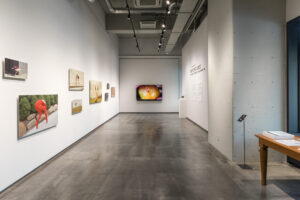
  • Interview: Jukan Tateisi — Chapter 1

    Interview: Jukan Tateisi — Chapter 1

    I was thrilled to meet Jukan Tateisi (立石従寛) in person for the first time at a co-working space located in the area of Hiroo (広尾), Tokyo, in December 2022. Of course, we had “Zoomed” prior to the meeting, which only further adds to the fact that I personally detest all these virtual meetings — I’m sure a few of you share the exact same sentiment. Let alone all the technical issues you might come across during a Zoom call — the occasional lag, the interruptions, the voices talking over one another — whenever you conduct a Zoom call or a FaceTime or whatnot, it almost feels as if all your energy is being sucked into a black hole, in return, you collect nothing whatsoever from the other end of this black hole, except plain words and just, sound. Then there’s that uniquely post-modern awkwardness of waving goodbye on a video call while your eyes dart frantically across the screen looking for the “End Call” button, hoping the other person doesn’t notice.

    Call me analogue, but I was genuinely glad that we could finally, actually interact with each other in real life again.

    Rants aside, another reason why I was thrilled, was because I was once again setting foot in the city of Tokyo, after an absence of almost three years, primarily due to the pandemic. The city felt similar, the crowd felt similar, and the same went for everything else in Tokyo, everything felt similar to what it once was, as if the pandemic had never occurred. I was able to feel invisible. There was a sense that, I could do whatever I wanted, adhering to the unspoken social etiquette, it goes without saying, within the abdomen of this gigantic monster of a city.

    Jukan Tateisi, the artist, splits his time working between Tokyo and Karuizawa, a premier holiday destination known as Tokyo’s back garden. I cannot deny that Jukan’s background played a role in catching my attention from the very beginning. Born in Chicago, raised across Japan, Toronto and apparently Amsterdam too, the boy had already traversed a large part of the world at a young age. Born into a family that owns one of the major companies in Japan (out of respect for the artist, the name of the company will not be mentioned), his life seemed to have been all planned out for him. Yet it wasn’t the path that he chose. Be it rebellious or otherwise, Jukan took his steps in taking on perhaps one of the most challenging, and arguably the most unreasonable and unorthodox occupations on this planet: becoming an artist. Boy oh boy, I can’t even start to fathom how many fights and arguments must have gone down when this was first brought up within the household.

    Nonetheless, he did it, I don’t know how, but he did. With a background in System Design and Management — I’m guessing that had something to do with computers — he packed his bag, brought his family on board, and arrived in London, enrolled at the Royal College of Art for his second master’s degree, this time in Fine Art Photography. From that point onwards, the guy never looked back.

    Coming back to Japan right when the pandemic struck, Jukan has since won awards, co-founded a couple of galleries, participated in numerous projects and worked with some of the biggest names in the industry. Becoming an artist no longer seems like the most ridiculous decision in the world now, does it?

    During our two-part conversation, Jukan and I discussed his past and how his experiences beyond the borders of Japan have shaped him both as a person and as an artist. We also touched upon the AI-related aspects of his work, given the technology’s exponential rise in significance in recent years. In the second part of the interview, we focused our attention on his work after returning to Japan when the pandemic broke out.


    The Artist’s Journey


    AXEL WANG:
    It’s just me being nosy, Tateisi-san, and maybe this is just standard practice, but why did you have the “H” removed from your surname in Romaji?

    JUKAN TATEISI:
    You are the first person who has brought this up. (laughs) As you know, normally in Japanese the “Shi” sound is spelt with an “H” in Romaji. The story goes back to my grandfather, who was an engineer and businessman, and as you probably know too, he launched a major electronics company back in the Showa days.

    My grandfather was someone who was always looking to innovate, with almost everything. He used to publish papers internationally, and noticed that there were other people who shared the same surname “Tateishi’, and that’s when he decided to set himself apart and differentiate himself, by removing the “H” in his family name.

    Throughout my life, I had to make decisions like everyone else, one of them being whether I should take over my grandfather’s company. In the modern era, I believe it’s not really about whether I’m a family member or not, it’s more about the individual, meaning there’s no guarantee that I’m just going to be the CEO unconditionally.


    AW: It’s less about blood and more about the ability and skills of the person.

    JT: It goes without saying that I do have great love, respect and gratitude towards the company, the employees, clients and consumers, but in the end, I decided not to be a part of the company simply because my passion lies somewhere else. After graduating from the Royal College of Art (RCA), I adopted “Jukan Tateisi” as my artist name with the “H” removed. I guess that’s my way of inheriting the concept and ideology from my grandfather since I was no longer with the company.


    AW: We know that you were born in Chicago. During our first meeting, you said that because of your father’s job, you had to bounce around between Toronto, Japan and Amsterdam, when you were young. What was it like growing up among so many countries and cultures as a kid? It must have been crazily overwhelming.

    JT: Yes, for sure, but when you look around Europe, there are tons of people with various backgrounds, so I’m definitely not the first. I came back to Japan for the first time when I was five, I don’t have many recollections of that period of my life, but my mother told me that I struggled quite a bit, especially whgen it came to communicating with the other kids, and that I seemed happier whenever I was out of Japan, mainly due to the way I expressed myself, like through writings or drawings you know. Thinking about it now, I imagine it’s because growing up in Chicago, for example, I experienced mostly snow and wind, it’s not like that in Tokyo. That’s probably what created these gaps and disparities between the rest of the kids and me, because we had different childhoods.


    AW: Do you think that your background and overseas experience particularly influence your style of work?

    JT: To a certain extent, I guess, yeah. This is something that I consider a lot actually, my identity as a Japanese with a slightly different background, and how this background affects the output of my work artistically and aesthetically. I’ve been training myself in Japanese tea ceremony and calligraphy, and you would probably find a lot of references to concepts derived from these traditional Japanese rituals or practices in my work, and in how the work is installed and presented — the lighting, the sound, even the temperature of the space.

    A straightforward, but impactful concept from the tea ceremony, for example, is that, when there’s a heavy object in question, like an iron box, you would present it in an “airy” way, by tweaking the height, say, of where this box is situated. By contrast, if the work is light in weight, like a print, you may exhibit it as if it’s denser, more compact, even more suffocating if you wanna go a bit wild, by incorporating shadow, for instance. The viewing experience and how you perceive the work would be hugely different.


    AW: I would like to fast-forward to the time just before you moved to London. You were working for your family’s company before the move, and you also told me that you had a newborn at that time. Moving to another country on the other end of the world, I hope there weren’t any arguments within the household.

    JT: Of course, there were. (laughs)


    AW: But why London, why art?

    JT: The first so-called artwork that I created was a piece of music when I was 16, as far as I can remember. Around that time, it was still fairly difficult for me to communicate with people here in Japan, not only verbally, but once again, it was more like a difference in mindset. I guess after a while of navigating, it became clear to me that, in fact, visual or sound-based communication was rather effective. I think that was the very initial trigger. It wasn’t as though I had already set out to become an artist, rather, it was a more appropriate way for me to umm, survive, metaphorically speaking, in Japanese society.

    Before I enrolled at the Royal College of Art, there was a period of around 10 years, for me to find out who I really was, a testing period if I could put it that way — to see if I should be a part of my grandfather’s company, if I could become an entrepreneur, engineer, venture capitalist or whatnot. I was almost avoiding working on art. In the end however, I just came to the conclusion that art was the only thing that clicked for me after that testing period. Therefore it wasn’t exactly an instantaneous or spontaneous decision: “Ah, I’m just gonna do art”, but more like, “At last, I get to do art.”


    AW: A lot of your works and projects consist of the element of sound. Voyage in Sound (2016), for example, it’s practically a work of sound. What does this medium of “sound” mean to you?

    JT: When we talk about emotions and the five senses, for me, the act of seeing is our way of verifying our surroundings, the environment — our sight confirms our world; when you touch something, that relates to ontology, like self-assuring, corroborating the fact that no immediate danger exists; whereas hearing, the auditory process for me, is to establish somewhat of a connection with and within myself — our hearings confirm ourselves. For me as an artist, in order to project myself to the world, I must create that connection within myself first and foremost.


    AW: You dwell in a variety of media, not only sound and music but also photography, installation and so on. Where does your love for multimedia come from?

    JT: Honestly, I don’t know. I just think it’s fun because I enjoy playing around with concepts and materialising them, whatever medium it is. Around the sixties, there was the ZERO movement1, Yves Klein2 created the fire paintings – the fire took over the paintbrushes. We’ve also seen needles being used instead of brushes or canvas or whatever. The end product, the final output of the artistic process, was eventually, a painting on a canvas — regardless of the shape of the canvas — created by human artists.

    Whenever I think of painting, the idea of a painting is constructed by the components of a canvas or paper; some sort of support for the canvas; plus paint or ink; together with the painter himself or herself. Obviously, we can add space and value to that list of components, but they are probably beside the point here. The recent work that I created, A Study of In(to)stallation (2022), was probably my experiment in tweaking, or altering, these components of a painting and the underlying relationship between them.

    Embarking from the mountain forest — that’s the canvas; the living and growing trees act as supports for the canvas; the rain, the wind, and the bird droppings even, they all contribute to the actual painting process. Since the work is an installation that viewers can actually step into, the concept of this installation began with all the aforementioned components of a painting, so I guess I’m also kind of asking the question: can we still call this work a painting here?

    Take Sol Lewitt3 for another example, he provided instructions for his paintings when he exhibited them. The painter could be anyone, so the actual painter was absent or void. The instructions could perhaps be perceived as the rule of the painting or the painter instead.

    When we look at the history of painting, these days the thought process behind a painting is gradually shifting away from that course and more towards Artificial Intelligence (AI). The whole structure has become highly randomised — the painter turns into AI, there’s an algorithm, though that algorithm is created by humans or artists, and simultaneously, these algorithms can be shared among artists. The components can become very complex, and it’s definitely something that I wanted to explore further.


    AW: Speaking of AI, in 2017, you created Expose and Hide, an augmented reality (AR) virtual exhibition, if I worded it correctly, before your time at RCA. It’s widely adopted nowadays apparently, but back then it wasn’t that prevalent. I unfortunately didn’t get to see your exhibition in person, but do you think you could share some thought processes behind the project?

    JT: I think I’ve always been curious about the boundary between the two worlds — the science/technology world, and the art world, even when I was at my family’s company. The concept of the project was about how our memories are structured through recorded information that is co-shared with other people. Like Dropbox, for instance, the data is created as a kind of commonality shared among users who have access to it, it’s like we all get to share a bunch of memories on the cloud together as part of the collective data set.

    Another layer is that, I think many of us, find it easier to expose more of ourselves on the internet, in a digital or virtual world, say on social media; physical interactions, expressions, or communications, on the other hand, can be somewhat difficult for certain people, so we tend to hide behind a protective veil instead, in real life. In the exhibition, actual prints of the portraits were exhibited in the physical space, but if you examine the works via a device, the augmented reality exposes more of the subjects, almost nude, hence the title.


    AW: In It Is What It Is (2017) and Another Seascapes (2019), you experimented further with AI. In today’s art world, there’s a certain feeling that everything has already been done. Nonetheless, as technology advances, I think it’s inevitable that artists or we humans in general, feel that AI has to be the next step. The most discussed question is perhaps whether AI is going to replace humans in the end. How do you envision this relationship between AI and humans yourself?

    JT: I guess AI will be hidden away. It will exist for sure, like everywhere, ubiquitous, and we won’t even notice that AI is AI anymore. We won’t feel that it’s scary, nobody recognises it as a danger.


    AW: It’s just there, like a tree.

    JT: It will probably be something very close to the concept of bacteria which live within us.


    AW: A bit like COVID nowadays then.

    JT: That’s actually a good way of describing it. On the other hand, when you said that many are worried that AI will jeopardise humanity, for me, that’s not really possible, at least for the foreseeable future, because we humans possess other qualities like emotional and physical intelligence, for example, I don’t think AI is able to replicate that just yet. Some jobs based on rules, manuals, or algorithms, like the banking systems or lawyers even, may possibly be replaced by AI in the future, but for me, the bigger question lies in whether AI can come up with its own rules one day.

    When AI defeated the human Go world champion Ke Jie4 in 2016 or 2017, people were literally screaming, that this must be the end of the human race. Yoshiharu Habu-san5 proposed that perhaps we could change one rule in Shogi, like how the knight could move, for example. By changing one simple rule, there will be a time gap between the AI actually studying the rule and making the calculation, but humans are able to adapt to the rule immediately. Therefore, so far it seems, that the ability and right to rewrite rules, still belongs to humans.


    TO BE CONTINUED…


  • Interview: Riyo Nemeth

    Interview: Riyo Nemeth

    The first thing that caught the eyes, was this slightly distorted figure, alien-like, which almost immediately reminded me of the unsettling and visceral works by Francis Bacon, the British painter.

    The surname of the artist behind those works, “Nemeth”, certainly piqued my interest. For anyone who doesn’t share any enthusiasm for fashion, hell, even if you are an expert in the subject matter, chances are the name might still elude you. It wasn’t your mainstream luxury brand known to every household, nor was it one of the Belgian or Japanese designer names we used to consider “niche”. It was probably around the time I was first exposed to Dover Street Market in London, where the works of Christopher Nemeth were sitting on the third floor, if memory serves me right, along with the likes of highly sought-after Elena Dawson and others. It was one of those early retail experiences I would never forget — discovering genuine designer garments that boasted meticulous craftsmanship and intricate details, all in the flesh.

    Around the summer of 2021, I eventually managed to overcome my initial fear of rejection, and reached out to Riyo Nemeth (ネメス・リヨ), the artist, who turns out to be Nemeth’s daughter, for a potential collaboration. Following a series of emails and Zoom meetings over the course of more than 12 months, we finally, finally caught up with each other in Tokyo when all the pandemic restrictions were lifted in Japan.

    Near Shibuya, in a vibrant izakaya with rock music blasting, I met Riyo face-to-face for the first time in December 2022. What struck me the most was how much she reminded me of the UK — London, to be precise — a place I had called home for almost twenty years, before the outbreak, which had kept me away from the English capital for more than four years and counting. Fair to say, it was quite some sense of nostalgia, even though I had only just met this person for the first time in real life.

    Slender and tall, somewhat ghostly and enigmatic at first sight, dressed head-to-toe black, very likely all Nemeth too, edged with a hint of Comme des Garçons. Albeit slightly shy and introverted, perhaps even a little timid, yet at the same time stoic, extremely poised. Had I encountered her by chance in an East London pub, I wouldn’t have thought twice about her being a native of Tokyo. In fact, I wouldn’t have been surprised if it turned out we had unknowingly passed each other on the streets of Shoreditch at some point in our respective past.

    Looking back now, and thinking about it all, was it truly Dover Street Market where I first stumbled upon the namesake label of Riyo’s father, I couldn’t tell. As we age, our memories fade, and I can no longer keep up with the tricks they play. What captivated me about Riyo’s work was exactly this, the way she delves deep into the fabric of our memories and creates this surreal sense of unfamiliarity by capturing the essential sights of our familiar surroundings and objects, exquisitely exploring the delicate line blurring reality and imagination.

    We completed the following interview in early 2023, with our first session initially beginning in August 2022. In this interview, Riyo talked about her past, the work that she’s doing right now, as well as her artistic practise.


    AXEL WANG:
    Riyo, how did you end up with a Fine Arts degree from Central Saint Martins? Given your background, one would probably imagine you doing something slightly more related to the spectrum of fashion. Why did you choose to do art? Was there any family influence?

    RIYO NEMETH:
    At the time, I wasn’t completely sure what path to take, but I chose Fine Art because I believed that art is at the core of all creation, and that learning the process of making art can be applied to any kind of field. My father studied Fine Art, and this was what he told me. He did become a fashion designer, even so, he continued painting, which was something he was truly passionate about.

    I always loved art, as well as fashion and music. Like a lot of people, I was fascinated by music videos and fashion magazines growing up, and from there I became curious about the process of artistic visualisation and interpretation across other fields like music and fashion. From a young age, I was often taken to a space called SuperDeluxe in Roppongi, which was run by friends of my parents, and I used to watch live music and video performances there quite frequently. Now looking back, I think the experiences I had there were the reasons why I was unconsciously drawn to video art and why I continue to pursue it.


    AW: Why did you decide to go to London for your university studies?

    RN: I was born and raised in Tokyo, and my father is British, but we rarely went to England when I was young. I think I simply wanted to know more about the other side of my nationality.


    AW: And the obvious question that follows, when and why did you decide to come back to Tokyo?

    RN: I came back to Tokyo to help my family business when I was 25.


    AW: How would you compare the two places, in terms of working and everyday living?

    RN: It’s hard to compare because I was a student, then a graduate, when I was in London. I have the fondest memories of being in my early 20s, which was the best time to be there in London. The city was inspiring, and still is for me. I found that the manner in which individuals share their viewpoints, articulate their concepts, and how they engage in the creative processes is more straightforward. While Tokyo is my hometown, where I feel extremely at ease, the creative process here appears to be more indirect compared to London.

    Having experienced both cities, I believe I have been influenced by their respective approaches. Plus, over here, I have easier and cheaper access to all sorts of materials and equipment. I’ve been able to make works here that would’ve been extremely hard to execute in London. So personally, London is a good place to absorb ideas, and Tokyo is a good place to materialise some of these ideas.

    AW: Japan is generally considered a homogeneous society. There are many “hafu1” stories out there that recount discomfort stemming from differences in skin colour, facial features, or even accent. What was it like for you growing up in Japan? Did you ever struggle with your identity?

    RN: As a child, I attended Japanese schools, and I could only speak Japanese. My parents made a conscious decision to raise me with a singular racial identity. I felt like just another kid — I never really thought about my slightly different appearance. I’m lucky that I don’t have any bad memories of being directly or indirectly discriminated against, though I didn’t have much knowledge about racial discrimination at the time. When you don’t know, you don’t see it right? There were probably a bunch of small things, I just wasn’t aware of them, or have since erased them from my memory.


    AW: At first glance, your work would perhaps strike one as haunting. The images are obviously very dark, and there’s an air of enigmatic mystery to them. They reminded me of Deborah Turbeville and Francesca Woodman, and also Francis Bacon and Georg Baselitz, to a certain degree. Let’s talk about your inspirations, which I understand can be a bit nonsensical, yet they have to be brought up when interviewing with an artist. I guess that’s just an easier way for people to draw correlations between what they know and what they don’t. Is there an artist or figure that you resonate with, or who has inspired you the most?

    RN: Many of my video works feature a black background, which I view as equivalent to a white canvas, but on a screen. I like to think that my process of creating video works is somewhat similar to painting texture by adding layers of images.

    Francis Bacon is one of my favourite artists. I’m fascinated by his ability to deform human bodies to the extent of being almost unsettling while still retaining a sense of familiarity. I love the texture and shadow in his work — it feels as though they have absorbed time itself. I’m also a great admirer of Bill Viola, whose image-making and immersive installation works are something I’ve always looked up to. And Michael Snow’s ability to manipulate images and create a sense of spacious consciousness has left a lasting impression on me since the beginning of my creative career.


    AW: Riyo, your work engages with the passing of time, would you say that you are a nostalgic person?

    RN: You could say that. Talking about nostalgia, memory is something that I often think about when making work. The memory of familiar surroundings that we share, and how that affects the way we see things. For example, when you see an apple, you know the texture and weight, even if it’s projected larger than yourself, you know the feeling of holding it in your hand. So I often try to manipulate our common recognition, or even exaggerate it, to create unfamiliarity within familiar perspectives.

    I also think time can not only bring more reality to an image, but disturb it simultaneously. People unknowingly assume how things move, and by seeing movement, we perceive the subject’s weight and size. I like changing the speed of movement to create uncertainty. When I make videos, I try to visualise the density and weight of time by altering the speed or sound, using layers of photographs, and in the process, I think about how many frames per second to add in order to create depth in movement, as well as in time.


    AW: What is it about the medium that fascinates you so much? Or perhaps, a more romantic way of asking this question would be, did you choose the medium or did the medium choose you?

    RN: I like the light, sound and impact that video possesses, that’s what I’m purely drawn to, plus the depth of time which I have in total control to disperse or condense. When I first started working with video in my work, it was more of an instinctive decision. I’m terrible at painting or drawing, but with video, it feels freer. Nevertheless, I admire the process of painting — how you can start from a blank canvas and create an infinite imagination. Whereas with video and photography, you usually need to provide a subject to capture. Although technology imposes certain limitations, at the same time, there are countless possibilities, and how it challenges me to turn the shooting subject into my complete creation is what captivates me too.


    AW: I remember watching this performance by TAO Dance Theater2 at Sadler’s Wells in London back in 2014. I was completely baffled by the repetitive choreography at the beginning, it just wasn’t like any contemporary dance you’d come to expect. After a while, I started to realise something different, repetition, isn’t it kind of like what life is really all about? We follow the same routines, day by day, year by year, the cycle continues, and we try to find meanings among all these repetitions, these cycles. During the performance, underneath the repetition, you saw the limits imposed by the human body, and you saw discipline, there was a balance of restraint and abandon, and yet you sensed a desire to break out of the repetition.You sensed an emergence of chaos, it’s almost like an abstract expressionist’s painting. Riyo, your work to me feels a little bit similar, in the way that you use repetition and infinite looping, that they can feel palpable even, what does repetition mean to you?

    RN: Repetition is one of the aspects that I’ve been experimenting with in my work. I’m intrigued by the limitations and possibilities of the medium I work with, and how video has the power to transition between the real and the unreal.

    As we live in repetitive daily routines, the same goes for dance, our bodies repeat the same movement over and over again, and there are numerous overlapping cycles of different scales in our lives. However, each time, it’s never quite the same movement. On the other hand, in a video, you can repeat the exact same movement, yet it becomes unnatural. I like experimenting with how we unintentionally ignore aspects of certain things, to see what we want to see, and how quickly we notice uncertainties.

    Technically, videos cannot be repeated infinitely as they essentially run on electricity to be materialised. At the end of the day, someone has to connect the media and switch it on, otherwise it cannot exist. In that sense, digital works are more unsustainable than paintings, comparatively and technically, they, in fact, decay much faster. I’ve been thinking about this underlying contradiction in my work, and I see similarities with some aspects of our lives, as we live through the repetitive daily routine, and we tend to forget that things don’t last forever.


    AW: We can’t really avoid bringing up the pandemic. How was that whole thing for you?

    RN: It feels like the last three years crept by so slowly, yet the memories feel few and far between. I was scared and frustrated at the beginning of the pandemic, uncertain about what tomorrow or the future would bring. The constant barrage of news reports during that time obviously had a significant impact on me, it felt like the world was shifting and changing at an unprecedented rate. But amidst it all, it was incredible to see how the entire world shared this collective experience. It was surreal that someone halfway across the globe could relate to my fears and concerns.


    AW: Referencing Georg Baselitz once more, who said that good art should come from misery. During the pandemic, societal changes aside, I felt that some riveting ideas were being thrown around and emerged, be it meaningful or not, like NFTs for instance. Do you agree with what Baselitz said?

    RN: I like that idea, I think misery is, in some way, unpleasant but strangely alluring, and we still haven’t quite grasped it fully yet. People look for change when they are desperate for change. After experiencing misery, you are forced to move forward and seek out something new. Restriction may spark new ideas, even if they stem from misery and discomfort. Isolation slows you down or stops you completely, forcing you to look around yourself more deeply and more elaborately, like seeing through a macro lens, and you might just find something you were too busy to notice before.


    AW: Is there any other medium you are looking to explore in the future?

    RN: I’m always interested in performance, so I definitely would like to incorporate some performative live elements into video works in the future, where videos and people intersect within a space, every time the video repeats itself, it would be slightly different, changing. I tend to make videos in a very precise way, which is why I want to inject more rawness and unpredictability that performance brings to the table — where each repetition of a person’s movement can be unique.

    Video has been, and will continue to be my primary medium, though I also incorporate photographs into my videos. My aim is to integrate video, photography, and live performance into a single creative process, resulting in a more immersive experience that seamlessly transitions between two-dimensional and three-dimensional forms. In this context, I am keen to delve further into installation work and explore the spatial possibilities of flat images in a three-dimensional space.

  • Interview: Luc Schol

    Interview: Luc Schol


    AXEL WANG:
    Luc, you have studied and practised photography for a long time. What first steered you towards it?

    LUC SCHOL:
    I originally envisioned myself becoming a comic book artist when I was a small boy. My first foray into lens-based media was actually from a filmmaker’s perspective. I created a puppet movie when I was 14, and I remember fondly playing around re-editing The Legend of Zelda: Twilight Princess trailers back when iMovie still had an interface resembling Final Cut Pro.

    Afterwards, when I turned 16 in 2007, my father gave me a smaller camera to photograph an evening out at a restaurant. I photographed my kid sister crying about something, and that was that. I moved into still imagery from that moment, with support from my father, he was an art director for a bunch of great Dutch magazines when print media still had strong footing and funding.

    Back in those days, I didn’t think much about the essence of my work really. I was mostly obsessed with learning how to grab the moment, learning Photoshop and getting into art school. It was mostly portrait and editorial-based. My early influences were the classics that my dad introduced me to, the first names you learn when you get into photography.


    AW: Daido Moriyama1 once said that the essence of photography to him, is more about duplication and less about artistry. What is the essence of photography to you?

    LS: Photography is a lens toward many things. It is literally a peephole to look into everything the world has to offer. I therefore believe photography’s essence lies in its adaptability, and its futility of trying truly capture a slice of time. Photography has no core genre or set of values, there is such a vast variety within its usage.

    For me personally, I love the immediacy of the image. I press a button and I get a whole composition in return, such a great and satisfying transaction. A camera has such an amazing visual feedback loop. There is nothing as dreadful as an empty page — what misery writers and painters must go through. I am an inherently lazy person, and I strongly believe that as a teenager, I chose the camera from an easy way out perspective.


    AW: After graduating from Willem de Kooning Academy in 2015, you did solo shows, participated in art fairs and group exhibitions. Why did you feel the need to continue studying photography after that, especially in London?

    LS: Simply put, I felt like I needed a change! The Netherlands is a wonderful place to live and an immensely lucky place to be born in, but I had spent all of my life in one city. I had always wanted to live in a city with a population of millions once in my life, so I took the plunge.

    I had never done a master’s degree, and felt that it could be a great stepping stone to meeting new people and strengthening my practice. I have to say that I was never able to take this step if it wasn’t for the grants I applied for: the Prins Bernhard Cultuurfonds, Bekker la Bastide and the Vrijvrouwe Fundatie van Renswoude in The Hague.


    AW: In your landscape photography, are you attempting to address specific issues, or is it more about the magnificence, the vastness, and the beauty of nature that awes you?

    LS: I believe this is an important question. Yes, in an ideal world, one might only be able to enjoy the vastness, magnificence and beauty, with the genre of Romanticism devoted to that mindset, though the experience of sublimity also encompasses notions of being fearful, small, not fully understanding, part of a larger whole (a sprinkle of cosmic horror almost).

    However, the landscape is inherently political, whether it is the Capitalist and Western notion of the great expanse, property and “development”, or the landscape as a reminder of what we are slowly destroying by means of the existential dread of global warming.

    The landscape is what we portray on top of it, it is an almost open experience, but it would be naive to say that the privileged view that I might have, is the only one I want my audience to experience. I am not explicitly inspired by political motives, but I also want to move away from “just” sharing the sublime experience.


    AW: What do you look for when you photograph a person? Do you have to get to know them first, before you take the shot?

    LS: Most of my portraits have been collaborations with companies, magazines or institutions, so they include functional and/or commercial aspects. However, it has always been a journey towards shooting aesthetically beautiful and refined portraits in a style that I hope to keep growing over the years, “daylight minimalism” – this is the first time I named it!

    I don’t like working in studios or with light setups as much. If I have to work under a roof, I’ll stick them by a window, but I genuinely prefer to go outside and fully use what the light of the day and its many shades and reflections might offer at that moment. There is nothing more special than the giant fireball in the sky. We have such a primal relationship to the sun’s warmth – almost as if we are capable of photosynthesis.

    I like to talk to my subjects first, usually going on a walk together past pre-scouted points, chatting along as I photograph, trying to find a good shot. It is all low-key and gentle, though I hope to minimise the amount of images I need to shoot and the percentage of chance I still need for these pictures.


    AW: Do you think there’s such a thing as a good photograph and a bad one?

    LS: Of course, there are good and bad images, but the outcomes change due to the criteria one chooses. Especially in larger, multi-image stories, “boring” imagery can start holding value, and sometimes great one-offs just don’t fit within a certain context.

    I do believe that a photographer should always know what tickles them aesthetically and constantly strive to improve their craft. One doesn’t have to carry technical cameras through the great American landscape, but every style can be improved upon. On a side note, I do think it’s important to point out that an interesting subject does not immediately bring a great picture. For example, one can still take a boring or bad picture of an immaculately dressed subject in a gorgeous landscape.


    AW: I remember a line from a TV series many years ago: “Photographs are so ironically impermanent, they capture one moment in time to perfection. A painting can capture eternity.” This line has weirdly stuck with me ever since. There has always been this polarised view on how much truth one photograph holds, let alone the fact that so much can be manipulated digitally in a photograph these days. What’s your take on this? Do you photograph to tell the truth?

    LS: I don’t photograph to tell the truth, I have never been interested in telling any truth, and I gladly steer away from the photograph as an objective truth discussion. I believe chasing truth, etc., is more of a reportage thing.

    I believe in the subjectivity of photography, in creating worlds one can enter through editing images. Essentially, photography is a long chain of choices one makes. Some choices became instinct, but one day in the past, they were a choice for a photographer.

    I do agree with the quote though. Photography is an odd beast. A look into the past, evidence of a point in time. I wonder how people perceived the past before the advent of photography. Did scholars of old times imagine stories in moving paintings?


    AW: I love how you created your website. It felt almost like a video game. You’ve often mentioned Zelda as a point of reference in our previous conversations. What is it about video games that captivates you so much?

    LS: Video games uphold the most intense suspension of disbelief. I don’t know how many days I have booted up an intricately detailed world, and suddenly I snap out of it 6-10 hours later. Because you have the freedom to move around and make choices, I feel like there is nothing quite like it. It is incredibly immersive. It is an all-encompassing experience, and once you are in, you are in.

    Within that context, you can feel all these design and gameplay choices, engage in themes and morality related to our world, but you are still in Hyrule, Nilfgaard or the Lands Between2. This is something I wish to achieve myself over the years within my art, creating an immersive experience that makes the audience feel they are in my world, whilst engaging in critical subjects.

    I find contemporary art incredibly anti-immersion. Once one reads an opening wall text explaining a piece or a show, it immediately relates everything to subjects, themes, lives and circumstances outside of the art pieces. I understand why this is important, but it’s not the style I want to achieve. I recently went to a show, Peckham24 in London, and they had the nuance to display no text on the wall, and left all statements and descriptions within a folded piece of paper that you could pick up. Such a difference in the suspension of disbelief!


    AW: Photography has evolved in so many ways, probably a bit like video games too, it has always been evolving. A lot of the works that you created lately are 3D renders. Why did you decide to take on such a medium?

    LS: I had a crazy phase during the pandemic where I considered retraining myself as a game designer, and I picked up 3D design during that process. When classmates started building darkrooms in their bathrooms, I started dreaming of creating my own Hyrule. After discovering that creating and solving gameplay mechanics and loops aren’t necessarily my thing, I still envisioned ideas, stories and worlds that needed to be created from scratch. I continued my journey with 3D software, but now with the still image — a photograph, as a result.


    AW: For many photographers, there’s almost this need I felt, for them to actively engage with social media, namely Instagram, on the contrary, Luc, it looks like you remain relatively quiet, why is that?

    LS: I am quiet because I find it incredibly difficult to engage with social media professionally. After a more active approach on a personal level in my early twenties, I have grown more and more detached. I’ve also noticed my health improves if I stay away from social media — so there is also a conundrum there I haven’t solved yet.

    It is important to go with the times and use the provided channels to engage with your audience and larger professional field, but it also isn’t a must. An artist must find a way to engage, but one can also choose to do so in whatever means they enjoy, for me, that’s the interactive website I’ve made.


    AW: Do you ever feel fed up with photography? It almost feels like everyone is qualified to call themselves a photographer these days, thanks to technology and Instagram.

    LS: I feel fed up with photography, probably two times a year and start fantasising about my own restaurant (I am an avid hobby cook). But then I remember that means being in your joint for 7 days a week for the first 5 years, immediately I snap back to photography and art. (laughs) That has nothing to do with Instagram though. Yes, technology changed, and photography became accessible, but that’s not a bad thing at all. Things have always changed and have always seemed to initiate an end of things.

    I mostly find the systems in play behind these developments to be problematic. All this access has demeaned financial standings in the field. Commercial and corporate work is rewarded too greatly because capitalism is dividing and destroying society, making it harder by the day to come by from any form of art making.

    If we had things like a universal basic income and/or a very low cost of living, all these issues wouldn’t frankly be an issue. We would all just be happy to develop and share our craft full-time, growing as a species in the meantime. When there is a corrupt market at play that decides whether or not you have a home or something to eat, it becomes increasingly more difficult to engage in activities that make us so intricately human.