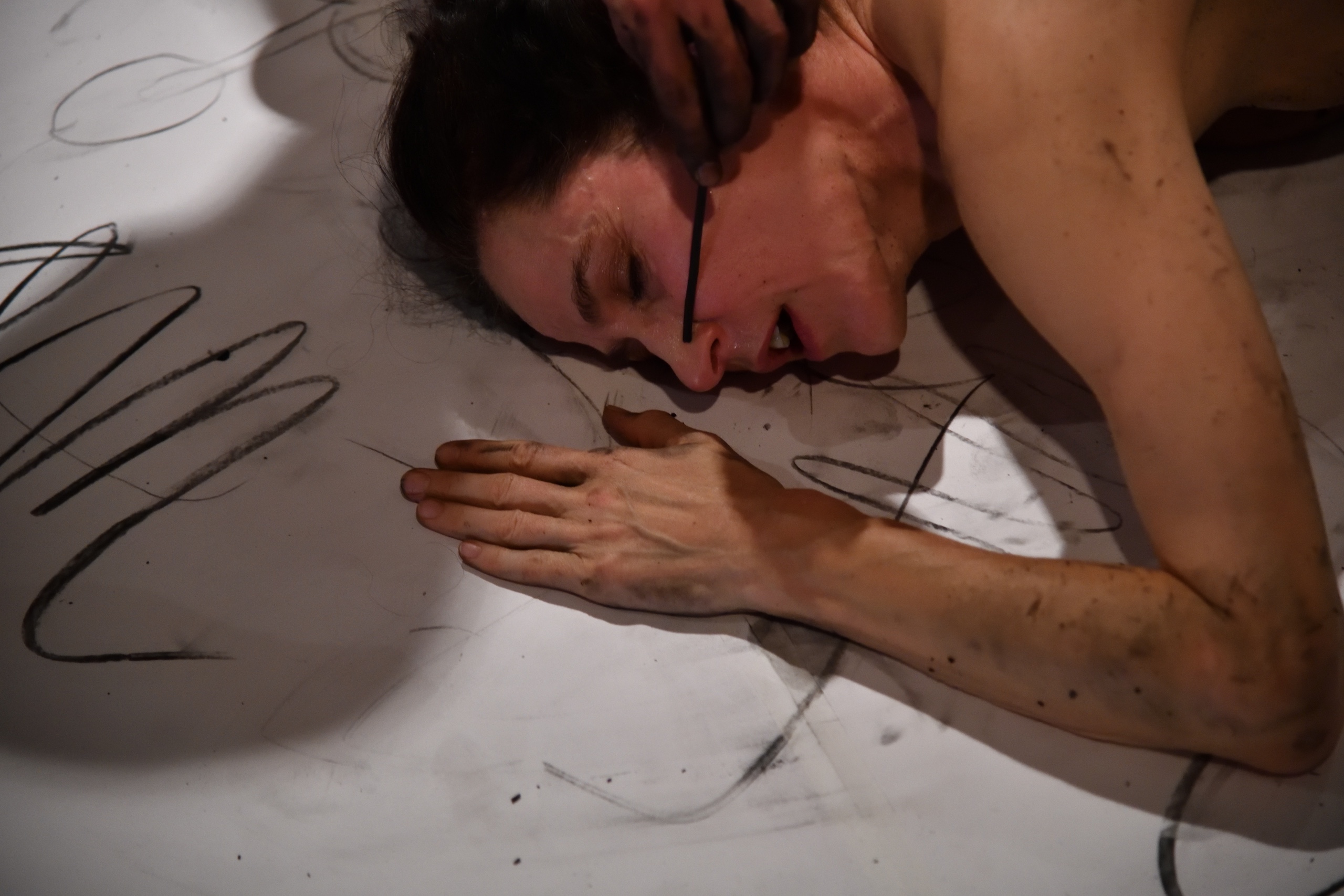
Journal Category: Story

  • Interview: Joanna Rosenfeld — Chapter 5

    Interview: Joanna Rosenfeld — Chapter 5

    The Summer Before the Dark


    AXEL WANG:
    This final part of the interview is going to be a bit personal. You mentioned that when you moved from Liverpool to Brighton, it was career suicide.

    JOANNA ROSENFELD:
    Yeah (laughs).


    AW: I guess it would be fair to say that you chose love over career.

    JR: I did at the time.


    AW: And that was 20, 30-odd years ago, right? Obviously now your kids have all grown up, and we are sitting here in Tokyo having this chat. Looking back, would you have made that same choice?

    JR: Yeah, I think so. Even though it was career suicide at that point, as a creative you could also call it an incubation. I had to find different ways of creating, and I learnt so much. I was given the opportunity to grow a lot of my practice in a very small, contained way, which I’ve now outgrown. There were elements of my practice at the time that were more like seeds. And I grew a lot of that practice within the environment of being part of a family, having children and being a caregiver. The experience of being a mother, is crucial to how I see my relationship with the audience now.

    I think it really allowed me to understand something about the human condition which I didn’t know before. And I mean the heartbreak of it all ’cause our journey wasn’t easy. We have a child with neurodivergence and there was a lot of drama (laughs), and a lot of sacrifice. But it made me so grateful, and it makes me grateful for what I can do now.

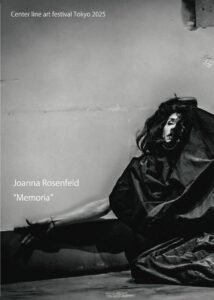
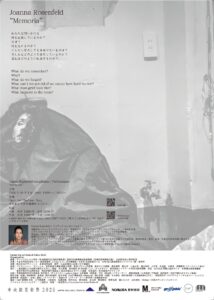
    I think when I make a piece, even if it’s a personal piece like the one you saw (Memoria, 2025), I have a question that I start with, but then I do ask myself, “Why am I making this? What is the benefit for the viewer, the participant?” So for me, Memoria, for example, is about how we deal with grief, which we don’t do very well in the West.
    I think in Japan it’s slightly different. People have photographs and little altars for those who have died. They talk to them and respect them; they might even say hello and goodbye to them every day before they leave for work. So the dead are somehow integrated into everyday life. But then there’s the question of what to do with their belongings, and that can still become a burden.

    My father, when my brother died, was given two weeks of leave from work, and then was expected to go back as if nothing had happened. I don’t know how you deal with that, in a society where you can’t talk about loss.

    Germany, England and Japan — China, maybe, is the opposite — all have very different relationships with what we keep, what we let go of, and what we rebuild after things are destroyed. Memoria is about all of that. What do we make with the past? Do we make anything with it? Is there a point to it? Does it swallow us up? Is it better if we walk away? I don’t know. I have no answer.
     

    AW: If we think of parenting as a job or a project, do you think you’ve managed to do it well so far?

    JR: Yes, I think so.


    “It’s not about peace.”


    AW: From what you shared before, it sounds like you and your daughters have a rather healthy relationship, built on mutual respect and love that flows both ways. You don’t really see that as much, especially in a lot of East Asian families, where parenting often focuses more on directing children’s lives. But you and your daughters seem to have a relationship that’s more, independent — maybe that’s the right word.

    JR: Well, there are different styles of parenting. I wouldn’t judge anybody else’s style as better or worse. I was taught to parent by my oldest daughter, who has ADHD. Well, firstly, the parenting I received from my parents may echo some aspects of that East Asian style of parenting.

    My father, for example, was really interested in biology and loved animals, but his father was an architect, so he became an architect.

    There are also stories about my aunt, my father’s older sister, who wanted to be a tailor. And my grandfather absolutely refused, he thought it was beneath her. When my father met my mother, who didn’t quite fit into the idea of who he should marry, my grandparents disinherited him. They tried to pressure him financially to make a different choice — unsuccessfully — and eventually, they changed their minds and my father was reintegrated into the family.

    But that kind of “You’re gonna do what we want you to do” is also part of our culture. I think maybe because my father had those experiences, he tried to parent in a different way.

    In Germany, the ’68 generation is something we talk about. They’re sort of the baby boomers who were born around the end of or just after the Second World War, and who, during the Summer of Love1, did quite a lot of proper rebelling. There were student protests, a lot of unrest and many people died. I think there was an echo here in Japan as well with the student revolts and demonstrations.

    So my parents were part of that generation, but there was no knowledge about what to do instead of this kind of parenting. My parents would flip from complete negligence to a totalitarian patriarchal structure. Sort of, “We don’t look at you at all, and now you need to perform and get 100% at school. But now we don’t look at you at all.” That’s how I was parented, and I found it very difficult.
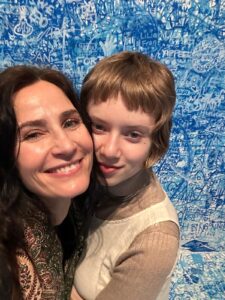
    And then we had our daughter, who is incredible — such a fabulous human being, talented, sensitive and insightful — but couldn’t be in a room with more than ten people without freaking out. She couldn’t be apart from me for the first three years of her life without melting down.

    To try and manage that, I learnt so much from her. And so I discovered attachment theory, which puts the child at the centre, knowing what they need and communicating what they need. And by enabling that communication to be heard, independence grows.

    So we decided to use that parenting style, which meant a lot of involvement in the early years, and hence (laughs) the career suicide. I suppose I don’t do things by half, and I wanted to go all the way with parenting.

    And then we transformed from being sort of a teacher, guide, to being more of a consultant when the child grew older. That was very difficult because I had very much identified with being a mother. In fact, un-mothering myself has been an important part of the last five years, sort of going, “Okay, well, I don’t have that same role to fulfil anymore, so I need to let go of the identities I’ve built around being available, doing the laundry, or having special time with the children.” Stepping back, listening to them and really seeing their talents — that’s something I feel very fortunate to have learnt. And I think that’s maybe the biggest gift.
    My youngest daughter is now applying to study music at university. I’ve seen her talent in music all her life. I took her to Suzuki Method violin lessons when she was two, which is very parent-involved, and I encouraged her as much as I could. I even asked her music teacher to organise some conducting because I could see that she had an understanding of how an orchestra works — she didn’t know this.

    So behind the scenes, I was always helping to curate experiences for her that would allow her to grow in confidence, because I could see she had the talent. Whether she would pick it up as a career, I didn’t know, but I could see it was something she loved. I’m delighted that she’s choosing it now.

    When she chose her A-levels, I insisted that she have an essay-based subject because she might want to go to university, even though she was so convinced she would go to drama school instead. So she chose politics and now she wants to study music at university, and she needed that subject. That’s what I mean by looking at things from a longer view: this is what your talents and interests are right now, but let’s not close doors. Let’s keep them open so you can make different choices when you’re older. You might change your mind, circumstances might change.


    AW: So while they were growing up, you were still quite involved in some of their decisions. How did you decide when to insist on something and when to let them make their own choices?

    JR: Well, there were certain things, like ballet. The older one wanted to stop, and I said, “That’s fine, but you have to finish the term because we paid for it.” So you can’t (snaps fingers), on the spur of the moment and just change your mind.

    With music, specifically violin, there was a point when both of them wanted to stop, just as they were ready to start playing in orchestras. I didn’t let them because they’d invested so much time, and I wanted them to have a go at the orchestra for a year. If they still didn’t want to do it afterwards, then they could stop. Because I was part of it too — I was always in class — they knew my time was invested as well, so they agreed.

    And, of course, once they were with friends and started making relationships in the orchestra, they didn’t want to stop (laughs). But they had the option, right? There was always a reason, and the reason was: “You’ve worked so hard. This is the reward for that work. Please experience it first. Taste what it’s like to be in a Mahler symphony playing second violin.” (laughs) It’s fascinating, wonderful. What an experience.

    I think the motivation is different, because I wanted them to experience something, not just do what I wanted… It’s not about peace.

     

    AW: You mean peace between you and your daughters?

    JR: Peace between us or peace in life — it’s not about that. In my experience, there are two ways of parenting that are really about peace. One is when parents take complete control and expect their children to do what they say: “I know more, I understand more about the world, so you need to accept my knowledge and not contradict me.” It’s about keeping the peace.

    And then there’s the other way: “I want peace, so do whatever you like. I don’t care.” (laughs) For me, that’s not the point either, because peace doesn’t necessarily mean engagement or connection.


    “I think our mortality is our gift.”


    AW: Lastly, there are no questions here, but we talked about death during our last session, and lately, it’s been on my mind a lot. I remember listening to a podcast where Ricky Gervais compared life to a queue leading to a cliff. He was paraphrasing someone else I think, but anyway, he said something like: in your twenties, you’re at the back of this queue — laughing with friends, feeling invincible. But as you reach your forties, you start seeing people ahead of you fall, and it hits you: one day, it’ll be your turn too.

    I think I’m in that phase now. Ten years ago, people around me were getting married and having kids, but now, some people my age are actually dying.

    I used to see ageing as this beautiful metamorphosis, experience, wisdom, and perspective. But now, approaching forty, I’m just not really sure anymore, I think people call this a midlife crisis (laughs). I don’t think I’m in a shitty phase, probably more of a curious, introspective one. I feel like I’m relearning myself, trying to understand what this next stage of life means.

    JR: Well, first of all, I don’t have that privilege, the privilege of innocence, never had that privilege of thinking death only comes to the old. I never felt like life was orderly. You imagine a meteor shower could just take out anyone. One of the Marvel films has that, right? Half of the population just disappears.

    In fact, maybe that’s why I’m a performance artist or an artist in the first place, the awareness of our mortality, makes me question why we exist.

    Naive in many ways, but definitely not around that subject of death. But, you see, I think our mortality is our gift. I think becoming aware of our mortality means we can make choices that aren’t defined by culture or pressure, but by our true desires. If I’m aware that I might die tomorrow or next year, how do I want to spend that time? Do I really want to do what my parents have suggested, or what is expected of me? And if I do, great, then I can do that full-heartedly. But if I don’t, it might give me the courage to do what I really want to do.

    I think that’s such a gift, to be able to alter our behaviour according to an awareness of the finite nature of our existence. It might be that I want to be remembered as the most benevolent person on the planet, or I might just wanna fuck as many people as I can, or taste as many flavours as possible. It could be a very selfish, insular reason, or an incredibly generous one, whatever that motivation is, I think it’s a gift, and we need to harness it.
    I think you’re in a really exciting place where you’re becoming aware of your mortality. It gives us an opportunity to go, “Okay, this is not enough. What does touch me? What makes my heart go…?” (mimics sound of heart beating).

    I really think our mortality is a gift. I said something on Saturdays to someone which, we tried to translate but couldn’t: the tragedy of humans is that we have hearts that can break, the gift of humans is that we have hearts that can break.


    AW: I think that’s a beautiful wrap.
  • Interview: Joanna Rosenfeld — Chapter 4

    Interview: Joanna Rosenfeld — Chapter 4

    The Theatre and Its Double


    AXEL WANG:
    You’ve performed in so many places, does the experience vary between cities?

    JOANNA ROSENFELD:
    It varies enormously.


    AW: How so?

    JR: What people are going through, the atmosphere of a place, change the way I operate. It’s one of the tragedies, I think, about artists who work in many places because, the work I do is both sensitive to the place and anchored in my autobiographical experience of life.

    A film is different. If you create a movie, then it can go anywhere — in the Outback or on your screen, whatever — and you consume it. But that’s not what I do. The reason why the shutters were open for the performance you watched (Memoria, 4 October 2025) was that this piece of work was not just for the few who chose to come in. There were lots of people walking past, being stopped in their tracks to observe a glimpse of something that was completely strange and unusual. And that works with the ethos of that specific space.

    I wanted to recognise that this specific space brings art to a community that’s actually pretty starved of that kind of experience. Yes, it’s on the outskirts of Tokyo, it’s not an up-and-coming or hip place, the building itself is very old, right next to the railway line. There’s a lot about it that shouts, “Art doesn’t happen in this community”, and “We don’t have access to art.”

    And so I talked to you before about the outdoor Shakespeare performances — how to make art available to people who don’t feel they have a right to experience it, or don’t have the capacity or desire to experience it. There’s this idea of what’s called Invisible Theatre, where we bring theatre into social spaces in order to create a discussion, a response.

    I don’t make it invisible. The theory is that you might, as actors, bring a scene into the Tube and people don’t know whether it’s real or not. They think it’s real, and so they’ll respond as if it’s real. That’s not what I like to do. My performances are clearly performative, but I find it very interesting, as an onlooker, to see people confronted with this kind of art and to watch them watching it.

    So yes, to come back to your question, does every city work in a different way?

    Yes, it does.

    Working, for example, in Taiwan, people really come to things. They really come. They hear that somebody whispers that something’s going on, and suddenly you have a huge crowd of people observing, which changes the atmosphere and there’s an excitement for that group of people. They’re hungry for experiences, maybe because it’s a very small island, and there’s not that much coming and going. While in other cities, people are almost too shy to engage with things.


    AW: Like in Japan?

    JR: Well, in Japan I haven’t experienced that. I’m thinking more about England — maybe Japan and England are similar in that there’s an embarrassment in admitting that you’re curious. Not so much in Canada and America, or Germany either — they want to engage when they want to engage.

    And then in England, you have a completely different response to performance, which is disruption, or destruction, which I haven’t encountered anywhere else. We were performing in a park where the performance was ticketed, but you could still observe and hear it from outside the ticket gate. And suddenly, there were items being flung over the bushes. The people flinging them were, young people, who couldn’t actually see where the items were landing, and there were lots of people on the other side of these bushes. So, there was a real attempt to disrupt, and potentially hurt people.

    It was just fascinating. They couldn’t just accept that there was something going on. They had to somehow get involved with it… Mmm…

    And I experienced something similar in Liverpool, where we were doing street theatre. People got in the way on purpose and sort of tried to have a fight with the performers while they were clearly in character, wearing 1920s costumes. And so that kind of, um, engagement, I haven’t seen anywhere else. But again, it’s very specific to the place, and it’s very much cultural — specifically, maybe, working-class culture in England.


    AW: Never thought of it that way, I just thought it’s chavs being chavs (laughs).

    JR: I think it’s something about, again, access and entitlement. So, if I don’t feel this is for me, then I’m angry at it happening in my neighbourhood. If I don’t feel like I’m being invited in, then maybe my reaction is to shut it down. So, it’s not about chavs being chavs, but about how I make work that invites you to engage with it, to feel that you’re part of it.

    If I make the decision to perform in your environment, then I need to respect that community. And hence, I said it’s a tragedy about the travelling performer, right? Because we quite often don’t have enough time to really get to know a community. And so, it does feel like we plunk our performance pieces into this community and expect people to just sort of respond to it as if it’s some sort of universal, generalised mash. It isn’t. It never is.

    Every place has its own story, and to do the research properly, we have to spend time. I know of one artist who is a friend of mine, Tristan Sharpe. He spends about three months, if he can, getting to know the space and the community before making a piece. He just sits in the space for a long time and feels the atmosphere, feels what the space is like.

    And every place has different communities, and with that come different forms of engagement. And my role changes when the place changes. In European or American contexts where I pass as a local, I’m seen as just another performer. When I perform in East Asia, I’m quite exotic, you know. And I know that exoticism is part of the relationship with the audience — that I’m being seen as unusual, as not from here and not belonging here.


    “I’m too visceral for them, too raw, too confrontational.”


    AW: But are you comfortable with the exoticism?

    JR: Yes. I am comfortable with that, it’s just the truth. I do look different and I’m not from here. And there are cultural norms that do not apply to me being here because I get that privilege. There are norms that I can transgress, even though I know they exist, because of that.

    I embrace my multicultural background, and I think that allows me to very consciously break and challenge boundaries. But if I were an Asian woman, I probably wouldn’t be allowed.

    There’s a reason why there are a lot of Butoh dancers of Japanese heritage in Europe. Some of the early Butoh burlesque work from the ’70s was too outrageous for European audiences, and it had to be shut down even though it had been touring in Japan for years (laughs). Very interesting, again — where’s the boundary between cultures? Where is the grotesque meeting the erotic? Where’s the repression? What is being repressed, and in which context?

    Maybe if it had been Europeans doing it in Japan, it wouldn’t have been okay either. There’s a level of strangeness that we can accept. And if it had been European performers in Europe, maybe it would’ve been acceptable. But because they were Japanese performers, which made it exotic in Europe, it wasn’t acceptable.


    AW: While you’re performing, do you notice the audience at all? Do you pay any attention to what they are doing, or do you just focus on your own thing?

    JR: No, I don’t focus only on my own thing, but I don’t have a prescriptive idea of how you should be responding. ‘Cause I don’t know what each individual audience member is going through when they’re observing. So, Memoria (2025), for example, the American guy, I think the piece really resonated with him because he was grieving someone, so being swallowed up by this black mass and disappearing, and trying to come back out, actually really, really, did something for him. While for you, it wasn’t resonating, and that’s also fair.

    I’m not there to entertain, I’m not a clown. In that sense, it’s a bit like when we went to that exhibition (The Architecture of Sou Fujimoto: Primordial Future Forest / 藤本壮介の建築:原初・未来・森, 2025, Mori Art Museum) just now and I went through all sorts of emotions (laughs) — feeling overwhelmed, hating him, loving him in my head. We all have that.

    Each audience member has these different responses, and I’m not there to… I’m not Spielberg. Spielberg likes to control what people experience. He’s kind of a director who goes, “I’m gonna give you an experience and everybody should have the same.” And I’ve seen it in Broadway, how it’s being managed. The audience gets measured every day, and if they don’t quite respond according to the planned outcome, if they don’t laugh as much, the production gets changed. That’s not at all what I’m creating.

    I’m creating a space where each individual audience member can have their own response to the work. There’s no right or wrong because I’m asking questions, and all the questions you might have are valid. I love a walkout — you probably would have been a walkout (laughs) — I really do, because it means it’s not just bland, “Oh, I can sit through this.” I don’t want that. Your reaction is completely legitimate, and I’m aware of it. I’m not protecting myself from it, either.

    The same event will have so many different responses, even in a culture like Japan or China or Taiwan, which is still described from the outside as a monoculture. I don’t see it like that. I’ve not experienced a monoculture anywhere in the world. What I see is lots of people with different stories, different journeys, different stages in their lives.

    I find it kind of inconceivable to call any culture mono. Just today, when we were in the queue, there was a woman with piercings everywhere, and she’s a very specific part of a specific culture and identity. It’s very different from the man with his suit and his little black bag, or the conductor on the train here. I don’t know how somebody can look at those individuals, who are presenting themselves and engaging with the world in such different ways, and go, “Oh, yeah, monoculture.” Like, what lens are you using (laughs), to put everything, everyone, in one boat, if you like?


    AW: Are you not worried, though, about how the locals perceive your art? Are you not worried that they’re only going to see you as a symbol?

    JR: A symbol of my culture?


    AW: Yeah, as a foreigner, a Westerner doing Butoh, that they might just take your work at face value instead of diving deeper into the core of it.

    JR: I think that might be a starting point. But I don’t think the work lets them get away with that. I don’t think the work allows that to happen. I think I’m too visceral for them, too raw, too confrontational.

    Now that I’m having repeat performances in Japan, 50% of my audience are repeat attendees. They’re people who’ve come and come, and come again to watch me. And that tells me something, that I’m not being perceived just as a symbol of my culture. It’s either something interesting, stimulating, surprising, or maybe it’s something where they go, “Wow, I share that feeling with this person from a different culture.”

    And ClafT1, for example, after the (Memoria) performance, invited me to come back and perform there next year. And that relationship is not happening because I’m exotic, it’s happening because something in what I do is speaking to them, and to the community they represent.

    But, you see, I think there’s something about my work that works really well in East Asia ’cause the visual and emotional intensity is contained, in a form that works here. There’s an appreciation of destruction — well, in Germany too. England, maybe not so much. England, they like to make fun of everything. So maybe I’m in the wrong place in England, even though it was my breeding ground.


    AW: There’s always that, um, that working-class attitude, isn’t it, in the UK, where they laugh at and make jokes about these kinds of things, the arty-farty stuff.

    JR: The working class don’t have access. Here (Japan) it’s slightly different. There’s the pride in the Kabuki, the pride in the sumo wrestling, it’s still very enmeshed with everyone. There is the English class society, and you just cannot ignore it. The working classes were kept away from culture for centuries. So their culture is football, that’s their religion.

    Because of the financial division and the shrinking of the middle classes, you have more and more people who are becoming poor in England, and don’t have access to culture. And we don’t see that from here (Japan) because we see England as this privileged place. But there are a lot of people who have no access to culture, who were never on the receiving end of the vicious stealing by the few who benefited from the colonies. We don’t see them, but they’re there.


    “…I don’t think this generation is going to mature into consuming theatre,
    so we have to change the way we make performance and where we make performance.”


    AW: We spoke about AI at some point, I think COVID really accelerated the whole process of digitalisation across many areas of our lives, and it’s also galvanised many artists to engage with that shift. But when it comes to theatre or performance art, I feel like that world has been somewhat left behind, it hasn’t really partaken in the game. The nature of performance art still feels quite analogue to me. Given your long experience in the field, do you think theatre has evolved with the times?

    JR: Well, there’re many strands, and some things just are analogue. Procreation is analogue, how we make food is analogue still, with very expensive lab meat the exception. The material nature of human existence isn’t going to go away. Not until we, as a species, disappear.

    I think theatre and performance art are about shared experiences. The problem’s not AI, it’s gaming.


    AW: As a form of entertainment, you mean?

    JR: So theatre used to be our only form of entertainment, and then film came in. We still had shared experiences, but film was kind of a way of creating one performance and selling it to many people — very capitalist, but great idea.

    Film and live performance have always coexisted, and then TV came in as a competition. And TV really undermined live performance because you had performers on TV, all the time, doing stuff for you. And it’s filmed, so again, you do one performance and you can repeat it over and over, which reduces the amount of people working in the industry.

    Now, I think film and TV, with streaming services as well, have really decimated live performance, even though they’ve all found ways to coexist. What we now have, though, among people maybe 40 and under, is a generation who are not used to watching TV. They’re not used to consuming content in the way that people born in the ’70s were trained to.

    So you’re probably used to DVDs, CDs maybe as children. Then later on with Blu-rays, and now streaming services, you’re your own curator of the programs you watch. And then gaming came in, online gaming specifically in the last 20 years, and people don’t even watch TV anymore. They don’t watch films, they’re simply not interested. When they have time off, they go home and get their Xbox out, and play with their friends who might be all over the world. What happens in games is that we have a different way of engaging. TV is becoming boring because it’s singularly consumerist, right? While gaming means I have agency, I have choices to make, and I’m communicating with my friends at the same time. And we see that in performance sometimes these days, when people start eating in the middle or talking to their friends, because we’re now used to the much more relaxed atmosphere of gaming, where you can hear other people having conversations while you’re still playing.

    This holy silence of observation is kind of gone for a particular generation. But what I find interesting is that, that generation is still longing for some kind of shared experience. Definitely in Europe, what we see is a huge rise in festival culture in the summer — music festivals, dance festivals, concerts. Glastonbury’s bigger than ever with 250,000 people attending. That’s the same size as Brighton. That’s a big city, for a week, together. That’s a really big shared experience. And people come every year if they can.

    There used to be two or three festivals, now there are so many. That’s live performance that we experience together. But in our day-to-day lives, we’re used to something much more interactive. So how do we work with that? I find that really interesting.

    Theatre’s kind of almost for old people now, who know how to consume it. And I don’t think this generation is going to mature into consuming theatre, so we have to change the way we make performance and where we make performance.

    ©Andy Ka


    AW: What do you propose though?

    JR: Well, interestingly we just saw this exhibition (The Architecture of Sou Fujimoto: Primordial Future Forest / 藤本壮介の建築:原初・未来・森, 2025, Mori Art Museum), right? I think the problem is about finance, and understanding what theatre does for a community.

    The architect we just saw had this one piece that was very open-plan, with a performance space in the centre, seats and seats around it, and these islands above. They seemed unconnected, so people could just wander in, observe for a bit, and leave. I think ultimately that’s what performance has to become — something that’s much more part of our daily experience.

    The prediction for humanity is that we’ll have more leisure time and less work time as the automation of labour continues. So we’ll want to entertain ourselves with each other more. That part will not go away. We want to spend time together, focused, dedicated time, exploring culture and experiences together.

    But the financing of that has to change. Rather than it being, “Okay, here’s the theatre space and I paid a ticket to be part of it”, as a community, we have to understand that we need to provide it. Maybe as a general tax. Then we know we have a choice to participate, observe, witness, when and if we want to. But we’re part of the creation of that experience, just like we pay taxes for our rubbish to be collected.

    I think that’s the only way. It’s similar to what happens with public art now. We create public art spaces, galleries that are sometimes free, and sculptures in public spaces. One of the things I found really interesting about Himeji, when I went there last February, was the public art — it was just out of this world. There were so many beautiful sculptures throughout the streets, as well as interesting 3D works and mosaics. It creates an environment where people are surrounded by art all the time.

    And I think performance is the same. We need to understand that it’s part of who we are. Maybe that’s the German in me. Bringing it to where the public is, rather than going, “Oh, you need to come to me.” We, as humans, need stuff to do! We need to find a way of considering what it means to be conscious and alive. That doesn’t mean we’re just taking drugs and destroying things. I think that’s what art is about. That’s my proposition.

    Bringing it to where the public is, rather than going, “Oh, you need to come to me.” We, as humans, need stuff to do! We need to find a way of considering what it means to be conscious and alive. That doesn’t mean we’re just taking drugs and destroying things. I think that’s what art is about. That’s my proposition.

    I think Tokyo does this, right? I know several Butoh artists who perform in designated public spaces, and there are programmes that licence artists to perform at specific times and engage directly with the public in these spaces.

    ©King Snow


    TO BE CONTINUED…

  • Interview: Joanna Rosenfeld — Chapter 3

    Interview: Joanna Rosenfeld — Chapter 3

    The Stranger


    AXEL WANG:
    Your sabbatical in Japan. You’ve been here for quite some time, right? Seven months? Are you planning to leave or planning to stay?

    JOANNA ROSENFELD:
    I have to leave.


    AW: But you’re coming back.

    JR: Yes, I am.


    AW: You sounded a bit hesitant.

    JR: No, but my daughter cried when I told her. She’s 19, and she’s about to go off and live her life, though she really struggled with me leaving. And she’s quite right. I’m going back for six months, then I’m coming (to Japan) again. I was actually in Berlin for a month before I came to Japan, so she hasn’t seen me in eight months.


    AW: How has the whole journey, the whole experience, influenced you?

    JR: It’s made me more radical, like I said (laughs). There are several things going on for me. So coming to Japan, I want to study and learn something, and I want to be able to give something back. I’d worked in East Asia before, when I was very young, as a translator in the tourism industry. I saw how people would go somewhere, take what they want, and leave. And I hated that. So I’ve been offering very low-cost workshops and teaching/learning opportunities since I arrived. Conan (Amok) and I have also developed a workshop programme together now.

    At the same time, I came to Japan to “un-wife” and “un-mother” myself, which I think has been very successful.

    The two things come together. I became a mother, and then we married, because my child was deemed an illegitimate alien in the UK, and to naturalise her, we had to marry. So becoming a wife was closely tied to becoming a mother. From my perspective, my role as a mother is now finished. I’ll always be a mother — I’m very aware of that — but the role of caretaker, cook, cleaner, school runner, all of that, that’s done. I don’t have to do that anymore, and I don’t want to do that anymore. I also don’t want to model to my daughters that this is something they have to do forever. I want to model conscious parenting, where we’re clear about roles and responsibilities — and when they end, new possibilities can begin.

    Studying Butoh was part of this journey. I’ve worked with some incredible teachers. In fact, this red cloth (on the wrist) — it was put on me just last night by Daisuke Yoshimoto (吉本大輔), an 84-year-old Butoh master. He gave it to me as a sign of respect for the work I’ve created in his workshop. So I think I’ve managed to learn a lot, and grow a lot.

    When Conan and I first started working together, he called me a contact improvisation performer. Now he calls me a Butoh dancer. So something shifted, if that’s the case (laughs). I’ve now stepped into being a full-time artist, wholeheartedly and completely, and I’m very happy about that.


    AW: Work aside, how’s the everyday part? It’s not easy being a vegetarian here in Japan.

    JR: Yes, you knew that (laughs). The everyday part — well, I’m really lucky, the day after I arrived, Conan and I started working in Yokohama, co-teaching and creating our piece. So he really took me under his wing, showed me around, and helped me navigate the trains and everything. I can’t read or speak Japanese, so he really looked after me in that sense.

    But yes, food has been a real challenge. Being a vegetarian here, trying to decipher ingredients with the Google thing… For the first two months, I basically lived off onigiri, or Hama Sushi, where they have the cucumber rolls, natto sushi, miso soup — very, very simple food. I’m still learning and I don’t always want to get the Google out and try, you know, comparing all the different products, so the whole experience has been quite interesting to say the least.


    “…we are all dead bodies walking.”


    AW: I think we’re running out of time, so one last question Joanna. We’ve talked about death, and you’re investigating death as a theme. From everything that you’ve just said about all the deaths you experienced in the past, what role do you think death will play in your future work?

    JR: It’s permanently, constantly with me.


    AW: What is it that you’re trying to convey?

    JR: I don’t think I have a specific answer, but what I do know is that I have a different relationship with death.


    AW: Do you think about your own death?

    JR: All the time. And sometimes, I long for it. We have a word for that in German, “Lebensmüde” — tired of life. And it’s not the same as being suicidal.

    I’ll give you a bit more of a story. My mother was about five months pregnant with me, when she found out my brother had this condition we talked about. She wanted to abort me — she was young, and didn’t know how to handle this permanent illness.

    So haemophilia, is a bleeding disorder. With severe haemophilia, as my brother had, the body lacks an enzyme that causes blood to clot. Even a tiny pinprick could lead to someone bleeding out and dying in hours. When my brother was around one, he hurt the inside of his mouth and wouldn’t stop bleeding. He went pale and almost died. He was saved, but then came the diagnosis. The only treatment back then was injecting an enzyme, called Factor VIII, from another person into the bloodstream to allow clotting. But the body would use it up, so you had to inject every day, and there would be periods between injections, where life was in jeopardy again.

    I was born with the umbilical cord around my neck, almost dead. In my piece We Need to Talk About Death, I joke that this was my first suicide attempt, being born with the umbilical cord around my neck, because I could sense that my parents were questioning themselves, whether they were capable of caring for me. And they weren’t, but they were capable of keeping my brother alive until he died of an AIDS-related illness.

    We lived with the danger of his death before I was even born. Because of all these, I spent a lot of time at my grandparents’, since my parents were overwhelmed and they could not leave my brother. My grandmother was a haemophilia carrier. Her first-born son — my uncle — died of haemophilia at five years old, and photographs of him were everywhere. So I grew up with this boy — he was three in the photograph — and I knew about him from the moment I understood what photographs were. And then my own brother was permanently in danger of dying. So yes, death was a very present thing for me — the sword of Damocles1 was always there.

    Then I also experienced the deaths of friends: one was killed in a car accident when I was 14, another took his own life at 17. My brother, my uncles — these were all unusual, unexpected, and young deaths. It’s probably not a typical way to grow up like that, and it made me acutely aware that death comes whenever and there are no guarantees. The idea of an expected order — that the elderly die first — has never been my reality.

    Yet growing up that way has given me a certain capacity, to handle other people’s experiences. As a performer, I can hold them, and I can meet people in those places of death and grief. So yes, I think death will always be present in my work. As Hijikata said, we are all dead bodies walking.


    TO BE CONTINUED…

  • Interview: Joanna Rosenfeld — Chapter 2

    Interview: Joanna Rosenfeld — Chapter 2

    The Metamorphosis


    AXEL WANG:
    Let’s talk about Butoh.

    JOANNA ROSENFELD:
    ‘Cause that’s what you saw.


    AW: Yeah, and that’s what I thought you did.

    JR: It is what I do now.


    “As I began to understand it more, it occurred to me that
    I’d probably always been doing Butoh, because it genuinely felt like I was coming home.”


    AW: How did it all begin, what drew you to it initially?

    JR: Actually, initially, I was repulsed. Some friends encouraged me to check it out, so I looked up some images online — and I just found them really repulsive. Old men in drag, white-painted bodies, twisted expressions of pain, extreme postures of distress. I just thought, I’m not sure this is something I’m interested in at this moment in my life (laughs).

    And that’s coming from someone who’s worked a lot with the grotesque. I was trained in Commedia dell’arte, which is a traditional form of masked performance from Italy — it’s ancient, grotesque, and I love it. But Butoh? I was just repulsed.

    Then I was working on a piece — still unfinished — called We Need to Talk About Death. I made an 18-minute version, though it should be a full hour. And in that piece, I use archival material — specifically, documentation of grief. One of the first home video cameras I ever had was given to me by my uncle, way before we had these (smart) phones and things. And about a year later, he killed himself.

    On that day, when he took his life, I was alone in my flat in Liverpool, I was quite new in the city and I didn’t know what to do, so I turned the camera on and filmed myself in that moment of grief. I just talked to myself on camera about his suicide — raw, immediate, unfiltered.

    I did the same when my brother died, but that wasn’t immediate — he died before I had that camera. But my uncle’s suicide, that was an immediate response, literally within five minutes of hearing the news, I put the camera on and filmed it. I know it’s an odd thing to do, but I felt this intense need to capture the reality and keep a documentation of that extraordinary moment. My uncle was in his mid-50s, he jumped from a skyscraper, damaging the roof on the way down, and my aunt had to pay for the repairs.


    AW: Shit…

    JR: The whole thing is just mad. In retrospect, we all went, “Oh yeah, he was a bedwetter all his life”, or “He was an alcoholic, lost his driving licence several times”, or “Maybe he should have had therapy”, but nobody actually encouraged him to do that.

    Having worked in primary school as an art and drama teacher, I’ve watched how children play out the theme of death — they have no qualms — and they kill each other off all the time (in their games), and they really go through the details. But then there’s a point where we all stop talking about death. When someone says, “Oh, I lost someone”, that’s usually the end of it. We don’t ask how, because that feels intrusive, and we don’t give people room to talk about it.

    I’ve been doing work around mental health as an artist, leading workshops, and some of the stories really stay with me. There was one mother who gave birth to twins, one died, the other survived with a disability. After three months, no one wanted to hear about the baby who died. When I met her, her son was 18. And all she talked about was the dead baby — not the one who was alive — because no one had ever let her speak about it and she finally had the opportunity. She’d been bottling up all these stories about her experiences for 18 years, nobody wanted to hear what happened to her, because it was too ugly, or distasteful, or made them feel uncomfortable. I don’t know how cross-cultural this is but this is very common in Europe.

    Anyway, I used that archival footage in a performance in 2018 — raw, with sound, projected with loudspeakers. The piece had pure movement, it had poetry, I played with toys using Lego figures, and closed-caption cameras that also projected death scenes, basically reenactments of how people I knew had died, like my brother, and others. It’s been performed a few times in Brighton and Manchester, though I felt that it’s still missing something and it needed another layer of grief that was more reflective, that wasn’t raw. Butoh is called “the dance of darkness”, and people describe the Butoh dancer as a moving dead body. I think that’s when I became intrigued and decided to participate in workshops — and I loved it, then I joined another, and it just snowballed. By now I have probably worked with 25 or more different teachers.

    ©Ewa Golanowska


    AW: So you first encountered Butoh quite a while ago then.

    JR: Seven years ago. As I began to understand it more, it occurred to me that I’d probably always been doing Butoh, because it genuinely felt like I was coming home.

    I was a very odd child. I’d do these grotesque things (she puts her legs behind her head), just out of nowhere, all the time. I talked to myself in kindergarten. In primary school, I’d walk around on my hands, I was always doing this strange stuff. And the more I learnt about Butoh, the more I recognised that in myself.

    It was strange — because I had the form, but not the cultural context. That’s part of why I’m on sabbatical here, studying more with Motoya in Nagoya. And now here in Tokyo, I’ve been spending a lot of time at the Keio University archives, really digging into the practice of the original artists — who are all gone now. I wanted to learn more about the cultural context of where it came from, and the significance of form for those artists and what they were trying to do.

    ©Ewa Golanowska
    ©Ewa Golanowska

    I’ve been working on Butoh for about six years now. Then of course COVID hit — and for three years, nothing happened. Nothing significant culturally anyway, apart from me running an outdoor Shakespeare festival, which was intense. There was literally no funding for my own work but I did continue to train and perform in others’ works.

    Then a Butoh dancer — now a close friend — came to London to perform in a David Glass Company piece called Seven Brides. She performed a Butoh section and also led a workshop, which I attended. She’s based in Tokyo, and I completely fell in love with her practice. Later, she invited some of us to come and work with her in Japan. I jumped at the opportunity. The timing was right — my daughter had just finished school — I came to Japan and performed in Yamanashi Prefecture, that was October last year.

    Butoh in the UK is much more about virtual spaces, but in Japan it’s all been live, live, live. I have a big question about how to make performance art more accessible to the younger generation — because there’s definitely an age gap, partly to do with time and money available, and they also choose to spend more time online, gaming and stuff.

    You probably know this, but the gaming industry is now the largest entertainment sector in the world, and it’s starting to open up to performance in some interesting ways. As performers, we’re now competing with gaming, TV, YouTube, streaming platforms, and cinema. And while cinema is slowly declining, streaming, home-made content, and gaming are booming, though they tend to be solitary experiences, and aren’t necessarily interactive or immersive in nature. And I do think immersive theatre and performance still have huge potential — but we have to think differently about access, formats, and how to reach people where they are.


    AW: I feel like I want to come back to this in a bit.

    Do you remember when I saw your performance at Motoya’s, I told you on the spot that it reminded me of a Yoko Ono piece1. And you said you’d visited her exhibition at Tate Modern (YOKO ONO: MUSIC OF THE MIND, 2024) multiple times. Would you say she’s one of your influences after you started practising Butoh?

    JR: She’s prior. I’ve loved her for a long time. Yoko Ono is a performance artist. And I identify as a performance artist. Ono, along with Laurie Anderson, and also Marina Abramović — those three are my goddesses, my heroes.

    “Can I be you when I grow up? (Laughs)”

    They each have different elements of guts that I adore. And radicalism in a form that I really love, even though none of them leans into the grotesque. I love how they transgress out of theatre, they’re not creating theatre, and I love how their works speak to everyone.

    Yoko Ono, specifically through her collaboration with John Lennon, managed to enter popular culture in a way she hadn’t been able to before, despite being a part of the avant-garde art scene here in Japan for years. That’s when Butoh was born, she and Tatsumi Hijikata2 were acquaintances. It was very small — influential — but very small, and she became global because of John Lennon. I’m not saying that’s what I want at all, but I really admire how she managed to keep her integrity in that environment.


    AW: You mentioned this language of contact improvisation earlier, can you tell me more?

    JR: It’s an improvised dance form that originated in the United States in the early 1970s, developed by Steve Paxton and a few others around him. It’s based on using physical body contact to explore movement and create performance, and it’s practised both by performers and by lovers of the art as a hobby.

    I first came across it through a university lecture when I was 21, and I’ve been doing it on and off since then. For me, it’s a performance practice. In contact improvisation, we work with shared gravity — what might look like lifts can happen, and there’s often a sense of fluidity as well as an acrobatic element in the performance that wouldn’t be possible without. But it can also be quite dangerous — I’ve got this bruise on my nose because someone elbowed me in the face two days ago. (Laughs) Accidentally, of course.


    AW: Is it standard practice for all Butoh artists?

    JR: Not at all, but it’s been a consistent part of my dance practice. I didn’t train in ballet, I trained in modern contemporary and contact improvisation. And contact improvisation is, well, mostly improvisation, there are certain techniques and forms you learn, so it never gets boring for me because I’m ADHD (laughs).


    “…what I want to do is to transform space, to create something that makes the audience feel something — feel different from how they did before watching the piece.”


    AW: While you’re on sabbatical here, you’ve been working closely with Conan Amok (阿目虎南)3. I’d say he’s quite an active figure in the Butoh scene, having also been involved with Dairakudakan (大駱駝艦)4 at an earlier stage. What is it like working and collaborating with the guy, what have you learnt from him?

    JR: We met in Romania at a Butoh retreat where he was teaching, maybe two and a half years ago. Conan wasn’t choreographing — just teaching and hosting workshops, we happened to be in the same piece and we just clicked, really clicked. He was interested in what I was interested in, which is bringing contact improvisation and Butoh together to see what might emerge in performance.

    So we did some exploring in our free time there, and decided we wanted to pursue it further, after he went back to Japan, me the UK, we made a dance film remotely, we also did apply for several grants and eventually got funding from Dance Base Yokohama5 to make a piece — one of the reasons I’m here now.

    Dairakudakan comes directly from Tatsumi Hijikata’s line — who’s all about body training and getting into form through the body — and they have a very strong choreographic tradition; Kazuo Ohno (大野一雄), on the other hand, emphasised training the imagination and getting into the form through the imagination, the body follows; Akira Kasai (笠井叡), I don’t know him well, I think he was studying in Germany for a bit, either way, he remains an influential teacher and is based in Tokyo right now.

    What I’m learning from Conan is how to choreograph and fix form. My own practice is structured improvisation: I work with clear content, imagination, and defined start and end points — but how exactly it unfolds, every time it is different. Conan, by contrast, will count in three 8s, four 8s, five 8s, six 8s — he fixes everything.


    AW: You’ve been in the performing arts business for a while now Joanna, as you’ve said, it’s not entirely different from dance — even Butoh — they go hand in hand, to some extent. Since starting Butoh, do you still find it challenging, the choreographies for example, do you still see them as challenges?

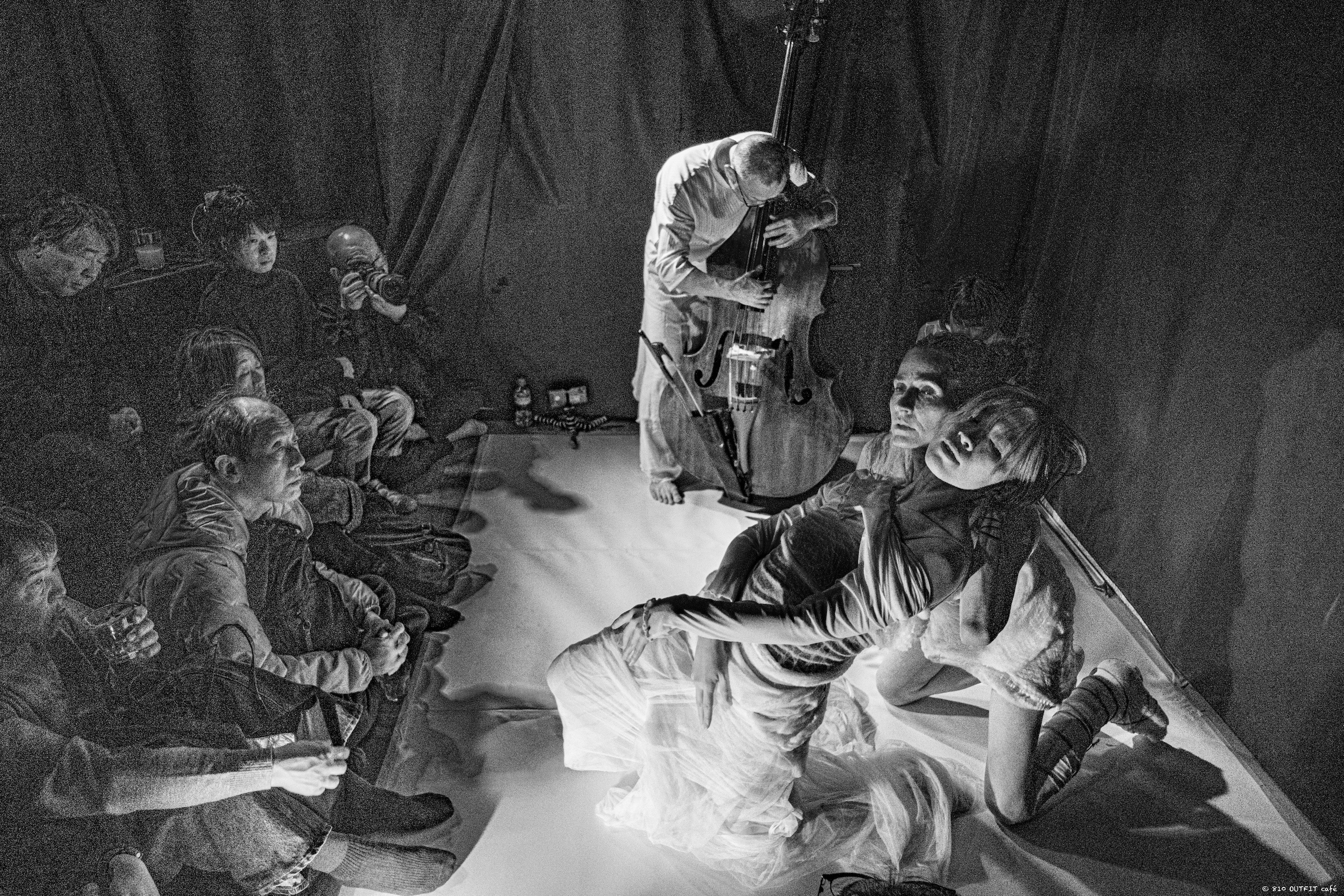
    JR: Yes, absolutely. Every piece is a challenge. I performed a new solo, Fragments of Silence, last Wednesday (19 March 2025) — a collaboration with a musician called Hoshi, a cellist and flute player. The challenge for me is always to create something with transformative potential, both for the audience and for myself.

    The challenge lies in where, it’s very easy in performance — that goes for all performances, dance, theatre, performance art — to just deliver form. And I would say that, at the event you saw at Motoya’s, maybe some dancers were just delivering form. But what I want to do is to transform space, to create something that makes the audience feel something — feel different from how they did before watching the piece.

    That’s the challenge, every single time. And when I look at Butoh’s founders, Hijikata and Ohno, that’s what they were after too. Thus part of the methodology is not to entertain, though Dairakudakan might be slightly different, they have an element of entertainment in their performances — the colours in the eyes are not quite the same in that sense. Maybe that’s why Conan and I work so well together because we benefit from each other’s experience and strength.

    For me, the form can be as beautiful as anything — but if it doesn’t touch the audience, it’s pointless, to be frank, it’s just a wank, you might as well not invite an audience.

    “Why am I doing this?”

    The question of “why” is important, and sometimes the “why” is because I’ve been invited, that’s the practical reason. But the real reason why I’m performing needs to be something else.

    And it’s dangerous sometimes. I heard about a dancer, who came to Japan to perform a Butoh dance after the reactor meltdown, to dance for the dead. She’s Japanese but doesn’t live here anymore. I don’t know how the dance went, but I do know it upset a lot of people — it was very soon after the disaster, and the people I spoke to felt that the dancer was using the tragedy to gain publicity. I can’t say if that’s true — I don’t know the dancer, but yes, it’s dangerous territory.

    “Am I a shaman?”
    No.

    “Do I want to create and perform shamanic death rituals for earthquake victims?”
    No.

    “Is that my role?”
    No — I’m a performance artist.

    “Do I want to use potent material to create something that somehow touches the audience?”
    Absolutely.

    What I find interesting in Butoh is that we don’t communicate nor explain the materials we use nor what we’re thinking when we perform something. As an audience, you’re confronted with the imagery and it evokes something in you. It’s not like theatre, where you have to understand it. You experience Butoh, so that gives me incredible freedom to use whatever material I like.

    Actually I had a conversation after the solo on Wednesday with an audience member about touchy material. I admitted to him that I used the Holocaust for the performance — it was just a very short moment — ashes flying up the chimney of the crematorium. Now, I have Jewish ancestry, and some very distant relatives of mine were in Auschwitz — that’s close enough. And we talked about how close is too close. The dancer I mentioned earlier, that felt too close. Hijikata used Holocaust materials in his choreography for example, but he never touched Hiroshima or Nagasaki. Maybe that was too close for him, he never worked with atomic bomb material, ever. But he did work with other horror that was slightly further away.

    ©Wataru Igarashi


    AW: You wrote that you’ve often asked yourself: Why Butoh? What is Butoh? Is this Butoh? Do you think you’ve found the answers to those questions?

    JR: I’m letting other people decide whether what I do is Butoh.


    AW: Have you simply learnt to stop asking yourself those questions then?

    JR: No, I’m still asking myself those questions:

    “Is this Butoh?”

    “Does it just look like Butoh?”

    I suppose there’s a kind of inner knowing that I have formed about what Butoh is. For me, Butoh is a radical practice of non-narrative performance, it’s radical because it has no taboo, and that’s where it crosses over with my practice, I’ve become more radical since I encountered Butoh, because now I have a context where I can be as extreme as the fuck I want. For example, yesterday I performed an improvised piece with a man who’s 87, and I sat on his face.


    AW: Is he a dancer?

    JR: He’s a Butoh dancer. So we improvised a Butoh piece together and he was playing with masculine power, he had a stick in his hand, and kept hitting things and people. In the performance, I de-weaponised him, and I sat on his face.


    AW: What happened afterwards?

    JR: (Laughs) I don’t quite remember, I think I danced with something else.

    That for me, is sort of the Butoh thing. You don’t necessarily follow the narrative. We could’ve developed the narrative since he played this kind of patriarchal and prosperous character the whole time — but I didn’t want to, though I did want to take the weapon away from him and ended up sitting on his face (laughs).

    I was wearing only little shorts, very few clothes. Sitting on a man is one thing; sitting on someone’s face is another; and sitting on an 87-year-old man’s face is a completely different story. It was far out, and it was a triumph, there was a triumph about this taking over the ancient patriarch and battling him, and there was sexuality somehow in there. But Butoh allows me to play with everything.

    You’ve seen my solo which is different of course. Solos aren’t as sexual because there’s no one to be sexual with, really, though there can be (sexual parts) — duets, trios, quartets, group choreographies — sex is a big thing. Hijikata’s golden phallus is a famous one from the Rebellion of the Body6, I think it’s in a museum somewhere (laughs).


    TO BE CONTINUED…

  • Interview: Joanna Rosenfeld — Chapter 1

    Interview: Joanna Rosenfeld — Chapter 1

    We conducted an interview with Joanna Rosenfeld, a German-British performance artist, theatre maker and Butoh practitioner.

    Rosenfeld’s work is known for its raw vulnerability and explores themes such as trauma, mental health, motherhood, grief, longing and survival. Drawing from autobiographical material and improvisation, she investigates connection, time, and the environment, often expanding personal narratives into collective experiences.

    The interview spans two separate sittings, with our first conversation set in Nakano, Tokyo, in a space close to where Joanna was rehearsing for an upcoming performance back in March 2025. The second session took place just over six months later, allowing certain thoughts and questions to return in different forms, this time near the Mori Art Museum, after we had visited the Sou Fujimoto exhibition together, and only a few days after I had seen her perform Memoria.

    Across five chapters, the conversation moves between Joanna’s past and present, each opening onto a different part of her life and practice, with glimpses of the more personal and intimate moments that have shaped her along the way. We touch on her background and connection with Butoh, her experiences in Japan and her relationship with audiences in different parts of the world, before turning towards motherhood and, ultimately, death.

    Joanna co-founded an experimental performance art theatre company named AboutFace Theatre Company UK, creating original touring work including EXILED (1999) and CLOSE UPS (2000). Following a range of artistic collaborations and works in film and theatre production and direction, Rosenfeld began dedicating herself to practising Butoh in 2017. Her recent performances include Resonant Void (2024), Luminous Ashes (with Conan Amok, 2024), Fragments of Silence (2025), and After the Eclipse (with Fumihiro Yoshino, 2026).


    A Room of One’s Own


    AXEL WANG:
    When I saw you perform at Motoya’s1, Joanna, I got the impression that you were a professional dancer. But while doing research and looking through your website before this interview, I noticed you hold so many different titles, wearing a lot of hats! Based on the work you’re doing these days, which of those titles would you say best aligns with what you’re doing right now?

    JOANNA ROSENFELD:
    Performance artist. And I teach.


    AW: Teaching in Brighton, England?

    JR: Teaching where they have me. I’ve been teaching in Chichester and Brighton mostly, also here in Tokyo and Kyoto, taught in Taiwan, wherever I get a gig, so to speak. But back in Brighton I was teaching for a long time, at a drama school named Academy of Creative Training. Must’ve been what, 18 years?


    AW: I spent a few years in Brighton as well, before university. Is that where you’re based now?

    JR: I have been in Brighton for a long time, yes.


    AW: How come?

    JR: Well, love. That’s the simple answer (laughs).


    AW: Oh wow, please do tell!

    JR: Well, my journey’s a little bit complex. I trained as an actor at a city theatre in Frankfurt, Germany and was studying music at a conservatoire — but I didn’t like it. I kept arguing with the directors, and the dramaturge noticed and told me, “You should go to university, you’ve got a good head on your shoulders.” So I did — while still working. It was a five-year MA course, and I did that in Germany, and part of it involved going to the UK for a year — I ended up at Southampton University, studying just English literature and drama. After I finished the degree, rather than following my professor’s wish and doing a PhD, I decided I wanted to go back into working, no more academics.

    So then I found this professional development degree, specifically in physical theatre in Liverpool, associated with the John Moores University. It was just a one-year thing and after that, I started a theatre company, which honestly wasn’t really theatre, it was more experimental theatre slash performance art really. That’s pretty much been the core of my work since. At the time I called it a theatre company because that’s how we could get funding. “Experimental art” just wasn’t going to cut it, certainly not with my background as I didn’t come through an arts college.

    Physical theatre is super close to dance — like really close. Mime is part of it, clowning is part of it, physical control, acrobatics, all of those are part of it. I stayed away from dance for a long time, even though I trained as a dancer when I was a child because I was interested in narrative originally, I wanted to tell stories.

    And then I started teaching. Since I’m German-born, and Germany has several very important playwrights, I naturally gravitated toward that. And one of them is Bertolt Brecht, a famous playwright and socialist, who lived in the 20th century, from the late 1800s up to 1956 — and I loved his work. Brecht wrote lots of musicals and you would know The Threepenny Opera (1928), and Mack the Knife (1928) — “When the shark bites with his teeth, dear..” — it became a jazz classic, but yeah, he’s a fascinating playwright.

    Within about a year of starting my theatre company, I began teaching Brecht’s material. What I found compelling about Brecht was his whole take on how and why we tell stories. His theory was that the audience should never be in suspense. Instead, he wanted them to know what was going to happen, and that they should always be in a position of going, “I wonder how they’re going to do that”, rather than “What’s going to happen next?” The complete opposite of, let’s say, a Hitchcock film.


    AW: That’s an interesting perspective.

    JR: Yes, and I was really curious about that. For my first or maybe second piece, I was specifically exploring non-narrative structure, because at the time I was seeing more and more non-narrative, episodic cinema emerging. As I started studying film more seriously, I learnt that even in early cinema, the brain works in a totally different way than Brecht assumed. He got it wrong, I thought. The brain automatically creates narrative from, or makes a story out of, unrelated images, as long as they’re sequenced in order.

    There’s this filmmaker, Sergei Eisenstein, one of the early Soviet directors, who made the famous Battleship Potemkin (1925). He created these fast-cut film collages and was dubbed the “father of the cut”. And I realised: it’s the same with live performance. If I show you something non-narrative on stage, your brain will still try to make sense of it, and will still try to build a story.


    AW: I think that’s what audiences do.

    JR: Brecht believed that if you stopped the audience from emotionally engaging and told them what was going to happen, they’d stay in the intellectual, cognitive part of the brain. But I don’t think that’s how it works. Once I understood that, I was totally liberated from narrative in my work.


    AW: Is that how you got into dancing?

    JR: Well, I call it pure movement rather than dance. When you called me a professional dancer — that’s interesting — I wouldn’t say I’m a dancer, but I do use dance in performance. I see myself more as a performance artist with certain physical skills that allow me to use my body in a kind of dancery way.


    AW: But how did you end up in Brighton (laughs)?

    JR: Oh yeah, that story (laughs).

    So I was in Liverpool, developing my second piece, and I bumped into this man — it’s actually kind of a cute story. He was performing in a theatre show where I happened to be the fire officer. You know how it is when there’s no money in a company — you end up doing everything: theatre, front of house, bar, you name it.

    As fire officer, my job was to check all the fire exits and make sure nothing was obstructing them. Then during the performance, I’d sit in the audience and watch — not just the show, but to keep an eye on safety. It was really cheap labour, hardly any pay, but you got to see the shows for free.

    The theatre’s called the Unity Theatre, a black box space with a raked seating area. The audience would enter from the top then walk down to their seats. Although it holds about 600–700 people, it feels incredibly intimate and small. What happens is that, if the show is not full, people would always fill from the top, never the front rows.

    And this show where this man was performing, it wasn’t full. So the top four or five rows were packed, but as the fire officer and a performer myself, I knew the best seat — fourth row. So I sat there, completely alone on my own in that section of the auditorium, while everyone else stayed up top. Totally ridiculous.

    Anyway, the show happened, it was called The Man Who Stole a Winter Coat by Patrick Dineen — a really beautiful musical theatre piece, with about eight performers. And there was this one scene where one of the actors had to sing to one audience member. I was the only one in this man’s line of sight — there was no one else but me — and he sang directly to me, and I was just like, “Oh… this is very beautiful, I actually really like this.” (Laughs)


    AW: How old were you back then? Do you remember?

    JR: Early 20s, and yeah, it was a very special moment.

    After the show, I told him that I really enjoyed it. And he went, “Are you going to come see it again?” I said, “No, I’m on another shift,” so I didn’t. But the company came back with another show, so I went to see that, and we had a little chat. Then, about a year later, the original show toured back to Liverpool, and we bumped into each other at a café.


    AW: That sounds like a beautiful love story.

    JR: I remember going up to him and saying, “You don’t remember who I am, do you?” And he said, “No, but I think I should.” That night, he found me at the theatre — I was still working part-time there, and the rest is history.

    We fell in love. He lived in Brighton, in this beautiful little house he owned. I was in Liverpool, living in a slum, burnt-out buildings across the street, no central heating, and one of those electric meters you had to top up.


    AW: I remember using one of those when I lived in Northampton.

    JR: Yes, with those little cards. And when the electricity ran out in the middle of the night, you had to run to the corner shop — all of them had plexiglass and tiny little hatches to serve you through, because there was so much crime in the area.

    So when we decided we wanted to live together — we’d started this long-distance relationship — it was like, “Where should we live?” This lovely little two-bedroom house with a kitchen… Or my one-bedroom mess in a flat, where you can see people getting mugged, someone throwing up in the backyard, and underneath there’s a drug dealer, and underneath that there’s an alcoholic.


    AW: Sounds like a no-brainer, eh?

    JR: It was!

    However… However.

    It was also a very stupid thing for me to do, because… You’ve lived in the UK, so you know, the northwest — Manchester, Liverpool, Leeds, Sheffield — it’s thriving culturally, and it has a proper identity. And it’s full of cheap spaces, mostly because of its post-industrial state, still a little bit downtrodden on the out, so when I was living and working in Liverpool, I had access to incredible spaces. I could really work on my practice. I could be in warehouses performing week after week for next to nothing — or actually getting paid — I was able to get funding straight away for my first project. It was fabulous being in Liverpool. Moving down south to Brighton for my career was an absolute self-suicide. It was insane.

    Absolutely insane.

    Brighton’s only an hour on the train from London, which sounds great — but funding-wise, it’s a desert. Because London’s right there, it pulls in all the money and all the good artwork. There’s no identity there other than the Brighton Festival and the Fringe2, which is just a one-month event each year. Other than that, there is just no culture. Everything is in London. And it’s a really expensive tourist town with London prices. So career-wise, it was an absolutely idiotic decision.


    AW: Is this early 2000s?

    JR: Yes, it was. To be honest, in the early 2000s it was still kind of okay — the government was still giving some money to regions, even those close to London.

    But when the government changed3, all centralised funding to Brighton was cut. So the city had to rely entirely on its own income to keep things running. And all the cultural things have been cut to shreds. There was barely anything left, barely anything.


    AW: Were you born in Frankfurt, Joanna?

    JR: No, I was born in Dortmund, but I grew up in Frankfurt.


    AW: You still have family there?

    JR: Yeah, my parents are still there, and I go back to visit them from time to time.

    There’s actually a sad reason why I stayed in Frankfurt for university. My brother — he passed away — had haemophilia. It’s a severe genetic bleeding disorder, especially serious in boys. In the early ’80s, a lot of people with haemophilia were infected with HIV through the medication. My brother was one of them, he became HIV positive, and we always knew he’d likely die young at some point — and he did. He passed away the year before I finished my master’s. I chose to go to university in Frankfurt because that’s where he lived and I wanted to be close to him. And as soon as he died, I left for the UK.


    AW: Would you say the UK is home to you now, especially since your kids are there?

    JR: It has been.

    I’ve got two daughters — Katarina, she’s 22 and studying fashion at Central Saint Martins; and Alexandra, she’s 19, just finished her A-levels and is on a gap year.

    To be very honest, since Brexit, England does not feel like home anymore. Maybe I’m like you — I don’t really have a home. I’ve been in Japan for almost seven months now, and I’m really happy here. But I think I could be happy anywhere, as long as I’m doing work I care about, and making meaningful connections through the work I do.

    So I’m not sure how much longer I’ll stay in the UK.

    I had this conversation weirdly yesterday with my daughter. I’ve been invited to come back to Japan in October for a festival, and she was shocked. I told her, “But honey, there’s nothing for me in Brighton.”


    TO BE CONTINUED…

  • Interview: Motoya Kondo — Chapter 4

    Interview: Motoya Kondo — Chapter 4

    The Alchemist


    @SYNONYM


    AXEL WANG:
    At the beginning of our interview, we talked about the Japanese way of things. Do you think you’ve gained a better understanding or a different perspective of Japan because you moved away from it?

    MOTOYA KONDO:
    Yes. I mean, my awareness of Japanese cultural identity started to emerge when I was living in America during high school, as we discussed earlier. That was definitely the first trigger. After living in Germany for 10 or so years, I think I became more aware of the Japanese culture and history.

    Whenever I have the opportunity to come back to Japan, I’m always on the lookout for inspiration, something I can learn from this country — paintings, ceramics, anything. Currently, I’m most inspired by all these old Japanese works, which I think are also extremely experimental. I visited Ryōanji (龍安寺)1 in Kyoto (京都) recently, the stone gardens there are a marvel of sophistication, surpassing many contemporary installation arts that I see today. It’s incredible to witness such creativity from 500 years ago. I don’t know whether my feelings stem from being outside of Japan… and it’s not necessarily because of my Japanese identity either… Perhaps, it’s simply sparked by my keen interest in the art.

    It saddens me to read texts from the pre-Meiji (明治) era, that the art and spirituality of old Japan were so profound and enchanting, there’s a poignant sense of loss in our contemporary times. The transition, or evolution, from Edo (江戸) to Meiji marked a pivotal wave of Westernisation and modernisation, and post-World War II, the influence from America continued this transformation. Throughout the entire process, I felt that we may have lost that connection with the spirituality and art that was once consistently nurtured and cultivated on this land.

    Although I’m in a phase of rediscovering all these phenomenal things in Japan, it’s never an attempt to brag about the greatness of the nation, or to promote some kind of nationalist agenda. You see, my workshop participants and audiences are from all corners of the world, when I share thoughts about Japanese culture during the workshops, it’s futile, isn’t it, to merely emphasise the greatness of Japanese culture. Rather, it’s about sharing something universally inspiring that I’ve come across here in my homeland — a treasure that surpasses borders and hopefully enriches your artistic endeavours and inspires even more people.


    AW: Do you think you might be able to give an example of what is being lost?

    MK: One of the many things, is probably what we were just discussing, the very idea of selflessness. In earlier times, people used to carry themselves with greater dignity and elegance, in that they weren’t living solely for personal fame or wealth.

    I think this prevailing shift towards materialism in the mind does not only apply to present-day Japan but, by and large, to the world, where our values are predominantly grounded in material pursuits nowadays. Whereas in the past… well, I mean, there’s always darkness in human beings…


    “… that’s perhaps my faith in life, resting on the belief that our fundamental nature,
    for each of us, is absolutely pure,
    absolutely pure and vast that it cannot be contaminated.”


    AW: We would always have desires and greed.

    MK: Yes… I mean, I should never idealise or romanticise the past. I’m sure there were similar challenges, just like today. Nonetheless, whenever I read texts written in the past, it’s evident that there was once a more noble and selfless way of life. People dedicated themselves not for personal gain or fulfilment, but for something higher, exceeding the self. Unfortunately, this spirit seems to be diminishing in our time.

    When I was in Kyoto not long ago, I visited the emperor’s villa, called Shugakuin Imperial Villa (修学院離宮)2. It turned out to be surprisingly simple and humble, it’s not like an extravagant, luxurious palace full of gold embellishment, you know, there’s a rice field, three wooden houses, almost merging with the surroundings. It’s like an expression of humility towards nature. I felt that, at one point, this country cherished the wisdom of valuing something greater than oneself. On the other hand, this sort of spirituality seems to be waning in our present day, almost as if we are only capable of appreciating things that are visible, quantifiable or tangible.


    AW: When the pandemic first struck, you were in Nepal. What was it like over there?

    MK: Initially, my plan for Nepal was a brief one-month stay, however, a week before my departure, the pandemic hit, with the lockdown and the airport closing, my plans had to change. During this time, I was fortunate enough to meet a teacher, and I continued my study and research of the Tibetan language and Tibetan Buddhism. I did that for around a year and a half, I think. Every day, a group of three or four students gathered at the teacher’s house, and we would learn about ancient texts. The teacher also had to look after his mother, who had Alzheimer’s, during the class. There was ongoing construction nearby, and every once in a while, a stinky dog wandered in… So it wasn’t like I was studying in a serene monastery, if that’s how you imagined! (laughs)

    Following this period, I went up to a mountain in Nepal called Yolmo, and spent around 4 months there for my practice. For the first two months, I was living in a cave, where I had to gather wood to make fire. There’s an old lady who lives 15 minutes away, and she lent me a pot. Once a week or so, she’s kind enough to bring me vegetables and rice, so once a day, I would use this pot to cook rice and whatever vegetables had been gifted to me, and seasoning with salt and masala spice. On a luxurious day, I would also put a soft poached egg in it, which was pretty much my everyday life then. Material conditions were extremely elementary, but my mind was very fulfilled.


    AW: That must be so enlightening. Obviously, you are in Japan right now, everything is convenient, and you don’t have to start a fire by yourself anymore. This transition in lifestyles is crazy. I can’t even fathom what your life was like in the mountains for four months straight.

    MK: Well, only two months, I lived inside the cave, to be precise. After that, the rainy season started, so the cave was a little bit too humid to live in. During the following two months, I went out of the cave…


    AW: You went out of the cave! (laughs)

    MK: (Laughs) Literally, I did yes… I then moved to a stupa, it’s kind of like a place of worship, and the locals offered me to sleep inside and three meals a day without asking for anything in return. While I was there, I was practising Buddhist meditation, and some movement practices.


    AW: Well, obviously, the pandemic is over now, are you feeling more positive, or did it never really bother you?

    MK: I mean, in terms of my life, there haven’t been that many changes. My routine of researching and practising remained consistent during the pandemic. The circumstances of the pandemic offered me a lot of time to focus more on input, as I couldn’t perform or teach, so I dedicated time solely to learning and practising.

    Post-pandemic, my output work has resumed. Although the pandemic altered the balance between input and output, providing a rich period of learning for me, I am now delighted to share with others what I learnt. While the world has definitely changed on a global scale, on a personal level, be it in a cave or now here in my house in Nagoya, of course, the environments and specifics are different, but for me it’s kind of the same, because the majority of my daily responsibilities essentially remain unchanged — keep researching and practising, then sharing it with others.


    AW: From some artist and designer interviews that I’ve read, they talked about their reasons for continuing to create. Some said ego, some said passion, and some said it’s about passing on values to future generations. You have hosted many lessons and workshops over the years, and I consider that passing on the baton in all aspects. The students who study under you, are they mostly professional dancers?

    MK: Not really. There are some, but more frequently, the professional dancers are not necessarily the ones who do the most interesting things, in my opinion.


    AW: Why do you think that is?

    MK: Perhaps training professionally in one particular manner can pose some sort of hindrance. The knowledge and experience gained might occasionally obstruct the kind of experience that I try to introduce. While a well-trained body is undoubtedly helpful, it may also become an obstacle. Both aspects are important, of course, having a trained body and the ability to adopt something new. And professional performers often may also have too much intention to “perform” rather than to “experience”.

    At the end of the day, whether you are a dancer or whatever, it’s important to remember that we live our lives every day. The key lies in tapping into this generous well of experiences that our bodies and minds accumulate through everyday life. If we can successfully translate this inner richness into movements, or even more fundamentally, manifest it as a presence on stage, everyone can create something beautiful that touches people, whether you are a professional dancer or an amateur, it doesn’t really matter.


    AW: You mentioned converting this house that your father built, the EGGCOSMOS, into a semi-dance studio.

    MK: Concretely, my plan for now is to offer workshops and, potentially, at times, performances here. And yes, my broader intention is to transform it into a hub where people from diverse backgrounds can come together, to engage in thought-provoking conversations, foster creativity, and experiment — a crossing point of perspectives and ideas, that’s my wish.


    AW: Final question, Motoya-san. You once said that you went to all those places searching for an answer to the question of how dance and art can contribute to the world. After all these years, have you found the answer?

    MK: Yes, I believe so. I mean, describing it as “contributing to the world” might be a bit exaggerated (laughs), even though I said that once, and that was genuinely what I had in mind. Perhaps we can simplify it by asking, what should I do as an artist, as a human being?

    For me, the essence and ultimate purpose of art and dance is to unveil reality, the truth of one’s existence. This truth doesn’t always carry notions of darkness, heaviness, or hopelessness, as if the world is doomed and we are all fucked and so on. No, not in my mind. I believe that the deepest truth, the reality, is somewhat relieving, liberating, and luminous, that’s perhaps my faith in life, resting on the belief that our fundamental nature, for each of us, is absolutely pure, absolutely pure and vast that it cannot be contaminated.

    Through art, we have the opportunity to re-establish a connection with the radiant and luminous space within our bodies and consciousnesses, utilising this inherent resource that each one of us possesses. However, due to the “sunglasses” we tend to wear, this reality often eludes us, and we crunch and reduce it into minute fragments, seeking fulfilment externally instead of recognising the wealth within ourselves. My wish is to make dance a path towards reconnecting with the abundant, innate resources of the body and mind, which are absolutely pure and boundlessly vast. That’s my view. Now, I need to practise every day to fully realise it experientially.

  • Interview: Motoya Kondo — Chapter 3

    Interview: Motoya Kondo — Chapter 3

    Still Water


    Splendour by Kenichi & The Sun with Lico Kehua Li


    AXEL WANG:
    I asked our friend Lico this question about repetition before. Most of the time, performances are repetitions, and so are the practices and rehearsals.

    MOTOYA KONDO:
    We repeat the same choreography for each performance, and repeat the same performance over the years.


    “I see myself more as a mirror, reflecting the audience’s thoughts,
    sensations, imaginations and emotions,
    and ultimately the awareness behind those experiences.”


    AW: Exactly, but with every repetition of the same performance, do you notice anything different?

    MK: Oh, yeah, definitely. Well, I create performances in different ways. Twilight (2014), for example, the choreography is predominantly fixed, whereas in more recent performances like Lifelines (2022), while certain structural elements remain fixed, there’s ample space for improvisation.

    Regardless of the approach, every time I perform, it’s a brand new experience. It’s not a matter of choreographed pieces containing more repetition than improvisation, even in the well-choreographed works, the dynamic changes with each performance, different images emerge, new experiences unfold, and factors like the venue, the audience, my physical and mental conditions on the day, the weather, and the environment — they all vary from performance to performance, I don’t feel like I’m merely repeating the same thing.

    This just came to mind, though in a slightly different context, but when I was in Bali, I encountered four exceptional dancers, and one of them has been performing the exact same, less-than-10-minute dance called Kebyar Duduk1, nothing else but the same choreography, throughout his entire life. Until the age of 85, he danced — same dance, less than 10 minutes, every single time — he never created a new production or anything. Despite the apparent repetition, I’m more than certain that his dance has evolved and deepened over time. Through each repetition, there must have been something fresh and unique born from it.


    AW: You mentioned the audience. I wanted to touch upon the relationship between audience and performer. I think we both agree that live performance is way more powerful. The audience becomes part of the performance, and in a way completes the performance. Does it matter to you whether you perform in front of an audience or if it’s an empty theatre?

    MK: Definitely it does. Performance is something created together by performer and audience.


    AW: Do you pay attention to the audience at all during a performance?

    MK: Not like peeking at them to see if they like the dance. (laughs) But the presence of the audience remains vividly within my awareness at all times. The energy from the audience significantly shapes the overall atmosphere for dancers on stage. In contrast, performing in an empty theatre is completely different.

    In my view, a performance reaches completion, as you mentioned, through the audience’s presence, their imaginations, perceptions, and feelings, these are also crucial ingredients of the work. Particularly in mine, my intention isn’t to convey a specific message with hidden meanings or explanations to the audience, alternatively, I aim to encourage them to actively engage with their imaginations. I see myself more as a mirror, reflecting the audience’s thoughts, sensations, imaginations and emotions, and ultimately, the awareness behind those experiences. The audience, through the performer, sees themselves.

    ©︎Kung Wai, The Feuerle Collection


    AW: We first met each other in Berlin in the summer of 2017, when I found out about your collaboration with Hoshiko Yamane (山根星子), and I became very intrigued by her work and especially, your collaboration.

    Although dance and music seem like a perfect couple on the surface, it doesn’t happen often enough for a dancer to collaborate with a musician on such a long-term basis and vice versa. Can you tell me a bit more about this collaboration? How do you feel your works complement one another?

    MK: I don’t know if I’m answering your question directly, but there’s an interesting anecdote behind it. When I first moved to Berlin, I was working with Tiziana (Longo) back then, and together we began performing in the city. During one of our very first performances, we were completely unknown, obviously, and I think only four or five people attended, and Hoshiko happened to be in the audience.

    After the performance, we spoke briefly, and Hoshiko introduced herself as a violinist, and that was pretty much it. Then we all got on with our lives without much contact or knowledge of each other’s activities. But somehow, maybe two or three years after that first exchange, on one occasion — I don’t recall the details — but we started entertaining the idea of performing together, and so we did. From this very modest and almost serendipitous beginning, our collaboration has continued to this day…


    (One of Motoya’s students arrived, and the conversation resumed after a short break.)


    MK: Yes, sorry. As I was saying, from a very brief and humble beginning… I get the feeling that my life has always been like that, and I imagine everybody else’s may be somewhat similar — it often begins with the smallest seed. When we created Twilight, at first, Tiziana and I were just selecting music from published sources. But at some point, we invited Hoshiko to compose original music for the performance, and the end result was utterly remarkable. I was like wow, I was blown away. It’s been almost 10 years since we’ve collaborated.

    Initially, it was more like she was playing music in the background, while we performed. But now our current approach is more akin to the dynamic of, let’s say, Flamenco. There’s a guitarist and a dancer, one-versus-one. It’s not merely background music accompanying a dancer in the foreground. I think this is what I’m experimenting with our collaboration at the present stage — one body, one violin, one-to-one. I’m searching for a way to cultivate a heightened resonance with the music, not in the manner of my body moves, follows or dances with the rhythm of the melody… When Hoshiko plays the violin, the sound becomes almost like a tangible substance touching the skin, the sound is not merely auditory perception, it reaches beyond the ears to resonate with the entirety of skin, bones, and body.

    ©︎Kung Wai, The Feuerle Collection

    There’s a great Noh Theater (能 / のう) performer named Hisao Kanze2, who passed away more than 40 years ago. He once wrote that, in Noh Theater, while it may lack the gorgeous melodic lines that characterise Western music, it possesses a profound presence within a singular sound. This one singular sound, offers something Western music may not fully encapsulate — and that is what I search for in my dance.

    Instead of crafting countless dazzling movements, and amusing the audience with graceful flowing lines, my pursuit is for something less — a singular movement that exudes greater presence, impact and intensity in my dance. The same thing can be said for the music; we search for fewer melodies but find full richness and presence within a single sound played by Hoshiko. That is something we are looking to experiment with.

    Every time before rehearsal, Hoshiko and I would sit down together for tea, and we would talk, much like what we are doing now. There’s one time while we were having some Japanese wagashi (和菓子) — each piece looked almost identical, and yet subtle differences emerged in colours and patterns, and we just said: “Let’s try this today.” For every performance, we essentially maintain the same structure, but each sound is played with slightly different layers, and we follow wherever that may lead us.


    AW: Is Hoshiko’s performance in Lifelines also improvised?

    MK: We share some specific images or structures collectively. When Hoshiko performs, I think these days she uses a loop machine to cover 25 different sound layers or so, she said, actually, it’s not possible to compose and replicate the exact same performance every time. So yeah, each rendition involves significant improvisational elements.

    ©︎Yozy Zhang


    AW: Another collaborator of yours, whom you mentioned earlier, is Tiziana. You founded Motimaru Dance Company together in 2010 in Tokyo. After more than a decade, you decided to part ways and head in different directions.

    MK: The evolution was quite a natural progression, I think. We worked together for around a decade, as you know. She was, of course, an immensely important collaborator during that period. We both learnt a great deal from each other, and our influence on each other’s artistic perspectives was substantial. Sharing the same mentor meant we shared the whole connected vision on a very deep level for more than 10 years.

    However, over time, we slowly, slowly began to sense a shift — perhaps a moment that’s not so easily and precisely definable. After sharing this creative journey for well over 10 years, it felt like the right time to part ways. So yeah, it’s a very organic and natural process, I would say.


    TO BE CONTINUED…

  • Interview: Motoya Kondo — Chapter 2

    Interview: Motoya Kondo — Chapter 2

    Shuhari 守破離


    Extract from an experimental film by Emil Sampel


    AXEL WANG:
    Butoh is often interpreted as dark and distorted. Motoya-san, do you see darkness in your art?

    MOTOYA KONDO:
    For me, what I aim to do, is to confront the totality of life, acknowledging not just its brightness but also its shadows. When we examine our own lives, they have two sides, don’t they? Both life and death coexist. As witnessed in my mother’s journey, life appeared relatively stable and fine, yet with the sudden intrusion of illness and ultimately, death, the unavoidable facets of reality, such as sickness, death, and darkness, all emerge as inevitable dimensions of our human existence.

    Therefore, I firmly believe the question lies not in categorising Butoh as either dark or light, but rather in recognising the complexities and totality in our lives. Whether we want it or not, we often find life encompasses more than just moments of brightness and joy. The presence of darkness is intertwined with our existence, making it an integral and conspicuous aspect of life and, consequently, of my art.

    And I also believe that art can embrace darkness as beauty. Hip-hop, for example, often channels the anger and violence prevalent in the circumstances of African American people in the US. Such energy could potentially manifest destructively. Nevertheless, when expressed through music, this anger undergoes a transformation into a creative force. Similarly, Flamenco, while unquestionably exquisite in its form, harbours shades of darkness and struggle, exhibits emotions like love and hate, desire and anger — the art form harnesses such energy so creatively. And let’s say comedy, comedians mock and make fun of the darker aspects of existence, turning that dark energy into laughter.

    So I think that’s a very fundamental aspect of art, to embrace and transmute the dark side of existence, and it extends far beyond darkness alone, incorporating a much broader spectrum — joy, happiness and love, they all coexist within this realm. In my art, I don’t specifically fixate on the darkness of existence, instead, I seek to explore the totality of existence — lightness and darkness, love and hate, life and death. Confronting this totality is central to my work. And ultimately, I have faith in the absolute light that exists beyond the duality of light and darkness.

    ©Yozy Zhang


    AW: In essence, do you think that’s what Butoh is about, the totality of existence? Say, when you host a workshop, how do you explain to your students what Butoh is?

    MK: I avoid so rigidly defining Butoh. Instead, we look at the works of Tatsumi Hijikata (土方巽) and Kazuo Ohno (大野一雄), to understand the remarkable qualities, while also bringing critical points of view where necessary. In Hijikata’s work, perhaps there’s a particular focus on the darker front — sickness and death.


    “I am driven toward a different objective, the opposite —
    to express or manifest selflessness on the stage.”


    AW: That’s probably where most people got the impression from — Butoh being very monstrous and creepy.

    MK: I believe his emphasis was intentionally directed to that part of reality, however, one thing we should be careful about in our interpretation is that, Hijikata wasn’t merely vomiting out or projecting his personal issues onto the stage. Alternatively, he embraced the dark side, like I said, as a form of beauty and even elegance. I also sensed a great amount of humour in his work, frankly — it’s not always so serious and dark — the manner in which he engaged with and found enjoyment in darkness… His darkness shone so luminously on stage.

    You know, if we merely portray darkness as itself, it holds absolutely no meaning. Conversely, if we succeed in presenting, for instance, faeces on stage as flowers or something elegant, that becomes intriguing for me. This may apply to Butoh, contemporary dance, painting, whatever. At times, I would find artworks that present darkness and grotesqueness without offering any new perspectives, in such cases, one may question the significance and purpose of it all.

    ©Yozy Zhang


    AW: In many of your research papers and the conversations we’ve had so far, “reality” is a word that comes up often. I’m curious, what do you mean by “reality”?

    MK: (Silence) Before talking about what the reality is… it often occurs to me that, our everyday lives pass by so quickly, without us even realising who we truly are and who others truly are — that’s the state of our lives somehow… I recall an incident when I returned home with my father one day, and we were in the kitchen, my father said to me, “Hmm, the kitchen is very dark, what happened today?” I looked at him and said, “Father, you are wearing sunglasses.” He then removed them and said, “Oh, now I see!”

    This scenario, in a way, mirrors our state of life, doesn’t it? As if we are constantly wearing sunglasses and shaping the perception of ourselves and the world through those tinted lenses. Only when we take the sunglasses off does a clearer view of ourselves and our surroundings unveil. That’s what I meant by the reality.

    ©Yozy Zhang


    AW: You said before that Buddhism is perhaps your biggest inspiration throughout your life and career. In what way does Buddhism inspire you?

    MK: Buddhism has been dedicated to researching the reality of existence and truth — “sunglasses-off”, essentially, for well over 2,500 years, generation after generation. In my view, Buddhism also aligns with the purpose of art, to take off the sunglasses through which we perceive ourselves and the world, and to reveal the naked truth of our body and consciousness, and therefore the truth of the whole world and our reality.

    And that’s what I particularly value in Hijikata’s work, where he presented so many distorted elements in his works, acknowledging our human conditions. Because if we look into ourselves closely, into our bodies and minds, we find asymmetry, imperfections, and complexities — we are not only pretty and joyful beings. The distortions, twists, and cracks are all parts of our lives, a universal condition shared by everyone, including Hijikata and me.

    Hijikata’s approach involved confronting all these distortions, revealing the conditions of our body and mind and simultaneously, embracing them all as a form of grace, instead of discarding or ignoring them. At the core, Hijikata himself stated that Butoh is, or art itself, is the exploration of human existence. His method wasn’t purely intellectual or philosophical, but thoroughly experiential, because for dancers, interesting thoughts and philosophies must be fully embodied on stage.

    ©Claude Hofer

    In many ways, the Buddhist tradition has long engaged in researching the very existential questions, and the depth of this exploration has stood the test of time. Not only through extensive philosophical sophistication, discussions and development, there’s also a methodological dimension, sometimes people refer to this as meditation, which is a practice aimed at exploring and understanding this existential reality in a more experiential way. Over the course of 2,500 years, Buddhism has accumulated an immense wealth of knowledge and experience in this pursuit, for me, that’s an extremely valuable resource.

    But umm, when I use the term “Buddhism”, very much like “Butoh”, there is often a divergence between what people associate with the term, and its true essence… More often than not, I hesitate to use these terms simply because they may or will evoke perceptions of a belief system or religion. Yet for me, it transcends those connotations. Like when people say, “Oh, Butoh has nothing to do with Buddhism” — I’m not really sure what they meant by “Buddhism” there, but it seems they might be expressing their thoughts based on somewhat of a vague or approximate image of the term.

    My primary research and connection have always been with Tibetan traditions. The more extensively I dive, the deeper the connection I notice, between Tibetan Buddhist practice and Hijikata’s choreography techniques, as well as his training methodologies. Obviously, Tibetan traditions don’t utilise or realise them as an artistic form for presentation to audiences, but many of their methods are surprisingly similar. What is deeply suggestive in those methods in the Tibetan tradition, is that certain practices are reserved only for well-prepared and qualified students, taught by qualified teachers, as the associated risks are clear, the purpose of the practice is well-defined and actually very refined.

    ©Claude Hofer


    AW: Your workshops and lessons aren’t about dance only, but also the practice of the mind as well, is it like meditation?

    MK: Once again, I prefer not to use the word “meditation” as it might lead to potential misunderstanding. But the focus of the lesson is really about the practice and the exploration of the reality of the body and mind. And such exploration extends beyond mere intellectual investigation. Ideally by the end of the process, it helps participants create compelling art while also having a positive impact on their everyday lives — these must come together in synergy. If a particular practice only contributes to artistic innovation but compromises mental well-being, that’s an outcome to be avoided at all costs.


    AW: Coming back to Buddhism, there is this idea of anattā, meaning “selflessness” in English, and “muga (無我)” in Japanese. You strike me as a very selfless person, Motoya-san.

    MK: Or maybe you just don’t know me enough. (laughs)


    AW: Probably, probably. It’s only an impression, I think “undistracted” may be a better word here.

    MK: I can surely say that Buddhist practice has helped me, helped my life, greatly. Even though I have not fully comprehended the depth of selflessness at this phase, when I reflect on my past and present, I find a significant shift. Comparing my current state with my younger years, I definitely find it more at ease and more joyful to live each day. My life has been greatly enriched by my research into Buddhist philosophies and practices.

    This intuition of selflessness holds great importance in my artistic pursuits. Contrary to self-expression, I am driven toward a different objective, the opposite — to express or manifest selflessness on the stage.


    AW: That’s interesting, because when one thinks about contemporary art, it’s mostly about self-expression, but you are trying to achieve the exact opposite, the expression of selflessness.

    MK: Yes, that is what I’m searching for. It might be more accurate to say that the more we see and understand the depth of oneself, the more we understand selflessness.


    TO BE CONTINUED…

  • Interview: Motoya Kondo — Chapter 1

    Interview: Motoya Kondo — Chapter 1

    The summer of 2017 marked the beginning of my journey into the enigmatic world of Motoya Kondo (近藤基弥). It was indeed a season of discovery, as I had only just wrapped up my trip to Kassel, Germany, for documenta, before setting foot in Berlin for the first time. Same as Motoya’s initial encounter with Butoh, an astounding coincidence welcomed me to his home in the charming area of Prenzlauer Berg.

    Don’t we all get the feeling sometimes, that each one of our worlds is carefully woven by countless threads of chance? It’s in these unexpected moments of chances, that we come across some of the most profound experiences in life, ones that leave an unfading imprint on our hearts.

    On the evening of my arrival in Berlin, after I enjoyed a solo dinner at an exceptionally memorable Thai diner located on the ground floor of my accommodation, Motoya kindly, and unexpectedly, invited me to a performance by his dance students later that night. A workshop showcase, happening in the studio space called “Utero” within Motoya’s home, if I may also add, the name “Utero”, meaning “womb” in Italian, was yet another fruit that emerged during one of our casual conversations in the days that followed, chance, eh?

    And yes, since I was on a journey of discovery, why would I say no to such an invitation? And that was proven to be nothing but the right call. Although I was sitting in the back row among 10 or so audience members, in the 10-ish-square-metre studio space, the performance was nothing short of intense. It was vivid, it was suffocating, and utterly captivating — all coalescing into something unlike anything I had ever seen before. As I sat there, savouring every last bite of the fruit of their workshop, a quiet curiosity stirred within, wondering what the maestro himself might unveil through his own performance.

    The following night, despite not being able to witness Motoya’s art yet, another experimental performance pleasantly unfolded in Utero featuring Motoya’s longstanding collaborator, Hoshiko Yamane (山根星子) and an Italian musician named Stefano Giorgi. The blend of violin sonance, juxtaposed with the deep and rhythmic vibrating sound of yaybahar, created an otherworldly auditory experience that, once again, was entirely novel to my ears.

    Over the ensuing years, Motoya’s path and mine converged in the cities of Berlin and London when chance intervened anew. Amidst sips of tea, we talked about art, life, and everything in between, each meeting weaving the threads tighter. In the cold winter of 2021, Nagoya (名古屋) welcomed the return of Motoya, the city of his birth and upbringing. Summoned home by the sombre chords of loss following his mother’s passing. I remember one Friday evening, in a corner of a dimly lit, humble izakaya, where our words mingled with the aroma of katsu and the laughter of salarymen. I can still see his eyes, glistening with the weight of emotions, yet guarded by a calmness that seemed to wrap around him like an impervious shield. It was as if the world’s sorrows could knock at the man’s door, but they could never breach the sanctuary of his spirit.

    The passage of time brought forth the promise of an interview, initially slated for August 2021. However, life’s intricate dance wove a different rhythm. With the outbreak and unsettling circumstances of the pandemic, it was only in the waning days of December 2023 that I finally got to sit down with Motoya once more in Nagoya. The delay only served to enrich the narrative, it seemed, as both of us armed ourselves with new experiences and new insights gained from separate journeys and the ebb of time.

    In the opening part of our conversation below, Motoya shares stories about his younger self, recounting the beginnings of his journey into Butoh dance, and his worldwide experiences, as well as the heartfelt impact of his mother’s passing. Transitioning into the second chapter, our focus turns to Motoya’s roles as both a dancer and a Buddhist. The third chapter delves into Motoya’s collaborations, while in the concluding final chapter, he eloquently expresses his convictions regarding the purpose of art and dance, as well as the inherent purity of human beings.


    Into the Wild


    AXEL WANG:
    In order for us to address the present and the future, I think we must go back to the past. 2005 was the year you first came across Butoh (舞踏). What triggered your interest in the art form?

    MOTOYA KONDO:
    It was a total coincidence. I was organising a New Year’s Eve event at a temple while I was still in university, about one year before I met my teacher. Out of the blue, one of the co-organisers just said, “Maybe we could invite Kazuo Ohno1”, and I was like, “Who’s that?” I then found out he’s one of the Butoh founders. Unfortunately, one of his associates responded via email and said that he couldn’t participate in the event due to age and everything.

    Some time after that, I came across Ohno’s name again, and they were offering workshops and classes, so I felt like checking them out. But yeah, there’s no better way to describe it other than a mere coincidence. I didn’t know anything about Kazuo Ohno, I didn’t know anything about Butoh, and I had never seen any Butoh performance, nothing.


    AW: Do you still remember your first Butoh experience?

    MK: Well, when I entered the studio for the workshop on the first day, I arrived a little bit late. I remember I saw a video of Kazuo Ohno dancing, and everybody was watching it — I didn’t understand anything at all, once again, and I didn’t feel like “wow” to be honest, but it certainly piqued my interest.

    I gradually started training under my teacher Yoshito Ohno2, the son of Kazuo Ohno, and the training was eye-opening and very inspiring for me back then. If I try to verbalise it, that one thing I experienced in his teaching, was a deep connection with Japanese tradition and the history of Japanese art, and simultaneously, it comprised not only Japanese but also the history of Western modern art. Every experience transcended the borders and distinctions between Japan, the East, and the West. Moreover, there was something primordial, something universal, about human existence.

    When I was in high school, I spent a year in Portland, USA, and I was a huge hip-hop fan. And later I remember going to Harlem in New York and seeing people doing freestyles and etc. on the street, and it was so cool — the music, the culture — everything in the US just seemed way cooler. Although the Japanese hip-hop scene was quite big in the 90s, the genre is so indisputably rooted in African American history, and what we (Japanese) were doing, was kind of just copying, I thought.

    After a while, I also started to get into Australian Aboriginal music. Despite the appreciation and inspiration, I couldn’t ignore the fact that Aboriginal music is closely tied to the Aboriginal people’s daily lives, centred around their existence within their land, hunting and their unique movements and ways of being. In contrast to my own everyday life, this always left a lingering feeling of disconnection in my heart. Having grown up in cities, hunting was, needless to say, not part of my daily life, and the historical context also felt distant. I think in my mind, I was searching for something that would truly resonate with my reality, a connection I couldn’t fully find with either hip-hop or Aboriginal music.

    Being in America as a young Japanese kid, that was the first time I genuinely started perceiving Japan from an external perspective. And around the same time, I think my awareness of my Japanese identity also began to form, and I noticed the overarching influences of America on Japanese society — culture, politics, economy — everything. To a certain extent, I felt that we (Japanese) may have lost our connection to our past.


    AW: You felt that when you went to America as a high school student?

    MK: I started pondering at least, on these kinds of issues. I was just a young boy thinking about what I wanted to do for my future, you know, and I actually thought about becoming a sword maker…


    AW: Like a katanakaji (刀鍛冶)?

    MK: Yeah (laughs), I was searching for something, you know, like a quest to connect with certain ancient Japanese traditions — perhaps “traditions” isn’t the precise word… maybe it’s the ancient spirituality and cultural heritage of Japan.

    Back in my university years, I used to do a lot of purposeless backpacking, just travelling around, and I made friends with people from Israel, Mexico, Italy, India — literally everywhere, and I felt that my mind was expanding to welcome the whole world. I had always enjoyed music, however, be it hip-hop or Aboriginal music, none of them truly spoke to me in the way I described earlier. Until I met Yoshito-sensei, through his teaching, I witnessed some very old Japanese ways of thinking, tea ceremony, flower arrangement, Noh theatre (能 のう)3, the Japanese sense of space, all of it, in tandem with Western art and literature, and furthermore, a quest for universal human truth.


     “I was searching for something that would truly resonate with my reality.”


    AW: The lessons weren’t exclusively about dance?

    MK: Yoshito-sensei often referenced various aspects of traditional Japanese practices, and his ideas were influenced by the rich tapestry of Japanese traditions and art. What made it even more fascinating to me at the time, was that he would talk to us about Salvador Dalí, Picasso, Giacometti and all these great Western artists. So in many aspects, all my struggles, searches, and thoughts found a common ground in his lessons.

    As I mentioned earlier, there was something intrinsically primordial in his teaching. All of my thoughts were merging into one place, and I thought, “Wow, this is amazing, I had no idea that something like Butoh existed in my country.”


    AW: So the journey began. In 2010, you decided to leave Japan to explore other dance forms originating from other parts of the world. Why did you feel it was necessary for you to get out of the country?

    MK: I think when I met my teacher, I was so inspired by him, almost like falling in love, you know, and I was so captured by this thing called Butoh. However, bit by bit, as I began to see more performances and workshops, all happening under the name of Butoh, of course many were indeed inspiring, but at the same time, I felt that, the very thing that I was searching for in my heart, I didn’t find it in them, which was the primary reason that prompted my travel afterwards, to see Balinese dance, Flamenco, Tibetan Buddhism4 and so on.

    After several years of training under Yoshito-sensei, I sensed that nearly all of my ideas about dance, about life, were influenced by his teachings. While he’s a great teacher and a hugely influential figure who set my path and guided me, I gradually came to realise the need to further conduct my own research into dance and life, and to develop my own approach.

    Considering the dance pioneers like Tatsumi Hijikata5, Kazuo Ohno and Yoshito Ohno, each created a different dance, something of their own. They served as incredible sources of inspiration, and their works affected me significantly, and I hold deep admiration for them, but I did feel compelled to further explore my own dance and the reality of existence. The most important question was not “What is Butoh?” but “What is the truth of existence?”


    AW: The last time we met here in Nagoya in 2021, when you came back for your mother’s funeral, and you were telling me about her passing, even though you seemed extremely calm, but I can imagine it must be one of the hardest things for anyone to endure.

    MK: Definitely, that was one of the most emotionally intense events, facing my mother’s passing. The pain wasn’t only about her departure, but to see her in so much pain and suffering before she eventually passed away, that was more painful than anything else.

    After my mother’s passing, her body returned home and remained in the house for three days. I found myself sleeping on this sofa, while my mother was lying right over there, so during that period, I would often catch sight of her face, and she looked so peaceful, so beautifully calm and serene, and that sort of enveloped me in a feeling of peace as well.

    Losing my grandmother some years ago, with whom I shared a strong connection, and then my mother… confronting the deaths of loved ones has always been an empowering experience for me. Rather than leaving me in a devastating state, it instilled a profound sense of enrichment within me. Of course, it was extremely sad, but in many ways, it granted me newfound strength and kindled an immense sentiment of gratitude for the gifts they had bestowed upon me while they were alive.

    ©︎Kung Wai, The Feuerle Collection


    AW: Death is not something we often talk about in the world we live in today. I appreciate you opening up about the subject.

    MK: To say that I felt motivated and stronger inside would perhaps be an accurate description. Following my mother’s passing, upon returning to Europe, I immediately started working again. Contemplating and confronting death redirects my mindset, not only in my work but also in everyday life. This introspection made me think about my own death, I think about it almost every morning.

    The loss of both my grandmother and mother… my feeling was more like, okay, now I must fully embrace living my own life, since it’s not going to last forever, and it’s going to end one day. As an artist, occasionally, unnecessary ambition may creep in, say when you hear a compliment, I too, might desire becoming a successful artist, being admired and all that. When my mind drifts to those so-called “wrong” or “twisted” places, however, contemplating my own death realigns my perspective. It puts my mind back in the right place, so to speak. Almost like a reminder, that these aspirations hold little significance in the face of mortality, none of them is going to help when I die. What matters ultimately, is the extent to which we share and give to others.

    I created a performance inspired by my mother’s death, transforming the ordeal of pain and grief from losing loved ones into creative energy — Lifelines (2022) is the name of the work, and I’m going to perform it soon here in Nagoya with Hoshiko Yamane6.


    AW: You posted a lovely picture of you and your mother together on Instagram, where you wrote about the spiritual condition that you started to witness blossoming between you and your father. “Through the death of my mother, something new was born between me and my father”, I thought that was beautiful. What was your relationship like before with your father?

    MK: I mean, we were good… there were some difficult periods, especially after I chose the path of dance… But before that, I always remember him being a good father, and there was never any bad memory, though he did work a lot so we didn’t have that many opportunities to connect, so to speak.

    After I chose the path of dance, however, there were indeed moments of conflict — not only with my father, but with my mother, sister, everyone around me was becoming difficult, basically, no one liked my decision. But looking back, they were probably just worried and tried to look out for me simply.

    Either way, it’s not because my mother passed, my father and I finally resolved the conflicts… I’m sure that for my father to lose his wife was exceedingly painful too. As a son, I tried to express my love and care for my father, and I think he felt that, and in turn, our relationship and bond have likely grown deeper and stronger, especially now that we have more time to simply be the two of us.


    TO BE CONTINUED…

  • Interview: Kawita Vatanajyankur — Chapter 2

    Interview: Kawita Vatanajyankur — Chapter 2

    Machine Ghost, Human Shell


    AXEL WANG:
    Kawita, we gently touched on your work series Tools earlier in the last part of our conversation, and I’ve noticed that you are often labelled as a feminist artist, even though the things that you might want to convey through your work are much more universal. Does this label of feminist artist bother you sometimes?

    KAWITA VATANAJYANKUR:
    Not particularly, but it’s true that, say, in my recent series, Cyber Labour, the focus is more on questioning the essence of our humanity rather than solely on feminism. In my latest work, The Machine Ghost and the Human Shell (2024), which explores what remains within our ghost and soul when algorithms guide and manipulate our daily lives, are we still “us”? It poses universal questions about existence — regardless of gender.

    I guess it’s the way I utilise my body in the performance videos, along with the trajectory of my artistic career, that intertwines with feminist themes, leading to the attribution of the feminist artist label. But once again, it doesn’t really bother me because, like we just discussed, initially, I set out to confront the taboo of femininity in my series Tools, and this parallel was sort of carried on in my later series as well. When scrutinising industries within a capitalist framework, of course, women are often paid less and treated unequally, compared with their male counterparts in the workplace. So yes, there are scales of injustice present in many of my works, reflecting the challenges women face in the world today.

    Afterwards, I created another series called Performing Textiles, which addresses the ongoing exploitation of female garment workers within the industry. So I guess it’s reasonable to interpret these series as feminist works. Oh, today happens to be International Women’s Day — seems like the perfect time to talk about this!


    AW: Indeed, happy International Women’s Day! Just thought I’d ask, why don’t you hire actors or actresses for your performance? Since a lot of what you do in them involves physically demanding tasks, some are quite extreme, I must say.

    KV: I want to know what it feels like to be objectified, though it’s undeniable that many people already see themselves as mere objects in the capitalist world’s relentless pursuit of profit, we are like cogs in this money-making machinery.

    On the other hand, physically, I also want to know what it’s like to be mechanised by society, particularly for labourers. So I must undergo the whole experience myself. I recall a moment during my performance, when I had, almost like an epiphany — as I approached the point of becoming something like a machine, I entered a state of numbness, where sensations just began to fade away. I believe this is how the system deceives our brain into believing that this is normal. Our bodies and minds possess a remarkably magical ability to adapt to any circumstance, even those that dehumanise us.

    Maybe I’ve shared this story with you before, but it’s like the analogy of the frog placed in a pot of water. If the water is already boiling, the frog instinctively avoids jumping in. However, if you place the frog in still water at room temperature and gradually increase the heat, the frog’s body adjusts to the changing temperature until it’s too late to grasp the danger, ultimately leading to its death. Similarly, in my performance, I undergo a process of dehumanisation, I transform myself into an object, stripping away my humanity.

    I suppose this is how, during that transformation, when I enter the performance as a human being, after experiencing pain for a while, I slowly get used to it. Eventually, the body tricks me into believing that I can endure even more pain, transitioning into a numb state where I just no longer feel what I’m supposed to feel. And I guess that’s how society deceives people, once again — it establishes a new norm, convincing individuals that since everyone else is doing it, why shouldn’t they? It creates the notion that deviating from this norm is unacceptable. By speaking out against it, you’re essentially challenging this norm and saying, “Hey, this is boiling water, it’s not right, and it should never be the norm.”


    AW: Just as you are often labelled a feminist artist, you are also labelled a Thai artist. In a lot of your past interviews that I read, many of the questions can’t seem to divert away from your ethnic background. Have you become more comfortable with this over the years?

    KV: I don’t believe in categorising based on nationality. When we start dividing or categorising, creating an “us versus them”, we set the stage for conflict, don’t we? This divisive thinking, often leads to a lot of troubles in the world. I personally like the idea of somewhat of a cloud country. I genuinely believe that viewing ourselves as part of a collective whole would foster greater empathy and unity.

    On the other hand, I don’t really have a problem being referred to as a Thai artist, essentially, it’s my background, and my work often reflects the cultural influence, drawing from my experiences and stories from this country. Nevertheless, I believe that as a society, we shouldn’t feel compelled to constantly divide ourselves along national lines.


    AW: Kawita, you were born into a family of lawyers and judges. You went to Melbourne at a very young age. Obviously, you didn’t choose which family to be born into, however, that put you in a relatively privileged and comfortable seat compared with many people in Thailand. Would you agree?

    KV: Yes, I think that’s fair.


    AW: Have you ever been challenged by anyone who perhaps comes from a lesser background, when the person sees your work and says, “Kawita, you don’t know what it’s like being one of us?”

    KV: Yes, actually, all the time, to be honest.


    AW: What would they say?

    KV: Exactly what you just said, that I would never truly understand or relate, and that I’m only creating content for my own benefit, you know, stuff like that.


    AW: How would you confront these statements?

    KV: Well, I try to address them via interviews. In Thailand, inequality is like a scar, a wound that never truly heals. If you scratch it, the wound reopens — for many, many reasons. Factors such as government actions, policies, and our capitalist system exacerbate this divide, where the rich always get richer while the poor get poorer. Those at the bottom of the social hierarchy, the labourers, are the ones who would always suffer. For the younger generation, breaking into established sectors proves extremely difficult as existing empires monopolise both wealth and power, perpetuating a vicious cycle of inequality.

    So, I do understand why people pose such statements, they see me as someone positioned above them, atop the societal pyramid, perhaps exploiting them both knowingly and unwittingly. By claiming that I’m on their side seems like a lie to them because they are still struggling every day. However, I am not part of any empire, nor am I exceptionally wealthy. (laughs) The truth is, as an artist from the middle class, I feel that this segment of society is shrinking due to the widening gap of inequality. In turn, it leads to a breakdown of understanding among societal tiers here — how can the rich grasp the struggles of the poor? Bridging this gap requires the intervention of the middle class, the ones who are educated, to mediate, and to facilitate understanding. Even though the middle class is shrinking, I still see it as my responsibility to communicate with these disparate groups. To say that, hey look, even though I may not comprehend you entirely, I want your stories to be heard.

    In many ways, I am a content creator, but I would only do what I think is right. I don’t go out and portray myself as a victim of societal injustices because I’m not, but if artists don’t step up as communicators, who will? In that sense, I consider my work vital as it bridges and intertwines disparate worlds. Obviously, it’s a massive challenge, but the aspiration is probably like a dream for me as an artist.


    AW: That’s very admirable and brave, to carry that sort of responsibility on your shoulders.

    KV: It comes back to what I mentioned earlier about the dangers of categorisation. If you’re privileged, society may label you as the antagonist, you are seen as incapable of understanding or advocating for positive change, because you’re the “bad guy.” On the other hand, individuals perceived as lower in the hierarchy may feel that their voices are always muted or overlooked, as their experiences are often dismissed due to their perceived oppression. If our society continues to view individuals through such narrow lenses, how are we ever going to move forward?


    AW: Marina Abramovic, who has been a massive, massive influence for you. Would love to hear about your encounter. How was it like meeting her?

    KV: Marina has a close relationship with the Bangkok Art Biennale (BAB) Foundation’s artistic director, Apinan Poshyananda, they have known each other for perhaps 20 or 30 years. I had the opportunity to meet Marina during a show I had in Venice with the BAB back in 2017, and Apinan introduced us at the dinner table. We sat next to each other and just started talking, I showed Marina some of my work, and she was very supportive of the direction that I was taking and encouraged me to be more fearless!


    AW: That must be terrifying, showing your work to Marina Abramovic.

    KV: Surprisingly, it wasn’t, Marina wasn’t intimidating at all! It was all very relaxed and casual. She offered me advice on my performance, suggesting that I become more self-aware and meditate to enhance my presence, which she emphasised as crucial for longer performances.


    AW: Kawita, you’ve ventured into AI in recent years. Is there a reason behind it?

    KV: It all started with Voidscape (2022), which is more of a VR project commissioned by Central Department Store, one of Thailand’s corporate giants. They approached me to work together, but I made it clear that I couldn’t promote or celebrate Central as a brand. As an artist, my focus is on critiquing the capitalist system, not endorsing it. Instead, I proposed a project that would question the ethics of consumerism, raising awareness among Central’s customers about the dangers of being unaware of what they are buying.

    During the research phase, I heard many customers saying things like, “Labourers are going to be replaced by machines anyway, why should we care about them in the future?” This was totally a wake-up call for me, and I just recognised the urgency of addressing not only present issues, but also future possibilities. Consider this: we’re all here within this capitalist pyramid, with the rich at the top, followed by the middle class, and the labourers at the very bottom. When machines start replacing labourers, where do they go? They can’t just vanish from the pyramid, right? That’s what I wanted to talk about — the transition stage of labourers being replaced by machines and AI.

    That’s how the question of AI came about, and this was back in 2019, 2020. The project is a collaboration between Cyrus James Khan and me, a game developer who’s very much interested in cyborgs and robots. I was also introduced to Pat Pataranutaporn from MIT Media Lab, an AI and cyborg specialist. When I asked Pat about the future of labourers, he outlined three theories.

    The first theory is quite utopian, imagining a future where everyone is just super happy, as robots take on the majority of labour and production tasks. This would free humans to pursue their passions — painting, poetry, anything — rather than being tied to undesirable tasks.

    Another theory is the dystopian perspective, as explained in Martin Ford’s book, Rise of the Robots: Technology and the Threat of a Jobless Future. This scenario is quite bleak, portraying a world where robots and machines replace humans in the workforce, leading to widespread unemployment and financial instability. As a consequence, individuals might become marginalised from society, potentially resorting to virtual realities or gaming as a means of survival.

    Finally, there exists a scenario of coexistence between AI and humans.


    AW: A symbiosis.

    KV: Exactly. It’s a world where AI can enhance human creativity by assisting with various tasks. Coming back to Voidscape, the work presents a dystopian vision where rampant human consumption has led to environmental destruction, leaving no habitable spaces. In this future, labourers are forced to undergo cybernetic enhancements and merge with machines, becoming cyborgs to meet the demands of mass production or to repair damaged ecosystems.


    AW: Afterwards, you did another work with Pat titled: Mental Machine: Labor in the Self Economy. The images look phenomenal. I wish I could see it in person. Can you tell us about the idea behind the piece?

    KV: We question the existence of AI and how it challenges our perceptions of reality. We all tend to divide the world into black and white, either upholding the current capitalist system as a necessary good evil or advocating for its destruction and complete overthrow, so this is like extreme left and right, isn’t it? Both of them firmly believe they are correct, and this debate was visualised and presented via two AIs that we created respectively.

    As you can see from some of the photos, I was also performing live as part of the exhibition. It took place at the Art Gallery of Western Australia in Perth, and the performance took centre stage, covering the entire floor of the museum. There were all these poles connected with each other using threads, where every pole represented an industry and if you looked at it from a bird’s-eye view, you would see a sprawling network representing Southeast Asian capitalism.

    Trapped within this web, I, a human being, faced a pivotal choice: to either perpetuate like one of the two AIs who believes in the system, or I could untangle every thread, and break free from the cycle of repetitive labour, and escape this ensnaring trap. During my live performance, I was struggling between the contrasting meanings of these two mindsets. At one point, I untangled every thread and found myself in a void of emptiness — I had no work to do, I was just lying still. But then the question arose: Is this the true meaning of the word “freedom”? When I sat in a void, everything that I had once been programmed to value in life completely vanished. I felt like I was nothing. Does this absence of solid structures define true freedom?
    In response, I gradually began to weave my own structures, deviating from the old structure of the capitalist network. But soon, I found myself trapped once again within the confines of this so-called new structure that I had created myself.

    I haven’t found a definitive answer for that experiment yet, but I think this is where we are as human beings. How do we escape from this failing and broken system? Even if we manage to get out, it carries the risks of uncertainty and instability. Would we be willing to risk chaos and anarchy if no one were governing us? In that sense, this work no longer concerns female labourers alone, but rather the broader implications of our socioeconomic structure and the future of labour in a post-capitalist society.


    AW: The three scenarios you mentioned: utopia, dystopia, and symbiosis. For yourself personally, which one are you leaning more towards?

    KV: Symbiosis. Keeping a positive mindset is important for artists, I think. (laughs)


    AW: You mentioned The Machine Ghost in the Human Shell earlier. I understand that the work is yet to be premiered. Would you mind sharing a few words about it at this stage?

    KV: It’s a new performance/video premiering in November this year at the Asia Pacific Triennial. At first glance, it might seem like we’re against the idea and existence of AI, as we raise questions about how it manipulates and influences our thoughts, to the extent that we question what remains of our humanity, our very souls. But in fact, our stance is quite the opposite. We believe in the potential of the technology, and we envision it as a tool for enhancing our coexistence in its best form.

    Have you seen the anime Ghost in the Shell? There’s a scene where the protagonist, Motoko Kusanagi (草薙素子), ponders her existence, referencing René Descartes: “I think, therefore I am.” With her own memories and capacity for independent thought, she asks things like, “If she can think and have her own ideas, does that mean she exists on par with humans?”

    In the anime, there’s another theory suggesting that mere thought doesn’t necessarily signify or confirm our existence. According to this theory, genuine human essence and thinking processes stem from the complexity of ideas. This complexity, as Carl Jung posited, arises from our life experiences, environment, and biological senses. Thus, our physical embodiment is essential for the formation of these ideas, which encompass emotions, feelings, memories, and more. These complexities form our thoughts and ultimately define our existence.

    But what I have in mind is this: what if our life experiences are constantly being invaded or manipulated? Take our childhood memories, for instance, the experiences we had while playing in the playground with friends, whereas children these days inhabit the Metaverse, they engage with friends and even AI in virtual gaming worlds. This fundamentally alters their childhood memories, experiences, and environment, as they’re no longer living in the physical world but rather in a virtual world.

    Our souls influence our complexities, intertwined with our karma, shaping our existence and everything that we experience in life. Yet, if our complexities are subject to shift, does our soul remain unchanged? Are we still the same soul? Regardless of the reality of souls, one thing undeniable is that our complexities will be altered and our ghosts will be affected, and I believe this is happening already, hence the title of the work: The Machine Ghost in the Human Shell — it’s somewhat the inverse of our usual discussions about our souls being human, while we find ourselves inhabiting physical bodies made of flesh and other biomechatronics, technological or artificial components.


    AW: Final question, where would your utopia be, Kawita?

    KV: You know what, my utopia is both everywhere and nowhere. I feel like I kind of live within my own city, a city of the mind, where I find happiness each day and immerse myself in my work. Perhaps that’s why I feel like I could just live anywhere, and geography is not something that I consider specifically. I’m constantly on the move, whether it’s in Europe this month, Australia the next, or perhaps Indonesia or Taiwan after that. That’s pretty much how my life is at the moment: living in my own cloud country, actively bridging worlds and fostering communication!

    AW: Thank you so much for your time, Kawita. All the best with your exhibition at the upcoming Asia Pacific Triennial!

    KV: Thank you so much!