Journal Category: Story

  • Interview: Kawita Vatanajyankur — Chapter 1

    Interview: Kawita Vatanajyankur — Chapter 1

    We conducted an interview with Kawita Vatanajyankur, a Thai artist educated in Australia and currently based in Bangkok.

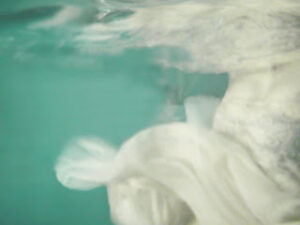
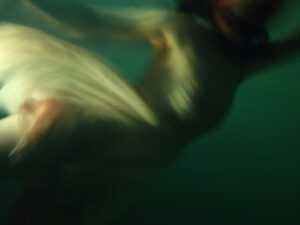
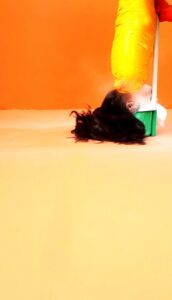
    A captivating figure in the contemporary art scene, Vatanajyankur is renowned for her thought-provoking, evocative and, to some, provocative performance pieces that explore the roles of women in today’s world, as well as societal structures and the human condition. Vatanajyankur’s oeuvre is characterised by the visceral embodiment of her own body in her live and video performances. Her videos often resemble works of painting, with colour composition and body movements reminiscent of brushstrokes on a canvas.

    Through her artistic expression, Vatanajyankur confronts audiences with the stark realities of physical labour, particularly the burdens placed upon women in traditional Thai society. With a meticulous blend of physical endurance, symbolism, and thematic depth, her work transcends mere aesthetic appeal — taking a very much in-your-face approach — questioning uncomfortable truths and the intricacies of human existence in a time of rapid AI and technology advancement.

    In the first chapter of our interview below, Vatanajyankur reflects on her experiences migrating to Australia at a young age, and later returning to Thailand as an artist. She discusses her struggles with cultural differences and how the influence of her late father led her towards artistic pursuits while studying at university in Melbourne. Through her celebrated series Tools, which challenges societal norms, Vatanajyankur shares insights into her creative process and personal growth, offering a glimpse into the complexities of identity in her art.


    The Year of the Hare


    AXEL WANG:
    First of all, thank you again, Kawita, for taking the time to do this interview with us. I wish we could have carried this out under slightly better circumstances, with us securing the open-call opportunity and having the chat face-to-face during your visit to Japan. I have to say it was all very disappointing.

    KAWITA VATANAJYANKUR:
    Let’s not worry about it!


    AW: Kawita, honestly speaking, this is perhaps one of the hardest interviews I’ve had to prepare for, simply because of the sheer amount of materials about you out there. I think I studied at least 20 interviews, articles, and videos about you before our chat today. Do you even remember how many interviews you’ve done throughout your career?

    KV: I don’t remember exactly, it’s quite a lot. (laughs) I began my career as an artist immediately after finishing university, around 2012. I probably do an interview almost every month these days.


    AW: That’s crazy. Do you generally enjoy doing interviews, though?

    KV: Well, I do. I believe interviews, in a way, help me clarify what I truly intend to convey through my work. Some questions prompt me to consider aspects of the work I’ve never thought of before. It allows me to dig deeper into the meaning behind my creations — interviews are both a challenge and a valuable practice, actually.

    It’s also an integral part of the job being an artist, you know, there’s the research, the execution, the post-production and all that. There’s the management side of it, and there’s also the PR side of it, and interviews simply constitute one part of that broader responsibility.


    AW: Do you Google yourself sometimes?

    KV: I do. (laughs) I like to stay informed, only occasionally though. (laughs)


    AW: I remember you said you moved to Australia at the age of 14, right?

    KV: Around 14 to 15.


    AW: Do you remember what it was like? Were you scared, nervous, or were you more excited?

    KV: I always wanted to study overseas, and I’ve always loved art and music since a young age. I guess the main difference between studying in Thailand and Australia was that, I came from a very strict school environment in Thailand, where expressing yourself and questioning the world around you was discouraged, which contradicted the essence of art, and I really wanted to get out of it. My dad supported my decision and took me to Australia, and eventually I enrolled at Westbourne Grammar School for its focus on art and music.

    I had trouble adjusting to the new environment at first, not because people weren’t friendly, but because I had been so accustomed to remaining silent and not expressing myself in the past. When I was in Thailand, I felt like I was conforming to and playing this role of a “good girl”, who’s obedient, quiet and agreeable, always deferring to teachers and adults.

    Hence, transitioning to a more participatory environment in Australia became extremely demanding, as I found it really difficult to voice my opinions and engage in class — I just couldn’t speak, you know. The school referred me to a counsellor, and it took about a year for me to sort of slowly break out of my shell. By the time I reached year 11, around 17 years old before university, I had become more expressive and outspoken, though not as much as I had hoped. Nevertheless, I was able to share my thoughts and raise my hands in class. I guess this marked the beginning of a new chapter in my life as a more confident teenager.
    AW: I guess that applies to a lot of Asians when they initially migrate to the West, for whatever reasons, though it looks like you overcame the barrier eventually.

    KV: Yes, I think I did. I think the environment plays a significant role — it shapes you, you know, it moulds you into who you are. If an environment sort of oppresses you, then you won’t be able to fully shine.


    AW: You studied painting in university right?

    KV: You did do the research! (laughs). In fact, when I was at the Royal Melbourne Institute of Technology (RMIT), I switched courses so many times. Initially, I was in fashion, and very soon I just felt that wasn’t really for me. I then moved to study textiles because I saw it as the more artistic side of fashion, which I genuinely enjoyed, even now, I still knit and crochet in my spare time.

    However, what truly left me feeling unfulfilled was the persistent questioning: “Is this all there is? Are we merely designing and producing things?” I just thought there had to be more to life than that. I was in a phase of searching for meanings, as you can imagine, so I applied for Fine Art since I was already into painting.

    I remember in my first Fine Art class, they posed the question: What defines beauty? If something conventionally deemed ugly — like bruises — holds significance, does it then become beautiful? It echoed the same question marks I had while designing and weaving in my textile course, as I constantly found myself questioning the true essence of beauty and what beauty entails. It was at that moment that I realised I was finally home.


    AW: And you also took on photography, right?

    KV: And right again! (laughs) In the Fine Art course at RMIT, we were encouraged to explore everything and ask questions — for instance, what does a painting mean? What does it symbolise? Is it confined to strokes on canvas? What are the theories of colours? How would we express ourselves artistically in a world devoid of traditional art tools like canvas and paintbrushes? I think the ethos influenced me profoundly.

    On top of photography, I also picked video art and installation art as alternatives, as well as gold and silversmithing, plus sonic art. And my prior experience in high school drama prepared me well for the performance classes too.


    AW: That’s all boxes ticked!

    KV: Indeed. I was encouraged to pursue whatever medium intrigued me. I guess you can sort of tell in my work nowadays, elements like colour compositions and brushstrokes are obviously present, motions are evident — the principles of painting are extended into performance and moving images. The Fine Art course opened so many doors for me.


    AW: After you graduated from university, you were already on the path of establishing yourself as an emerging young artist in Australia. You had gallery representation, exhibitions, and various projects underway. Why, then, did you feel the need to move back to Thailand to further your career as an artist?

    KV: Honest answer, I really had to come back to Bangkok and live with my mom after my dad passed away. My mom was left alone after sending my brother to study in England. I felt it was important for me to be there for her.

    Career-wise, although I could see the benefits of exhibiting in Australia, at the same time, I just thought it’s actually not so bad an idea to give it a go in Asia, where people can truly relate to my work through shared cultural background and experiences. It’s like you and me — since we both studied overseas, you instantly understand feelings of shyness, or the constant fear of being wrong or embarrassed while living in a foreign country. On the plus side, it also meant that I could conduct further research into my roots, so I just thought, why not?

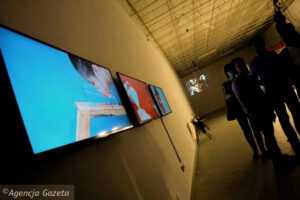
    Especially around that time, Thailand began to host more international art festivals, and there were more cultural exchanges with museums in different countries. Like in 2014, Bangkok Art and Culture collaborated with a museum in Poland, allowing me to exhibit my work in Europe for the very first time.

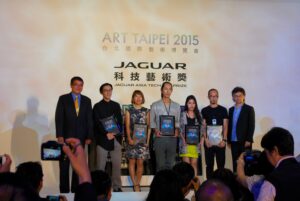
    Working with Thai institutions also led to opportunities such as being a finalist for the Jaguar Asia Tech Art Prize in Taiwan, I think that was in 2015. Believe it or not, I’m still friends with some of the finalists to this day, like Chung-Han Yao (姚仲涵) and Richi Owaki (大脇理智). Thailand provided the platform for these significant opportunities to unfold in many ways.
    AW: In an earlier interview, you said you felt like an alien in Thailand, returning from Australia after living there for 10 years. What were your struggles?

    KV: Not being obedient? (laughs) It mainly came down to the cultural differences between Australians and Thais. Even now, I still face disapproval from older generations.

    Professionally, I’m supposed to, and expected to, embody this avant-garde artist persona — pushing boundaries to the extreme, you know? (laughs) But privately, it’s a starkly contrasting world. What I do still gets frowned upon by many older people, and they would say stuff like, “What is an artist anyway?” “Why is she making work in such a provocative way?” I guess my work is still considered kind of inappropriate in the eyes of many conservative elders.

    You know, in Thailand, we don’t commonly use the word “debate”. Voicing opinions can often be perceived as arguing or attempting to win the conversation, particularly for women, which can be interpreted as overly assertive or aggressive. So sometimes it’s a little bit hard to have a conversation with them about what I do.


    AW: It seems like you still haven’t completely got used to the Thai way of things.

    KV: No, of course not — that’s why I make art! (laughs) I think it’s also a generational issue, it’s the culture that we were brought up in. Unlike older generations, where girls were expected to be obedient and conform to societal roles, always saying “yes”, my generation and the younger ones get to challenge these norms more openly nowadays.

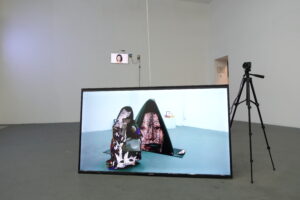
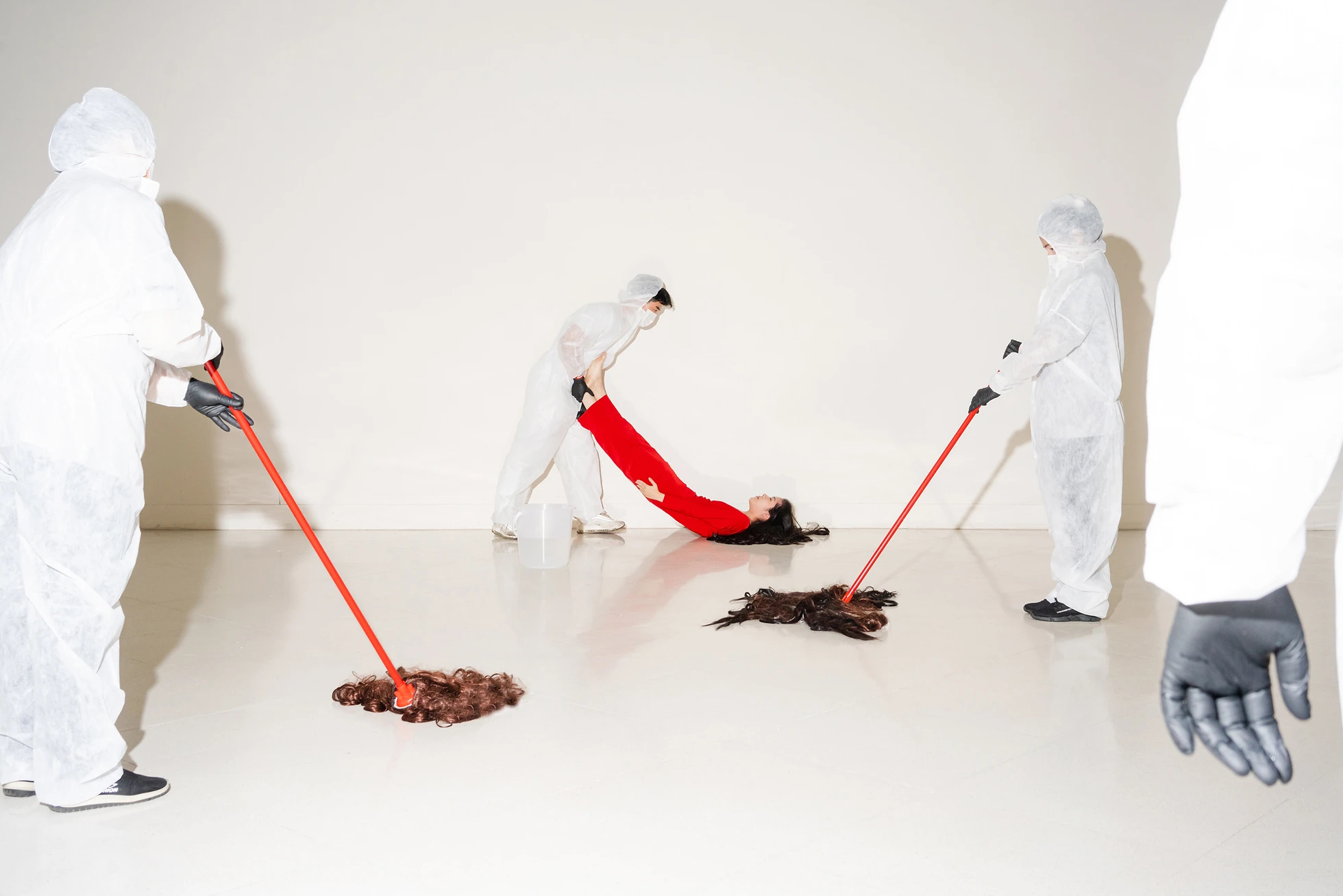
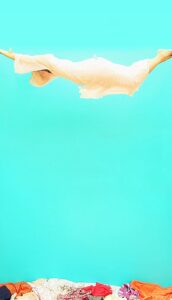
    This was what inspired me to create my first work series, Tools, exploring how women are perceived in many societies, how we are expected to fit into certain roles in order to be understood, accepted, and respected by society, and to earn this qualification of being “good enough”. In the series, I transformed myself into various domestic objects, symbolising the pressure to fit into predefined roles — the series really stemmed from feeling alienated within Thai culture and from not meeting societal standards and expectations.

    I believe it’s long been considered a taboo for women, historically and even today, to be outspoken or fearless. Instead of being viewed as brave, it’s often seen as inappropriate. In the series, I placed myself in uncomfortable situations where I had to completely transform myself into something that I was not. It was like a sarcastic commentary on society’s expectations, where conforming to certain roles is deemed necessary, even if it means sacrificing yourself.

     

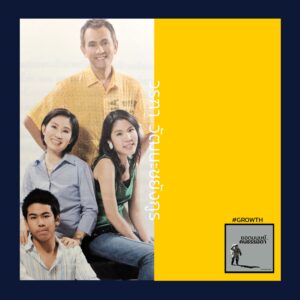
    AW: I’m going to change the subject a little bit. You brought up your father earlier, and you said he passed away right before you went to university. I can’t imagine what that must have been like, for someone at such a young age to go through that. Do you mind sharing some stories about you and your father?

    KV: My dad was a creative producer, and he was involved in the advertising and artistic scenes in Thailand back in the day. Although he held a PhD in education, he recognised that his inner strength lay in creativity. He was influenced by all these experimental films so, so much, that we would often stay up late to watch them together, and we would analyse characters development, their motivations and emotions, symbolism within the films, and so on.


    AW: Do you remember any names of the films?

    KV: Oh, there were so many of them — American, French, Japanese — we used to watch, sometimes two or three a day. I think that’s how my fascination with moving images began to take root. It wasn’t until I entered university that I realised it had always been a part of me. When lecturers at the university asked what medium best conveyed my narratives, I instinctively just answered moving images. Sound, motion, and symbolism are essential elements in my work.

    That’s the impact my dad had on me. Even now, I often find myself wondering, “What would he make of this project? How would he bring this idea to life?” He continues to be a strong and guiding presence in my thoughts.
    AW: Sounds like your dad was also like your mentor.

    KV: In many, many ways, actually. I remember one moment so vividly from my high school years when I was 16, my dad said to me, “Do you know what’s the worst thing you can be?” I was just really confused, like, I was 16. (laughs) And he continued, “How did you become so ordinary?”

    It was a time when I started to pay attention to my appearance — wearing makeup, dressing like other girls, I began to like what others liked, and followed trends, so to speak. It was kind of like I was seeking acceptance within a society where I so desperately wanted to belong, which wasn’t wrong, but thinking about it now, perhaps my dad’s words were a bit too harsh. (laughs)

    He said that conforming to societal norms would prevent me from discovering my true self. Obviously, being only 16 at the time, I just nodded along, thinking to myself, “Okay, whatever, dad!” (laughs) Yet, looking back, despite the harsh words, I realised that the conversation was probably one of the main reasons I decided to pursue art at university. His words stayed with me over the years, and slowly I gave myself permission to explore, ultimately becoming the person I am today.

    My university lecturer, Dr Phil Edwards, later told me similar things. He urged me to get out of myself, to shed these self-imposed constraints and to go beyond who I was. He said I was stagnating by clinging to a particular version of myself. Once again, I just didn’t know what to do, and I made the stupid decision to go and jump into the freezing ocean.
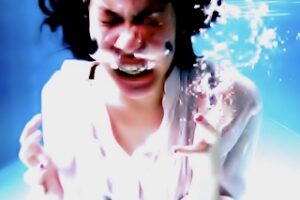
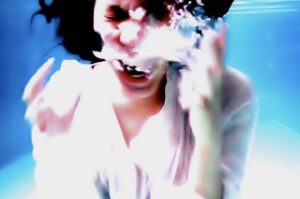
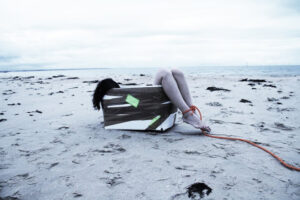
    As you might have guessed, unsurprisingly, nothing came out of that dreadful experience. However, I do believe there was a brief and fleeting moment, like a glimpse during that ordeal, where I became slightly more fearless. It’s as if I sought to break free from my usual constraints metaphorically by placing myself in a dangerously extreme situation. Perhaps I did go too far, but at the time, I craved nothing but a cleansing of my old self.

    Following that experience, I began creating artworks centred around the theme of “getting out of something” before my university graduation. Those works reflected both the emotions I was experiencing and my desire to break away from my former self, living in a foreign country where everything was unfamiliar. Navigating life was already tough enough for me back then, transcending that version of myself in a foreign land was even more daunting. Within those works, there was a palpable absence of fear, accompanied by a sensation of confronting and grappling with the challenges and hardship encountered without giving up. In the end, I suppose something did emerge from jumping into the ocean. (laughs)
     

    TO BE CONTINUED…

  • Interview: Shinka Yang — Chapter 2

    Interview: Shinka Yang — Chapter 2

    Somewhere in Time


    AXEL WANG:
    Hito Steyerl(黑特· 史德耶尔)在10年前的一次演讲中,把近几年艺术项目的增长,跟枪支武器的平民化做了一个对比。大概意思是,无论是Duchamp(赛尔·杜尚),Malevich(马列维奇)再到Youtube,都大幅地缩短了人们制作合格艺术品所需要的材料,时间及训练。当然她的演讲有很多面向,就针对刚刚提到的关于“数量”这一点,作为一名多媒体数码艺术家来说,随着越来越多艺术家以及艺术品,到艺术项目的诞生,你会有什么特别的感受吗?

    Around a decade ago, Hito Steyerl1 gave a speech comparing the democratisation of firearms to the rapid growth of art projects. Her point was that, from Duchamp to Malevich to YouTube, the time, materials, and training required to create decent or competent artwork have been significantly reduced. Her speech, of course, covered multiple facets but focusing specifically on this idea of “quantity”, as a multimedia digital artist, how do you feel about the increasing number of artists, artworks, and art projects today?


    SHINKA YANG:
    我个人觉得这是件挺好的事情。现在国内也有特别多的艺术项目,质量参差不齐。但随着数量的增长以及市场的淘汰机制,未来在质量上肯定也会有所提高,整个生态也会跟着进步。那么对于全民的美育工程,或者是整体艺术氛围,甚至普通市民及艺术市场的培养,肯定是件好事情,虽然这个回答听起来有点官方(笑)。

    Personally, I believe this is a positive development. Nowadays, many art projects are being carried out across China, though the quality naturally varies. However, as the number of projects increases and the market gradually filters things out, the overall quality of the projects is bound to improve eventually, and the entire ecosystem will progress. The growth will also contribute to art education for the masses, and the broader artistic atmosphere, and the cultivation of both public appreciation and the art market itself. I know this answer sounds a little official or bureaucratic (laughs), but I genuinely think it’s a good thing.


    AW:你在上海参与的这类艺术项目,是跟日本这边的类似吗?

    Are the projects you’ve been involved with in Shanghai similar to the ones in Japan?


    SY:有点类似。但国内基于国情,这类项目主要都还是政府发起,遵循国家领导人的政策(笑)。其中有些会选择和院校合作,有些和企业合作。也会借鉴日本的一些经验,但整体的风貌还是不太一样。

    Somewhat similar. However, given China’s unique social and political context, these projects are mainly government-initiated and adhere to the cultural policies of national leaders. (laughs) Some projects collaborate with academic institutions, while others partner with private enterprises. They also draw inspiration from certain Japanese models, but the overall approach and structure remain quite distinct, I would say.
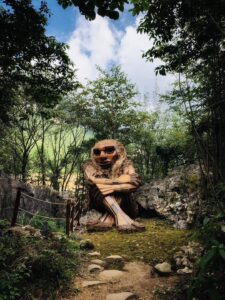
    Marit (2019), Thomas Dambo, ©Chongqing, Wulong Lanba Art Festival 2019


    AW:但是观众呢?比方说东京有个双年展或者是什么艺术项目,从名古屋过去是很简单的一件事情嘛。但如果你在上海郊外的农村做一个什么项目,在广州或是北京的人不太可能专程飞过去看吧?所以这些项目都是以吸引当地居民,强调当地性为主?

    But what about the audience? Say, when the Tokyo Biennale is on, it’s fairly easy for someone from Nagoya to visit. On the other hand, if there’s an art project in some remote village in a rural area on the outskirts of Shanghai, it’s almost impossible for people to fly over from Guangzhou or Beijing, just to see it, right? So are these projects mainly intended to attract local residents and emphasise locality?


    SY:中国和日本确实情况不太一样,中国的艺术爱好者本来也没有那么普遍。这几年许多城市都在办的地域艺术项目往往会和乡村美化、城市更新联系在一起,公共性、服务性会大于艺术性,而公共性必然与在地性有很紧密的联系。 国内也有一些由地产商孵化的文旅项目,和日本的艺术项目会比较相似,一般也都是和既有的旅游资源强绑定的,纯粹去看艺术的人相对还是少。 前几年重庆武隆的一个景区联合四川美术学院搞了一个大地艺术季,请了北川富朗做顾问,无论是从艺术家名单还是组织架构基本都是平移了越后妻有模式。从成果上看不能说做的不好,毕竟连Christian Boltanski(克里斯蒂安•波尔坦斯基)也都请来了,网络上的热度也很高,但是你会发现它真正辐射到的人群大部分还是本来就要去重庆旅游的人,以及行业相关的人。而当地性或许会是更加适合中国的一条路径。

    In many aspects, the situations in China and Japan are quite different, especially when it comes to the relative prevalence of art audiences. In recent years, many regional art projects in China have been closely tied to rural revitalisation and urban renewal initiatives. Public function and social service often take precedence over artistic expression itself, and naturally, that kind of public-oriented approach is deeply connected to locality.

    There are also some cultural tourism projects incubated by real estate developers that resemble Japanese-style art festivals more closely. These projects, are often anchored to established tourist destinations or attractions, so they tend to draw an overwhelmingly tourism-oriented audience rather than just art enthusiasts.

    A notable example would be the large-scale art festival held in Chongqing’s Wulong region a few years ago, organised in collaboration with the Sichuan Fine Arts Institute, with Fram Kitagawa2 serving as an advisor. The festival basically mirrored the artist lineup and organisational blueprint of Japan’s Echigo-Tsumari Art Field model. It was quite impressive actually, bringing on board even internationally acclaimed artists like Christian Boltanski, and there was a huge amount of online attention surrounding the project. But in reality, most of the people it reached were already visiting Chongqing as tourists, along with people working within the art industry itself. So perhaps prioritising locality is, ultimately, a more suitable path for China.

    Sound Scenes in Wulong (2019), Akinori Matsumoto ©Chongqing, Wulong Lanba Art Festival 2019


    AW:热海2023年年末的艺术祭,有遇到一些什么有趣,或者是难忘的事情吗?或者说跟你之前参与的艺术节相比,有带给你什么不一样的感受嘛?

    Did anything particularly memorable or interesting happen during the Atami art festival at the end of 2023? Compared to the festivals you’ve participated in previously, did it leave you with any different impressions or feelings?


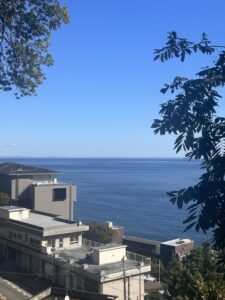
    SY:因为我国内工作的原因,我这次没有办法长时间待在热海,去拥有一段比较沉浸式的体验。但是为数不多的滞留时间真的都特别开心。因为热海有山也有海,艺术家们当时是住在山上的,而我展出的画廊在山下。布展走下山时沿途可以看到海,感觉很棒。

    Due to work commitments in Shanghai, I wasn’t able to stay in Atami for an extended period of time or fully immerse myself, so to speak. Despite the relatively short time I spent there, I had a great experience. Atami is very mountainous and sits right by the sea. At the time, most of the artists were staying higher up in the mountains, while the gallery exhibiting my work was located closer to the foot of the mountain. Every day, I would walk downhill while looking out at the ocean along the way, and it felt incredible.


    AW:整个热海艺术祭跟你之前参加的Alternative Kyoto会有点像嘛?

    Would you say the whole thing was a bit similar to Alternative Kyoto, which you also participated in previously?


    SY:类型是有点像的,但在热海我参与的是展览,在京都则是一个驻地项目。当时前前后后大概在京都和艺术家们合宿了两个月吧,期间我还在写博士毕业论文。Alternative Kyoto也是我第一次参与驻留项目,而当时驻留的村子太过祥和,我本身又是对科技、技术比较关注的艺术家,会让我有点些不知所措,不知道该如何与当地创造联结。而热海的展览中,我展出了一件已有的作品,因此没有太多的主题制作压力。

    The Atami project was more of an exhibition, whereas the Kyoto project was a residency programme. I spent roughly two months living together with the other artists in Kyoto during that time, while also working on my doctoral thesis.

    The Alternative Kyoto residency was actually my first experience of its kind, and the village where I stayed was so incredibly peaceful. As you know, I’m one of those artists who primarily focus on technology and digital culture, so I felt somewhat bewildered initially about how to establish a meaningful connection with the local environment. In contrast, for Atami, I was presenting an existing work, so there wasn’t as much pressure to create something specifically tied to the site or theme.

    Dear Ms Yang (2019) @TAMABI
    Dear Ms Yang (2019) @TAMABI


    AW:在你不久前参与的一档播客中,你提到了前ChatGPT跟后ChatGPT时代。因为索取知识的维度有了很大的区别,面对学生,你经常有一种“教不动”的感觉。等这群新时代的新人类都开始从业了之后,这也将是我个人必须面对的问题,可以说说你在教学中遇到的一些困难或者挣扎么?

    In a podcast you participated in not long ago, you described our current moment as divided into the pre-ChatGPT and post-ChatGPT eras. Because the way people acquire knowledge has changed so dramatically, you mentioned that you often feel as though students have become increasingly difficult to teach. Once this new generation fully enters the workforce, I imagine this is something people like me will also have to confront. Could you talk a little about the frustrations or struggles you’ve encountered while teaching?


    SY:我忘记原话是怎么说的,当时说的那个“教不动”的感觉,是现在的学生跟他讲任何的事情他都会用 ChatGPT来回答你。作为老师在教课的时候,你面对的有点像是一台机器。一名老师要带动的知识是很有限的,但是当学生运用非常多不管是ChatGPT或者是别的AI来回馈你的时候,你就是在跟整个人类的知识库做斗争,教学上是有一定的无力感。但是这个无力感确实也是有界限的,因为机器的知识是有边界的,所以教学上或者是交流上,也是可以找到方法突破。

    I can’t recall my exact wording back then, but when I talked about feeling “unable to teach,” what I meant was that students nowadays often resort to ChatGPT for almost every query. As a teacher, it sometimes feels like you’re communicating with a machine.

    The amount of knowledge a teacher can provide is fundamentally limited, but when students rely extensively on ChatGPT or other AI systems to respond, it starts to feel as though you’re competing against the entirety of humanity’s knowledge database. That inevitably creates a certain sense of helplessness within education. At the same time though, that helplessness also has its limits, because machines themselves still have boundaries. Their knowledge is not infinite. So within teaching and communication, there are still ways to break through those limitations.


    AW:如果用歌剧打个比方,当然没有任何对歌剧不尊重的意思,但以前它对人们的意义可能更加重大,现在可能对很多人来说只是一场仪式。这可能也是我个人一直以来的担忧吧,对下一代的人来说,我们现在所做的事情会不会也变得像歌剧一样。

    If I were to compare it to opera, without any disrespect to the art form, of course, but opera probably meant more to people back in the day, than it does now. Today, it’s more like a ritual or ceremony to many. To be honest, it concerns me sometimes that the things we are doing right now, might eventually become, a bit obsolete, like opera, to future generations.


    SY:我觉得人都有这样一个阶段。像是上大学的时候,我们可能都会有一种,对于相对来说有点不那么时髦,有些陈旧,通俗点可能就是有些土,面对这么一类东西时,会产生一种比较天然的鄙视或者是不满足感。我记得我年轻一些的时候看国内很多很厉害的中国学院派老艺术家,就觉得他们画的都是什么东西;包括现在回过头去看,80,90年代,做媒体艺术的那些人,当时也不清楚他们到底在做些什么。每个人都会经历这么一个阶段吧。

    拿我自己做比方的话,当我现在再回头去看那些,我之前可能有一些鄙夷的东西时,我开始觉得随着年纪的增长以及更多知识的学习,逐渐能够看懂它里面的一些根基和脉络。那么这些根基和脉络,它可能不是那么容易让一个年轻人一下子就迅速掌握的。甚至对某一部分人来说,他对掌握这个根基脉络,确实就是没有兴趣。但是对我来说,当我开始渐渐地看明白 — 乍看很简单的线条 — 它背后的脉络或者是社会历史这样的背景时,我才感受到那些比较传统或者是老旧的东西,它的魅力和价值。所以我一直也不太会担心是否所有观众都会接受我。

    I think we all go through phases, like during university years, there’s often this perception that certain things in the past are a bit, well, passé — like you naturally dismiss them as unfashionable or outdated, or just “uncool”. I remember when I was younger, I would look at many highly renowned Chinese academic artists, and I felt somewhat perplexed by their work — I just didn’t understand what the heck they were doing. While reflecting on media artists of the 1980s and 1990s, I struggled to comprehend their ideas back then, too. Once again, it just seems to be a phase many of us experience.

    Using myself as an example, when I revisit things I once looked down upon, I now realise that as you grow older and accumulate more knowledge, you gradually begin to understand the deeper foundations and historical threads behind them. Those nuances aren’t things a young person can immediately grasp overnight. And for some people, perhaps there’s simply no interest in understanding them at all.

    But for me, once I began to slowly recognise the social and historical contexts hidden behind what initially appeared to be simple lines or traditional forms, I started to appreciate their charm and value. That’s probably why I’ve never been overly worried about whether everyone in the audience will fully accept or understand my work.

    How Remote Should I Go (2019)


    AW:你在上海出生长大,我相信你小时候的生长环境跟现在的上海应该是截然不同。我之前采访一位澳门艺术家,他说小时候在澳门,他清晰记得墙上有一层白白的像石灰一样的粉,跟日本或西方的墙都很不一 样。我自己也很有共鸣,因为现在广州所有的墙似乎都不是这样了。你的作品探讨更多的是受科技影响的当下,尤其你也在海外留学过,离开过家,关于这一方面:乡愁、怀旧、看过去的题材,是你会感兴趣的么?

    You were born and raised in Shanghai, and I imagine the environment you grew up in must have been vastly different from the Shanghai we see today. I once interviewed an artist from Macau who vividly remembered a kind of pale, chalky lime powder covering the walls during his childhood, something very different from the walls you’d typically see in Japan or the West. I could personally, and strongly relate to that myself, because in Guangzhou nowadays, it seems the walls no longer bear such characteristics.

    Your artwork tends to focus more on the impact of technology in contemporary society, considering your experience studying in Japan and leaving home, in this regard, I wonder if themes like nostalgia, homesickness, or revisiting the past are something that interests you?


    SY:这是一个很有趣的话题,因为我对这样的主题很感兴趣,同时也很容易被这种情感打动。我也总是在想与其他人相比,我似乎欠缺了这种(思乡的)感受。但之前跟一个上海籍的策展人聊天,跟我差不多年纪,在日本生活十几年,她开玩笑说我们这代上海人是有原罪的,我们都是没有过去的(笑)。因为我们出生的前后几年,可能是上海市区经历了最翻天覆地的变化的几年,等有稳定的记忆以来其实已经是现在这样:一座净化版的城市。哪怕对市中心那些还未变成大型商圈的破旧小楼还有些记忆,但在形成一定的情感链接之前就已经被抹掉了。所有那些被抹去的东西,可能就是我们上一代人口中所谓的乡愁吧。

    上海永远像一个异乡,因为永远会有新的东西涌出来,而这些东西的服务对象并不是原本居住在这里的人(笑)。这可能是很多大城市都存在的状态。对我来说,乡愁可能是台式电脑,拨号上网,诺基亚手机和油墩子(一种以前随处可见的上海路边摊小吃),甚至2018年左右还略显诡异的人工智能神经网络生成的图像,也算得上一种乡愁了。所以你说我的作品探讨更多的是科技影响的当下,我觉得追根到底的话,是因为我只有当下,中国的城市化建设确实在过去几十年有着惊人的速度,也制造出很多没有过去的小孩(笑)。

    This is actually a compelling topic for me, because I’m deeply intrigued by these themes and easily moved by such emotions. I often find myself pondering that, compared to others, I inherently lack the sense of nostalgia and homesickness in me.

    It’s interesting though — during a recent conversation with a Shanghai-born curator around my age who has lived in Japan for over a decade, she jokingly said that our generation of Shanghainese carries a kind of original sin — we’re people without a past (laughs) The reason is that the years surrounding our childhoods happened to coincide with some of the most tumultuous transformations Shanghai had ever undergone. By the time we formed our memories, the cityscape had already morphed into what we know of today — a sanitised version of its former self.
    While we might still retain the faintest memories of some old, run-down residential buildings in the city, before they were converted to bustling commercial hubs, those memories would have been erased before any real emotional connection could be established. Perhaps all those erased pieces are exactly what the previous generation refers to as nostalgia.

    Shanghai perpetually feels like a foreign land, because there’s constantly something new emerging, and those developments aren’t necessarily catered to the original inhabitants. (laughs) I guess this is not completely out of the ordinary for many major cities in the world.
    For me, nostalgia could manifest in memories of desktop computers, dial-up internet, Nokia phones, and yóu dūnzi (a ubiquitous street snack in old Shanghai). Even the slightly eerie images generated by AI neural networks around 2018 evoke a strange sense of nostalgia.

    So, when you mentioned that my work tends to explore the contemporary impact of technology. I believe, at its core, my frame of reference is solely grounded in the present — that’s pretty much all I have. China’s rapid urbanisation over the past few decades has moved at an astonishing speed, creating an entire generation of children without a past. (laughs)
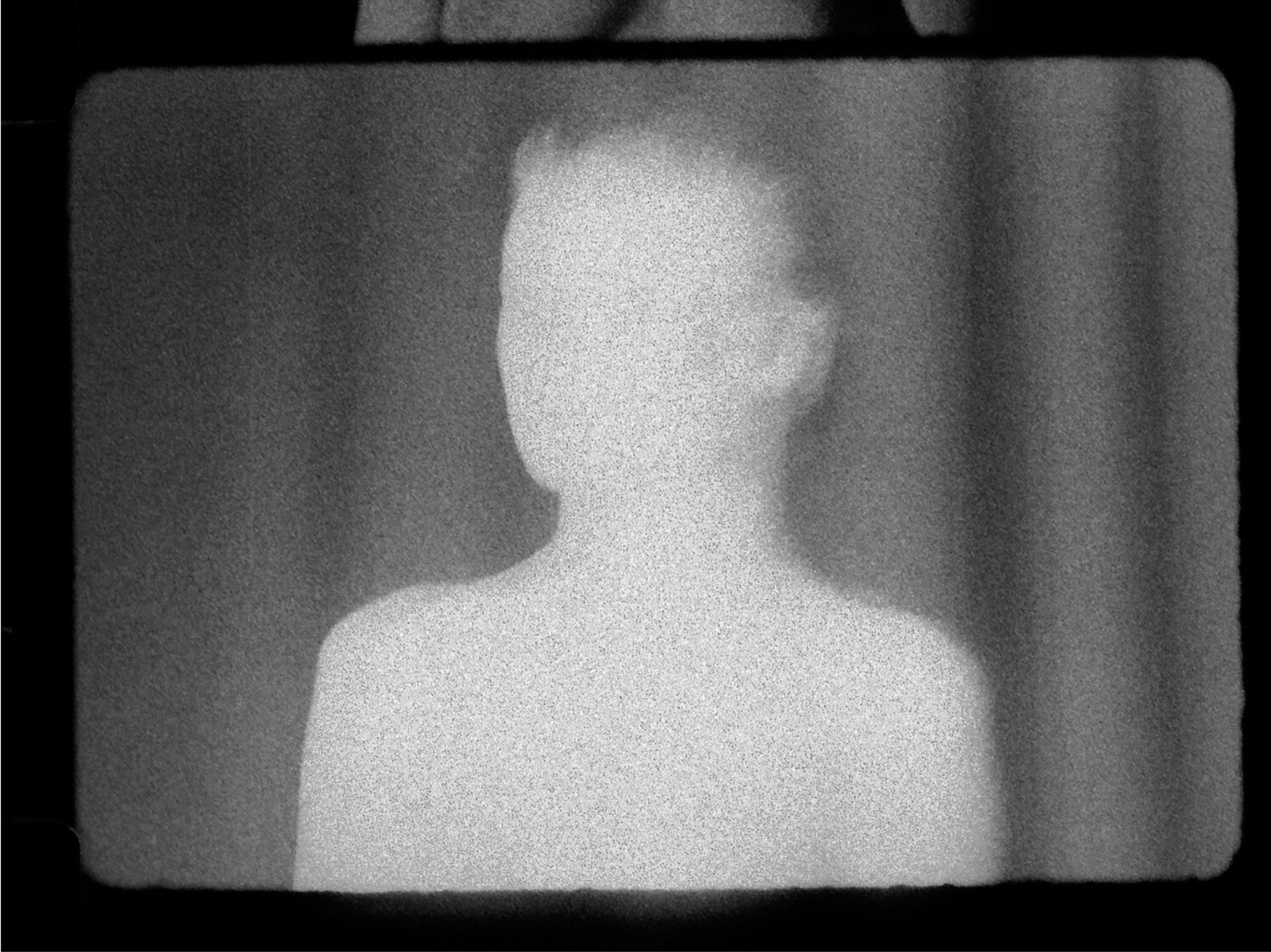
    Only Black Sees Me (2018) @Oraganhaus Art Space
    Only Black Sees Me (2018) @Oraganhaus Art Space


    AW:畅想一下人类的未来吧。当下人们谈起全自动机器人或是人工智能的时候,有一方的言论似乎是在描绘一个很黑暗的未来;反之有一方认为人类应该更多地考虑如何跟机器或AI进行更好的合作而不是担心害怕。作为一个数字媒体艺术从业者,你的看法是什么呢?

    The mainstream has pushed this narrative of a future with automated robots and AI, and it’s super gloomy, where eventually we are all gonna be killed by machines. On the other hand, some argue that humans should focus more on learning how to collaborate with machines and AI rather than fearing them. As someone working in digital media art, how do you personally see it?


    SY:我现在的看法是,作为我这种门类的艺术家,我是非常欢迎、好奇以及对新技术永远都很激动的这么一类人。在激动的同时,也会有一些批判性的思考。我的观点是在未来,机器不会取代人类,但是人会逐渐变成机器人。

    另外,我个人一直觉得需要警惕的是,现在的生成式AI正在逐渐拥有制造非常“逼真”经验的能力,当技术足够成熟,这些AI生成的经验总有一天会冲刷掉人类真实生产的经验。所以人还是需要努力保卫生产现实的能力。我也一直在建立我自己的个人数据集(笑)。

    From my current standpoint, as an artist of my particular stripe, I’m inherently open-minded, curious, and perpetually excited about new emerging technologies. With that being said, there has to be critical reflection as well.

    Looking ahead, my current view is that machines won’t supplant humans, rather, humans themselves will progressively adopt more machine-like qualities.

    Another thing I’ve become increasingly aware of is that generative AI is slowly gaining the ability to fabricate extremely convincing “realistic” experiences. Once the technology becomes sufficiently advanced, there’s a possibility that these AI-generated experiences could eventually overwrite or wash away experiences genuinely produced by humans themselves.

    That’s why I think people still need to actively safeguard humanity’s ability to produce reality, or the so-called authentic experiences. On a personal front, I’ve also been actively curating my own private dataset. (laughs)


    AW:以科学进步的步伐来看,人类战胜死亡,无论是通过何种手段,意识上传也好,器官移植也好,感觉只是时间问题。从你之前的访问来看,与永生相比,你似乎对“消失”和“被删除”比较感兴趣。

    It’s probably just a matter of time before humans overcome mortality — mind uploading, organ transplantation, or any other means. Judging from your previous interviews, you seem more interested in the ideas of “disappearing” and “being deleted”, rather than seeking eternity.


    SY:我觉得永生已经没什么好谈的了,是上个时代的议题了。就像你说的,永生几乎已经会是一个必然的未来。对于数字时代,消失和被删除反而是比较困难的事情。因为你的数字痕迹永远会被储存在某一个地方。

    Immortality already sounds like a topic of the past. As you just mentioned, it’s almost inevitable, and bound to occur at some point. In this digital age, it’s probably more difficult for anyone to just “disappear” or be erased, given that our digital footprint is constantly preserved somewhere indefinitely and easily traceable.

    Soft Revolution (2019)


    AW:回到访问的最初,接下来2,3年,当你在上海或者国内得到了充足的养分后,你说会想换一个地方生活或者是工作。

    Returning to something we mentioned at the very beginning, you said that after spending another two or three years in Shanghai or China, ideally you’d like to move somewhere else to live or to work.


    SY:是的。这是一个比较理想的状态。

    Yes, that would be ideal.


    AW:对现阶段的你来说,如果换一个地方生活,有没有具体考虑过什么地方呢?

    At the current phase of your life, have you considered anywhere in particular?


    SY:如果真的离开上海可能会考虑东欧国家吧。疫情之前曾经去过一次乌克兰,是至今回想都很想继续久居的地方(希望世界和平)。波兰、塞尔维亚这些我都很想去。特别喜欢破破的地方,感觉很安心(笑)。

    If I really were to leave Shanghai, I might consider somewhere in Eastern Europe. I visited Ukraine once before the pandemic, and even now it remains a place where I could genuinely imagine living long-term (hopefully the world can return to peace). Poland and Serbia are also places I’d love to spend time in. I especially like places that feel a little worn-down or imperfect. They somehow make me feel very at ease. (laughs)


    AW:最后,可以透露一下接下来有什么想尝试的作品方向,议题啥的么?

    Final question Shinka, are there any new directions, themes, or ideas you’d like to explore in your future work?


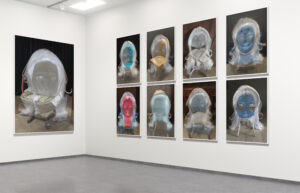
    SY:之后我可能会想钻研更多的计算机技术,补充点专业技能。因为我的创作方法有很明显的技术驱动性。 我大部分的灵感都来自于接触到某个新技术时,发现这个技术的逻辑和一些现实议题正好可以作联结。比如我去年在学ControlNet的时候,正好和一个医美机构合作,就延伸出了一个作品,用ControlNet控制图像,照一个女性人脸的结构去生成许多生活场景。图像生成中的“控制”模块,和日常生活中女性的生存场景进行了一个有些恶趣味的结合。

    Moving forward, I would very much like to dive deeper into computer technology just to become better at what I do, as my creative process is dominantly technology-driven. Much of my inspiration stems from encountering new technologies and recognising how their internal logic can connect to certain real-world issues.

    For instance, last year, while studying ControlNet3, I happened to collaborate with a medical aesthetics institution, which eventually developed into a project where I used ControlNet to manipulate images based on the facial structures of women, generating a series of everyday life scenarios.

    The idea of “control” within image generation became intertwined with the lived realities and social conditions surrounding women, creating a somewhat darkly bizarre juxtaposition.

    Face to Face-ControlNet


    AW:你刚提到艺术家驻村,我突然想起前段时间跟北条知子碰了个面,她的状态好像跟你有点相反。她在毕业后就一直在世界各国驻村,感觉是跑完了一圈,现在想安定下来。但听起来你现在的状态是相对稳定,然后你会想往外到处跑。

    A quick anecdote before you go Shinka, you mentioned artist residency just now, and it reminded me of a recent conversation I had with Tomoko Hojo. Her situation actually seemed somewhat opposite to yours. After graduating, she spent years participating in residencies around the world, and now she’s considering settling down. But listening to you now, it feels like your current life is relatively stable, and yet you still have this desire to keep moving “outward” and exploring.


    SY:嗯,我觉得也不是单纯想往外跑,我是需要从稳定状态中获得能量的人,也需要从“向外到处跑”的过程中让自己在稳定状态中坚持下去的人(笑)。

    Well, I wouldn’t say it’s simply about wanting to escape or constantly move around. I’m the kind of person who needs stability in order to vitalise, but at the same time, I also need moments of “running outward” in order to sustain that stability. (laughs)
  • Interview: Shinka Yang — Chapter 1

    Interview: Shinka Yang — Chapter 1

    We conducted an interview with Shinka Qinhua Yang, a Shanghai-based multimedia digital artist who holds a PhD from Tama Art University in Tokyo.

    Using various digital methods, Shinka creates works that probe the fictitiousness of reality, focusing on the calculation, generation, and arrangement of immense artificial constructs within the context of consumerism. In recent years, her practice has gravitated towards questions surrounding image production, labour consumption, and women’s identity within the intertwined systems of artificial intelligence and neoliberal economics.

    Since the third edition of Alternative Kyoto in 2021, I have been keeping an eye on what Shinka does. Bizarre, intriguingly strange, so utterly, “now”, for lack of a better word, that it wonderfully captures the zeitgeist of our era. Half of the time, digital works these days just, don’t, seem to work, at least to my bare eyes — possibly due to a lack of reference points, whatever — they can arrive over-rendered, like visually over-caffeinated BS on steroids, even though dressed up with some half-baked concept, or a narrative engineered to compensate for the fact that the work itself says almost fuck all.

    They are mostly banal, so blasé, so prosaic, desperate to signal intelligence, urgency, futurity, anything at all, and yet, you stand in front of them, you smell no romance, no danger, no mystery, just the faint exhaustion of having looked at something pretentiously “relevant”. I can continue to sit here and swing my bat against the new wave of prompt or generative-image or screensaver spectacle and Silicon Valley artist-wannabe tech nerds, but perhaps next time.

    Although Shinka’s work embodies that very sense of nowness with a post-internet Y2K-infected aesthetic, and undeniably aligns with the broader East Asian digital and media art landscape, culturally and emotionally, it never feels globally generic. The technical aspects of her work feel less like a showcase of prowess — they are more like symptoms, of a wider social pathology embedded within normalised culture and conditions of contemporary life. She approaches these symptoms by diagnosing and dissecting the structures that produce these symptoms rather than merely exposing them. There are no hyper-stimulating visuals or overt techno-dystopian critiques competing for your attention. Instead, they are only fragmented archives and speculative memories, radiating a vacant and muted, still atmosphere, almost like that uncanny feeling of crouching alone and browsing the web past midnight. She invites onlookers to walk across the emotional residue left behind by these conditions, tapping directly into a contemporary anxiety that many digital artists only circle awkwardly around from a distance. And that fascinates me.

    In early 2023, following an open call from a Tokyo museum, I took the plunge and reached out to Shinka about a potential collaboration. The project itself never materialised (fair play by the museum), but over several online conversations, I would say something meaningful was established, if nothing else. There was one particular moment during our exchange that I found, to say it was interesting, would be a bit of an understatement. When I asked her about the essence of her art, she answered: “I would like to become a robot.”

    Good ol’ Shinka.

    To say that it was one of the strangest responses to one of the most templated art interview questions would be another understatement, though, in retrospect, not an entirely baffling one.

    Tracing back to the beginning of our interview, Shinka had mentioned feeling a profound void within herself, having grown up in Shanghai during the turbulence of the 1990s amid a period of rapid, almost violent, and near-total urban transformation. As vast sections of Shanghai disappeared, parts of her seemed to disappear with them. Beyond the repetitive routines and confines of home and school, her recollections of much of the city and of her own past remain strangely elusive, like a hard drive being endlessly reformatted and overwritten, leaving her with a fragmented construction of personal history. Even though nostalgia strikes a chord, it is merely a cluster of hollow static, never a poignant melody. Unmoored from both place and memory, this insularity firmly anchored her practice in the present, urging her to confront and focus on the relentless condition of “now”. “I would like to become a robot”, it had probably not really been about technology after all. If memory and experience had become unreliable ways of understanding the world around her, I guess the machine’s way of constructing reality offered another.

    Yet after finishing her studies in Japan and returning to Shanghai, Shinka told me that she has grown increasingly aware of and sensitive to, and touched by, the emotion of nostalgia, alongside what she described, with a hint of lightheartedness, as a more genuine “humanistic concern”.

    Perhaps it was the reacquaintance with her homeland after being away for so long, or perhaps it was the sheer advancement of human technology and the acceleration and explosion of “the now” in contemporary life — you know the list of culprits — that, paradoxically, rebooted a kindling and awakening in her, forcing a renewed confrontation with her own memories and cultural background.

    This trajectory is somewhat reminiscent of fantasy or sci-fi films like Air Doll or Poor Things, where a robot-like being is initially introduced into the world, devoid of memories, emotionally vacant, stripped of sensations. Yet, as she navigates life, observing the world through her pair of mechanical silver eyes, she experiences and suffers, she grows and learns. Over time, she begins to evolve, developing emotions, sympathy, and empathy for others and her surroundings — much like an actual human being. The difference, of course, in this case, is that Shinka is far, far removed from being an android.

    “The past is never dead. It’s not even past,” William Faulkner once wrote. The past never politely leaves itself in the past, it ruthlessly seeps and continues to exert itself upon the present, silently spoiling the future in ways we seldom recognise. Is it haunting her practice? I’m not sure. Even though Shinka appears relentlessly propelled towards the future, towards crazier technology and mind-boggling artificiality, there ironically remains an unresolved absence trailing behind it, and this lingering absence of her past silently permeates like an emotional undercurrent. Beneath all the digital surfaces and conceptual architecture of her work, there’s something unequivocally human pushing through, and I, for one, will be curious to see how the present — which will one day eventually become the past — and all those accumulated traces, manifest within her in the years to come.


    The Girl with the Silver Eye


    Face to Face-ControlNet


    AXEL WANG:
    非常感谢喘儿能抽出时间进行这次谈话。原本是想趁着你去年秋天来京都的时候,或是年末来热海准备项目时可以跟你进行面谈,最终没有去成,还是得Zoom。另外,我必须承认在你的这个艺术门类跟科技领域,很多东西我都不太了解。像我读你的论文或访谈时,很多词汇都非常陌生,每个字都能明白,但当拼在一起的时候我就得想一想,你究竟说的是什么。

    First of all, Shinka, thank you for taking the time to do this interview with us. I had hoped to have a face-to-face chat when you were in Kyoto last autumn, or while you were preparing for the Atami project at the end of last year. Unfortunately, neither could work out, so I suppose Zoom it is. Also, I have to admit that, when it comes to your field of art and the world of tech, like when I was reading your past interviews and essays, many of the terminologies were just way over my head! I just had to pause and try to figure out exactly what you were trying to say.


    SHINKA YANG:
    这可能是我的问题(笑)。

    That’s probably down to me. (laughs)


    AW:今年有什么工作安排吗?

    Any work planned for this year?


    SY: 去年下半年的展览频次有点太高了,导致整个人的身体和创作状态都不是太好。所以今年可能想花时间好好沉淀一下,以及不得不开始去完成一些拖延很久的学术工作。今年年底可能会出版一本书,关于人工智能与当代艺术实践,这会占据我今年主要的时间。除此之外还有一些零星的展览计划,但不会安排太多。

    There were perhaps a few too many exhibitions during the second half of last year, and it felt rather draining — both physically and creatively. So this year, I’m probably going to take some time to just sit down and digest everything properly, and to work on some academic projects that I’ve put off for some time. I’m hoping to publish a book by the end of the year, mainly focused on AI and contemporary art practices, which will probably take up most of my time. Apart from that, there are some exhibition plans here and there, but nothing too excessive.


    AW:你是正儿八经上海出生长大的吗?

    Were you born and raised in Shanghai?


    SY:对。

    Yes.

    AW:对于小时候的生长环境,有什么细节是特别有印象的吗?

    Thinking back to your childhood environment, are there any specific details that left a strong impression?


    SY:可能更多还是家庭成员之间内部的细节,爸爸妈妈工作比较忙,大部分的时间会把我一个人放在家里,所以对于外界环境会有一种类似真空的感觉。

    It’s probably more the dynamics within the family, rather than anything external. With my parents preoccupied with work, I spent a lot of time alone at home. This solitude apparently fostered a sort of, void-like feeling within me toward the world outside.


    AW:你在上海大学电影学院毕业,当时的主修是编导?

    You graduated from the Shanghai Film Academy, and majored in screenwriting and directing, right?


    SY:全名是广播电视编导。我们的专业内容可能更偏向电影研究和微电影的制作。

    The course, titled “Radio and Television Scriptwriting and Directing”, focused more on film studies and research, and short film production.


    AW:在我的成长过程中,包括我身边的人,好像没听过谁考虑选择艺术、设计或电影相关的专业。通常都是说要当科学家嘛,要不就是去银行,或当律师、医生之类的。直到我上大学的时候,得知一个初中同学去了温哥华一所叫Emily Carr的学校念设计相关的本科,突然才觉得说:“喔,原来这也是一个选项。” 不知道当时你选择了编导这个大学专业,是有受到什么家人影响吗?

    In my upbringing, neither I nor the people around me ever really considered studying art, design, or film. The typical paths were becoming scientists, working at banks, or pursuing careers as lawyers, doctors or you-know-what. It wasn’t until I started university that I heard a former middle school classmate had attended Emily Carr, a design school in Vancouver, and then I thought, “Oh, I didn’t know that was an option.” When you chose film as your major, were you influenced by your family in any way?


    SY:这其实是个挺随机又挺命运安排的人生走向。我的父母其实就是刚刚你说的,科学家,他们本身对艺术并没有任何的概念或兴趣。高中的时候上海很流行Lomo相机,我就开始对摄影产生了兴趣,但也没有说想要往艺术方面发展,填报志愿时选的都是文学或者新闻类的专业。

    结果最后想去的学校没考上,去了上海大学,而巧合的是上海大学第一年是不分专业的,第二年选专业时文科生也可以选编导专业,我就想着尝试一下。在之后的学习过程中,就发现自己确实还是喜欢影像创作,做的也还不错。但同时又觉得非常不满足,包括大环境以及周遭的同学,觉的他们拍的都好差(笑)。所以那时候就决定了以后一定去一所专门学艺术的学校继续深造。

    It’s actually a curious concoction of randomness and fate. My parents fit the mould of what you just described — scientists — with little interest in, or understanding of art. I remember getting into photography during high school, around the time Lomo cameras were very trendy in Shanghai. But even then, it was more of a hobby, the idea of pursuing art or becoming a professional artist never quite crossed my mind.

    By coincidence, I eventually found myself studying film at Shanghai University — a kind of “why not” decision. But then, the more I worked with moving images and visual storytelling, the more I realised I genuinely enjoyed it, and that I was actually quite good at it. Yet alongside this newfound enthusiasm came an equally strong sense of dissatisfaction. The general academic environment, as well as much of the work produced by my peers, left a lot to be desired. To be honest, I just thought most of it was pretty terrible. (laughs) That was probably when I first began seriously considering the prospect of pursuing further education at a specialised art school.


    AW:来日本是有受到像Gutai这类艺术运动的影响吗?

    Would you say that your later decision to study in Japan was influenced by art movements like Gutai1?


    SY:像这一类的系统知识我可能是到日本之后才了解到的。我去日本前其实还没有接触过当代艺术的教育,更多还是影像和电影。

    我大学毕业论文的研究方向是日本战后前卫艺术,主要是寺山修司,这大概是我人生第一个转折点,在此之前我对欧美的文学电影了解的更多一点,甚至连日本动漫动画片我都很少看。因为寺山修司我才对日本文化第一次产生兴趣。

    第二个转折点是我大四下半年曾在上海的OCAT短暂实习过。OCAT是一家比较专注于影像艺术的当代艺术中心,我在那里了解到比较多的影像艺术作品,其中也有很多日本的影像艺术家,包括久保田成子等。这份实习之后,才算是开始坚定地追求当代艺术方向的学习。

    It wasn’t until I arrived in Japan that I formally began to study contemporary art and its history. Before that, my background was much more rooted in film and visual imagery.

    My undergraduate thesis revolved around post-war Japanese avant-garde art — namely artists like Shuji Terayama2 — and this marked a significant turning point in my life. Before the thesis, my studies leaned more towards European and American literature and cinema — I barely watched any Japanese anime or manga, even. It was through the works of Terayama that I first developed an interest in Japanese culture.

    The second pivotal moment came during the latter half of my final year in university, when I briefly interned at OCAT in Shanghai. OCAT is a contemporary art institution that focuses largely on media art, where I had the opportunity to explore and become acquainted with the works of many media artists, including Japanese artists like Shigeko Kubota3. It was after this internship that I became determined to pursue studies in the direction of contemporary art.


    AW:2022年在多摩博士毕业后有什么特别的原因让你决定离开日本,回到上海的嘛?

    Any reasons that prompted your return to Shanghai after earning a doctorate from Tama University in Tokyo?


    SY:我自己本身可能也不是特别满足于单纯做一个艺术家,会希望我的身份更多元一些 — 生活以及工作,能够有很多段落组成。对现阶段的我,可能在国内能实现的事情会多一些。所以想先回来多一些体验,转换一 下生活,之后再考虑还要不要去其他地方。

    On a personal level, I’ve come to realise that simply identifying as an artist doesn’t feel entirely fulfilling. I’m increasingly drawn to a more, multifaceted way of living and working, one that extends further art alone. At this stage of my life, it appears that there are more opportunities and possibilities for me to explore within my home country. So I wanted to return to Shanghai first, to experience more and to live a slightly different lifestyle for a while, before considering what might come next elsewhere.


    AW:在日本生活了8年后回到上海,若让你做一个横向对比的话,两个地方有给你带来怎样的差异感吗?

    After spending 8 years in Japan and going back to Shanghai, can you share how these two places compare?


    SY:我是一个相当封闭,并自我的人。所以在哪里生活,说老实话对当下的自己来说其实都差不多。不过我最近翻照片的时候发现一个很有意思的差距,就是在上海拍的照片,物和人会很多,但在日本拍的风景和街景比较多。

    我觉得上海对我来说就是一处全是由细节组成的地方,我也是所有细节中的某一个细节。日本则更像是一个环境,一个容器的外壳,我可以选择进入和不进入,这种可选择的疏离感还挺舒服的。

    I’m actually a very self-secluded and self-contained person. If I’m completely honest, at the moment, I feel fairly indifferent about where I live. With that being said, I noticed something interesting lately while I was digging through some old photographs — those taken in Shanghai were mostly objects and portraits of people, whereas I photographed more landscapes and street scenes in Japan.

    I perceive Shanghai as a city composed of countless details, where I, too, exist as one small part among many. Japan, by contrast, feels more like a complete environment in itself — almost like the shell of a container that I can choose to enter, or not. I found that sense of optional alienation strangely comforting.


    AW:回到工作方面,你之前在其他访问中也提到在日本时的“个人化”跟“疏离感”,整个创作环境相对来说舒服一点。不知道你现在回到国内之后,整个大环境有没有对你的创作产生一些直接,或正面或负面的影响?

    Coming back to your work, you previously talked about the overall creative environment being more relaxed and feeling more at ease in Japan, describing your times using words like “personalised” and “alienated”. Now that you’re back home, has the whole vibe there had any direct impact on your work, either in a positive way or a not-so-positive way?


    SY:影响肯定是有的。这里就只说一些正面的吧(笑)。我自己的一个感觉是我的作品变得比以前更“通俗”了,会想让大家都看得懂。以前感觉更多重视在自我表达和对于一些技术议题的实验性探索,不太在乎观众的感受。这可能和两个国家观众的包容度有关系。

    There’s definitely been an impact, though, for now, let’s keep on the positive side. (laughs) From my perspective, I’ve noticed a distinctive shift in my practice. My work has become more “accessible” than before, in the sense that it’s speaks more readily to a broader audience, I want people to actually understand it.
    When I was in Japan, I was much more invested in self-expression and technical experimentation, with little concern for audience perception. I think this may partly have to do with differences in audience tolerance and expectations, and cultural attitudes toward art in the two countries.


    AW:在英文的表达里有个说法叫”elevator sentence”,大概指的是在与别人共乘电梯这一段很短的时间内,提出描述一个简明扼要的句子或表达。当被问到你的艺术作品是关于什么的时候,你会如何用一句elevator sentence表达呢?

    In English, there’s a term called an “elevator sentence”. It’s about delivering a brief and concise statement about the theme and idea of your work during a short elevator ride. If someone were to ask about the essence of your art, how would you encapsulate it in an elevator sentence?


    SY:我想成为机器人(笑),算吗?有一回我跟一位朋友在聊天时,他提到说我所有的作品都是以机器的⻆度在看事情,我的人性反而在作品里没有过多的体现。本来我也没太多这方面的想法,听别人这么一说,好像确实是这样。

    I once joked about wanting to become a robot — does that count? (laughs) Once, while chatting with a friend, he pointed out that much of my work seems to have adopted the perspective of machines, with very little sense of human subjectivity present within it. I never thought of that before, but once he said it, I realised he was probably right.

    I AM A GROUP: The Covert Operation / 我是一群人:秘密行动 (2023), Midjourney + Deepfake


    AW:你曾说“现实本身就是虚拟的”,我对这句话挺感兴趣。首先我觉得我们得给俩词下个定义,当你说“现实”,是指reality,线下(offline);“虚拟”则是virtual reality,线上(online),对吗?

    In paraphrase, you mentioned that reality itself is virtual. I’m very intrigued by the statement, but let’s define the two terms first and foremost. When you said “reality”, you meant like offline, and “virtual” refers to virtual reality — conversely, the online world, does that sound about right?


    SY:我们换种说法嘛,本来这句话,它可能更像是一个文字游戏。用中文的话,virtual reality就是虚拟现实,VR也是所谓的数字品专业非常重要的一个部分,我其实就是把这个颠倒了一下,原话的意思是不要再搞虚拟现实了,现实本身就是虚拟。那么这个现实性跟虚拟性,它可以从很多不同的⻆度去拆分这两个词。现实是reality,虚拟既可以是virtual — 词源的原意,同时也可以被理解成:看不见的。

    刚讲说我想成为一个机器人,我的作品很大一部分是试图去展现机器的视⻆,机器是怎么去看待这个世界的,我一直对机器的视觉逻辑和它的运转系统感兴趣。

    我们现在生活中的各种现实空间,它存在着很多看不见的东西,这些东西指代一些,比方说后台的程序,或者系统之间的操作,还有数据上的操作,它们都是不可见的。同时呢,也能指代在这些所谓的数据,所谓的操作,背后还有一套像是政治系统也好,权力系统也好,这类隐形的东西,它决定了我们现实的形态,那么再反过来讲,现实其实就是虚拟的,我说明白了吗(笑)?

    Let me rephrase it. The statement was more like wordplay originally. In Chinese, “virtual reality” is literally translated as “虚拟现实 (xūnǐ xiànshí)”, and VR nowadays is obviously a crucial part of the digital product industry. I effectively reversed “virtual (虚拟)” and “reality (现实)”, suggesting that it’s about time that we all stop obsessing over virtual reality because reality (现实) itself is virtual (虚拟).

    The very idea of “reality” and “virtuality” can be dissected from multiple perspectives. This tangible surrounding of ours represents reality, while “virtual” in its etymological sense denotes representation, simulation, or imitation, it may also refer to the unseen aspects invisible to our naked eye.

    Earlier, I mentioned wanting to become a robot, and much of my work indeed attempts to showcase the viewpoints of machines — how they perceive the world. I’ve long been fascinated by the visual logic and operational systems of machines.

    In the realities we inhabit, numerous imperceptible or invisible components and structures are constantly at work, like programs running on backends, inter-system operations, data and algorithmic processes and so on — they all remain hidden from plain sight. Beyond that, invisible political systems and power structures operate behind those data systems and operations, quietly shaping the reality we experience. Thus, in a way, reality itself is virtual. Did that make any sense? (laughs)


    AW:我得回头再听一下录音(笑)。

    接下来想问问关于游戏。大家常把虚拟的东西跟游戏联想在一块,包括我自己。在近几年的很多大型展览内,会看到越来越多,长得很像游戏的艺术作品。当我在观看这类作品时, 我的reference points可能相对来说很少,往往不太知道怎样去看明白它,感觉上我只是在观看别人玩或是表演游戏。不知道你个人对游戏这个载体有什么想法,你玩游戏吗?

    I’m pretty sure I have to go back and listen to the recording, just to make sure I understand everything correctly. (laughs)

    Now, I just wanted to quickly touch on video games. As it often occurs that people, myself included, associate virtuality with video games. In recent years, I have begun to stumble upon more and more artworks in exhibitions that appear very game-like. When I look at this type of work, probably due to the lack of references, I’m mostly at a loss. Time and again, I feel like I’m simply watching someone else play or perform a game. How do you feel about video games as a medium? Do you game yourself?


    SY:我不玩游戏,但我觉得游戏这个载体本身,作为一个媒体艺术的专业词汇区块,我其实是非常感兴趣的。再加上我早期的作品会经常使用到一些我自己的avatar人物和游戏化的3D视觉,尽管很多人也问过我对游戏艺术的看法,但我其实没有太仔细地梳理这件事。

    游戏中人物形象的具身性,拟身性这些比较常规的概念,以及剧场表演性都是我非常感兴趣的。

    我觉得你刚才说的,看他们在表演游戏,这个说法还是挺有趣的。我觉得这也是游戏艺术的一个问题吧。一部影像作品面对所有的观众,他们可以同时观看,但是游戏艺术的展览和展示,每个游戏的玩家可能只有一到两个人,更多的人可能是在旁边看。现在很多展览里会有一些VR作品,那么如何去兼顾好周围观看者的游戏体验,如何达到这个效果的平衡,我觉得从策展维度这确实是一个可以好好讨论的议题。

    I don’t, not really. However, as a medium under the broader discourse of media art, I’m incredibly fascinated by it. In some of my earlier works, I frequently used my own avatar characters and gamified 3D visuals, so people often ask about my take on games as a form of art, but honestly, I haven’t really thought this through in depth.

    What interests me more are the experiential and performative dimensions of gaming itself — ideas surrounding corporeality, mimetic embodiment, and the theatrical nature of interaction within virtual environments.

    What you just said about “watching other people perform games” is actually, also quite interesting, because I think this, at its core, points to a fundamental challenge for games as an art form. While viewers can sit down and watch a film collectively, and simultaneously, in exhibitions where game art is presented, only a couple of players can interact and engage directly with each work, the rest of us can only watch and observe as spectators. As VR works become more prevalent in modern-day exhibitions, from a curatorial perspective, how to balance the gaming experience between participants and spectators remains very much open for discussion.

    Taming the Vistas (2023) Video installation ©Taipei Digital Art Centre
    Taming the Vistas (2023) Video installation ©Taipei Digital Art Centre


    AW:你在2022年末发表的一篇论文《The Eyes Have It — Evolution of the Ontology of Machine Vision》,不敢说我完全读懂了,但在读的过程中经常会有种,“哇真的吗,有这么严重吗?” 的感觉。原因你在文中也点出来了,因为图像已经很广泛地参与,介入以及融合在我们的每一天内,“But all of this is hard to see”。从论文开头时讨论到,人类运用机器之眼是希望更客观的记录真实,到图像的产生以及机器的运用逐渐变得去人类化,不知道我这么理解是对的么?

    In your 2022 essay, titled The Eyes Have It — Evolution of the Ontology of Machine Vision, once again, I can’t really say that I understood everything, but while reading, I kept having moments where I thought, “Wow, is that for real? Is it really as bad as it seems?” As you did point out, the reason for this pervasive feeling is the widespread integration of images into our daily lives, so intertwined, so blended, that it’s hard to notice. “But all of this is hard to see,” as you wrote.

    In the introduction, you argued that machine vision was initially employed as a supposedly objective means of recording reality, over time, however, it evolved beyond documentation into the generation and production of images and the wider application of automated systems, contributing to the dehumanisation of various human activities. Am I understanding that correctly?


    SY:是的。那篇论文严格意义上来讲是我整个博士论文的一个引言部分,不算是非常成功的论文。可能更类似是历史梳理的一篇论文。从当代艺术史中一些比较经典,关于机器之眼的运用,不断不断地进化到现在人工智能的演进,探讨的是机器之眼是如何从一个替代人类眼睛的工具,到它拥有类似人类大脑的功用 — 机器之眼主体论的进化,大概是这么一条脉络上的梳理。

    然后你刚才讲,“是真的吗?有这么严重吗?” 我觉得很多媒体理论学者确实有这样一个倾向,把整件事情描述得非常黑暗,包括像Timothy Morton和他著名的《暗黑生态学》,还有像是Matthew Fuller的《邪恶媒介》之类的。我自己可能也很容易被这种理论吸引,随之我研究的内容可能也会往这个方向倾斜。但实际上,现实生活中,我很多时候也在想,“真的有这么夸张吗?”

    Sounds about right. That essay was technically speaking, the introductory section of my doctoral dissertation, I don’t think it works particularly well as a standalone paper. It’s more of a historical overview, that traces the evolution of machine vision applications throughout contemporary art history, and their ongoing advancements in artificial intelligence. From being a simple tool that substituted human sight, to almost having cognitive functionality akin to the human brain, basically, it maps the evolution of the ontology of machine vision as a subject in itself.

    Regarding what you just said, “Is it really that bad?” I do think many media theorists and scholars have a tendency to portray the situation in a very bleak and dark light. Say, Timothy Morton and his renowned Dark Ecology4, as well as Matthew Fuller’s book: Evil Media5, exemplify the tendency. I, too, am drawn to such theories, and naturally, my research sometimes leans in that direction as well. But in everyday life, I often find myself wondering the same, “Is it truly as extreme as it seems?”

    Taming the Vistas (2023) Video installation ©Watowa Gallery / Daizaburo
    Taming the Vistas (2023) Video installation ©Watowa Gallery / Daizaburo


    AW:你去年的新作《Taming the Vistas》,该作品向观众提出了一个问题:机器之眼所见到底是真相还是假象?不知道你是否有经历过一些什么,从而萌生了挑战机器正义性的想法?

    In the work you created last year, Taming the Vistas (2023), you raised the question of whether machine vision sees truth or illusion. Did you encounter anything specific that led you to this idea of challenging the supposed fairness and objectivity of machines?


    SY:对,那个作品提出的问题,就是所谓的机器之眼,到底是人的洞察还只是一场人造的幻觉。作品的创作初衷更多还是源自于我的兴趣,去了解这个系统背后到底是怎么运转的。当我开始做更多的研究,会发现,噢,原来所有的功能都得通过大量的人力劳动去实现,人工去教给。

    我是先有兴趣,然后再有实践和操作的过程,接着才有了作品的论述:挑战机器的正义性。起初并没有预设任何要挑战它的立场,而是当实践后才发现它的正义性是应该,或者说是可以被挑战的。

    Yes, the idea of that piece focuses on the concept of machine vision: does it truly reflect human insight or merely project an artificial, fabricated illusion? The genesis of this work stemmed largely from my innate curiosity about how these systems are run behind the scenes. As I carried on my research, it became apparent that all functionalities necessitated extensive manual training and human instruction for implementation.

    I think everything started because I was simply curious. This was followed by a process of experimentation and practice, which then culminated in the formulation of the artwork’s theoretical framework: to question and to challenge the objectivity of machines. Initially, there was no preconceived intention to challenge whatsoever, it was only through this immersive process, that I realised the supposed objectivity of machines, was something that could, and perhaps should, be questioned.


    AW:关于你的作品《The Burrow: Doppelgängers》,想以一个直男身份跟你聊聊这个作品的其中一个面向,关于女性期待这件事。

    在2019年前我一直生活在西方,跟当下的亚洲相比,西方女性的自主权以及社会地位可能会稍微高一些,这个比较之下产生的差异也是我来日本生活之后才体会到的。这几年下来也是我个人比较感兴趣的话题,感觉这方面的讨论尤其在日本还稍有些欠缺。你分别在日本以及中国都生活过,你觉得两个社会在女性期待这件事上有什么本质的差异么?

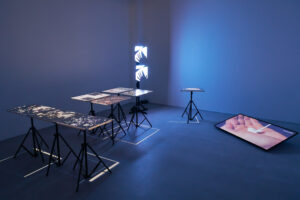
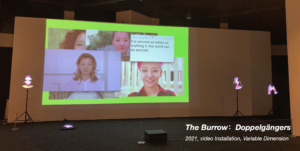
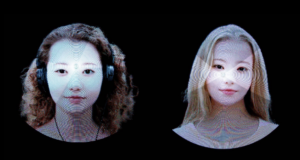
    About the work you created, The Burrow: Doppelgängers (2021), I’ve always wanted to talk to you about one particular dimension of the work — from the perspective of a straight man — regarding societal expectations placed upon women.

    Until 2019, I had been living in the West, compared with the situation in Asia, by and large, I guess it’s safe to presume that, overall, women’s autonomy and social standings might be slightly more favourable. And I’ve only become aware of such disparities after relocating to Japan. Personally, this has become a hugely intriguing topic, and I feel like this is not really being discussed that often, especially in Japan. Given your experiences living in both Japan and China, do you perceive any fundamental differences between the two societies when it comes to expectations for women?


    SY:本质上肯定是有的。总体上来看,我觉得在中国的女性,整体情况会比日本好一些。但是我想差异很多时候可能是自己给自己定义的吧。我从自己的视⻆和我的生活当中去看,可能自身没有受到过很多这方面的困扰,所以我对这个差异并不是非常敏感。对我来说,作为一个女性在日本的身份其实是次要的,我在日本更多的身份还是一个外国人。

    所以当你说女性期待带给我的困扰吧,我觉得任何期待,都会给任何人带来困扰。我是一名女性,你可能会期待我的作品里有不光是女权意识的元素,或是一些女性叙事的元素,都会给我带来困扰;那么我在日本作为一名外国人,可能策展人或观众会希望我的作品是有那么一些对于中国社会,甚至是政治方面的讨论,同样会给我带来困扰,所以任何属性都会带来困扰。

    但这也很能理解,比如说我在看待别人的作品时,我可能也会带有同样的属性预判,以及对于这个属性的期待。困扰的话,可能跟“女性”没有太大的关系,“属性”才是真正带来困扰的。

    To a certain extent, yes. Broadly speaking, I do think the situation is somewhat better for women in China than in Japan. I’m guessing these sorts of “differences” are, more or less, internalised, or self-imposed. Drawing from my own life experiences, I’ve probably never been particularly troubled by these issues, which is why I’m not quite sensitive to any perceived disparities between the two places. For me, being a woman in Japan felt secondary to being a foreigner.

    When discussing the challenges posed by expectations associated with being a woman, I believe that expectations of any form can be burdensome for any individual. As a female artist, one might expect my work to incorporate feminist themes or narratives, which can be somewhat frustrating. Likewise, as a foreigner living in Japan, there might be expectations from curators or audiences, that my work should address aspects of Chinese society or even politics.

    Essentially, any attributed label brings its own set of challenges, which is inevitable, and understandable, because, say, when I look at other people’s work, for example, I might also have preconceived notions and expectations toward it. I think it’s a common human tendency to make assumptions and hold expectations based on the labels. Therefore, in the end, the issue is not specifically the label of a “woman,” but the burden that comes with being categorised at all.

    TO BE CONTINUED…

  • Interview: Loreal Prystaj — Chapter 4

    Interview: Loreal Prystaj — Chapter 4

    The Transformation


    AXEL WANG:
    In your previous interviews, Loreal, you mentioned Louise Bourgeois and Dorothea Tanning as your inspirations. There is one artist in particular that I wanted to talk to you about, and that is Francesca Woodman1.

    I, for one, have always been drawn to her work since I was young, purely because of the aesthetics, the washed-out grey, the slightly seductive and erotic postures, the settings of abandoned buildings with debris, etc. Despite the many differences between Woodman’s work and yours — the styles, themes and perhaps the underlying messages too, there do exist, on the other hand, some parallels and elements of similarities between you and her — you both use a camera, you both dwell in surrealism…

    LOREAL PRYSTAJ:
    We both use our bodies.


    AW: Exactly, and for the same reason — convenience. You both come from a family of artists too. Isn’t it strange for you to experience all these parallels with another artist who once lived?

    LP: This question of what inspires me, I always find interesting. The reality is, what inspires me is my own life experiences, the surroundings, the people I meet, the interactions and conversations I have and how I respond to those scenarios that arise. But then, often what I am asked when someone sees my work is, who influences you, what artists inspire you? I feel more parallels and understandings, and again, I’ll use the word “affinity” towards artists I like. Their determination, focus, and story inspire me — that’s where most of the inspiration lies for me, which motivates me.

    When I was at Byrdcliffe and created the series Between the Cracks (2014), a black-and-white series in which I photographed my body in vacant rooms within a cabin-like space, I didn’t know about Francesca Woodman at the time, until somebody came to visit the artists in the residency and, upon seeing the series, she said, ‘Wow, this is very Francesca Woodman.” And I was like, “Huh, who is she?”

    I looked her up afterwards, and I loved her work. Looking at her photographs, I felt more of a connection than inspiration. She was such an intuitive creator — I could feel it — I know that her art can be described as dark and moody, or depressive in feeling, but I see her work and I perceive, she was getting so much enjoyment from creating. It was playful, it was fun and imaginative. I related a lot to the experiences she was going through when she was living in Brooklyn, but I don’t perceive that she was depressed emotionally in her essence, instead, I think she found the world to be a very beautiful and mysterious place — so I perceive.

    But this, perhaps, people of her age, at the time she was living, could not connect with that… and that disconnect might have been what felt depressing for her. It’s funny to see her work, being described as if she were always this dark person — maybe she was — but I think Brooklyn may have been a place she felt disconnected from, and became depressed by.  Again, this is mere perception.

    …And I think it may have been that disconnect that resulted in her unfortunate death. So, when I learnt about her, it was more of a motivating factor, to continue doing my work and stay strong in how I see the world by sharing my perspective, even if no one can connect to it — I would have loved to meet her.


    AW: I think we tend to, especially with artists who passed away, put a halo around them, we mythologise perhaps a little bit too much sometimes.

    LP: At the end of the day, we are all just projecting, whether it be the artists or the viewers, even myself. When I engage with somebody else’s work, I’m aware that I’m projecting my perspective onto it, which may have very little to do with their actual experience. I think who Woodman was as an artist was phenomenal, and her work was phenomenal and still is. Just taking it for what it is already is a great inspiration in itself, in fact.


    AW: At the beginning of the interview, you talked about the work you did in Denmark, Urds Brønd (2023). Looking at your artistic career from a bird’s-eye view, you’ve transformed, from themes of self-portraiture and the domestic, to nature and now to mysticism, you expanded from photography to working with space. Would you say these transformations are all natural, or are they more like deliberate deviations?

    LP: I think it’s a very natural transformation, in the sense that it comes authentically. At the start of our conversation, we were talking about this ability to let go. So first and foremost, what attracted me to working with larger medium, like installation, for example, rather than just photographic prints, was that during my degree show at the Royal College of Art (RCA), I was given a space to show everything I had produced over those two years. I was working on so many things — there were photo projects, I was playing with patterns, doing sculptural works, and there were moving-image pieces — I had no idea what to show.

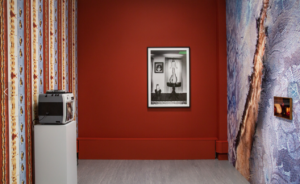
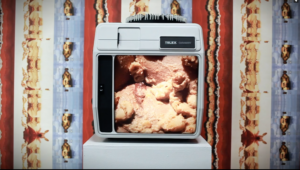
    Suddenly, it occurred to me that everything was connected. Within that space, I created this imaginative domestic room, where I designed wallpaper and installed a telex slide machine that transformed into something like a television or kitchen microwave. The whole experience allowed me to see how well I could assemble different media to create a dialogue and become stronger together. Perhaps a single photograph alone might not speak as loudly conceptually, until it was placed beside other works, in dialogue with other media, like sound or sculpture — that’s when the multidisciplinary approach started to emerge.

    You probably notice that when we’re having a conversation, I tend to jump here and there, but then at some point, it all comes together — so I hope. (laughs) I create work in a very similar way. I don’t always know what the heck I’m doing, but I trust the process, and it always comes together. A friend of mine used to tell me that my creative process was like watching a bunch of threads dispersed, which were my ideas with endless possibilities, then at some point, all the threads would start to weave together, becoming this one, refined, clean string, conceptually speaking. When she said it, I could relate to this metaphor as a visual artist. So long as you see only one thread, it will probably not make much sense, until you are presented with other works.

    As for the themes in my work, a lot of the domestic work, I think, had to do with certain roles that I found within myself and feeling like I needed to disrupt them, or get out of them. I’ve always loved adventures and exploring nature, etc. Ironically, despite that being where I feel most pulled and inspired, I have created so much work in the domestic spaces. It wasn’t only me trying to work through and resolve something that was coming through me, but I was also influenced to continue making that kind of work, as I had already produced so much of it, and it was what people kept asking me about — it was like my past work was always being discussed in the present, which I am sure had an influence on me.

    In the midst of all that work being talked about, behind the scenes, I was recording my dreams. I was reading books by Carl Gustav Jung, looking into psychoanalysis, and was most inspired by things from life’s spiritual and mystical aspects. I’m still on that journey, personally and artistically, of learning why I am currently drawn to these topics.

    Once I gain a bit more understanding of why I am creating certain works, for example, my domestic pieces, I then reflect on my personal life and try to dig deeper. And currently, as I dig deeper into myself, I feel like I am entering a sacred archive — may it be biblically, mythologically, or centred around deities. Nature, mysticism and storytelling are all coming through right now.

    So I would say the reason my work has undergone such a big transition, so to speak, is because I am changing and transforming all the time. I’m at a new chapter in life where I am also confronting parts of myself and learning more about myself, which feels extremely natural.


    AW: We also mentioned the pandemic not too long ago, any reflections at all?

    LP: Oh, my gosh, at first it felt like a limbo. I also felt like time somehow expanded, as though it were a rubber band being pulled for two years, then suddenly the pandemic ended. Things started opening up — call it the universe — let go of this rubber band, which snapped and sprung into somehow feeling like time was catching up to itself, like a fast track, it feels like everything is happening so fast right now, for all of us, collectively.

    I did a collaboration during that time with filmmaker and photographer Sara Marinangeli. It’s a film piece called NON (2021). It was very much about visualising what that limbo felt like during the pandemic, almost as if we were frozen in time and becoming these statuesque sculptures, metaphorically speaking. How we envisioned it, was not as a film to sit down and watch from beginning to end, but more so a moving image projected in a dark space to evoke an emotion, while people immerse themselves in the space, becoming part of the sound and visuals.

    During COVID, artistically, I was experimenting more with body casts, and how these live casts similarly encapsulate a specific moment in time, much like how a photograph does. All these parallels and overlaps between the two media were very evident to me — how the medium of sculpture captures my face from a specific moment in time, for example, so too, does the photograph. It was a thought-provoking time as I started to reflect on who I am as an artist and where I was going, and I began to see that much of the domestic work I did was a chapter coming to an end — it’s not the place I’m growing into, but a place I’m growing out of. And what is it that I’m entering right now? So honing in on that, and diving into that, is how I have entered into something more mystical and spiritual. While incorporating nature, and simultaneously discovering parallels to the subconscious, the body, and the universe. So, it’s rather a new chapter for me.


    AW: Final question, Loreal, you’ve lived in so many parts of the world, let’s pick a favourite!

    LP: Well, considering my mind, body and soul, I’m going to give you three places, that suit each. Right now my body and soul feel positively aligned in London, like I’m fully present here. Have you ever been somewhere physically, but maybe emotionally or mentally, you’re somewhere else? I remember once before I left Manhattan, I felt like I was physically there but mentally was in London already.

    There was another time — I don’t know where I was emotionally at the time — but while I was going through a breakup that I mentioned previously, I was physically in Ukraine, maybe mentally too because I was focusing on a project, but emotionally, a part of me was still in London because my heart was broken. I perceive that when we’re present with our mind, body and soul, is when we feel most in alignment.

    Mentally, one of my favourite places to be is Portugal. I love the people, I feel like my mind is at ease there. The final one might come as a surprise, but soulfully and spiritually, I’m being pulled to Japan. Mentally I can’t tell you why that is, and physically I’m not there, but I feel the pull.


    AW: Thank you so much for your time Loreal, it’s been really fun and inspiring listening to your stories. Hopefully, we’re going to speak again soon!

    LP: Thank you, Axel! Have a beautiful evening!

  • Interview: Loreal Prystaj — Chapter 3

    Interview: Loreal Prystaj — Chapter 3

    Body Farm


    AXEL WANG:
    With your arrival in London, this ultimately would lead to your work Body Farm (2020). In one of your earlier interviews, you said that, when your flight landed, you found every cast of the work shattered in the suitcase, except for one. That must be devastating.

    LOREAL PRYSTAJ:
    Oh, my gosh, if only I could describe to you what that work went through.

    After university, I had this opportunity to exhibit at Lewisham Arthouse in London, as part of Pic.London. Before the exhibition, I returned to the US to teach at a summer programme at Yale. Honestly, I had no idea what I was going to exhibit or where the project was heading, I was just obsessed with body casts at the time, so while visiting home, I created casts of my whole family, from their faces to their feet — everything.

    Without much forethought, perhaps I should have given it more thought — I just filled a suitcase full of body casts to bring with me to London, assuming that shipping all the pieces would be too expensive. I don’t know if you know this about plaster, Axel — it remains porous and wet for about a week and a half after sculpting, maybe longer, before it is bone dry. So, this suitcase was full of these plaster pieces, which I brought from Upstate New York to Manhattan, packed in this dark case, a week before heading to London.

    I remember, while I was staying with my friend in Brooklyn, I was like, “Does it smell mildewy in here?” She was like, “That smell is coming from your suitcase!” And I was like, “Really?” (laughs) So, I opened up the suitcase. Now, this was before the pieces even broke, but they were covered in mould! It was growing all over, inside the suitcase — I thought they looked pretty cool, but oh my gosh, there was mould everywhere — it’s a health hazard, and I had to get rid of it. Washing them would essentially mean reacquainting moisture with the porous pieces, and it was just a complete disaster from that point onward. I figured I’d just deal with it once I got to London.

    Anyway, I packed and zipped them up in the suitcase as check-in luggage. When I arrived in London and opened this stinky, mildewy-smelling suitcase, they were all mouldy and broken, and I had two weeks to come up with something for these darn things. I dried them out and wiped off the mould, and as I looked at them — all broken and shattered — I just had no idea what to do with them.

    At the time, I had these wooden shadow box frames in my studio. Out of curiosity, I placed some of the broken body casts inside the shadow box, and wow, it started to become this reliquary-like object. At first, I was just half-joking to myself and laughed, under this state of what-the-heck-do-I-do, a reliquary of my family’s body parts, that’s just so funny, how much more morbid can we get here?

    But then I thought again, and there was this “light bulb” moment, after a series of discussions with my studio mate at the time, about reliquaries, memory, and ritual, she brought up body farms, one thing after another flowing through thought and conversation, and actually, I loved it. Brilliant! — This is exactly what it is.

    What is it, that a reliquary retains? It’s an archive of sacred memories… full of relics. This resonated with me. I visited my family, where I grew up; memories resurfaced; and there I was, metaphorically bringing my family (memories) with me to London. The casts turned into this farm of their fragmented body parts. How did they become fragmented? They became fragmented because I decided to leave where I grew up, I decided to cross the pond and tried to bring them with me. My travelling from New York to London suddenly became this symbolism for memory… and no matter how hard we try to hold on to it, it inevitably becomes more and more fragmented; as the hours, days, months, years pass — it’s always fleeting. It’s always changing…


    AW: It does add a whole new layer of connotation to the work, I must say, with the casts being broken. Like you just described, nothing is permanent, not even memories. Everything fractures, and the fragility of it all, and eventually they may end up being fabricated in some sense, but still, I couldn’t imagine how you must have felt when you first saw those shattered pieces. If I were you, I would’ve just sat there and cried.

    LP: You know Murphy’s Law? Anything that can go wrong, will go wrong. There was a certain point where everything with this project, literally… went wrong. I remember the moment I opened that suitcase, I was like — of course, of course, they broke, not that I want to present myself as being happy during that experience, because it was quite the contrary when I saw them all broken, but it’s like a peculiar acceptance. I could only laugh at that point — of course, they broke. Of course, what’s next?!? (laughs)


    AW: You’re still living in London after all these years. If you had to compare it with New York, the Concrete Jungle, the people, the culture, your everyday, how are you finding everything there in London?

    LP: I love London. I love London so, so much. I really feel it’s my home currently, I say that in the sense that it’s a place very aligned with who I am at present. I like the city’s access to different parts of the world, to culture, to a lot of people coming from all over. What’s similar between London and New York is that they are both cities, which attract people who are inspired and determined, resulting in engaging and rich interactions and deep conversations. There’s something dynamic that exists in both cities on many layers.

    One thing I love about London, and that I didn’t find existed in the way that I desired in Manhattan or Brooklyn, is the distribution of parks! London has an amazing amount of nature despite being a city — and that’s why you can see creatures running around, like foxes!

    On the other hand, I went back to New York last summer, and there’s a certain quality I’ve always loved in the people living in New York that I don’t necessarily find all the time in London. You know, New Yorkers may have a reputation for being perceived as “rude”, but having lived there, I’ve come to realise that this trait is more about an upfront, raw honesty than anything else. You know where you stand with people, there isn’t this “politeness” for the sake of being perceived as polite and nice, that’s not to say that New Yorkers aren’t kind — they really are. There’s just none of this, “beating around the bush”, or decoding mixed signals, like “What do they mean by that?” People just say exactly what they’re feeling when they’re feeling it. If someone likes you, they like you; If they don’t, you know it. Whereas I perceive, in London, there is a characteristic of composure and politeness, that feels like a mask to me. I find that I gravitate more toward raw honesty in people than just their composed nature for the sake of presentation — you know, this kind of being nice and polite for the sake of what others think. I have to say, sometimes I miss that rawness from New Yorkers.

    With all that being said, I do personally prefer London and genuinely feel that my lifestyle is healthier here. London has an “off ” button — it goes to sleep — the tubes stop running, the shops close, the pubs and their “ding-a-ding” with the bells — last call for drinks before midnight! New York never shuts down, and I felt that was really draining.


    AW: After graduating from the Royal College of Art (RCA), you did a residency in Lviv, Ukraine. What was it like for you? Was it emotional for you to go and reconnect with your roots?

    LP: This is such an interesting question. Okay, Axel, I have to give you a forewarning that we might go off on a bit of a tangent here, and this conversation may turn into another 5 hours. (laughs)

    So, I was presented with this opportunity in Ukraine while I was at the RCA, and I thought to myself, why not apply? I would love to visit! I was totally unaware before I applied, that, Lviv is in fact only 20 or 30 miles away from where I still have family, my heritage, the city of Truskavets.


    Lo and behold, I got accepted and wasn’t anticipating all these exciting things happening. Now, I think everything in the universe coincides with one another. You know how I mentioned earlier that I was visiting France with my partner? Well, there was a whole set of experiences that highlighted our growing in separate directions, and we broke up, around the same time I was accepted for the residency. That was in 2019, and I’m mentioning this because immediately right after that breakup, and after moving out, I was heading off to Ukraine.

    In fact, I wasn’t feeling any emotional repercussions of our breaking up quite yet, because I was so focused on what to do next, and the work, that (emotion) came later. Nonetheless, my parents knew I was going through a breakup, and they decided to visit me in Ukraine, to just be present with me and share time together, since they were under the impression that I was sad and I was grieving. Again, I was emotionally removed from the breakup until later.

    If it weren’t for the breakup or that specific context, my parents would not have visited me. I have been to other residencies, and there have been no visits. So, this life experience I was going through — this breakup — became the catalyst for my parents deciding to join me in Lviv during the residency. I could have been in any country, anywhere in the world, but I was in Ukraine, and they flew in from New York, which was one of the most magical moments for me.

    And yes, I felt a lot from my roots in Ukraine, which was incredible. I spoke very little Ukrainian with my dad as a child, and was surrounded by his side of the family speaking it all the time. So, although I did not speak it fluently, I picked up the language rather quickly over there, as if it was re-emerging through me — like it was hardwired into my memory and body.

    On the other hand, what was most profound to observe, was my dad. My parents are both in their seventies, and when I saw my dad there… it felt like the trajectory of experiences that led to my parents visiting was more about seeing my dad reacquainted with his roots. There can be this perception that as you get older, you get more stuck in your ways, grumpy, closed-minded, judgmental, etc., which has been talked about amongst my siblings about my dad. But when we were there, I saw my dad speaking Ukrainian, singing Ukrainian songs down the street, doing cheers with people in town, laughing — it was as though I saw my dad as his childhood self inside a seventy-year-old man’s body.

    I was moved, to observe this person that I know — outside of the role of playing my father — and see him as a person being reacquainted with his roots. It was a reminder for me that sometimes when people are getting a little bit more rigid in their way, stubborn, judgmental, it’s not necessarily because of their age or getting older — it might merely be because they’re just in a place that they’re not aligned with anymore, for too long. Stuck in a place that does not serve to remember their true essence. I don’t think American suburbia serves my parents, I think they are just comfortable there. I mean, they were laughing so much in Ukraine, and sharing so many stories about when they first met, I will always cherish it.


    AW: That’s beautiful, Loreal. I was looking at your work, Have You Dined Sufficiently: Mother’s Meatballs (2019), and while I find the visual aspects strikingly unique and provoking, I’m more curious about the idea behind the piece.

    Being born in the East, the phrase “I love you” does not really exist in our dictionary. I think I speak for most Asians when I say this, how our parents express love to their children is through things like, “Have you eaten?” or “What would you like for dinner?” — that’s their love language. Your piece somehow reminded me of that.

    LP: Yeah, I think I can relate to that from my upbringing — this kind of love language that is the function of taking care of the family — are the kids fed? Are the bedrooms clean? Did you get your homework done? There is this whole aspect in the sense that they care for you, and want you to do well, but with all the practicalities that exist in the physical universe, perhaps not always in the emotional sense.

    My mom is a very functional type of mother, you know, food is always in the fridge and she pushes us to achieve more, and do the chores. She’s a very reliable mother who would pick you up from here, drop you off there, etc. As I’ve gotten older, I’ve come to recognise that there are many qualities within me that are like my mom, and I accept and love that. Whereas in my teenage years, I was very much about my independence, “I make my own decisions”, “I don’t want to do that”, “Why would I listen to you (mom)?” I think many teenage daughters feel this way toward their moms.

    With time, though, I’ve developed an affinity for my mother. I understand so much more about her perspectives and what she was going through, to act in certain ways, that I perceive we’ve gotten closer as I get older. Currently, I feel there’s something really special emerging regarding what that relationship will manifest into.


    AW: You guys collaborated on the meatball piece, didn’t you? Is there another one on the horizon?

    LP: Yeah, so when I was at the RCA, I was creating a lot of work within the domestic space, the meatball work included. Once again, I found myself disrupting these hospitable, well-manned environments.

    With this piece, in particular, it was about twisting the act of cooking — an act of hospitality — into this sensual and sexual act, and bringing those topics to the dinner table that are not often discussed, or are repressed within the domesticated lifestyle. I see the work almost like a follow-through or an extension of the narrative encapsulated within the broader sphere of my domestic work — from the wallpaper to the pussy lamp photograph, the flower vase, and so on.

    Although it may not be wrong to label it a collaboration, since it was my mom making the meatballs, I always considered this to be the work involving my mom rather than a genuine collaboration. 99% of the time, I was directing this piece. Whereas right now, I feel we’re involved in a collaboration together because we’re in continuous dialogue with each other, we are working together and sharing ideas quite in-depth, and her input is so crucial for our current project. I see her as a true inspiration. Since she’s in the US, we are working long distances by shipping things back and forth. So yeah, it’s shaping out to be a really beautiful body of work — I am so excited, in fact, for when it’s ready to be revealed.


    AW: Literally can’t wait to see the fruit. It doesn’t happen often enough, a collaboration between an artist daughter and an artist mom.

    LP: Yeah, for now, I can’t really tell you what the end result will be, but I can definitely share how it started, it’s really been a whole intuitive, creative process.

    From 2020 to 2023-ish, I had been recording my dreams and building an archive… while I visited my mom and the family last summer in the US, for the first time in three years due to the pandemic, it was emotional when we met. She was crying as we hugged, and from my perspective, I just perceived, oh, we haven’t seen each other for a while and that’s where these emotions are coming from. But to my surprise, my mom had been withholding information that she was waiting to share with me in person.

    This was about a year ago, around August 2022, my mom looked at me and said, “Loreal, I have breast cancer.” You know those kinds of moments, where you hear the words, but they don’t quite sink in? I was just like, “What do you mean?” She started telling me about her check-ups, and how they (doctors) stuck this needle under her arm and injected a dye, which filled her lymph nodes in that area. She described them as enflaming and looking like a mound of grapes beneath her arm, and how painful it was.

    She’s very much healed now, and if cancer were to be found, they found it in my mom, at the best time possible — in the beginning stages — which I am grateful for, but as I listened to her sharing this experience, despite me being in shock, I kept thinking to myself, “Why does this sound so familiar?”

    Strange.

    I started going down this rabbit hole of digging through my dream archive and found one recording labelled “grapes, tattoo artist, pyramid” or something like that. I listened back to the dream recording, in my sleepy voice, I described a scene where I walked into a tattoo parlour and saw a man in a white lab coat. I lay down on a bed and asked for a “natural” tattoo — whatever that means — from this artist. As he finished and I got up from the bed, I walked over to a mirror to look at my new tattoo. I then discovered that he had injected a dye under my arm by seeing blueish/purple bulges, which I described in the recording as a mound of grapes, under my arm. I looked at him, disturbed, and told him I wanted it removed from my body, and he said I would have to go through another procedure for that to happen — I was panicking in my dream. Then it took a bit of a surreal direction, as I looked at the mound of grapes, they started growing by popping down my arm until they met a mark on my hand — a triangle with an eye inside, and then I woke up. Anyways, that was the recording.

    When I recorded the dream, it was honestly nothing significant to me. But after what my mom shared about her experience, this dream took on a whole other meaning. I shared the dream with her, which she expressed as sounding weird. Then I asked, “When was this procedure, Mom?” She responded, “End of July 30th or 31st (2022).” I looked at my dream recording and saw that I recorded it on July 31st, 2022.


    AW: That’s pretty nuts.

    LP: Yeah, I know. For real.

    There were too many synchronistic and parallel occurrences for this to be a mere coincidence. And I thought to myself, first and foremost, how limited we are as humans to even have the slightest understanding of this — what we call life, is. What felt clear, and is clear, is that we are Nature and part of it.

    I started to think about quantum entanglement and Bell’s theorem, the idea that if one atom splits and separates, what this atom experiences (gesturing with left hand), so too does this atom (gesturing with right hand) — aren’t we, after all, just a collection of atoms? Despite being a different individual, with different societal expectations, life experiences and influences, from my mom, I did come from her body — and perhaps my body has some form of consciousness that I am unaware of, trying to communicate with my mother — trying to heal her body, by sending me (itself) warming — like the way trees exchange signals and resources through underground mycelial networks, a phenomenon that has only relatively recently been discovered and studied by scientists in the late 20th century. Could this be a door opening, revealing that our bodies, like trees, communicate through some web in the quantum sphere that we just don’t quite understand yet, but know is there?

    While I was going down this rabbit hole, I was in the house looking at everything a bit differently, and stumbled upon my mom’s magnificent artworks, they’re just under the bed collecting dust. These beautiful tapestry-like fibre pieces that look almost like landscapes from a bird’s-eye view. I thought, if there’s ever a time to collaborate with this talented person, woman, artist, my mom — it’s now! I immediately told her, “Mom, let’s work on a project together.”

    It’s intriguing how, what initially began as a mother-daughter project, drawing parallels between the roles we play in that relationship, to similar narratives that can be found in nature, and connected to the body, has transcended to a deeper realisation that we are all interconnected and part of something profoundly divine. Combining our practises, from my sculptural and video works to my mom’s tapestry pieces, it’s evolving into something beautiful and unravelling in a wonderfully organic way.

    The project has reached the point where it feels like we are working together, collaboratively. For so long, my mom has been programmed to serve others. What once started as, “Sure, Loreal, I can help you with your project”… slowly became, “Mom, no, it’s our project”, and at this point, she’s coming to me with ideas, which feels so amazing because it’s morphing into a proper collaboration.


    TO BE CONTINUED…

  • Interview: Loreal Prystaj — Chapter 2

    Interview: Loreal Prystaj — Chapter 2

    The Signature of All Things


    AXEL WANG:
    In 2015, you came to Yamaguchi (山口), Japan, for around 2 months for an art residency. On the map, yet again, it looks like it’s in the middle of nowhere. Before your residency started, did you do any research about the place, or did you just take the plunge, pack your bags, and off you went?

    LOREAL PRYSTAJ:
    A little bit of a plunge. After the experience at Byrdcliffe, as I mentioned earlier, this idea that art residencies could be a foundation to create, opened up the door to applying. This also provided the opportunity to travel the world, not for the sake of vacation, but also with a purpose to learn, meet people, and create!

    Again, after the Byrdcliffe Art Residency experience, when I saw this opportunity to attend an artist residency in Japan, I immediately felt a pull… I can’t necessarily explain what it was, if it was a spiritual pull? Or an energetic pull? I really don’t know, but it felt like my heart had this affinity toward Japan, and I knew I would be there, without really knowing much about it. The work I submitted for the application was titled Perennial Breath: A Tapestry of Faces (2014-), a project I don’t consider ever truly finished. In fact, I got accepted into the residency to further develop that body of work.

    I arrived at the Akiyoshidai International Art Village (秋吉台国際芸術村), and it was such a beautiful, beautiful residency space. I went, of course, with the intention to continue the project, which I did, but at the same time, I was so awe-inspired by the architecture of Arata Isozaki (磯崎新)1 sitting amidst the vast beauty of nature. Each time I entered the space, I felt like I was waltzing through this 3-dimensional mathematical equation — every corner presented a precisely configured angle that would complement the staircase or meet the edge of a distant wall; the windows were perfectly placed, so that when looking outside from them, you may see a corner or edge of another building accurately framed in the centre.


    AW: Normally, when one thinks of rural Japan, nature would perhaps be the first thing that rushes to mind, but it was the architecture that caught your attention instead.

    LP: Yes, although I was inspired by this architecture, my daily focus did revolve around nature. My creative process is highly intuitive, I prefer not having a full understanding of what I will create when I arrive somewhere new, I want to feel like a sponge, ready to absorb my new surroundings.

    Initially, I began by photographing nature, but the resulting works turned out to be singular photographic pieces; not necessarily part of a series. I was just like, gosh, these photos were not conveying what I was feeling or seeing — they were not capturing the essence and energy of the forest, or how breathtaking the view was from the mountain top or the tactility of the tree’s bark — none of that translated or resonated through the photographs I was taking. In recognising that, I slowly started gravitating toward the architectural space and photographing parts of myself within it.

    Somehow, I didn’t feel the photographs of me capturing myself within the architecture stood on their own as singular images in a series, so I started to puzzle-piece them together — matching horizontal and vertical lines — as I did so, they started to become this captivating, three-dimensional, mosaic-like work.

    The whole experience of being in Japan, surrounded by breathtaking nature, and living within Arata Isozaki’s perfectly calculated architecture, left me with the profound sensation that I was living in a dream. The stroll through the woods felt like a dream, walking through this math equation-like architecture felt so surreal. The word for dream in Japanese is “yume”. That’s where the title of the work Yuとme came from. The character “と” meaning “and” is placed between the “Yu” and the “me”. With my native language being English, I see “You (and) Me”. The title became my way of inviting viewers to join me in this miraculous dream world.

    I also expanded on Perennial Breath, by capturing portraits of over 30 individuals from the community, each adorned with flowers cascading across their faces. This work-in-progress wasn’t confined only to Japan, as the project consists of more than 300 people whom I photographed during my travels and at various art residencies.

    Initially, the vision was to craft this textural moving-image installation featuring all these faces, from around the world. People of different ages and skin colours. Men and women, all camouflaging into one another, in this “breathing” ebb and flow of plants, creating this impression of everyone in a restful state, becoming part of nature, with plants, returning to the Earth, but always living on. The essence of the work was very much about conveying the cyclical nature of life, death, and rebirth.

    But while I was working on it, I soon departed for the RCA, and then the project came to a complete halt. Despite these themes being relevant to my current practice, I don’t know if there’s relevance to going back to this work, even though I think it’s really beautiful as a piece and concept.


    AW: If you have to use, say, three adjectives to describe your experience in Japan, what would they be?

    LP: Magical!… It’s going to be more than just three — mystical, ethereal, spiritual. Alive! I could feel nature living, exhaling and inhaling.


    AW: After the residency in Japan, you found yourself in Haukijärvi, Finland, in 2016 and Reflecting on Nature (2016) was born. Correct me if I’m wrong, but was that the first time you ventured beyond a confined indoor space and started to explore nature?

    LP: Yes, you’re absolutely right.


    AW: Do you think your experience in Japan might have played a part in that?

    LP: Perhaps. I do remember really wanting to photograph nature in Japan. It somehow just wasn’t translating in the photographs I was taking at that time — how mystical, magical, ethereal, all those delicious adjectives… I just didn’t know how to capture that. Perhaps, I merely gravitated toward what I knew how to capture well — myself indoors as part of the interior.

    As you mentioned, Reflecting on Nature was the first work, seen publicly, that I captured completely outside in nature, and I loved that work so much. And, I am about to also say, I dislike it a little bit now, though I want to refrain from saying that. It’s just… to this day, this work has been repeatedly published and talked about. It’s attracted a lot of attention, and that’s a beautiful thing, which I am grateful for, but sometimes I think, gosh, there is so much more I have created beyond that — it’s honestly a love-hate relationship.


    AW: When I Google you, that’s probably the number one work that pops up. I don’t know if you still want to talk any more about it.

    LP: I can try sharing some of the things that aren’t covered in the articles, or maybe they are. (laughs) My gosh, I’ve talked about this work a lot…

    So while I was there, in Haukijärvi, it was incredible to experience the 20 hours of daylight… you could be photographing at 11 p.m., and it would look like 4 in the afternoon. I spent a lot of time outside trying to figure out what I could create.

    Then one day, I saw a mirror in my bedroom and I was intrigued, to see what it could look like out in the open outdoors. Originally, I just anticipated creating surreal-like photographs. It was kind of crazy because the residency was only a month long, and at week three, I had a “light bulb” moment — abruptly having this revelation about what to photograph, which eventually became Reflecting on Nature. So all the photos you see in the series, I created within a 9-day period, more or less, which involved tons of trial and error.

    The title, concept, and artist statement also emerged only during the creative process — this question kept echoing through my mind: “What if Nature looked at itself in the mirror? What would it see?”

    I was reflecting on the whole experience, and I remembered one very specific day, when I wanted to capture the sunrise reflected in the mirror, with the moon in tandem with it. On the first day, I awoke at 5 a.m., only to realise I needed to rise a bit earlier. The following morning, I got up at 4 a.m., and realised that I needed to wake even earlier. By day three, after two trial runs, I finally grasped the necessity of waking up at 3, arriving at the location, finishing setting up by 4, starting to photograph by 4:30 to capture the sun and moon at once, and wrapping up the shoot by 5.

    And it was in that moment where… it was almost like this epiphany, with this realisation that I had to adjust myself, my lifestyle, to nature’s schedule… I heard it again: “What if Nature looked at itself in the mirror? What would it see?” But this time, I responded with another question: “What would we be?”

    I used to say or think to myself, “Oh, I love nature, I’m so grateful to have nature in my life,” etc., where in fact, Nature is not part of my life — I am part of it. We are part of Nature.

    So that’s the back story, and this epiphany or revelation was eventually presented as the concept. It’s like the work just happened — it came through me, and it was a very special series for me, at the time.

    There was something else I wanted to mention, but it slipped my mind.

    Anyway, it will probably come back!


    AW: So London in 2017…

    LP: Oh, I just remembered what I wanted to say! It’s not strictly about Reflecting on Nature, but it is related, and pertains to other works, on how I see myself in them, now that I am outside of them — this is a very quick anecdote.

    What I find truly fascinating is that in all the work I do within domestic spaces, I always seem to aim at disrupting them — the interior’s appearance, the way one views the scene in a room — like when I turned myself into a lamp in one of my photographs, for example. On the other hand, the work I do in nature, is always about my camouflaging into it: becoming part of and being one with Nature.

    I didn’t notice this until… perhaps… last year. Truth be told, nature and the outdoors are, in fact, what I really gravitate toward, and feel most connected with.

    And then when I look back, and reflect on chapters of my life, where I felt I was indoors too often with too much of a domestic lifestyle, or I had too much of a predictable routine, or in a relationship where gender roles were becoming apparent, I started feeling trapped.

    When you feel trapped in something, what do you do? You go and disrupt it, or interrupt it. Well, that’s what I was doing in a lot of those works.

    What is consistent throughout all my work, despite different life circumstances, is that I’ve often used myself within it — it’s simply a matter of how my body is captured and exists within the environment that shifts.


    AW: Thank you, that does sound fascinating. What I was gonna ask is, why did you feel the urge to go back to school? You had all these residencies and everything else going on.

    LP: At the time, and before 2017, I was living between Manhattan and Brooklyn — that’s where my life was. After the Fashion Institute of Technology and continuing my practice, with travelling and all… a lot of positive things emerged, but something in me wanted more, or rather, wasn’t fully aligned.

    During every residency — which I attend only during summers — I felt so in tune with where I could be and what I could be doing with my life. Whenever I returned to Brooklyn / Manhattan — it’s not that I was unhappy, but I felt this void — as if I wasn’t where I was meant to be, even though I didn’t necessarily know where else I could go or what else to do.

    At the time, I always felt that art residencies were like an oxygen tank that I would grab onto to feel alive, breathing from it, until the next summer’s art residency.

    A series of events led me to a conversation with an art agent one day, who casually advised me to consider doing a Master’s at the RCA, so that was a little seed planted in my head… I think that was in 2015.

    Back then, I wasn’t really thinking about going back to university, especially outside New York. If those thoughts ever came up, it was more like, should I go to the School of Visual Arts or NYU? etc. — everything revolved around New York City for me at the time.

    After she mentioned the RCA, it was like I felt another pull. I was curious. I honestly believe in listening to our intuition because that is something we are all innately born with, it’s our mind that sometimes restricts us from making decisions best for our growth.

    Afterwards… there was a point when I was visiting France with my partner at the time, and he invited me to a ball in Versailles, alongside other events, and I recall feeling so out of place.

    Then, out of the blue, this art agent’s voice came back to mind, telling me to visit the RCA — her words ringing in my head, I felt the pull again — I knew in my heart, that I had to go to London — I let my partner know, and the next day hopped on a night bus that arrived in London at 7 a.m. the following morning. I remember everything feeling so refreshing after leaving Paris. Also, it felt strangely familiar, as though I had been there before… firstly, everyone was speaking English — maybe that was it — with a British accent (laughs), the simple things in life.

    So, I had a whole day to check out London before my bus left in the evening to return to Paris. I went straight to the university… around 8 a.m., I naively perceived I could just walk in and look around — not the case, of course — I wasn’t allowed in without an appointment. Also, no staff were there… as it was summertime, I did not really factor this into my “plan of attack”, so when I arrived and learnt from the security guards that I wasn’t getting in, I just struck up a conversation with them over a coffee, since I didn’t have anywhere else to be.

    They were super interesting and so lovely. I’m still in touch with one of the guys, Sid, via email. I guess you could call it serendipity — a bit of luck — because while we were all chatting and sharing life stories with one another, Sid was like, “Hey mate, the head of the photo programme just walked in.” I was like, “Oh, cool!”, not perceiving that I was going to meet them, but then he said, “You know what, why don’t you come with me?”

    He introduced me to one of the heads of the photography programme, Hermione Wiltshire, and she showed me around the Photography floor — it was such a blessing of an experience.

    I applied for the course, and I was accepted the following year. The RCA to me was a very special chapter in my life — one I’m so grateful for — it was like a door that opened so much potential for the future.


    TO BE CONTINUED…


  • Interview: Loreal Prystaj — Chapter 1

    Interview: Loreal Prystaj — Chapter 1

    We conducted an interview with Loreal Prystaj, a second-generation Ukrainian immigrant born and bred in the US. The artist is currently based in London.

    Loreal’s artistic practice explores realms of consciousness, storytelling, and mysticism using a diverse range of media such as photography, moving image, sculpture, and sound. Drawing inspiration from psychoanalysis, archetypal symbolism, and surrealism, her work accentuates the psychological impact of the environment on both individuals and collectives. Engaging in a continuous conversation between the internal and the external, Loreal invites viewers to introspect on their consciousness and contemplate their influence on the shaping of their surroundings.

    As I sat down with Loreal, our dialogue unfolded across four separate, yet interwoven chapters. In this initial segment, Loreal revisited her childhood and upbringing in suburban New York, recounting her formative years at the Fashion Institute of Technology (FIT), and elucidating the motivations behind pursuing advanced studies in London. The second chapter illuminates Loreal’s artistic residencies across various global locales, including Japan and Finland, alongside the unexpected chain of events that led to her enrolment at the Royal Academy of Arts.

    From there, in the third instalment, the discussion turned towards the mishap that befell her work Body Farm (2020) and her experiences of building a life in London, a city she now calls home. We also touched upon her first trip to her family’s homeland, Ukraine, bringing forth a poignant exploration of familial bonds and heritage, before naturally giving way to a conversation about the evolving contours of her relationship with her mother.

    The interview took a reflective turn in the concluding fourth chapter, where we discussed the transformative journey of Loreal’s artistic practice over the years.


    The American Dream


    AXEL WANG
    First of all, it’s great to see you (on Zoom) again, Loreal. I wish we could have done this under slightly better circumstances, you know, with us winning the open call and conducting the interview face to face when you come to Japan. Once again, that’s life, I guess.

    LOREA PRYSTAJ
    There’ll be more opportunities to come, I have no doubt. Also, as I mentioned previously, I still plan and hope to be in Japan very soon. So I will let you know when that happens!


    AW: May I just ask first, where are you right now, and what have you been up to lately?

    LP: I just returned to London. I was just in Denmark for an exhibition and talk last week, it was the final phase of a collaboration that I was part of with the Danish artist Christel Elver Pilkær. And it was a wonderful experience! This collaboration started back in May 2023, and I had been going to Denmark since May till September — almost every month working on two different projects. One was a public sculptural art piece out in the woods called, Urds Brønd (2023), which is a Danish phrase meaning “the Well of Life”. The work reimagines different narratives from Norse mythology, and how a lot of these stories, within Nordic folklore, are depicted as deities, spirits, or even ghosts that exist within nature.

    Last week we expanded upon the piece Urds Brønd and continued our collaboration in a gallery setting, encompassing photography, installation and sound — we created a space where people could step into, a sort of, “liminal space” infused with all these stories and rich narratives. We were thinking about this term, “liminal space”, and where it exists in our day-to-day life.

    While contemplating, we thought about the experience of transitioning from wakefulness to slumber and entering the subconscious, bearing in mind the symbolism found in water and nature relating to the subconscious. The installation was constructed out of cyanotype on raw cotton and bedsheets, hanging from the ceiling. People could walk between the suspended pieces, as if navigating through a blue underwater forest, entering a portal, leading to a new reality — like falling asleep into a dream, furthering the concept that these stories and narratives found in folklore or mythology, are still being carried out in today’s world, perhaps buried and forgotten, but never lost. It’s about resurfacing these narratives.

    Our bodies, like nature, serve as archives of memories and stories. The work aims to draw parallels between the body and nature, and how these stories and spirits can be brought to life when we shine a light on them in the contemporary world as well.


    AW: I was going to ask about this project towards the end of our interview, but it seems you’ve already provided the perfect answer. Now let’s go all the way back! You were born in Fairport, New York, some call it a town and some call it a village, does your family still live there?

    LP: My parents still have the house, but aren’t living there physically, however. They moved to Texas, and the house is currently full of boxes everywhere. So, my childhood home in Fairport… yes, I still have access to the house, but it’s not the home that I grew up in.


    AW: From the map, Fairport looks like one of those very remote American towns that you often see depicted on American TV.

    LP: It’s American suburbia, like in American Beauty (1999), where you see houses next to each other, all the lawns are neatly cut with white picket fences. I mean, granted, we didn’t have a fence, but they exist.


    AW: In those places, it’s like everyone just knows everyone else, with lots of murders and supernatural stuff going on.

    LP: For real, Axel. I’m not a huge fan of American suburbia in the sense of living there because of what you’re describing. You know, of course, even though in films they are romanticising or dramatising these certain scenarios, there is some truth in that. I think the homogeneity of the lifestyle and this kind of domestication contribute to… I mean, I don’t want to get all morbid or anything, but I knew of a couple of people who took their lives… there are things that go on behind closed doors, but the presentation is always pretty.


    AW: What was it like for you, growing up in that small, enclosed, domesticated environment? Especially with your name, I thought you had a relatively peculiar surname, and sharing the same first name as the shampoo, would you say you have fond memories of Fairport, or you are more like, I’m not stepping back there again?

    LP: Interesting question. Well, first about my name. My dad is Ukrainian, despite being born in Munich, Germany. That was solely because it was right after World War II, a time when people were shifting countries like moving puzzle pieces — he was in Munich with my Baba and Gigi (grandparents), until they moved to
    Brooklyn, New York.

    I don’t recall if I shared this with you, Axel, but I was originally going to be named Zoya, which is a Ukrainian name. But in the end, both of my parents just loved the sound of the cosmetic L’Oréal, (French: [l‿ɔʁe.al]), so that’s that!

    My upbringing is definitely a bit of a dichotomy. I have a lot of fond memories, shared with friends and siblings, that I could go into loads of detail about the many spontaneous things that we did to entertain ourselves in a small town, very mischievous! Dare I say, on the household front, also fond memories, and also, umm… it’s quite a trajectory of stories that would unravel a lot in this conversation.

    Before I was born, my mom was an art teacher at an elementary school. As she described it, making “peanuts”, like no money at all. Since she also has a mathematical mind, she went and started a course in engineering, and lo and behold, my dad was her teacher, who at the time, was going through a divorce. He had two daughters with his first wife, my half-sisters — though I see all my siblings as family. I’m one of five kids… without going into too much detail, when I was born into the family as the youngest, I witnessed certain tensions within the household that had started long before I entered the picture.


    AW: It does start to sound like one of those American TV series!

    LP: I know! Mind you, firstly, my parents are only three years apart, and simply grew attracted to each other. At the time, my dad was going through a tough divorce with his first wife, who, if I recall correctly, had substance abuse issues. One day, when my dad was very stressed, my mom helped him with organising assignments and paperwork. As a kind gesture, he asked if he could buy her a drink, or something like that. They grabbed a drink, and the rest is history. I recall my dad sharing with me that there was a student who always handed in such perfectly drawn engineering diagrams, that he was continually impressed by — it turned out to be my mom’s assignments. You know, I perceive him as an artist at heart as well.


    AW: I was going to ask if you come from a family of artists.

    LP: My dad pursued an engineering career, but at heart, I believe he is 100% an artist. When he was younger, he wanted to be a cartoonist, and he also had a full ride to go to the Rhode Island School of Design to study illustration. However, coming from Ukraine, and moving to America, the American dream kicks in, to make money, get a house, start a business, “make it” — all that kind of stuff.

    And when my grandparents, his parents, found out that he had been offered this opportunity, my Gigi, his dad, asked the professor, ” What would my son do with his life? How will he make a living?” And the professor responded that he could become a cartoonist. Gigi was like, ” Nope, my son is not going to be a cartoonist,” and just pulled him out of receiving the scholarship. So my dad’s dream of becoming an artist was swept under the carpet.


    AW: Let’s put the spotlight back on you. Although your mother was an art teacher, did you always know that you wanted to become an artist, even before enrolling at the FIT?

    LP: That’s also an interesting question because when I was a child, I was making art all the time — drawing, sketching, and sculpting with mud. I don’t ever think it was a feeling of wanting or desiring, it was simply coming through me; my Being. And of course, when I hit early teen years, I was influenced by my surroundings more — by friends, family, my siblings, and I was investing my time and energy into other things like sports, drama — it’s not that I didn’t enjoy those things, but I don’t think they were my truest essence.

    Not until I entered high school, I took a darkroom photography class and was in multiple art classes; suddenly, I felt I was being reacquainted with “myself”. That’s when the more conscious thought, “Yes! I want to be an artist!” and “This is who I am”, began to take root in my decision-making. I think that artistic mindset was already within my hardwiring of my essence, since I was a little kid.

    You know, as children, we have this profound ability to just be, where no conditioning or veils are covering our pure and authentic selves. No influences or expectations are sinking in quite yet, you just are. Simply being… and then these veils are put upon you as you age, telling you how to be, what to be, how you should think, or what to do, and then at some point, you may become conscious that you’re being influenced by things that aren’t truly you, and you have to peel those layers off — one veil after another to remember who you are.

    Before I enrolled at FIT, I perceived that the direction best for me was fashion, which was the reason why I moved to Manhattan to attend that university. I loved the experience in many aspects — a university focused on the commercial world, located in New York City, taught me to think really quickly, and to execute ideas that could catch people’s attention — being influenced by the fashion and commercial world, I was taught to “sell” a picture in a couple of seconds, not tell the story behind it. The focus was solely on colour and composition, two very important aspects, but that kind of outlet for creativity resulted in feeling a bit empty for me. I started to acknowledge that I wanted to dive into fine art and a more conceptual artistic direction, rather than going further into fashion or the commercial world.


    AW: That’s why you decided to pursue an M.A. in photography afterwards.

    LP: After I graduated, I felt such an energy infused from the experience; from life itself, from that acknowledgement of what felt true for my artistic pursuit. Oh my gosh, looking back, it was wild. Straight after my undergrad, I was like a nomad for a year, with my backpack, living on people’s couches. At the time, I was making my bathtub series, because that’s what I had access to — everyone had a bathtub — taking photos in people’s apartments, and in hotels when my parents would come to visit! I was in this constant pursuit to create on a daily basis, with the thought, “I’m an artist, and I’m going to create every day.”

    After a series of synchronistic events, I had this opportunity to become the assistant art director at an art residency called Byrdcliffe in Woodstock. It was an incredibly eye-opening experience, as I hadn’t fully grasped the concept of an artist residency before then. Suddenly, I was working at this residency, in the Catskill Mountains, with time and space to create, while meeting artists from all over the world. Despite my job position, I made it an art residency of my own. During a two-week period when the first group of artists had left the residency, and a new group had not yet arrived, I produced a whole body of work. No one was there, just me, the empty bedrooms, and the woods. That is where I captured the series Between the Cracks (2014).

    It’s a black-and-white series, and I really love the body of work, for many reasons; personally and aesthetically. It was eye-opening for me in the sense that it reminded me of my initial interest in photography before being influenced by going to a fashion university — sitting still and observing simple moments of light and shadow. For instance, my bathtub series, despite it coming genuinely through me, I see a lot of fashion influences in that work — very clean, refined, colourful and edited. Between the Cracks wasn’t that, although I still photographed myself in both series; I am always readily available for myself, when an idea pops up.


    AW: Why isn’t it on your website, though?

    LP: You know, I didn’t put the bathtub series on the site either. I think right now in this chapter of my life — again, I am conscious that at times, things in our periphery, may it be objects, clothes, a series of work, or anything really that is part of past chapters of our lives, may influence our present decision-making, without us acknowledging it — those things can shape creatively something that isn’t really correlated to your present self, resulting in this sort of permeation of past selves. I prefer not having the option of being too informed by old work. It’s not that I don’t love these bodies of work… it’s just that right now I am practising letting go and letting them be.

    It came to my attention when I was moving house at one point, and I was just unpacking boxes of stuff, and it dawned on me: what is the relevance of all these things that I’m carrying with me? After I cleansed all of it as well as my art studio, I felt fresh to make work that was more in tune with who I am here and now, rather than who I once was and how I perceived I should be.

    On the other hand, at times I wonder if I am being fair to the work or not. I do in fact love it, and am really proud of it — you know, you must love the person that you once were, to love the person you are now and will become — if I discredit her, I’m also discrediting my current self and future self. I genuinely love who she was, and I love the work she was making.


    TO BE CONTINUED…

  • Interview: Rui Yasue — Chapter 2 | Publista

    Interview: Rui Yasue — Chapter 2 | Publista

    In Search of Light


    AXEL WANG:
    Continuing where we left off, Rui, so after you stopped going to Iraq, you gradually took on photography projects, mostly in Japan and occasionally Europe too, right?

    RUI YASUE:
    Yes. You know, I’ve always thought that there were, and there are many journalists in the Middle East, like really good ones. They are brave, they produce exceptional photographs and tell amazing stories, but somehow, I just felt like people in general are not that interested in the subject, and that hasn’t really changed for decades. So, I just thought I might need an alternative approach.

    Through my line of work, I met a Spanish photographer, and he used to say that to change the world, art is the only way. I didn’t quite understand what he was trying to say, but steadily, by meeting a lot of artists and participating in many art projects, I came to realise that potentially, people would read or listen if it was presented as an art project or exhibition, even if they didn’t particularly care about the Middle East.


    AW: Did you start making artwork?

    RY: Well, yes, but before I didn’t know how to connect, you know, what I wanted to do for the Middle East and what I could actually do here in Japan, because I’ve always taken the journalistic approach and done straight photography, which was kind of limited because, the photos I took, could only be taken, because I was physically there in that specific scene, the moment could only be captured with me being on the spot, and to make that happen, there were necessary procedures, documents, administrative stuff that you also had to go through. Without being in the scene, I didn’t know what I could do.

    It wasn’t until the Broken Hearts project, which you also helped materialise back in 2019. Although the photo was taken in a studio space in Nagoya, the theme was essentially connected to the Middle East, and I could tell my side of the story about the region even while being in Japan. Therefore, in some ways, this approach comes with slightly less hassle, you can kind of just whip out some magic from a computer, it’s all to do with your skills and imagination. I think inherently that’s one of the reasons I finally decided to leave Japan.


    AW: There has been a boom of videos in recent years due to the rise of TikTok, you create videos as well, do you think there’s something videos can convey that photography cannot?

    RY: The sound? People’s motion? But um, I don’t know about the digital natives, but for me, it’s too demanding to remember the entire footage/video that we see, whereas one image, it can be imprinted upon the canvas of our minds more effortlessly, making it hard to forget.

    So yeah, that is probably one of the many differences in my opinion. And also typically, I think photography is — depending on the type of photograph of course —more of a question, you know, and you have more room to wander, what goes beyond the frame, the before or the after moments.


    AW: Every photographer I interviewed, I asked them this question: what is the essence of photography to you?

    RY: That’s a tough one. Creating a deepfake has never been easier. Everything can be processed and manipulated through Photoshop. And we have all grown accustomed to portraits with slimmer faces, bigger eyes, and enhanced backgrounds and so on. Even international photography awards have struggled to differentiate between AI-generated photography and authentic captures. And obviously films can undergo digital manipulations too…

    So probably there is no pure straight photography anymore. A photograph can be taken not only by a camera, but a smartphone, a webcam or a surveillance camera even, and everything and anything can be subjected to editing these days. And once it’s edited, it’s not a photograph, it becomes a digital image, and once it’s published online, someone can save the image and modify the content, spread it again without anyone knowing.

    I don’t know what defines a genuine photograph anymore, let alone the essence of it. Personally, I am a photographer, but um, I’m not like a photographer photographer, like, my world does not solely revolve around the world of photography, if that makes sense, I do not obsess over photos. For me, the camera is merely an instrument, a tool for expressing my ideas, and it’s fun to play with. And if my imagination goes above what photography offers or what a camera is capable of, I will not hesitate to go there. And indeed, I do.


    AW: You’ve spent so much time living and working overseas, I’m curious as to how you feel about Japan as a nation, do you feel attached to this national identity of yours?

    RY: Well, wherever I go, when people ask me about my nationality, I tell them I’m Japanese so, Japan undoubtedly reflects a part of who I am, for better or worse. I’ve always felt that, on the other hand, people sometimes jump into labelling certain things as Japanese, Korean, or Chinese, without second thoughts. In fact, in the longer run of our history, everything has always been mixed and blended together.

    I created a video showcasing the Korean town in Osaka, for me It’s hard to categorise something as purely Japanese or non-Japanese because races and cultures have always interacted and influenced each other, or you know, all mixed together, even in the world we are living in today.

    When it comes to Japan, it’s undeniable that Japan is sinking right now. Economically, it’s not as strong as it used to be, but I guess it’s just a natural part of the cycle of life. Japan is no longer the second-largest economy in the world, and it will definitely slide further down the table in the near future, I’m sure. But Japan was not always a strong country in terms of GDP in the grand scope of things, and we have possibly witnessed the peak of this nation, but that’s just one moment in history, isn’t it? It’s not the final result, it never will be, the situation will continue to evolve and none of us will live long enough to see the end result of the marathon. So in the grand scheme of things, once again, it’s not a big deal. But yeah, this country does have a lot of problems. (laughs)


    AW: I guess we can talk about the Central African Republic (CAR) a little bit. You’re off in about, what, 10 days? Are you not afraid?

    RY: Not really, I’m quite excited actually. Because, when I attempted to enter Yemen in the past, the embassy informed me that I needed to have two security guards armed with machine guns accompanying me at all times. Well, it was just something that I couldn’t afford, and I had to call it off.

    The situation is slightly different this time, as my client who works in CAR is willing to cover those expenses, so I’m definitely relieved and feel much more secured. It’s not always easy, to find a trustworthy person in conflict zones. Obviously, there are many kind people, but you never really know until you wave goodbye to each other, which left me in a constant state of um, caution, or being suspicious all the time — it’s exhausting. But now I believe that on this occasion, I don’t need to worry about any of those, so I can solely focus on the photography.


    AW: Are you looking forward to getting somewhat of a new perspective on Japan after the trip?

    RY: Oh, absolutely. When I was a teenager, I didn’t have a passport, and my experiences were almost entirely limited to Japan until I made my first overseas trip to the US just before Cairo. I think it’s fair to say that I love this country, I love its literature, after my years abroad, the love has grown, seeing it from the outside.

    When you are inside a house and when you have nothing to compare it with, you won’t be able to truly grasp its external appearance, or even some of its interior — the shape, the colours, the texture, and more. I believe that having something to compare it with has, to some extent, definitely provided me with a clearer perspective. We recognise things by way of comparisons most of the time, don’t we?


    AW: You have certainly travelled a lot, but if you must pick one place to spend the rest of your life where would it be?

    RY: Right now, Iraq, I would say. Because to me, they have the best food. I gained five kilos within a month while I was there! Generally it’s pretty safe, and people are very polite.


    AW: If you weren’t a photographer, what do you think you would be? A musician? Since you play quite a few instruments?

    RY: I’m definitely not talented enough to be one. Well, I don’t know, I’m terrible with numbers, I’m not particularly good at selling things or organising things… I’m lazy… maybe a psychologist, a forensic psychologist.


    AW: I remember when we were doing interviews together with other people, you always asked them what their childhood dreams were. What was yours?

    RY: Well, my childhood dream, there were quite a few. One of them was becoming the pilot conductor of the Shinkansen, but um, my parents used to tell me, you probably have to study a lot harder to make that happen.


    AW: Thank you for your time, buddy, all the best!

    RY: Thank you too!

  • Interview: Rui Yasue — Chapter 1 | Publista

    Interview: Rui Yasue — Chapter 1 | Publista

    The first time I met Rui was also the first time I attended a Japanese wedding in Nagoya (名古屋) in 2018, and this guy was definitely hard to miss. Yasue-san was wearing a man bun and rocking a full-on kimono. To me at the time, he looked nothing short of a samurai walking out of a Japanese period drama. Instead of a katana, though, he had his camera.

    It wasn’t until the after-party later that night when we had our first conversation. I couldn’t recall much, except for mistaking him for a Brazilian after hearing his spot-on American accent. He had been taking photographs of the entire party of us “gaijins” throughout the night, running up and down the street, switching seats, going to all different corners, capturing us having a laugh. And fair to say, I was intrigued, but more like, ‘it was a long day man, just chill, won’t ya?’ I thought to myself.

    We didn’t meet again until a couple of weeks later when we managed to work on our first so-called project together, albeit small and ultimately pointless in hindsight — for the record, the project was neither of our idea — it was a video shoot of a burning trash can filled with, well, trash, at the beachside of Tokoname, just under an hour’s drive away from where we were, sounds ridiculous enough already doesn’t it, wait for it. The three of us had to wake up at around 3 AM and arrived at the spot before dawn broke, the beach was eerily quiet, and dead, the only thing that could be heard was the sound of the ocean waves and the whispers of the wind, soothing, yes perhaps under a different circumstance, it was dark, it was chilly, and sure as hell we were all freaking sleepy and exhausted, but none of it seemed to deter Rui. And there I witnessed the guy’s dedication and commitment to his art, and of course, what he was actually capable of when it comes to the crafts of video and photography. It still baffles me to this day however, why he decided to take up something like this, waking up, driving and shooting, all for nothing. Was it just a bit of fun hanging out with some new friends, or if it reminded him of his times in Egypt, I wouldn’t know.

    After I officially relocated to Japan the following year, our professional relationship and friendship grew. We set out to conduct interviews together, completed photoshoots, video shoots, art projects and exhibitions, you name it, and every collaboration proved to be an invaluable learning experience. It wasn’t always sunshine and roses like everything else, but the moments of joy and laughter we shared, the late nights and the long drives, and the words and love he showed to someone who was new to the country at the time, were beyond what I could ever fathom and certainly left me with many stories to write home. At the age of almost 40, with a vagabond spirit still aflame and an insatiable wanderlust, Rui fearlessly set forth, rid of his belongings — the guy is heading to the Central African Republic, a far-flung land shrouded in mystery, perhaps with an air of danger too, completely unknown to me and if you are reading this, you are probably Googling its location too.

    The conversation below was conducted 12 days before Rui’s departure from Japan. Usually adorned with a joyful demeanour and a knack for occasional sarcasm, the man I knew opened up about his heart-wrenching childhood and his curious days in the Middle East. I saw his poignant eyes, beneath his playful facade, lay a troubled soul burdened by a troubled past, sensitivity emanated from his every word, empathising with the pain of others. Despite every bit of inner turmoil, Rui possesses a heart brimming with goodness, always yearning for love, connection, peace and elusive tranquillity.

    Tennessee Williams used to say that life is all but a collection of memories, except for that one fleeting present moment that slips through our grasp, we don’t even notice, as if in a hurry. It is in this transience that the irony of photographs reveals itself — perfectly freezing a single moment in our time and memory, yet inherently impermanent, teasing us with a glimpse of eternity. With whatever lies ahead of Rui’s path, I hope photography can help him replace fragments of his past memories, and fill the void with new moments and narratives. Bon voyage, my friend! As we meet again, I eagerly await the retelling of your tales, capturing solace and transformation through the lens of your camera.


    Exit West


    AXEL WANG:
    Rui, what was that non-governmental thing you just mentioned?

    RUI YASUE:
    The organisation is based in Nagoya, called Save Iraqi Children Nagoya. The NGO is led by a lawyer and a doctor, and is dedicated to supporting medical services in Iraq. We invite Iraqi doctors to come to Japan, provide them with technical support and so on. When I first joined them in 2008, there was no Arabic speaker, so I was kind of mediating, you know, facilitating collaborations between the Iraqi doctors and the NGO. Occasionally, I was sent to Iraq to take photos.


    AW: We will get to Iraq in a bit, but first, Publista, is there any meaning behind this online pseudonym of yours?

    RY: It’s just a made-up word, basically means a person who publishes things.


    AW: While you were attending university in Nagoya, you took a placement year in Cairo. Did you know any Arabic?

    RY: I knew how to say hello!


    AW: Why did you pick Cairo then?

    RY: I mainly wanted to go there to learn Arabic, and you’re probably wondering why I wanted to learn Arabic, right? It’s kind of a long story, but when I was around 14, I read this book, if you translate the title into English, it’s something like The Logic of the Victim, written by Katsuichi Honda1, published in 1982. Without reading this book, I would have never expected there to be an ongoing war in modern society.

    I mean, while I was in elementary school, I grew up hearing the World War II stories from my elderly Japanese neighbour, a couple, around 60 years older than me. Although I loved hearing those tales of history and warfare, it wasn’t until I read the book and learnt that there was an actual war in Palestine. I guess this… revelation, made me realise that families could be easily torn apart during wartime, or in fact any time. You can lose your loved ones just like that, which really struck a personal chord, as my own family had fallen victim to murder when I was a child.

    I guess the whole thing sort of ignited a profound interest in Arabic culture for me, and I wanted to understand more about the situation, the state of the people living there, and the consequences of death.


    AW: You had a family member murdered?

    RY: Yes. So when I was born, I lived with my parents, grandmother, and my grandfather’s sister. When my father wanted to change the land ownership, he discovered there was actually another guy, who had a claim to part of the land. He turned out to be the son of an affair involving my grandfather’s sister, someone outside our immediate family.

    The guy refused to give up the land, and because he had huge debts, he moved in with us. He was just a crazy, terrible person, and eventually we gave up living in that house and moved out. Long story short, after a month or two, the police contacted us saying that they found the dismembered body of my grandfather’s sister, scattered across various locations, her head in Nagoya port, and her right arm in the mountains of Gifu… And this man was arrested for killing her.

    After the murder came to light, the incident garnered significant media attention, and my mum just couldn’t handle the situation, and became quite depressed as a result, I think. I mean, at the time I was only two but I knew something happened, even after I grew up, I couldn’t really discuss it, and it became somewhat of a taboo in the family, you know, to talk about it.


    AW: Man, that’s horrible.

    RY: It was. I had a serious grudge against this guy back then. In the end, he didn’t get the death penalty but only a life sentence. I think losing someone to such a heinous crime really impacted us as a whole family.

    Anyway, I think I might have gone off on a tangent a little.


    AW: Thank you for sharing the story, I had no idea. Coming back to Cairo, if I may, the city is not only far from Japan, but it’s contrasting to say the least. Can you still recall that feeling when you landed there?

    RY: I remember feeling really scared. I think I was around 21 or something. It was the middle of the night when my flight arrived at Cairo Airport, so a taxi was the only option left. I had to share the taxi with other people in the end, which was pretty shocking, definitely something I had never experienced before. And the number of cars on the road was really staggering as well.


    AW: If you have to use three words to describe the time you spent in Cairo, what would they be?

    RY: New, unexpected, and probably lazy.

    It was a bit tough in the beginning, because I had to sit down in the lecture hall for 3 hours without knowing what the professor was talking about, but um, the class was for foreigners, so I quickly made a lot of friends from all over the world. It was a great time, actually.

    AW: How long did it take you to become acquainted with the whole surroundings?

    RY: I would say two months. Because initially, I always had these thoughts in mind, that if we were in Japan, this wouldn’t have happened, things like this are impossible in Japan, and so on, you know. And once I began to stop seeing everything from the perspective of a Japanese person, I felt truly comfortable, and I could adapt to the society. Trains were late — okay; the bus didn’t have any schedule — you just had to wait. I learnt to accept things as they were.

    Also, this may be a bit surprising for you to hear, but I found Egypt relatively safe back then. I had no problem walking around in the middle of the night, even through those tiny alleys. Obviously, I’m male so, you know, I’m conceivably less likely to be targeted, but yeah, after around two months, I did not feel scared anymore.


    AW: Did you start photography when you were in Egypt?

    RY: No. I was not really interested in photography during my time in Egypt. When I went to Palestine for the first time after Egypt, I saw a lot of people who had lost their families due to the conflict with Israel, and I really wanted to document the whole thing. But I only had a tiny compact digital camera with me, and I felt ashamed pointing the camera at them, like I was just another tourist, you know, so that’s when I thought perhaps I needed some serious gear.

    I never intended to use the camera as part of my work, I wanted to be a journalist writing for newspapers.


    “Everybody’s busy. They work hard, hard enough to forget everything else.”


    AW: At the beginning of our conversation, you briefly mentioned doing photojournalism for Save Iraqi Children Nagoya in the Middle East. Did you have something specific in mind about what you wanted to capture there before your visits?

    RY: I had an assignment from the NGO to document the suffering of the people. I guess it’s a very typical image of Iraq, isn’t it? After spending a certain amount of time there, I think I just came to develop a further fondness for Arabic cultures and the people — they have a wonderful sense of humour, and they are lazy sometimes, and I tend to be more laid-back and less punctual, and I felt really comfortable being among them.

    I guess it’s fair to say that, in general, people outside the Middle East only know about the region through the news, which often portrays explosions or people being killed. It’s like if I stayed home 24/7 in Japan watching the news without ever stepping outside, I would presume that this country is extremely dangerous because murders and suicides are always on the news. It’s obviously not true because we live here and we experience daily life here firsthand. Same for the United States, it’s not the safest country in the world, but through movies, music, and cultural exposure, we are able to see the fact that, people there live without constant issues.

    But this sort of perception doesn’t exist for the Middle East. In some ways, I felt the need to share information about the daily lives of the people there, beyond the context of wars and terrorism and all that. Not before long, my focus shifted to capturing moments of laughter, people enjoying tea, you know, just normalcy, albeit probably a hundred kilometres away, the UK Air Force was bombing the city.

    I wanted to help overturn the negative image, misconception, or stereotype, whatever it is, and it became really important for me to show that Middle Eastern people are ordinary people, just like us, living their lives grounded in their own reality.


    AW: You developed this incredible emotional connection, sentiment, towards the Middle East, and towards Muslims, it’s not so common among Japanese, I feel.

    RY: You know, speaking from personal experience, being affected by a family murder really impacted me because I knew how unreasonable it is to lose someone you love just like that. Regardless of the circumstance, I don’t want to be killed, and I don’t think anyone wants to be killed. But when it happens in your own family, that sense of sadness and grief, it lingers, it doesn’t simply just go away.

    And I think a lot of people in the Middle East experience that and share the same pain, and it’s something that resonates with me a lot. To me, they too, have to bear this tremendous weight of being victims, but more often than not they are labelled as dangerous, vicious or whatnot, though at some point their families were attacked, their homes were bombed. I wished I could have done something to change that (misconception).


    AW: Diane Arbus once said that, she wanted to understand the world through her camera. Was that something you were trying to do as well, to understand the Islamic world through your lens?

    RY: Yes, I think that’s true. Another reason why I started photography was because, after covering events and conducting interviews in the Middle East, I returned to Japan and gave lectures at high schools and universities occasionally. I just found that people didn’t seem very interested in the Middle East, you know. So I thought if I had pretty pictures, maybe that would grab their attention.

    You see, the only news they saw was about people getting killed in Iraq, but they didn’t know what kind of faces people there had, what they ate, how they slept, or what their homes looked like.

    Many still believe that people in the Middle East live in deserts or tents, which is just not true. So I felt the urge to show how Middle Easterners live their day-to-day, in order to bridge the gap between their current situation and their daily lives.

    I felt this even more intensely after the Tohoku earthquake2, because when Japanese people saw the news about the disaster, they felt deep emotional sympathy because they all understood how those affected had lived their lives, and what they were going through in the shelters. They could imagine the disparity.

    Without understanding the gap between the current dire situation and people’s daily lives, it’s difficult for anyone to comprehend the sadness, pain, and resilience that other people had to go through.


    AW: You travelled back and forth between the Middle East and Japan quite often back then. Every time you returned to Japan, how did you feel?

    RY: Well, I could see that it’s a peaceful country and people feel safe. Everybody’s busy. They work hard, hard enough to forget everything else. But um, I do think that it’s a wonderful thing for people to live in peace.

    When I went to Tunisia after the revolution, I did interviews with some of the participants of the demonstrations…


    AW: By “revolution,” you mean the Arab Spring?

    RY: Yeah, I was there for a short period of time. So there was this wall mural, which illustrated a lot of people gathering, stepping towards democracy right. But one of the guys I interviewed, said that they had no idea what democracy actually was, they wanted to bring down the regime because they couldn’t eat.

    At the time, the unemployment rate was sky-high, flour was too expensive, and that’s why people became angry. The same thing happened in Egypt too. For them, as long as they could eat regularly, they saw no reason to raise their voices and bring about drastic changes in their lives, you know, by overthrowing the government or something.

    So yeah, it’s obviously a bliss, and a blessing to live in a peaceful society, but I guess many of us take it for granted, that it’s natural, and it’s given.


    AW: What was it like at the time?

    RY: Oh, well, people were excited. I only saw part of the demonstration in Egypt, I mean, the Arab Spring, or the Nation’s Spring, whatever, it wasn’t like an official, organised thing, you know, there was no leader of the Arab Spring, so to speak.

    It was just groups and groups of people, and they were excited, because they felt they were changing the world, or society, but um, I couldn’t help but feel like it was some kind of a delusion. I will spare you the details, but let’s just say people were manipulated very easily.


    AW: Coming back to photography, it has the power to speak the truth, and to spread lies, particularly during a demo, everything is not always what it seems.

    RY: Well, yes, it’s very difficult. I mean, what I personally saw on the ground, was only a tiny part of the whole event. You know, what I could frame in one photograph is only ten or twenty people, in a place of hundreds, if not thousands. Was what I saw the truth? Yes, I believe it was, but was it the whole truth? I don’t know, because at the end of the day, we are all humans and we all have our subjective opinions, and my photography only represents what I saw.

    The reason I stopped going to Iraq was because, I heard that many locals were starting to join the Islamic State, even though clearly they were doing horrible things. It’s just another reminder to me that peace does not arrive naturally, and it’s something that we must actively work towards. Unfortunately, it’s fairly easy to forget that.

    And it kind of also made me question whether humans are truly peaceful animals. Sometimes, it feels like we all have an inclination or even a desire to fight. Like kids in school, they fight, and they bully, and we all tend to categorise people too, it’s perhaps a natural state of human society.

    I felt powerless. Despite wanting to spread a peaceful image of the Iraqi people, I’m not saying I was mistaken, but alas, in the world we live in, there are bullies and terrible people, regardless of race or religion. Now, I see that as a normal occurrence, but at the time, I couldn’t admit it.


    TO BE CONTINUED…

  • Interview: Tomoko Hojo — Chapter 2

    Interview: Tomoko Hojo — Chapter 2

    The Noise of Time


    AXEL WANG:
    Let’s start this chapter by talking about sound shall we? For your practice Tomoko, I imagine you must go to lots of places and collect various samples of sound. I also presume that you would have to pay a lot of extra attention to the sound itself. There are actually a few things that piqued my interest whilst living in Japan, like the ‘be-bop’ sound when the pedestrian traffic light turns green, or some of those Showa music or announcements that you hear in a shotengai1.

    TOMOKO HOJO:
    Actually, I felt that in Japan, there’s probably a bit too much music going around, like in shotengai.


    AW: I also find the 5 PM chime to be quite pleasing. Is there any sound in particular that you favour here in Japan?

    TH: Well, it’s the exact opposite. I’m quite annoyed by a lot of the stuff that I hear in Japan, especially the sound of the cars. I remember going to some beautiful and supposedly quiet countryside away from the cities, where I thought I would be able to record some enchanting sounds of nature, but every now and then a car would drive by and more often than not it tends to ruin the recording.


    AW: Ryuichi Sakamoto2, who sadly passed away recently, had once said that, if I remember correctly, he hated those Shinkansen or the Metro announcements, the shotengai broadcasts and etc., it’s interesting he said that because he’s obviously a Japanese like yourself.

    TH: I think it might be related to the language itself, as I find immense pleasure in listening to unfamiliar languages. However, in Japan, it’s uncommon to encounter languages other than Japanese in public spaces. Once I begin to know the meaning behind those words, my attention shifts away from the sonic allure.


    AW: Like the messages just keep on bombarding you.

    TH: Yeah, but if I didn’t understand the language, I’m able to completely immerse in the auditory experience, like I can just enjoy it purely without any distractions.


    AW: What about elsewhere in the world, let’s say your most memorable encounter with sound recently?

    TH: Funny you bought this up, because just before I returned to Japan, I was doing research and staying in a small remote village of like 3000 people in Switzerland. The accommodation was very close to a church, and the church bell would ring every 30 minutes, even during midnights, throughout the night in fact.


    AW: That’s a bit annoying, no?

    TH: I know, but I found it quite fascinating frankly. Every day at 6 AM, the bell would ring for like 2 minutes, none of the locals complained it seemed, so this tradition was preserved. Even though I did find it noisy and loud at the beginning but after a while I pretty much got used to it, and developed some sort of a liking.

    ©Shu Nakagawa
    ©Shu Nakagawa


    AW: On the note of noise, how do we actually define noise, because noise is more political than musical isn’t it? My music can be your noise.

    TH: Like you just said, it all depends on the context. Even if the sound itself remains identical, it can be either music or just plain noise. It all comes down to how you interpret and perceive it. Sometimes I enjoy listening to music, but there are moments when it just gets on my nerves. I guess when it starts irritating me, that’s when it transitions from music to noise.


    AW: On a day-to-day basis, do you listen to the work of sound or the music that you create?

    TH: Not really. Once I dive into listening to my own works, my mind starts racing with thoughts like, “Oh, this could have been done differently,” and I find myself self-criticising. There are even times when I stumble upon my own works playing on the radio or somewhere else unexpectedly, and I can’t help but feel a bit embarrassed.

    AW: What about pop music in general, do you listen to it?

    TH: Yes, since it’s more of a hobby for me and I don’t have to be overly critical when I listen to pop music, coupled with the fact that my earphones aren’t great, it’s quite easy to recognise a clear melody, unlike experimental music or sound art, sometimes the line between musical sound and noise is rather blur, typically when everyday objects are frequently used as instruments in our line of work, thus it can be difficult to differentiate between the sounds coming through my headphones and those from the surrounding environment. So yeah, pop music serves as a switch for me.

    It’s like a backdrop when I want to concentrate, change the mood or something, I don’t have to pay so much attention to the intricacies of the music itself, as pop music often has simpler structures. I use the repeat mode regularly, listening to a single song for like a hundred times. I just really enjoy this process, the music, as if becoming a part of me, all the elements of surprises are being eliminated by the sense of familiarity, I don’t have to worry about what happens during the next phase of the song, I know all the lyrics and all the melodies by heart, it’s a very comfortable and blissful state.


    AW: The reason why I asked, is because I think sometimes people have this conception, or misconception about the taste of music. Like if you listen to classical music and then you are perceived to have better taste than someone who listens to pop or rock music. Where do you think this came from? Because in essence they are all just music.

    TH: It really depends on the industry you’re in, doesn’t it? In academia, there is a longstanding tradition where, let’s just say academic music, where it leans to be more complex than pop music, the form itself, the concept itself, and the structure once again, which understandably can all lead some academics to downplay the significance of pop music. After all, pop music commonly follows a certain formula and can be seen as relatively straightforward. You have melodies, chords, and lyrics, many pop songs may sound similar to each other right?

    It also depends on one’s background, I remember at university I had a sub-major which was choir, like vocal singing lessons. Since all students from all departments could join and there was this guy, who’s now a professional pianist, he was extremely good at singing, he used to say that he went to karaoke quite often, which I thought was quite interesting, and I guess such division between academic and pop music does not always exist.

    ©Scott Walden


    AW: The pandemic, how was it like for you?

    TH: Of course it wasn’t easy. Some of my overseas residences had to be postponed at the time, plans had to be rewritten, and nobody knew what was going to happen or when it would come to an end.


    AW: I was just in Kyoto a few weeks ago (April 2023) and it was flooded with tourists. I felt very selfish by saying this but I kind of secretly wish for another year of the pandemic, you know, with fewer crowds. But then I guess the world has gone back to where it was and inevitably started to spin again. All the interviews that I’ve done in the past few years, literally every single one of the interviewees said that, before the pandemic, they felt that the world was going too fast, and thanks to the pandemic, they got to slow down and focus. So in a way, once again, very selfish by saying this, the pandemic has actually done some people some kind of good. Did you feel the same way, that it’s going too fast before?

    TH: That’s true, or at least partially I think. I did have the opportunity to think about side projects that I wanted to tackle but couldn’t because I simply had no time. These projects were made possible through the funding I received during the pandemic. So yeah, it was hard time but in some way good times, challenging yet fruitful — a mix of both.

    I know it’s probably not the right thing to do but even during the pandemic I still had to travel around, it’s also related to my private life as my partner lives in the US. At the time the uncertainty surrounding border closures had only complicated matters. The fact that entry to Japan depended on nationality rather than the origin of travel was a frustrating example of divisive nationalism. Not a fan really.


    AW: One final question, Tomoko, in an earlier interview in 2019 you did, you said that maybe one day you would like to settle down and start a community. Do you still carry the same thought in your head?

    TH: For sure, yes. This is at the very, very top of my list to be honest. It’s just because of the pandemic right, things had slowed down and the residencies were postponed as a result. At the moment, I can’t really pinpoint where and when it (settling down) will happen, as I’m currently focused on completing my residency in Belgium, which will probably extend until the end of this year.

    Maintaining this kind of lifestyle, with constant travelling, can be quite exhausting. Although I truly enjoy the freedom, flexibility, and opportunity to meet new people wherever I go, I know for a fact that I can’t sustain it indefinitely. I would like to stop, and settle down somewhere within the next three years hopefully!


    AW: Do you have the slightest idea of where you would like to do that?

    TH: This is the question!