Return to Japan
AXEL WANG:
After almost a decade in China, you had your career and your whole life there. Why did you decide to return to Japan?
HIROKI OSUKA:
Like I said, I’ve always been a curious guy. I don’t like being in an environment that’s so comfortable, I wanted a new challenge. After so many years in China, Japan became so foreign to me. Even though I speak the language and know the culture inside out, after spending so much time overseas, I just realised that so many things we have here in Japan are almost like luxuries — the safety, the food, whatever, but I was so used to them, and I took them for granted.
I came to appreciate Japanese culture and the work ethic more. It’s something that I wanted to learn from my own people now, after so many years abroad. Also, as you know, I got married, and I had to plan for my family’s future, while the political climate in China was sort of taking a different turn. It didn’t feel as open anymore, and that sense of freedom was slowly diminishing. It was becoming somewhat tighter, more and more tense. And so I thought, okay, this is probably the right time to return to Japan.

“…Japanese textile factories are like very, very isolated here,
most of them working there are like 80 years old.
People are literally disappearing, and it’s really, really dying,
and I just thought this is crazy urgent.”
AW: Are you finding it difficult, adapting to the Japanese way of doing things again, after moving back here 4 years ago?
HO: At first, yes. It’s taking me some time, and I’m still getting used to it, especially now that I’ve started working with many locals here. Before coming back, the Japanese people I used to work with were more like, I don’t know, let’s just say they were more internationally minded, either creative people or buyers who visited Paris Fashion Week and stuff.
Right now, there are many things that I find rather counterproductive, frankly. I’m sure you can relate too. Being in a traditional Japanese working environment, there are numerous back-and-forths, double- and triple-checking, it’s good and bad, I suppose. There are times when you must make a quick decision, but over here, it’s just not possible. There are rules and procedures to follow.

AW: That’s when Dissonant Practice1 came into play, after you returned.
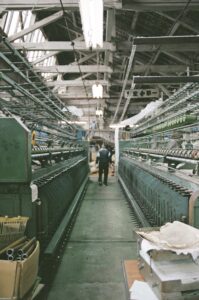
HO: With the work that I was doing with Ziggy (Chen), I used to visit a lot of these textile manufacturers in Japan, Italy, and so on. The ones in Japan, to be precise, many of them are located very close to my hometown, either in Ichinomiya¹ or Shizuoka (静岡). As a Japanese person working internationally, I guess I always wanted to represent my country, in a way that I wanted to present something amazing from Japan to an international audience.
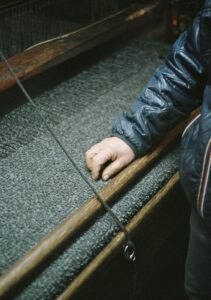
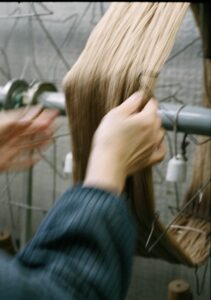
Among all these textile craftsmen I visited, I noticed how isolated they were from everyone else in the world. I mean, they make amazing stuff, they have amazing know-how, but they’re only working within their comfort zones, within very small boundaries, and with a very select group of people. If you are a new designer and you go there, they might just turn you away because they don’t want to take risks. Whenever I am in Europe, that was probably one of the first things people from the industry would ask me about, like where to source good Japanese fabrics. But on the other hand, Japanese textile factories are, like, very, very secluded here. Most of the people working there are, like, 80 years old. People are literally disappearing, and it’s really, really dying. And I just thought, this was crazy urgent.
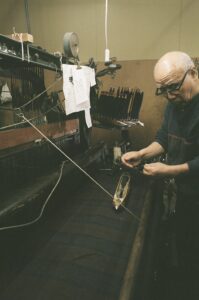
All these beautiful things happening around my hometown, they will be gone in no time. Nobody is taking over because nobody knows about this, and nobody thinks it’s cool because they’re just, like, a bunch of old fellas working with their friends, among themselves. At that point, I just thought I must do this right now, otherwise all these beautiful crafts would be dead without a successor.
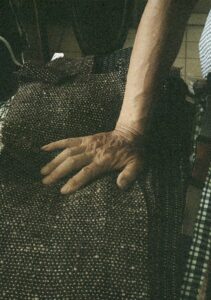
I got along fairly quickly with the factory people. They are all like my grandpas. I’m very familiar with the way they speak, and I respect them massively. And I’m so glad that they trust me in return for what I want to do. I then started taking photos, sharing stories, and writing about the situation on Instagram every now and then. Fortunately, some people reacted, Jan Jan (Van Essche)3 being one of the earliest supporters. Without taking, like, a sales approach to any of the labels, I’ve been exceptionally lucky to have these incredible designers showing appreciation for what I do.
AW: Does the name Dissonant Practice carry any particular significance? It certainly has a nice ring to it.
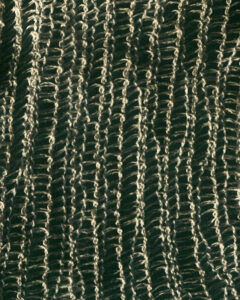
HO: All the knowledge and handicrafts that come with them are dying purely due to inefficiency — in order to industrialise, you must up your efficiency to produce more, right? All the inefficient and unnecessary stuff is just left behind, forgotten. They are like noises, you blank them out, and you ignore them. Same with the textiles that I work with, there are a lot of mistakes and errors or irregularities in them. They are kind of like noise too, you know. Some sort of dissonance is created by the man-made process in the final product.
I think it was Miles Davis who said, “There’s no such thing as a wrong note in music”, I listen to a lot of free jazz and noise music, and what he said resonates with me a lot. All these things that are considered mistakes, all have their roles in a piece of music. It’s the note that you play afterwards that determines whether they are right or wrong. Only by pursuing efficiency and getting rid of the unnecessary, eventually everything would just lose its charm, I felt. So I wanted to create the opposite, I wanted to focus on the dissonance, I wanted to focus on the noise. That’s the idea behind the project.
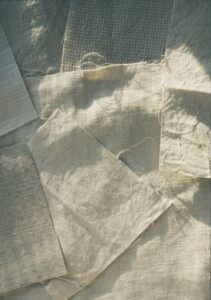
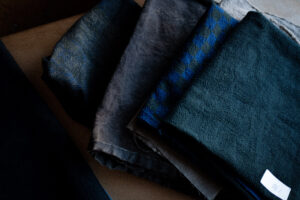
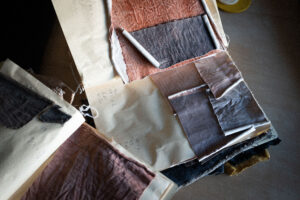
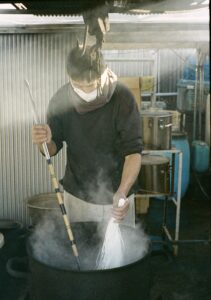
When I got into natural dyeing, I wasn’t doing it because it’s more environmentally friendly per se. Essentially, for me, the process creates a lot of noise, it creates dissonance in colours and textures. Take synthetic indigo as an example, if you place it side by side with natural indigo, you can see so much depth in the natural one because there is “noise” in the colour — it’s not just blue. There are hints of red, yellow, and green, which make the colour so rich. And without all these elements, it just becomes so plain and flat.
The spectrum of colours created through the process of natural dyeing changes over time depending on the conditions of light, temperature, humidity — everything. Hence, they become even more unique as time goes by, and that, I think, is the key to cherishing a garment for years to come. And it goes without saying really, this tactile experience is second to none. I personally find these things extremely fascinating, the name Dissonant Practice just represents a large part of this aesthetic.

AW: You mentioned social media briefly just now. Both your website and feeds, they all seem to have a mysterious air around them. Was that a calculated marketing choice?
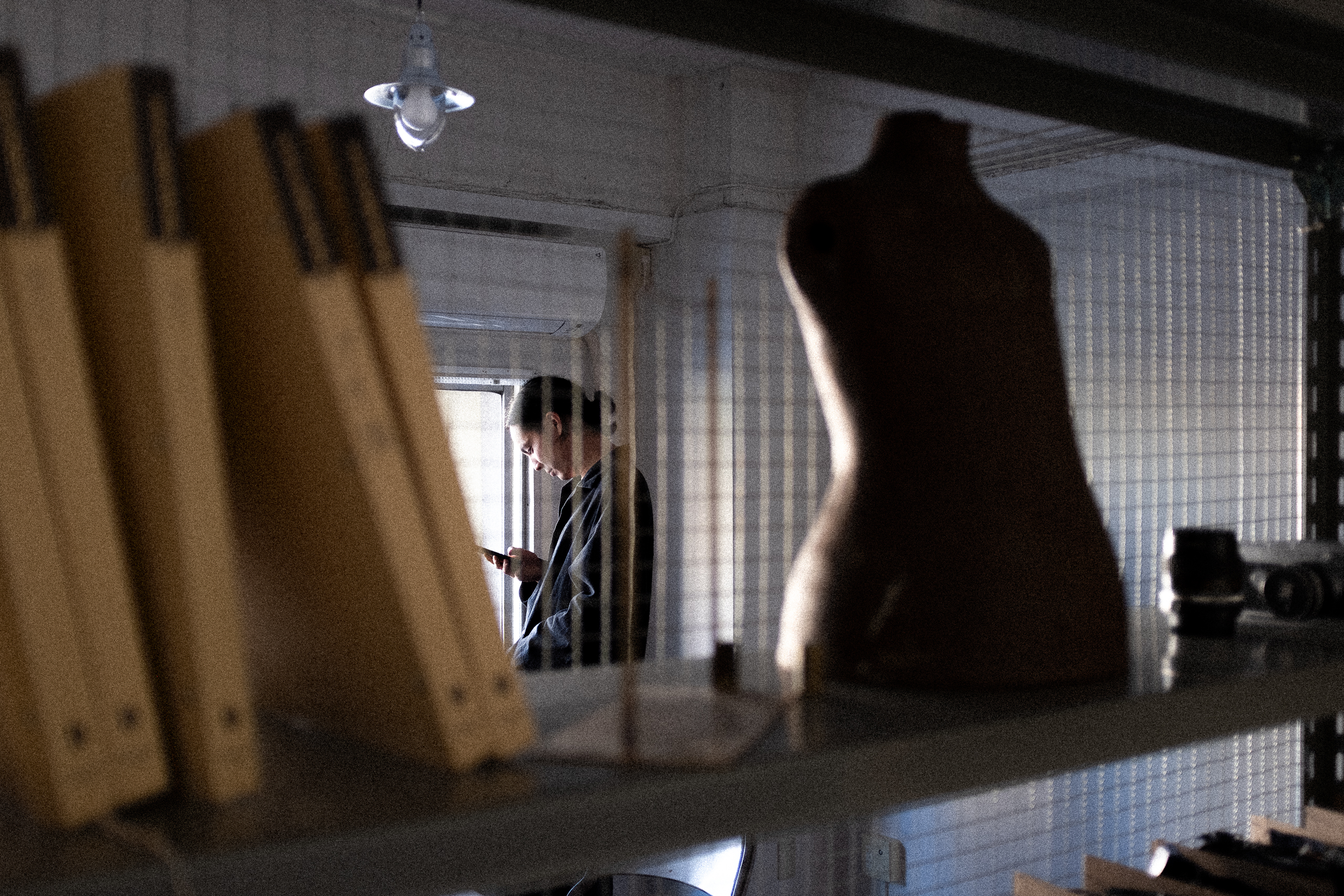
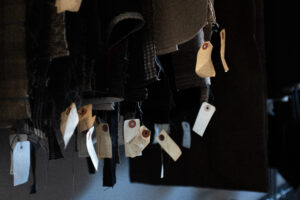
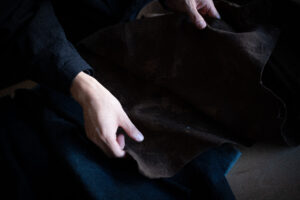
HO: I don’t really do it consciously, but I find this umm, ambiguity, way more beautiful, and I like that the imagery can be interpreted in various ways by different people, depending on your state of mind or the time of day. The imagery creates a kind of illusion for the viewer, you know, I mean, with a white background and proper lighting, it is what it is.
AW: There’s nothing else.
HO: There’s nothing else, and I didn’t want that. I wasn’t trying to put up a mysterious front and all that, I just find it more subtle and more beautiful that way. Especially with these kinds of natural fabrics, under different lighting, they become completely different — they can’t be captured 100% accurately anyway. That’s why, it doesn’t make sense for me to present images that are, like, crispy clear.
I was showing you some new developments I’ve been making earlier, right? So I took the samples from home, and as I was driving, I looked at the fabric in different environments under different lights. Every time I looked at it, it was never the same. All the hues and shades, even if we see it with our own eyes in person at, like, 2 a.m. or 5 a.m., they turn into something else. Like some of the fabrics that you saw, you may recognise them as black at first glance, but if you sit here (and look), and it becomes brown. There’s so much randomness, so much oomph to it.
I guess it’s also the idea of noise and dissonance that I wanted to convey through the images too. Maybe you cannot see it well, but when something is not so clear and precise, when it is abstract enough, you begin to see what you want to see.
AW: Your fascination with textiles, did it come from family?
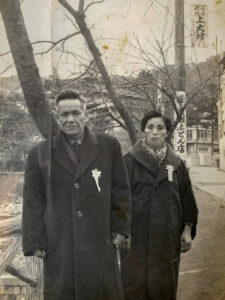
HO: Not really. My grandparents used to run a kimono shop, but by the time I was born, it was already gone. It was never part of my upbringing. I suppose it’s just my own, umm, fetish. (laughs) I just find it so fascinating, and that’s all. My father is an office worker at Toyota (豊田), so this was never a family affair. I’m the second son, so my parents probably wanted to experiment a little with me and see what might happen. I was encouraged to just follow what I was passionate about and do what I wanted to do.
AW: I guess we can’t avoid bringing up COVID. What do you make of this whole bizarre situation?
HO: I won’t talk about all the negative stuff because we all know it. I think there are a lot of common emotions shared among many people, that before COVID, everything was moving too fast. When COVID struck, it offered an opportunity to really slow down, and it was exactly the same for me. Over the past two to three years, I was really granted the chance to be still, to settle down, and to focus on my own research. So in that sense it’s been pretty amazing and rather positive.
The last time I was on a plane, was right at the brink of the COVID outbreak, coming back to Japan from Paris. I remembered people were talking about this new virus in Wuhan (武汉), and the whole lockdown and stuff. And since then, I haven’t really been travelling too much. It’s the first time in, like, 15 years, and that helped me deepen my connection with the local artisans here in Japan. For this textile project, it was essential really. It has probably been the most productive two years of my career.
AW: The world is picking up its pace once again, and Japan has finally reopened its borders. Are you ready for it?
HO: Honestly, I don’t know, only because I’m so accustomed to this lifestyle right now. For the past two or three years, my mental health has also been very healthy and stable, because living in a city like Tokyo, Paris or Shanghai, a megacity with the amount of people in it, you are bound to live in constant commotion and comparisons. Because of the pandemic, I experienced none of that and was able to focus on what I wanted to do and study.
AW: It is what it is now, I guess, and there will be no more surprises. Whenever I think about it, it brings somewhat of a bad taste in my mouth frankly, that we have to deal with all the tourists again. (laughs) I’m not going to say that I enjoyed the pandemic because that would be very disrespectful and selfish, but I remember being in Kyoto around July 2020, I had never experienced the city like that, it was surreal, to have Kyoto almost entirely all to yourself.
HO: That’s probably why I’d like one more year of it. (laughs)
AW: Final question, if you were not doing what you’re doing now, what do you think you would be doing?
HO: I think I’d be a musician, playing a soundtrack of dissonance and noise. (laughs)