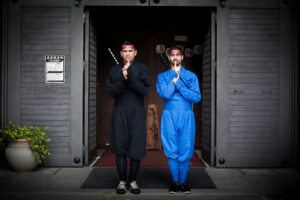
The first time I met Rui was also the first time I attended a Japanese wedding in Nagoya (名古屋) in 2018, and this guy was definitely hard to miss. Yasue-san was wearing a man bun and rocking a full-on kimono. To me at the time, he looked nothing short of a samurai walking out of a Japanese period drama. Instead of a katana, though, he had his camera.
It wasn’t until the after-party later that night when we had our first conversation. I couldn’t recall much, except for mistaking him for a Brazilian after hearing his spot-on American accent. He had been taking photographs of the entire party of us “gaijins” throughout the night, running up and down the street, switching seats, going to all different corners, capturing us having a laugh. And fair to say, I was intrigued, but more like, ‘it was a long day man, just chill, won’t ya?’ I thought to myself.
We didn’t meet again until a couple of weeks later when we managed to work on our first so-called project together, albeit small and ultimately pointless in hindsight — for the record, the project was neither of our idea — it was a video shoot of a burning trash can filled with, well, trash, at the beachside of Tokoname, just under an hour’s drive away from where we were, sounds ridiculous enough already doesn’t it, wait for it. The three of us had to wake up at around 3 AM and arrived at the spot before dawn broke, the beach was eerily quiet, and dead, the only thing that could be heard was the sound of the ocean waves and the whispers of the wind, soothing, yes perhaps under a different circumstance, it was dark, it was chilly, and sure as hell we were all freaking sleepy and exhausted, but none of it seemed to deter Rui. And there I witnessed the guy’s dedication and commitment to his art, and of course, what he was actually capable of when it comes to the crafts of video and photography. It still baffles me to this day however, why he decided to take up something like this, waking up, driving and shooting, all for nothing. Was it just a bit of fun hanging out with some new friends, or if it reminded him of his times in Egypt, I wouldn’t know.
After I officially relocated to Japan the following year, our professional relationship and friendship grew. We set out to conduct interviews together, completed photoshoots, video shoots, art projects and exhibitions, you name it, and every collaboration proved to be an invaluable learning experience. It wasn’t always sunshine and roses like everything else, but the moments of joy and laughter we shared, the late nights and the long drives, and the words and love he showed to someone who was new to the country at the time, were beyond what I could ever fathom and certainly left me with many stories to write home. At the age of almost 40, with a vagabond spirit still aflame and an insatiable wanderlust, Rui fearlessly set forth, rid of his belongings — the guy is heading to the Central African Republic, a far-flung land shrouded in mystery, perhaps with an air of danger too, completely unknown to me and if you are reading this, you are probably Googling its location too.
The conversation below was conducted 12 days before Rui’s departure from Japan. Usually adorned with a joyful demeanour and a knack for occasional sarcasm, the man I knew opened up about his heart-wrenching childhood and his curious days in the Middle East. I saw his poignant eyes, beneath his playful facade, lay a troubled soul burdened by a troubled past, sensitivity emanated from his every word, empathising with the pain of others. Despite every bit of inner turmoil, Rui possesses a heart brimming with goodness, always yearning for love, connection, peace and elusive tranquillity.
Tennessee Williams used to say that life is all but a collection of memories, except for that one fleeting present moment that slips through our grasp, we don’t even notice, as if in a hurry. It is in this transience that the irony of photographs reveals itself — perfectly freezing a single moment in our time and memory, yet inherently impermanent, teasing us with a glimpse of eternity. With whatever lies ahead of Rui’s path, I hope photography can help him replace fragments of his past memories, and fill the void with new moments and narratives. Bon voyage, my friend! As we meet again, I eagerly await the retelling of your tales, capturing solace and transformation through the lens of your camera.
Exit West
AXEL WANG:
Rui, what was that non-governmental thing you just mentioned?
RUI YASUE:
The organisation is based in Nagoya, called Save Iraqi Children Nagoya. The NGO is led by a lawyer and a doctor, and is dedicated to supporting medical services in Iraq. We invite Iraqi doctors to come to Japan, provide them with technical support and so on. When I first joined them in 2008, there was no Arabic speaker, so I was kind of mediating, you know, facilitating collaborations between the Iraqi doctors and the NGO. Occasionally, I was sent to Iraq to take photos.
AW: We will get to Iraq in a bit, but first, Publista, is there any meaning behind this online pseudonym of yours?
RY: It’s just a made-up word, basically means a person who publishes things.
AW: While you were attending university in Nagoya, you took a placement year in Cairo. Did you know any Arabic?
RY: I knew how to say hello!
AW: Why did you pick Cairo then?
RY: I mainly wanted to go there to learn Arabic, and you’re probably wondering why I wanted to learn Arabic, right? It’s kind of a long story, but when I was around 14, I read this book, if you translate the title into English, it’s something like The Logic of the Victim, written by Katsuichi Honda1, published in 1982. Without reading this book, I would have never expected there to be an ongoing war in modern society.
I mean, while I was in elementary school, I grew up hearing the World War II stories from my elderly Japanese neighbour, a couple, around 60 years older than me. Although I loved hearing those tales of history and warfare, it wasn’t until I read the book and learnt that there was an actual war in Palestine. I guess this… revelation, made me realise that families could be easily torn apart during wartime, or in fact any time. You can lose your loved ones just like that, which really struck a personal chord, as my own family had fallen victim to murder when I was a child.
I guess the whole thing sort of ignited a profound interest in Arabic culture for me, and I wanted to understand more about the situation, the state of the people living there, and the consequences of death.
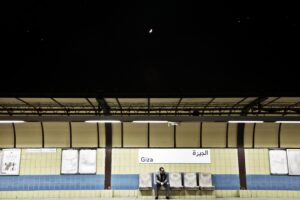
AW: You had a family member murdered?
RY: Yes. So when I was born, I lived with my parents, grandmother, and my grandfather’s sister. When my father wanted to change the land ownership, he discovered there was actually another guy, who had a claim to part of the land. He turned out to be the son of an affair involving my grandfather’s sister, someone outside our immediate family.
The guy refused to give up the land, and because he had huge debts, he moved in with us. He was just a crazy, terrible person, and eventually we gave up living in that house and moved out. Long story short, after a month or two, the police contacted us saying that they found the dismembered body of my grandfather’s sister, scattered across various locations, her head in Nagoya port, and her right arm in the mountains of Gifu… And this man was arrested for killing her.
After the murder came to light, the incident garnered significant media attention, and my mum just couldn’t handle the situation, and became quite depressed as a result, I think. I mean, at the time I was only two but I knew something happened, even after I grew up, I couldn’t really discuss it, and it became somewhat of a taboo in the family, you know, to talk about it.
AW: Man, that’s horrible.
RY: It was. I had a serious grudge against this guy back then. In the end, he didn’t get the death penalty but only a life sentence. I think losing someone to such a heinous crime really impacted us as a whole family.
Anyway, I think I might have gone off on a tangent a little.
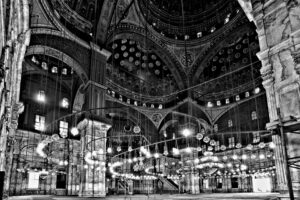
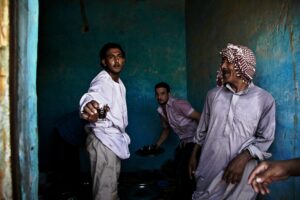
AW: Thank you for sharing the story, I had no idea. Coming back to Cairo, if I may, the city is not only far from Japan, but it’s contrasting to say the least. Can you still recall that feeling when you landed there?
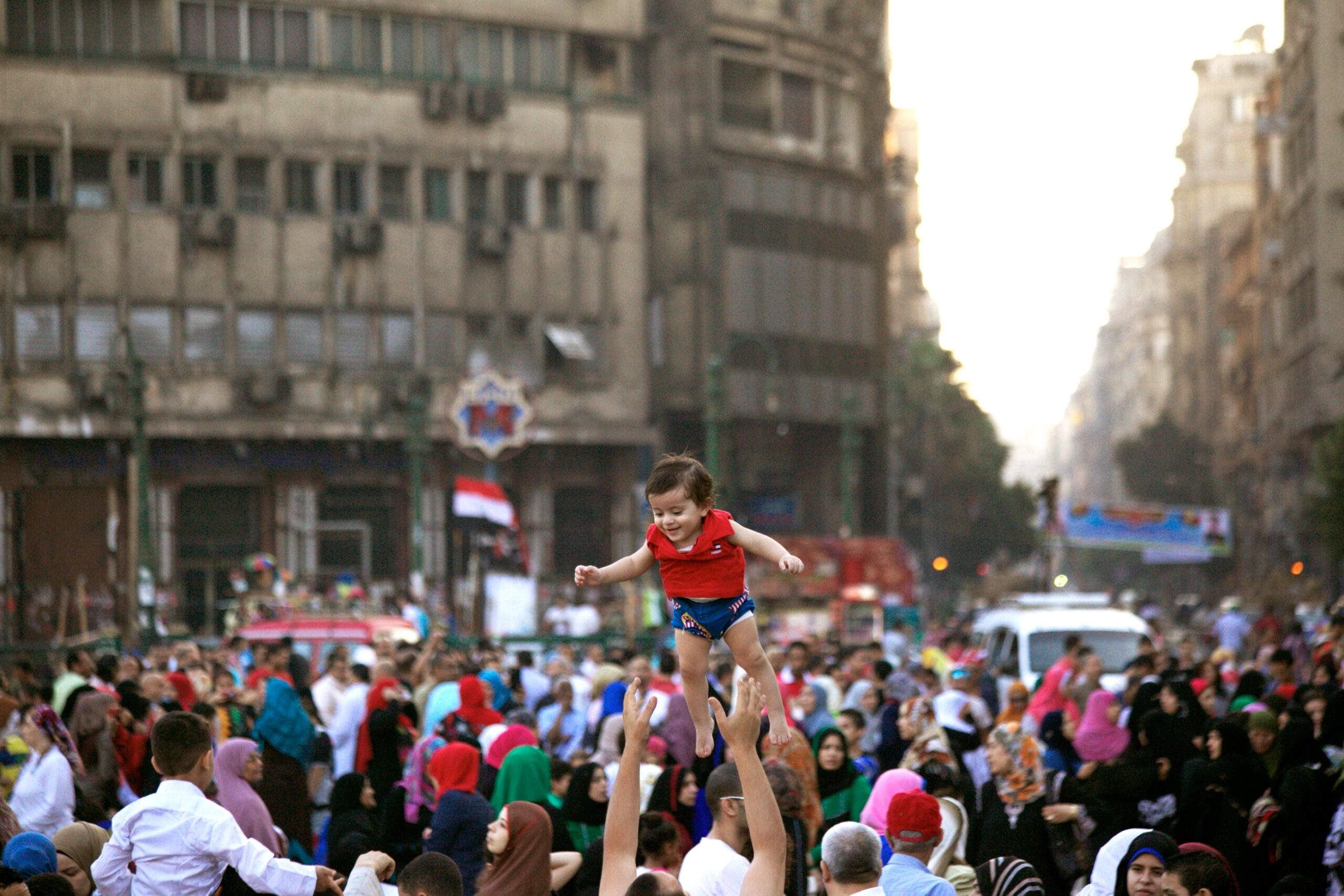
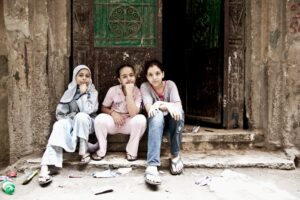
RY: I remember feeling really scared. I think I was around 21 or something. It was the middle of the night when my flight arrived at Cairo Airport, so a taxi was the only option left. I had to share the taxi with other people in the end, which was pretty shocking, definitely something I had never experienced before. And the number of cars on the road was really staggering as well.
AW: If you have to use three words to describe the time you spent in Cairo, what would they be?
RY: New, unexpected, and probably lazy.
It was a bit tough in the beginning, because I had to sit down in the lecture hall for 3 hours without knowing what the professor was talking about, but um, the class was for foreigners, so I quickly made a lot of friends from all over the world. It was a great time, actually.
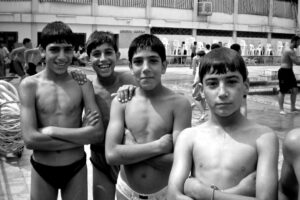
AW: How long did it take you to become acquainted with the whole surroundings?
RY: I would say two months. Because initially, I always had these thoughts in mind, that if we were in Japan, this wouldn’t have happened, things like this are impossible in Japan, and so on, you know. And once I began to stop seeing everything from the perspective of a Japanese person, I felt truly comfortable, and I could adapt to the society. Trains were late — okay; the bus didn’t have any schedule — you just had to wait. I learnt to accept things as they were.
Also, this may be a bit surprising for you to hear, but I found Egypt relatively safe back then. I had no problem walking around in the middle of the night, even through those tiny alleys. Obviously, I’m male so, you know, I’m conceivably less likely to be targeted, but yeah, after around two months, I did not feel scared anymore.
AW: Did you start photography when you were in Egypt?
RY: No. I was not really interested in photography during my time in Egypt. When I went to Palestine for the first time after Egypt, I saw a lot of people who had lost their families due to the conflict with Israel, and I really wanted to document the whole thing. But I only had a tiny compact digital camera with me, and I felt ashamed pointing the camera at them, like I was just another tourist, you know, so that’s when I thought perhaps I needed some serious gear.
I never intended to use the camera as part of my work, I wanted to be a journalist writing for newspapers.
“Everybody’s busy. They work hard, hard enough to forget everything else.”
AW: At the beginning of our conversation, you briefly mentioned doing photojournalism for Save Iraqi Children Nagoya in the Middle East. Did you have something specific in mind about what you wanted to capture there before your visits?
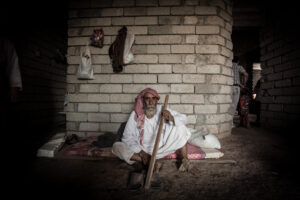
RY: I had an assignment from the NGO to document the suffering of the people. I guess it’s a very typical image of Iraq, isn’t it? After spending a certain amount of time there, I think I just came to develop a further fondness for Arabic cultures and the people — they have a wonderful sense of humour, and they are lazy sometimes, and I tend to be more laid-back and less punctual, and I felt really comfortable being among them.
I guess it’s fair to say that, in general, people outside the Middle East only know about the region through the news, which often portrays explosions or people being killed. It’s like if I stayed home 24/7 in Japan watching the news without ever stepping outside, I would presume that this country is extremely dangerous because murders and suicides are always on the news. It’s obviously not true because we live here and we experience daily life here firsthand. Same for the United States, it’s not the safest country in the world, but through movies, music, and cultural exposure, we are able to see the fact that, people there live without constant issues.
But this sort of perception doesn’t exist for the Middle East. In some ways, I felt the need to share information about the daily lives of the people there, beyond the context of wars and terrorism and all that. Not before long, my focus shifted to capturing moments of laughter, people enjoying tea, you know, just normalcy, albeit probably a hundred kilometres away, the UK Air Force was bombing the city.
I wanted to help overturn the negative image, misconception, or stereotype, whatever it is, and it became really important for me to show that Middle Eastern people are ordinary people, just like us, living their lives grounded in their own reality.
AW: You developed this incredible emotional connection, sentiment, towards the Middle East, and towards Muslims, it’s not so common among Japanese, I feel.
RY: You know, speaking from personal experience, being affected by a family murder really impacted me because I knew how unreasonable it is to lose someone you love just like that. Regardless of the circumstance, I don’t want to be killed, and I don’t think anyone wants to be killed. But when it happens in your own family, that sense of sadness and grief, it lingers, it doesn’t simply just go away.
And I think a lot of people in the Middle East experience that and share the same pain, and it’s something that resonates with me a lot. To me, they too, have to bear this tremendous weight of being victims, but more often than not they are labelled as dangerous, vicious or whatnot, though at some point their families were attacked, their homes were bombed. I wished I could have done something to change that (misconception).
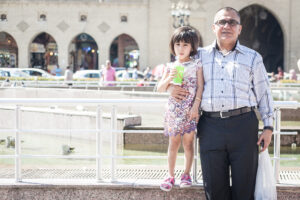
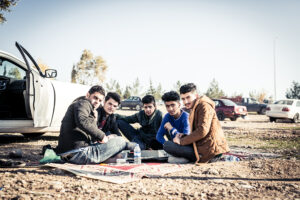
AW: Diane Arbus once said that, she wanted to understand the world through her camera. Was that something you were trying to do as well, to understand the Islamic world through your lens?
RY: Yes, I think that’s true. Another reason why I started photography was because, after covering events and conducting interviews in the Middle East, I returned to Japan and gave lectures at high schools and universities occasionally. I just found that people didn’t seem very interested in the Middle East, you know. So I thought if I had pretty pictures, maybe that would grab their attention.
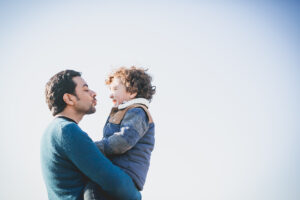
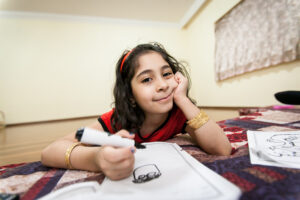
You see, the only news they saw was about people getting killed in Iraq, but they didn’t know what kind of faces people there had, what they ate, how they slept, or what their homes looked like.
Many still believe that people in the Middle East live in deserts or tents, which is just not true. So I felt the urge to show how Middle Easterners live their day-to-day, in order to bridge the gap between their current situation and their daily lives.
I felt this even more intensely after the Tohoku earthquake2, because when Japanese people saw the news about the disaster, they felt deep emotional sympathy because they all understood how those affected had lived their lives, and what they were going through in the shelters. They could imagine the disparity.
Without understanding the gap between the current dire situation and people’s daily lives, it’s difficult for anyone to comprehend the sadness, pain, and resilience that other people had to go through.
AW: You travelled back and forth between the Middle East and Japan quite often back then. Every time you returned to Japan, how did you feel?
RY: Well, I could see that it’s a peaceful country and people feel safe. Everybody’s busy. They work hard, hard enough to forget everything else. But um, I do think that it’s a wonderful thing for people to live in peace.
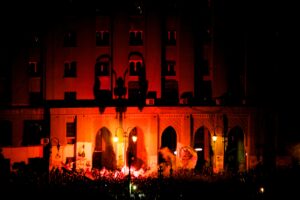
When I went to Tunisia after the revolution, I did interviews with some of the participants of the demonstrations…
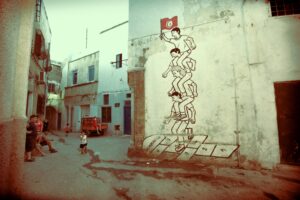
AW: By “revolution,” you mean the Arab Spring?
RY: Yeah, I was there for a short period of time. So there was this wall mural, which illustrated a lot of people gathering, stepping towards democracy right. But one of the guys I interviewed, said that they had no idea what democracy actually was, they wanted to bring down the regime because they couldn’t eat.
At the time, the unemployment rate was sky-high, flour was too expensive, and that’s why people became angry. The same thing happened in Egypt too. For them, as long as they could eat regularly, they saw no reason to raise their voices and bring about drastic changes in their lives, you know, by overthrowing the government or something.
So yeah, it’s obviously a bliss, and a blessing to live in a peaceful society, but I guess many of us take it for granted, that it’s natural, and it’s given.
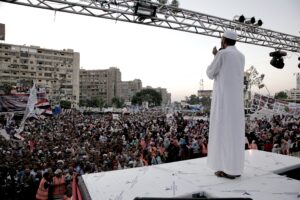
AW: What was it like at the time?
RY: Oh, well, people were excited. I only saw part of the demonstration in Egypt, I mean, the Arab Spring, or the Nation’s Spring, whatever, it wasn’t like an official, organised thing, you know, there was no leader of the Arab Spring, so to speak.
It was just groups and groups of people, and they were excited, because they felt they were changing the world, or society, but um, I couldn’t help but feel like it was some kind of a delusion. I will spare you the details, but let’s just say people were manipulated very easily.
AW: Coming back to photography, it has the power to speak the truth, and to spread lies, particularly during a demo, everything is not always what it seems.
RY: Well, yes, it’s very difficult. I mean, what I personally saw on the ground, was only a tiny part of the whole event. You know, what I could frame in one photograph is only ten or twenty people, in a place of hundreds, if not thousands. Was what I saw the truth? Yes, I believe it was, but was it the whole truth? I don’t know, because at the end of the day, we are all humans and we all have our subjective opinions, and my photography only represents what I saw.
The reason I stopped going to Iraq was because, I heard that many locals were starting to join the Islamic State, even though clearly they were doing horrible things. It’s just another reminder to me that peace does not arrive naturally, and it’s something that we must actively work towards. Unfortunately, it’s fairly easy to forget that.
And it kind of also made me question whether humans are truly peaceful animals. Sometimes, it feels like we all have an inclination or even a desire to fight. Like kids in school, they fight, and they bully, and we all tend to categorise people too, it’s perhaps a natural state of human society.
I felt powerless. Despite wanting to spread a peaceful image of the Iraqi people, I’m not saying I was mistaken, but alas, in the world we live in, there are bullies and terrible people, regardless of race or religion. Now, I see that as a normal occurrence, but at the time, I couldn’t admit it.