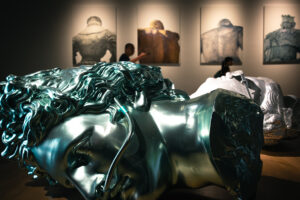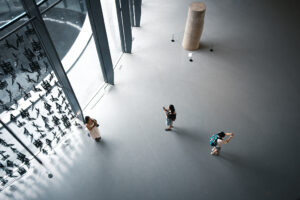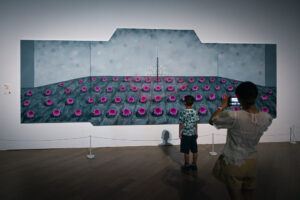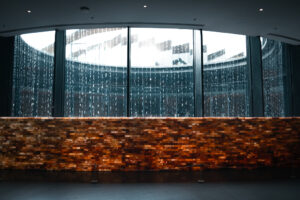
Look at these idiots with their smartphones, photographing the artworks, oblivious, and naive. Are they aware of the exhibition’s concept at all? That’s a definite no, most of them show not the slightest shred of interest in the work, but rather, the entire thing merely serves to paint a convenient and ideal backdrop for their soon-to-be-edited, soon-to-be-posted social media mirage, the whole game is about the image, never about the idea — so no, they are not aware. Worse than your average Eiffel Tower or Buckingham Palace tourists, these are art exhibition tourists and I fucking hate them1.
I’ve said it. You’ve heard it.
Before I go any further, some context perhaps.
If you’ve never heard of a city named Chengdu sitting in southwest China, I don’t blame you, but you must be familiar with Sichuan, or Szechuan — Mapo tofu, Bangbang chicken, Dandan noodles — if you have ever lived above a rock, you should have at least heard of one of these dishes. Yes, the Sichuan cuisine that’s been popularised around the globe by generations of Chinese immigrants, and Chengdu is the capital city of this province famously known for everything spicy, though some locals tend to argue that the spiciness and the numbing elements are only some of the many facets and layers that the cuisine comprises. Incredibly chilled, effortlessly hip, with extraordinary food, Chengdu is easily one of my favourite Chinese cities to spend time in. On my second visit here, one other strange thing that I noticed while strolling the streets, aside from the overwhelming smell of peppercorns and chillies, was the ubiquitous cosmetic surgery ads looming from towering billboards, large-sized, in-your-face, no one could have missed those, even if you were just a simple-minded tourist.
Plastic surgery, however, is not what brought me here.
The Biennale in Chengdu was officially inaugurated in 2001, with an exclusively domestic-focused Chinese artist lineup, whereas the second edition, weirdly staged four years later, invited around 20 international artists to participate. This was pre–Beijing Olympics China, a period marked by eagerness, with a bit of anxiety but much optimism, to present itself as open and welcoming, global and connected — how different that mood today seems. The Biennale proceeded more or less on schedule for the following four editions, experiencing a change of hands in 2011 from private to public administration. The Biennale did not take place in 2015 and entered a hiatus; during this period, instead, its cousin, the Anren Biennale stood in its place and took the throne. The Chengdu Biennale eventually returned in 2021, by then, the political and cultural landscape had largely shifted.
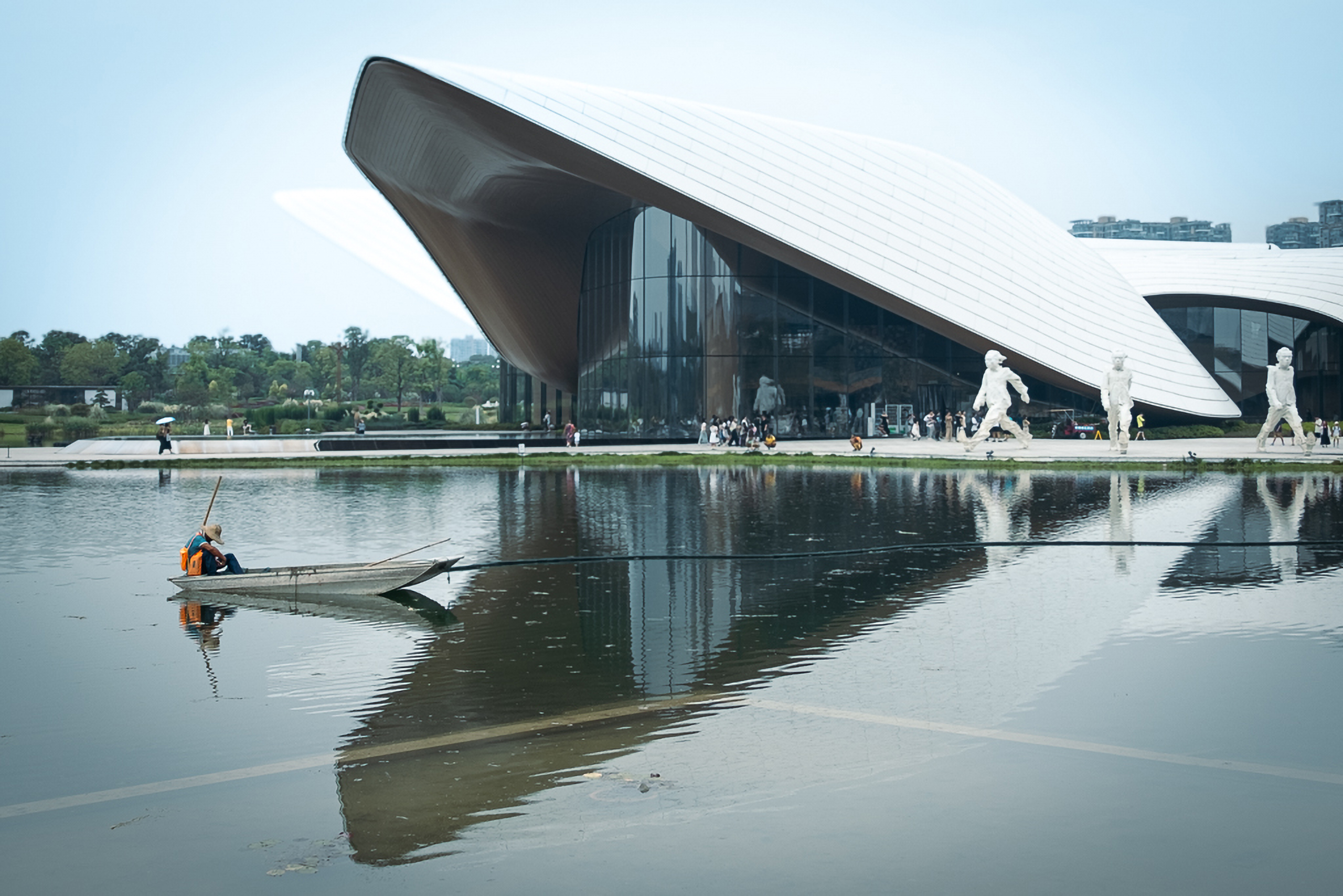
As complex and, at times, confusing as many other things in China for many, myself included frankly, now running into its either 9th or 11th edition, the Chengdu Biennale 2023 was massive, and admission was free. Not common, but a nice gesture from the museums and the local government to democratise contemporary art to a plain, flat horizon. One side of the argument maintains that the democratisation of art aims to educate the masses and elevate towards high culture. In the blue corner, on the other hand, from what I have personally witnessed, this very move achieves little beyond inviting people to tap in and photograph a selfie with a slice of contemporary art behind their backs. The Biennale took place in two separate museum venues located right next to each other, both spanning several floors of exhibition halls. You could drown yourself in artworks, blended with a swarming crowd for a couple of days in there, easy.
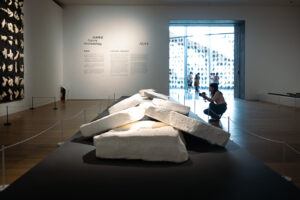
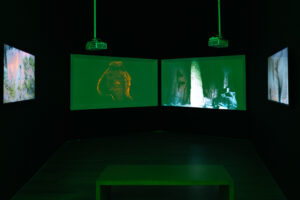
I was a COVID virgin before arriving in Chengdu this time around, unfortunately the cherry was popped just before I boarded the flight from Guangzhou. Symptoms began to show, how, you never quite knew how anymore, not that anybody cared, not anymore. I caught it anyway, and it felt like shit, that’s all I knew. I had a job to do in Chengdu nonetheless, so needless to say, my first day dragging myself through the Biennale while COVID-positive, was nothing short of miserable, and this was exacerbated by the sheer amount of people — a sea and mountain of people, as the Chinese idiom goes — taking selfies and photographing everything, from the artworks to the benches with their smartphones. Grandmothers were video-recording their grandkids screaming and running around; influencer-wannabes cycling through reels for TikTok and Xiaohongshu, one after another, striking the same stupid pose in front of the same boring piece, wearing the same horrible outfits with their ugly flashy handbags, pulling the same pretentious expression on their faces, and their faces, blimey, look remarkably indistinguishable.
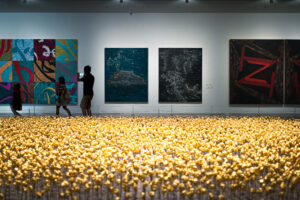
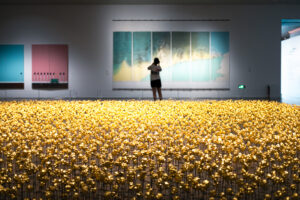
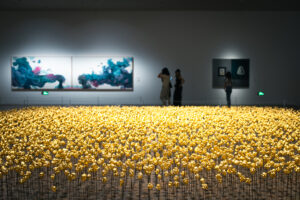
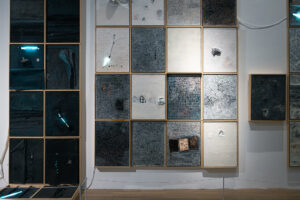
All those plastic surgery ads start to make sense.
Now, if I’ve managed to grab your attention and you’re still reading, you can probably see why I was being such a disgruntled curmudgeon about this whole circus. Combing through my own reactions, trying to figure out why I was so bothered by it all, perhaps COVID played a part, perhaps I just couldn’t stomach the spiciness after all. Again, if you’re still here, I should clarify that this is not going to be a proper study of the Biennale exhibitions; rather, what follows is something else entirely, more of a personal attempt to articulate what the experience triggered in me, a way of organising my thoughts in the aftermath. If you’d rather stick to the visuals of the exhibition, you can safely stay with the photography.