We caught up with Koichiro Osaka (大坂紘一郎) in May 2020 — the curator and founder of ASAKUSA gallery, as well as a longtime personal friend of ours. When Japan’s first state of emergency was lifted, to say that we were unsure or confused would be an understatement. It was a period in which the entire world found itself in a state of bewilderment and turbulence, accompanied by all sorts of stupidity, hatred and hostility.
We are publishing this conversation amidst what appears to be a fourth wave of COVID-19 in Japan. In our conversation, we covered aspects of the pandemic and contemporary art with Osaka. He also spoke candidly about parts of his past experiences and reflections, alongside his role as a curator. Osaka has long been a figure of inspiration to us. Over the 20-odd years that we’ve known each other, he’s always stood his ground firmly in the face of difficulties and obstacles, quietly doing his own thing, steadfastly advancing unassumingly without wavering, never drifting away. To any young person finding their way in the world, we truly hope that Osaka’s story may serve as a source of inspiration.
For the first part of this feature, which consists of two Q&As I did with Osaka in 2011 and 2020, respectively, together with a personal letter addressed to the Hokkaidō-born curator, please follow the link.
AXEL WANG:
Now that the state of emergency is lifted in Tokyo, are you going out to celebrate?
KOICHIRO OSAKA:
I don’t mind staying at home. A part of me is liberated, a part that is not compatible with social life, it’s like being a student again. From a larger dimension of things, the political landscape of the world, the economy, and the environment are all changing, at such an accelerated speed, it’s a shift that I have never experienced in my life, and yet here we are, living this lukewarm and peaceful everyday life, with a certain hypothetical threat of being infected by the virus. Life here just seems to go on without much disturbance, despite that we can’t really travel.
AW: Suddenly, everything comes to a halt.
KO: I don’t mind if the economic cycle stops either, because I’m not a pro-capitalist to start with, but this shift, we are not exactly a part of it. Indirectly, yes, everybody is embroiled in the process, but we don’t get to peek behind the curtains. We are only, in a subtle way, being informed, of what is and might take place next month. The media doesn’t paint the whole picture, and there’s only this much information being revealed. It’s sad, I think, at the same time.
AW: A few weeks ago, while we were on the phone, you said you had been travelling a lot, prior to the pandemic, obviously.
KO: When did you move to Nagoya?
AW: April, May last year. Prior to the move, I went around quite a bit too, outside of London. Why I brought that up was because personally, there’s a distinction between being a tourist and a traveller. If I travel with somebody else, I feel more like a tourist, but when I’m on my own, I tend to see more and experience more, more like a traveller in that sense, you know. But given that you were working in all those cities, New York, Hong Kong and so on, you were more of a resident and weren’t even particularly travelling?
KO: “Travelling” is not the right word, and I don’t prefer using it. I don’t typically travel — going from one destination to another — I only do that as a daily routine of work. I intentionally wanted to take a year off, from what I was doing in Tokyo.
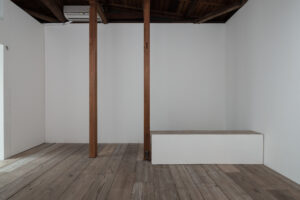
AW: ASAKUSA Gallery.
KO: Yes. It’s been 5 years since I came back from London and Berlin, it seemed like the right time to go out again. Once you settle in one place, you start to familiarise yourself with the local context and establish your practice, which is a great thing, whether as an interpreter, a curator or a writer. You need to understand the people around you, what they are thinking, and the way they practise, regardless of whether you want to change the local context or assert your own position, you do need to have an idea of what’s going on. I think 5 years were certainly necessary for me to achieve that, but once you stay longer, you are out of the bigger context in one way or another. That’s why I wanted to travel, for lack of a better word, and spend some time away from Tokyo. New York came first as a residency program, followed by a two-to three-month stint in Hong Kong, then I was in Southeast Asia. The pandemic happened, now here I am.
AW: You wanted to get out of your comfort zone.
KO: I don’t find myself so comfortable here in Tokyo, so I’m not sure.
AW: Why?
KO: I’m never happy with my surroundings, though I don’t blame others for it. There are many aspects I like about London, and it’s the same here in Tokyo. Parts of the job are easier solely because I’m a local and I speak the language however, I lose this advantage of being a foreigner or an outsider. It depends on how you position yourself, in order to be in that position, there’s a certain set of knowledge and experience required, creating your own field of expertise, it’s part of a learning process as well as a giving process — you take something, and you give, right?
At a certain point, if you stay still for too long and become persistent in holding onto that position, you exhaust yourself and have no more to give so to speak. You become sort of “expired”, and people would know that. You can only pretend to an extent, like you know what’s going on in your own crashing world, that you’ve just come back from New York and all that. I think it’s important that we don’t play a game like that. To conclude, yes, we should all go out and learn new things, and be happy!
AW: “Happiness”, I’m glad to hear that you are now more appreciative of your life.
KO: Because I spent a long time having difficulties coming to terms with myself — late teens, early twenties, going through my twenties, I didn’t like a lot of things, I was hugely unsatisfied.
AW: Is it more to do with work? The gallery has been going on for a few years, I would consider that an achievement.
KO: Not so much, though not entirely unrelated. When we had that Q&A almost ten years ago, I was working at a restaurant, or maybe I had just graduated, so I hadn’t particularly achieved anything. Now I think about work differently, well, I still think that everyone should probably stop working altogether, but first, the definition of “work” must change. By working, at least one’s inner desires have to be fulfilled instead of enslaving oneself to “work”. Sure, we all have to start somewhere, unless you already have a certain amount of assets to begin with. Either way, this change is something I deem necessary. I often think about how far I can push this reality through what I do in my life. I think eventually people could do what they enjoy, and it won’t be called “work” anymore.
AW: Let’s get down to politics. Your work, including the curation of exhibitions, largely engages with politics in different aspects. What triggered this interest? You didn’t seem to care much before.
KO: Doing what I have done in the last few years has helped me acquire another set of language to describe the concept of politics. I’m more comfortable talking about it now than before. I don’t think much has changed however, when it comes to my own viewpoint, as I don’t usually reflect on global politics.
I had a lot of question marks about myself in my early twenties when I was living in Thailand, how the scope of an individual’s life can alter depending on your family of origin and where you were born. Education and opportunities come into the equation too, obviously. I wanted to make sense of all this. It’s like when you asked me about my nationality, I always struggle with this type of question because I didn’t get to decide my nationality or sex.
Thinking politically, provides more than one way of answering it. It’s not denial in any sense, like I’m unhappy calling myself Japanese, but I know about my family, being born to parents of schoolteachers, definitely not lucrative jobs in most countries, but if I had been born elsewhere, I wouldn’t have been able to afford London, for example. It had to do with the Japanese economy at the time and the exchange rate, which had nothing to do with me as a person.
Yet I got to arrive in London as a student because of all these external factors combined, and taking them all, including my own background and experiences, into consideration, I felt responsible to respond to such circumstance, what someone from an industrial city in Hokkaidō, where there’s not much going on culturally, should say or could do in the world of contemporary art.
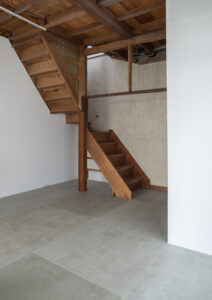
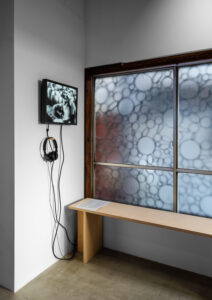
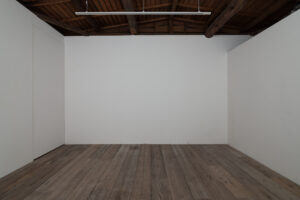
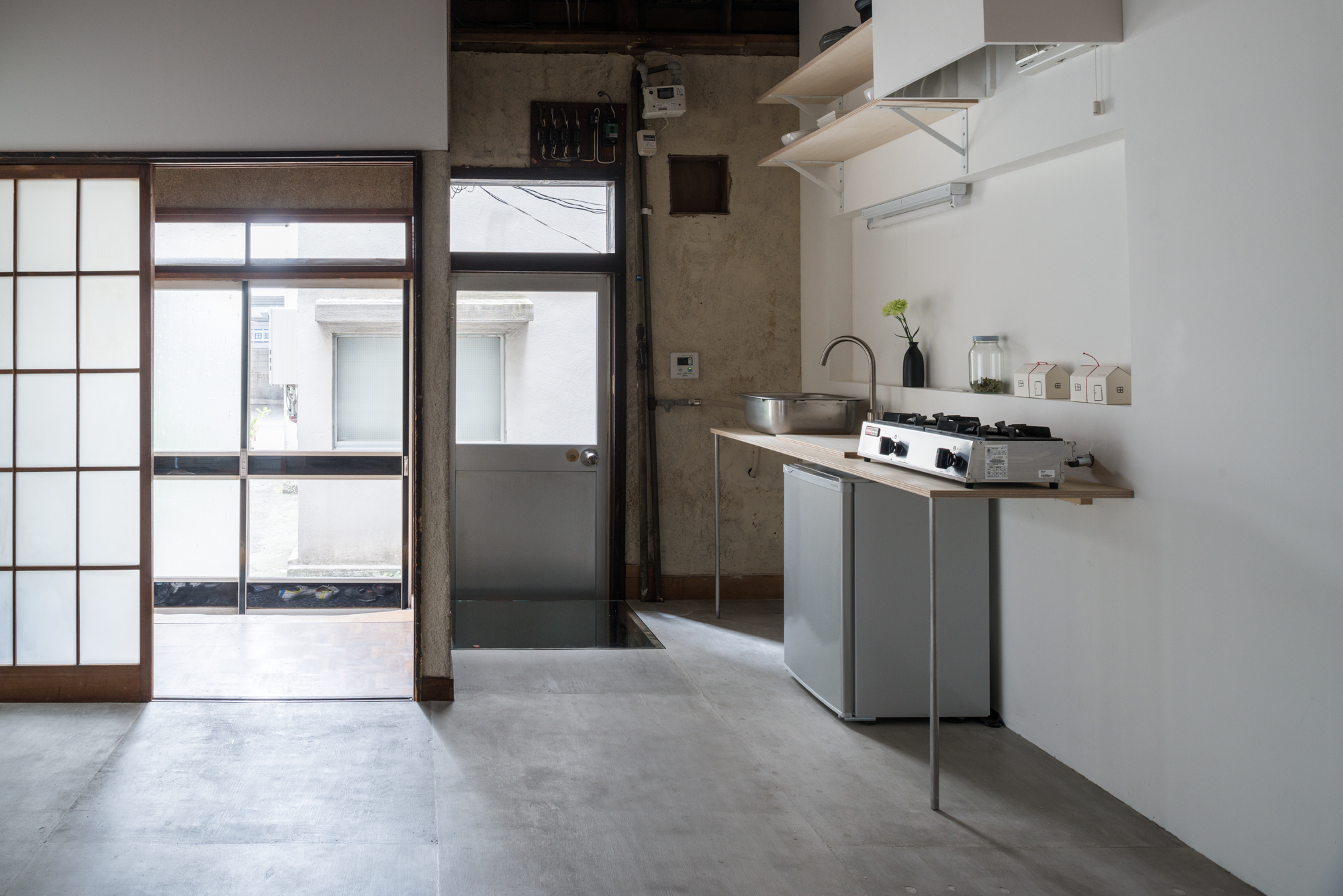
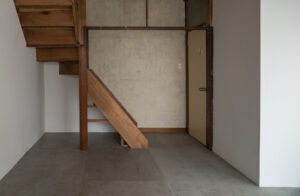
When I was choosing the location for the gallery, I didn’t go for the white cube, sure, because I couldn’t afford it, but that choice also revolved around this thought — myself, what’s around me, how I was raised, and so on — you can hardly bring all those variables down to a flat and plain surface in defining one’s, say, aesthetics and taste. Contemporary art taught me that, how we can possibly analyse this from both social and political perspectives, as well as visually, what’s beauty when it’s framed within and polished by a luxurious canvas or shell, if something is created using the cheapest materials available, what does it mean, my brain wasn’t wired that way until I began to study art and culture.
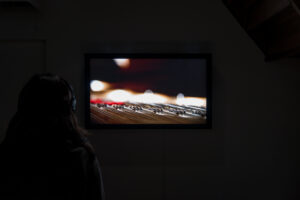
AW: We are experiencing a comprehensive shift in the art industry lately, be it auctions or art fairs, you can even stream and buy digital artworks by paying a subscription fee. As a gallery director and curator focusing on multimedia art and installation, do you see that as positive, since the art world has always been slow in adopting digital approaches?
KO: You know, I was in Berlin hoping to translate some English literature. I probably never told you that I wanted to be a writer or a novelist when I was young. The reason I mention this is that, during my time in London, especially, I viewed artworks through text, instead of any sensory experience of being in an actual exhibition, and I learnt to understand artworks through the filters of what had been written about them.
The contemporary art education in London gets far, in a way, I feel, to verbalise everything. When you see a piece of artwork, you are taught to read signs, it’s kind of a postmodern game of interpretation — visual elements are broken down into segments, what does this or that signify, and I was right in the middle of it all. I had a few questions about this analytical approach back then, though I’m more careful with texts now and certainly their limitation too.
After I came back to Tokyo and started working for SCAI The Bathhouse1 and also running ASAKUSA, being more involved in the installation process and execution, I had to be more aware of the artworks’ relationship with all other coordinations within a specific time and tangible space, so in this regard, online viewing for me is almost as if I’m stepping back to school, studying artworks through texts again and constructing exhibitions virtually in my head… But honestly, I don’t have a straight answer for now, I haven’t thought enough about it yet, we should come back to this later on.