10 December 2022
We would like to present to you a series of photographic essays centring on Okayama Art Summit 2022.
Adhering to the format of a triennale, now running into its third edition, Okayama Art Summit 2022 was held from the 30th of September to the 27th of November, spearheaded by the artistic director Rirkrit Tiravanija1, who was born in Buenos Aires and is of Thai origin. Exhibitions spread throughout the city across a total of 10 different venues, including historical sites like Okayama Castle and Okayama Korakuen Garden (岡山後楽園), where the former is known as the “Crow Castle” due to its black exterior, and the latter is considered one of the top three Japanese gardens in the country. Having missed the previous edition in 2019, right after the conclusion of Aichi Triennale 2022 I set out on a journey towards Okayama, stopping by Marugame in Kagawa to sample some of the best udon that the place has to offer beforehand, a short train ride then took me right to the centre of where all the action was in the city of Okayama.
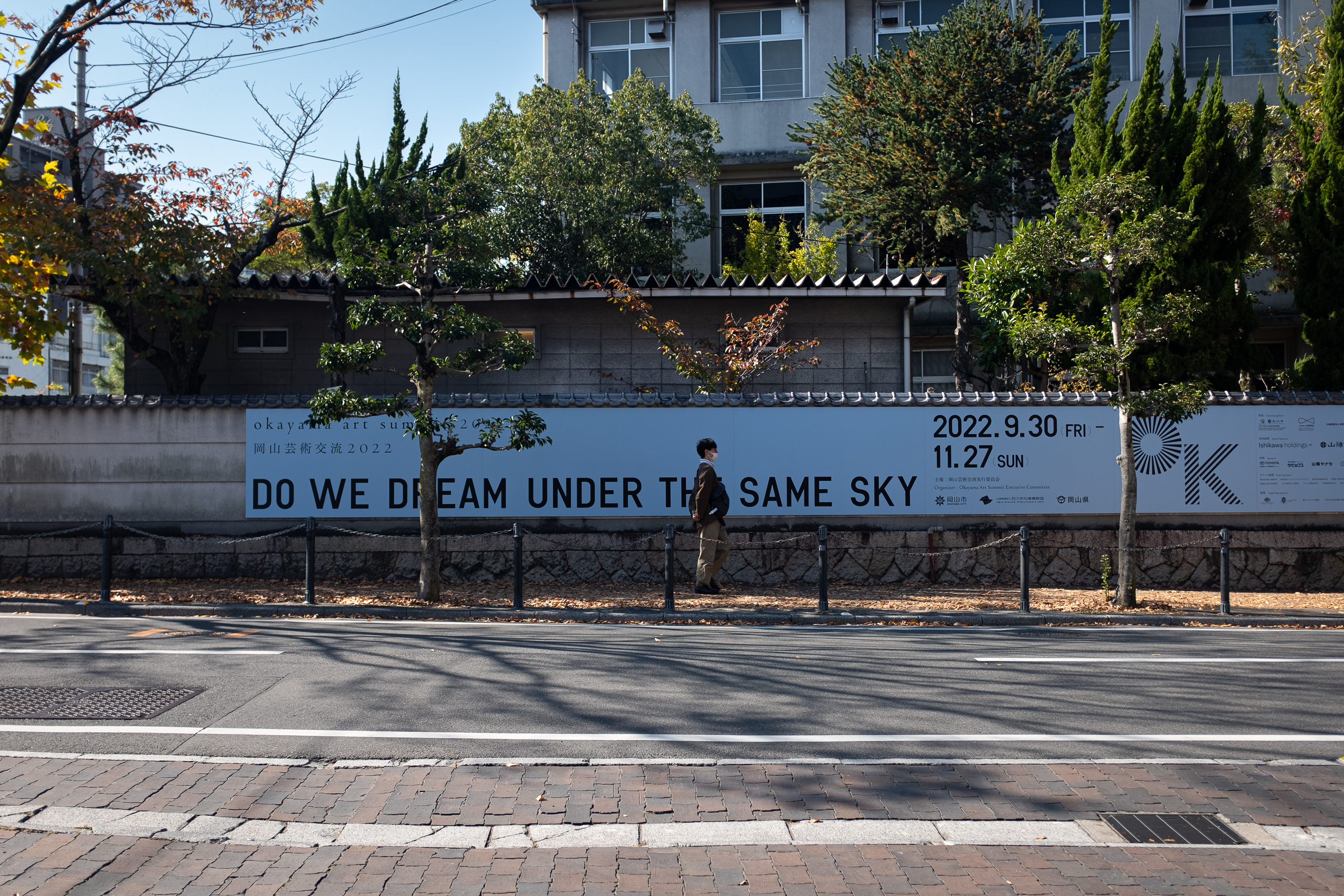
Titled Do We Dream Under the Same Sky, the director posed a largely relevant and vital question amidst the post-pandemic political turmoil. Or rather, without the question mark towards the end of the title, it was more about the initiation of an idea, that regardless of nationality, race, gender or location, we do, in fact, all dream under the very same sky, in spite of the recent rise of nationalism and populism accelerated by the pandemic. This idea, prevails gracefully throughout the entirety of the Summit, where we come across a diverse range of 28 groups of artists from 13 countries.
One interesting fact that may or may not elude the masses is that the hard-to-miss logo of the Summit was designed by Peter Saville, the world-famous Manchester-born graphic designer, who was also involved in the first edition of the Summit back in 2016. The logo reads “OK” and conspicuously refers to the city of Okayama. With the signages scattered across the entire city, it was almost as if the designer was responding to the proposal drafted by the Summit’s director: that everything will be affirmatively “okay”.
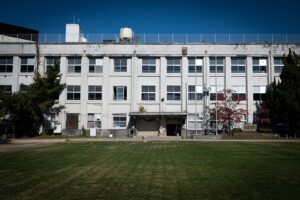
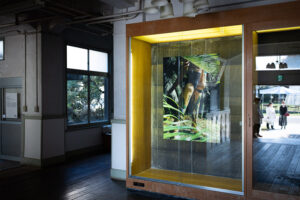
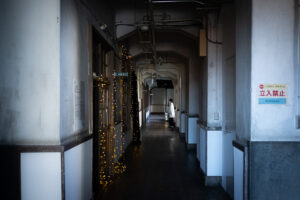
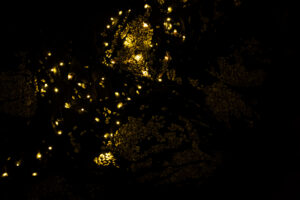
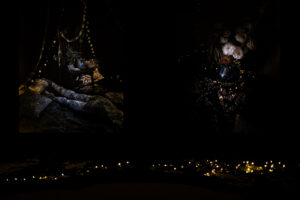
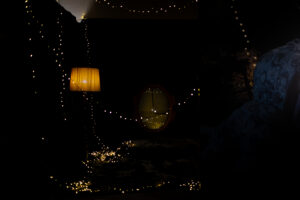
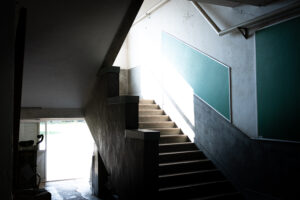
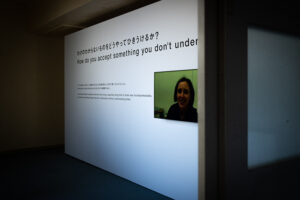
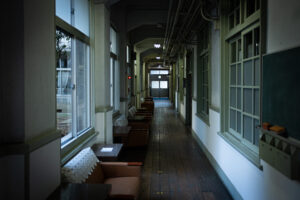
The Summit is a private initiative produced by Yasuharu Ishikawa and directed by Taro Nasu, working with the local municipality in launching one of the most mesmerising art events in the country. In the first part of the photography series below, with the second part following in a separate post, we zoom in on one of the main exhibition venues: the former Uchisange Elementary School (旧内山下小学校). Highlights included the Kimura Ihei2 Award-winning photographer Mari Katayama3, whose work explores social prejudice by using her own body as the subject, presented here via the medium of large-scale photography as well as a spatial installation in one of the classrooms.
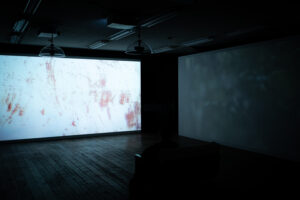
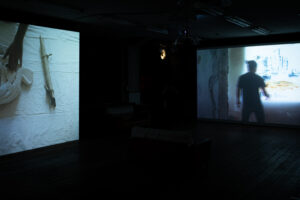
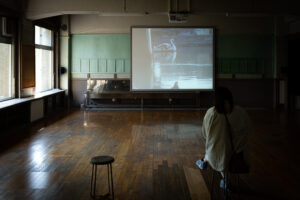
In another classroom upstairs, Apichatpong Weerasethakul4 dwelt further on memory and time, blurring the lines between reality and fantasy. In an abandoned swimming pool near the school building lay a gigantic curious toy bear on its back, staring at the sky. Created by Precious Okoyomon5, titled Touching My Lil Tail Till the Sun Notices Me, the innocent-looking stuffed bear was dressed in lace underwear. Perhaps inspired by, or troubled by, the ubiquitous “kawaii culture” in Japan, where infantilisation often sparks complaints and criticism from the West, the artist painted a pronounced contrast between cuteness and perversity. In a further corner of the open field playground outside the school buildings stood an all-white installation resembling an inverted umbrella, its light, skeletal form recalling the architectural vocabulary of Sou Fujimoto6. Designated as a smoking area, it lent an unexpected sense of occasion to the otherwise mundane act of smoking, which is indeed a rare indulgence, politically correct or not.
In two additional parts of the series covering the rest of the areas, at Okayama Tenmaya (天満屋), more works by Mari Katayama were exhibited. As passersby walked past, many didn’t even bat an eyelid. The works were surprisingly, or rather unsurprisingly, easy to miss. Masquerading impeccably as shop window displays, titled just one of those things, the high heels project launched by the artist back in 2011, further questioned the idea of beauty in Japan and the status of Japanese female company workers, many of whom are expected to wear high heels, conforming to social standards in a male-dominated society.
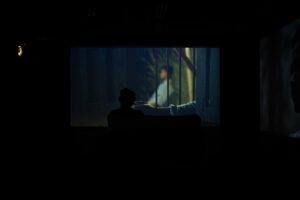
In Cinema Clair Marunouchi, more works by the Thai artist Apichatpong Weerasethakul were showcased. Several of the artist’s video works were pieced together, to compose a 90-minute film. A highly regarded filmmaker by critics and a popular choice among curators of art events. The themes in his works often involve the exploration of memories and desires, converging at the intersections of the spiritual, natural and political worlds. The director’s works are often slow, unfolding at a rather contemplative pace. There were quite a few viewers who dozed off while the film was screening, which was understandable, fair to say, if you weren’t already familiar with Weerasethakul’s work, or walked in expecting a Marvel production. After several encounters with the artist’s video works in various places across the world myself, there’s always that WTF moment. I personally was never really sure if I had wasted hours of my life trying to dissect the work, hopelessly wishing to make sense of everything I saw, or whether I had witnessed something so damn extraordinary that my tiny human brain couldn’t even grasp it. So yes, if you’ve ever fallen asleep during one of Weerasethakul’s films, I share that sentiment, and I’m sure you weren’t the first and won’t be the last.
Another delightful find was the work created by Enkū (円空), the Buddhist monk, exhibited in the Okayama Orient Museum. Born in 1632 and dying in 1695 in what is now Gifu Prefecture, Enkū’s sculptures stand out from more traditional Buddhist statues by embracing a, for lack of a better word, contemporary approach that showcases the natural beauty of the materials. When exhibited at a contemporary art event, Enkū’s work subtly weaves an intriguing narrative that bridges the past and present. His Buddha sculptures, characterised by their rough, textured surfaces and imperfect forms, are highly expressive and convey a sense of warmth and compassion that is central to Buddhist practice. Personally, I believe that the director’s intention was to deliver a message that transcends time. By placing ourselves within the course and tides of history, human beings have always lived under the exact same sky. Warmth and compassion, isn’t that what the world needs right now?
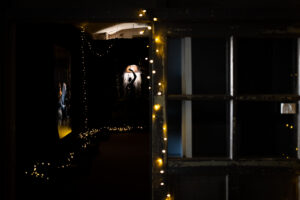
In another special chapter in this series, which aims to capture glimpses of Okayama City after night falls, it offers an alternative perspective to the Summit, whose activity is largely concentrated during the day.