23 August 2022
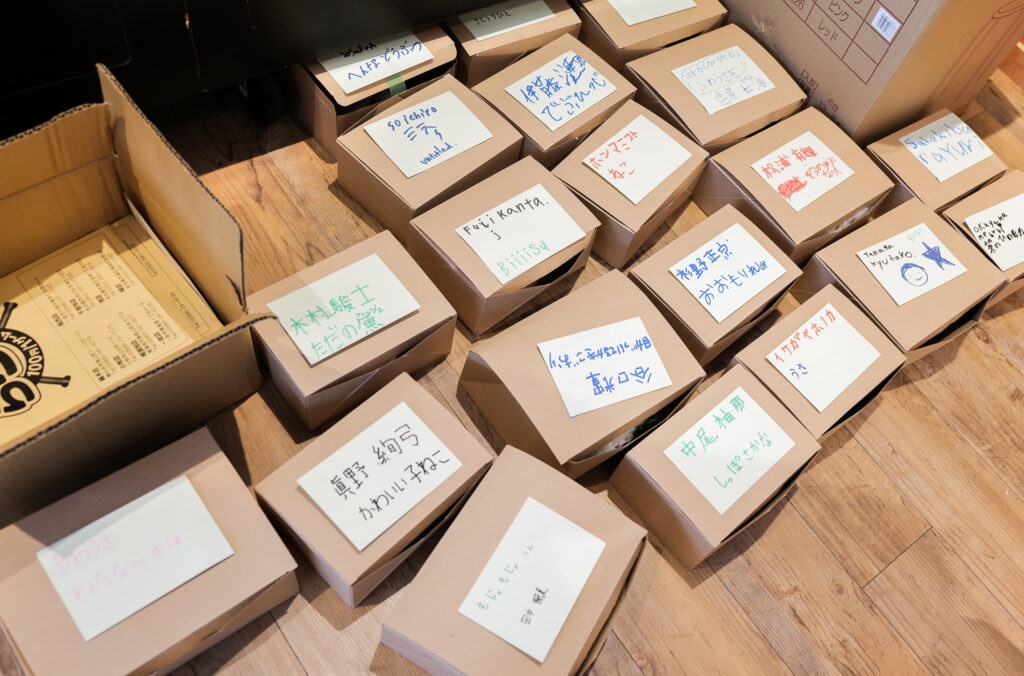
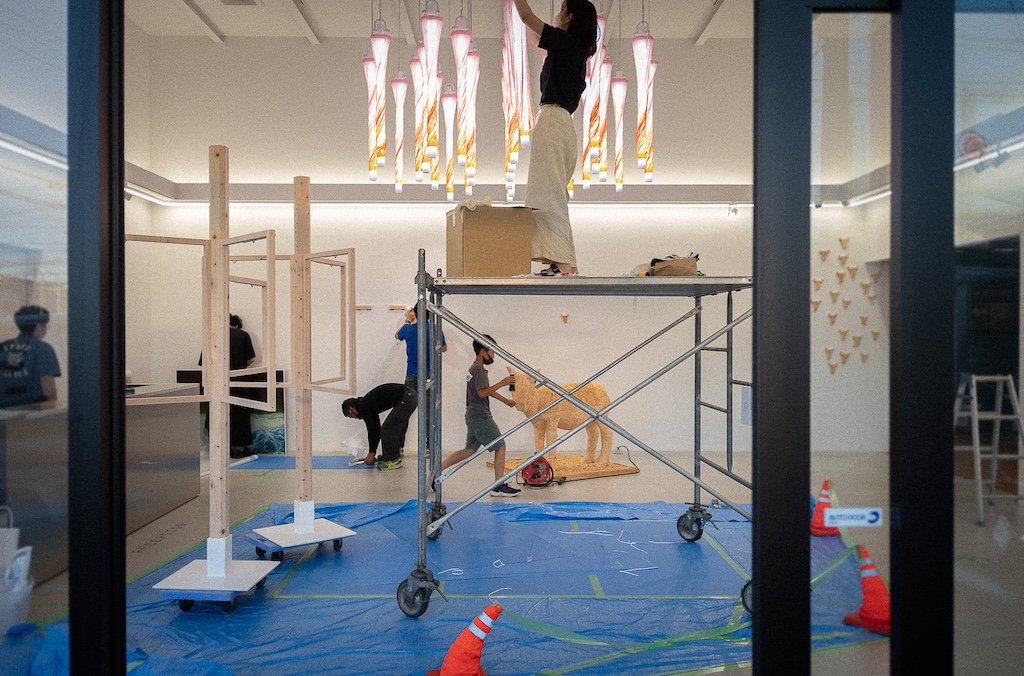
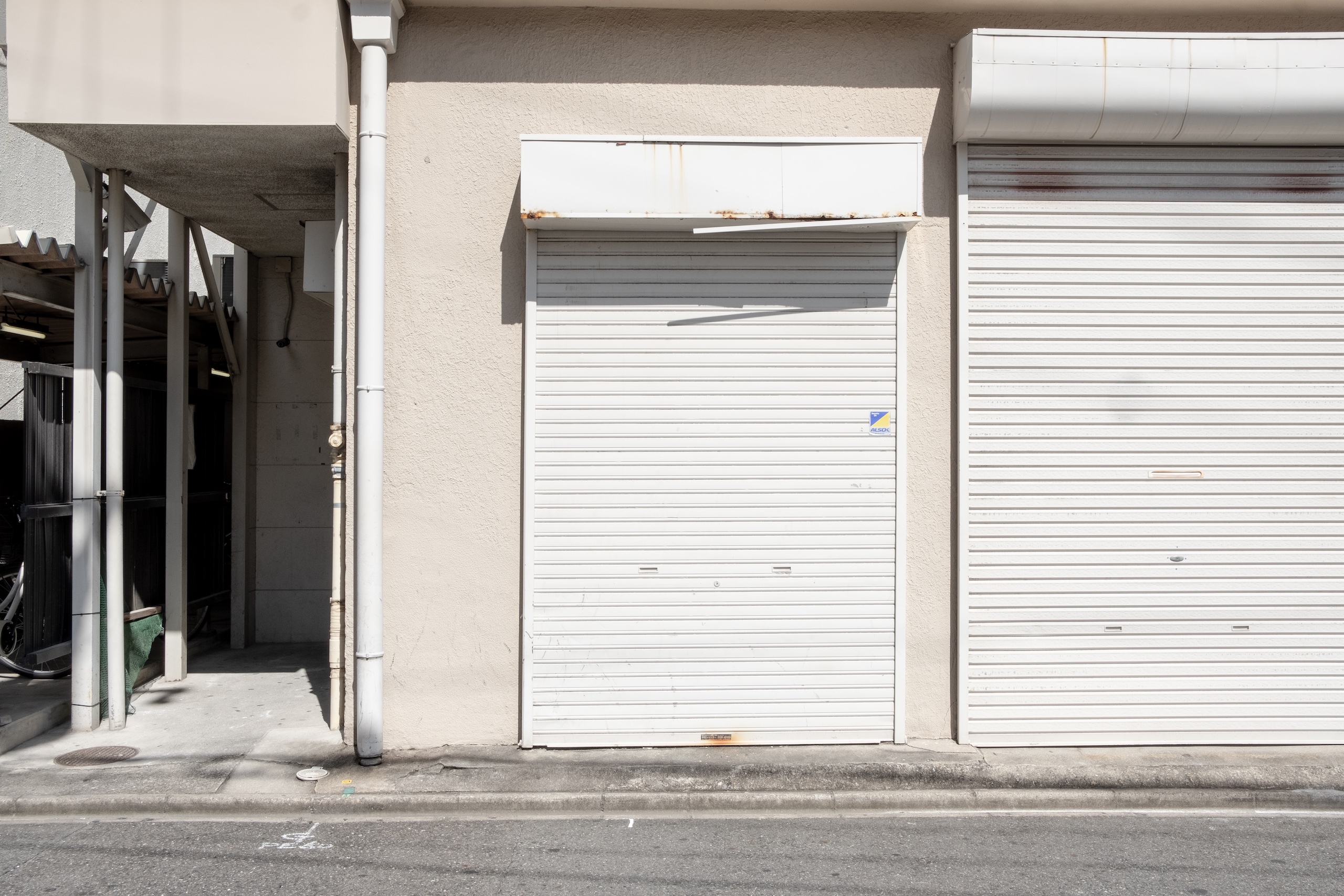
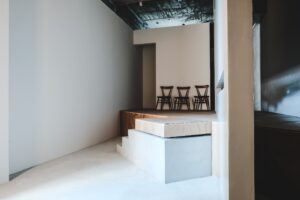
We would like to present a series of photographs offering a glimpse into the preparation and installation process behind GROWING SPACE (2022) in Nagoya (名古屋), Japan.
The first phase of the project GROWING SPACE was completed in March 2021, when Riko Yasumiya (安宮理子) installed a chandelier that resembles a skeletal model. GROWING SPACE (2022) marks the inaugural exhibition at Batting LALALA Midori’s (バッティングららら) exhibition space of the same name. Coinciding with this year’s Aichi Triennale 2022, Still Alive, the exhibition outlines the relationship between nature, humans and animals, centring on the concepts of coexistence and escapism, featuring a variety of artistic practices, including wooden sculptures by Mitsunori Kimura (木村充伯), landscape photography and moving images by Luc Schol, and interactive installations by Riko Yasumiya.


As the curator of the exhibition, I would like to take this opportunity to share some of the thought processes behind its realisation. From the standpoint of both curator and producer, the challenging aspect and perhaps also the charming aspect of this space is, first and foremost, that this is not your conventional white cube gallery space. During the development of the exhibition, one of the many things that we had to take into consideration was that, there would be streams of visitors coming in and out constantly, especially during the summer holiday period, in contrast to the relatively quieter atmosphere of traditional galleries and museums. Another key that we had to confront was that the audience is not your usual art-going crowd. How could we curate and produce an exhibition that remains accessible without compromising its artistic and conceptual integrity? How much compromise is acceptable? And, vitally, how could we interweave the artworks with a space that fundamentally functions as a lobby, transforming it into a site of imagination and play without degrading the works to banal or vacuous decoration on the wall? Naturally, safety precautions specific to the venue also had to be carefully addressed.


During the first phase of the project last year, we set out with the mission of surprising regular visitors to the batting centre. I recall hearing an Icelandic designer say in a podcast: “One of the currencies of innovation is being the first, otherwise you are just like the other dudes.” This is a sentiment I wholeheartedly agree with.
We wanted to introduce an element of surprise for those encountering the project. In many ways, “surprise” can be a double-edged sword, it often means placing people outside their comfort zones, which can, at times, be rather uncomfortable and unsettling. We sought to challenge not only ourselves but our audience too, not in a way that is offensive or distressing obviously, but in a manner that encourages reflection. We hoped that GROWING SPACE would be more than a mere presentation of artworks, even if it creates a degree of discomfort, if it prompts visitors to pause, think, or reconsider their perception of what a batting centre can be, then that, in itself, I guess, is another currency banked for us.


Finally, I would like to extend my sincere thanks to Kimura-san and Yasumiya-san for their dedication in realising the works on site; to Luc for his patience and collaboration throughout the entire preparation process; to Yamanobu (山信建設) Construction for assembling the exhibition; to Tracy Truong for the beautiful graphic design; to Shoko Natori (名取祥子) for translating the English text; and to Hémash (エマッシュ) and JILL D’ART GALLERY (ジルダールギャラリー) for their invaluable support. This exhibition would not have been possible without your contributions. My deepest gratitude to all of you, and I look forward to the next phase of the project.