05 May 2022
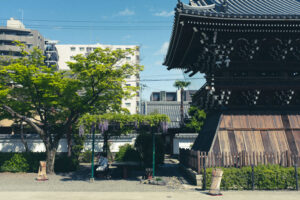
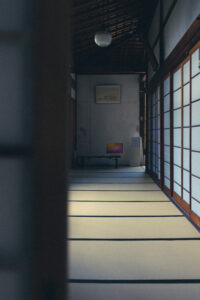
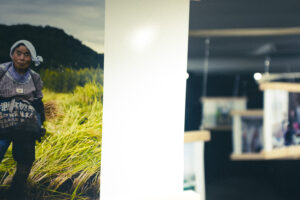
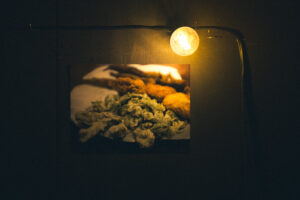
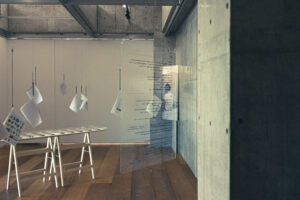
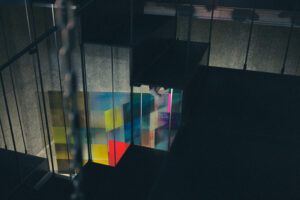
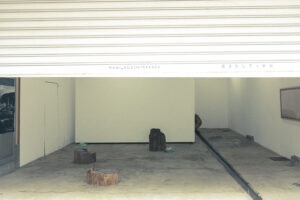
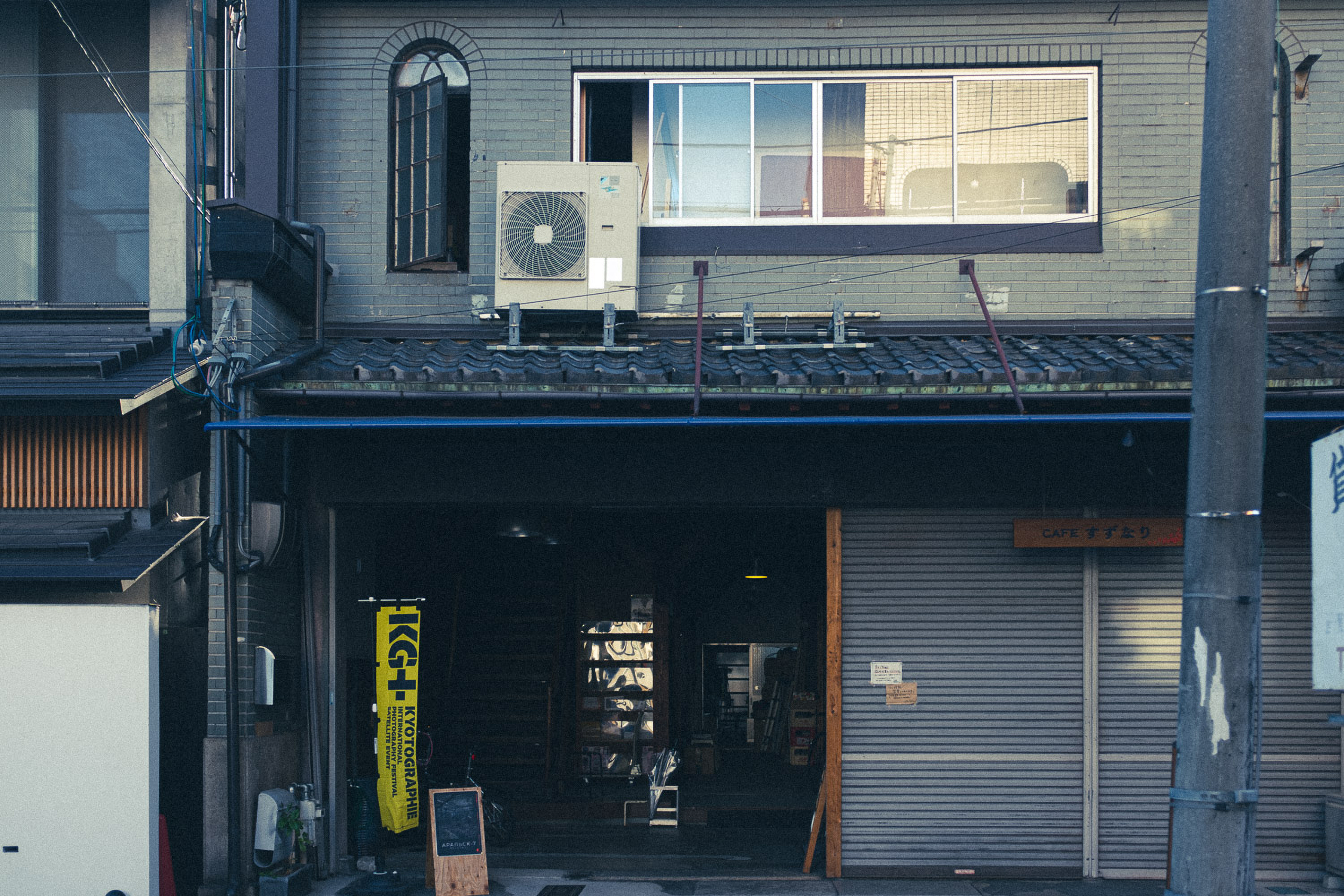
We would like to present a series of photographs documenting this year’s KG+, an annual photography event held in Kyoto, Japan.
By now, hundreds of Guy Bourdin’s renowned, and the much celebrated photograph of manicured hands with vivid red nails stacked on top of one another, covering the model’s eyes, leaving the red lips visible, would probably have surfaced across your social media feeds. The image was selected as the main visual for this year’s KYOTOGRAPHIE — not to be confused with KG+ — which shapes itself like a baby brother to the former. While KYOTOGRAPHIE brings together internationally established photographers, KG+ welcomes relatively lesser-known names — think emerging, that’s probably the right word.
It is perhaps best not to dwell on the event’s different categories, which are confusing, to say the least. The distinction between KG+, KG+ Select and KG+ Special is a little like the countless diffusion lines of a fashion label. Unless you’re a diehard fan of the designer, you probably won’t be able to tell exactly what distinguishes Ground Y, Y’s, and Y’s Bang On from Yohji Yamamoto.
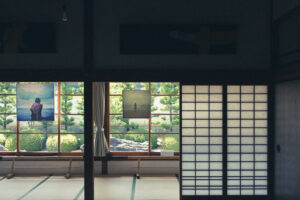
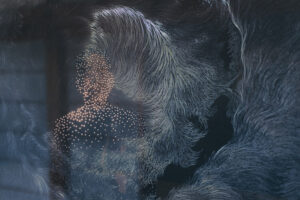
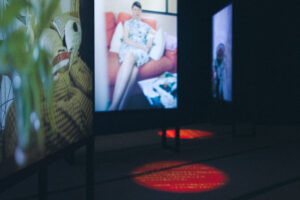
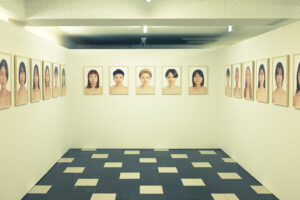
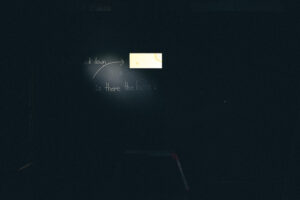
The exhibited photographic works at this year’s KG+ by and large, consisted of documentation of real-life events. A whole range of diverse subjects was explored, from gender issues and identity, to the aftermath of Fukushima, and so on. During the event, we could see artists and photographers experimenting with various methods to elevate the medium. One project that caught the eye was titled Home, created by Lu Wang (王露, b. 1989), a graduate of the University of the Arts, Tokyo. The project essentially revolves around personal and cultural identities, prompting questions surrounding migration and its by-products. The artist presented her work by incorporating elements of sound, lighting, and stage design, with the stories of her subjects being narrated within a dark, immersive environment. This did indeed somewhat transform the viewing experience, allowing audiences to engage with the subjects of the photographs as actual individuals with their own stories that form part of a broader narrative, rather than merely staring at some random photographs of Asian women dressed in Chinese qipao.
The word “photography” is composed of the Greek word “phos”, meaning light, and “graphê”, meaning drawing or writing. A literal translation of the word “photography” would therefore be “drawing with light” — anyone who has looked it up on Wikipedia should already be aware of this. What you should also be aware of, however, is that when photography first surfaced, there was an extremely technical side to it. Photography was, in fact, a technological invention that combined the sciences of optics and chemistry. It was regarded not only as a means of artistic expression but also, mainly, as a process of science, involving both chemical and physical experimentation. Printing colour photographs was once considered a massive task, something that has, of course, been all but eradicated by modern technology, for better or worse. The French photographer Nadar captured the first aerial photograph from a hot-air balloon, that was in 1858. Nowadays, even a cheap drone is capable of managing the same task perfectly.
Peeking once again at the course of photography in relation to art history — Dada, Surrealism, Russian Constructivism — all of these movements relied eminently on the camera for artistic production and visual creation. Photography has operated not only as a cultural medium but also as a social tool, and has always been intertwined with the political landscape and the state of society. Dada was a reaction to the First World War, which in turn gave rise to Surrealism in Europe. California Modernism, meanwhile, diminished quickly because of the Great Depression. Not to mention the fact that many of these movements occurred within relatively local contexts. The internet didn’t exist, people hand-wrote letters, and the docking of a ship carrying news or photographs probably made a lot of people’s day back then. Today, on the other hand, images and information travel at lightning speed, from one end of the world to the other in the blink of an eye. Images turn up callously on your screen regardless of your liking. Things have never been easier — gaining access to imagery, information, and knowledge — to call it effortless, would be an understatement.
Photography has endured as a vital creative and artistic medium, surviving and thriving for almost two hundred years, adopting countless facades and forms through the tides of history. Nonetheless, it has often been argued that the medium itself has become a little obsolete today due to the advancement of technology. With a single push of a button or a soft touch on the phone screen — there you have it — a photograph. You no longer have to concern yourself with silver nitrate, or even worry about shutter speed or exposure. With the help of a smartphone, everything can be viewed and edited from the palm of your hand.
More often than not, in the time that we are living in today, every individual is likely to encounter thousands of images or photographs, shared by other individuals on a daily basis, accelerated by nothing more than the simple act of scrolling through social media, with a tiny movement of the thumb. The omnipresence of photography has resulted in a perpetual bombardment of image after image, driving the mind into an oblivious state, filtering out everything in front of our bare eyes and leaving us, remembering, absolutely, nothing.
As human beings move towards a post-modern world, photography moves with us too. I have zero doubt that the medium itself will remain and continue to pervade, at least for now, photography will simply continue to up the ante and reinvent itself until the next big thing comes along. It remains the quickest, and arguably the easiest way to capture, document, and share stories with the rest of the world, the only variable that has changed is the platform on which the photograph is shared.
The purpose of a physical exhibition serves to tell a story, also to lift you out of your daily mundanity, providing an alternative experience. Whenever I visit a photography event like KG+, however, I’m often left with a question mark, asking myself: why am I even here? Wouldn’t it be easier if everything were published online? The information or content exhibited in such a manner is, in many ways, no different from an online blog post or a spread in a magazine. Painting is probably a whole different story, but we are kidding ourselves if we truly think that the quality of a printed photograph always outshines that of one we come across online — such an argument, or sentiment, to be precise, feels more like a dying old guard defending its realm, clinging on to the prestige in the face of changing times, than a genuine assessment of the image and the art form itself.
Photography has evolved, perhaps photographers and photography exhibitions should too?